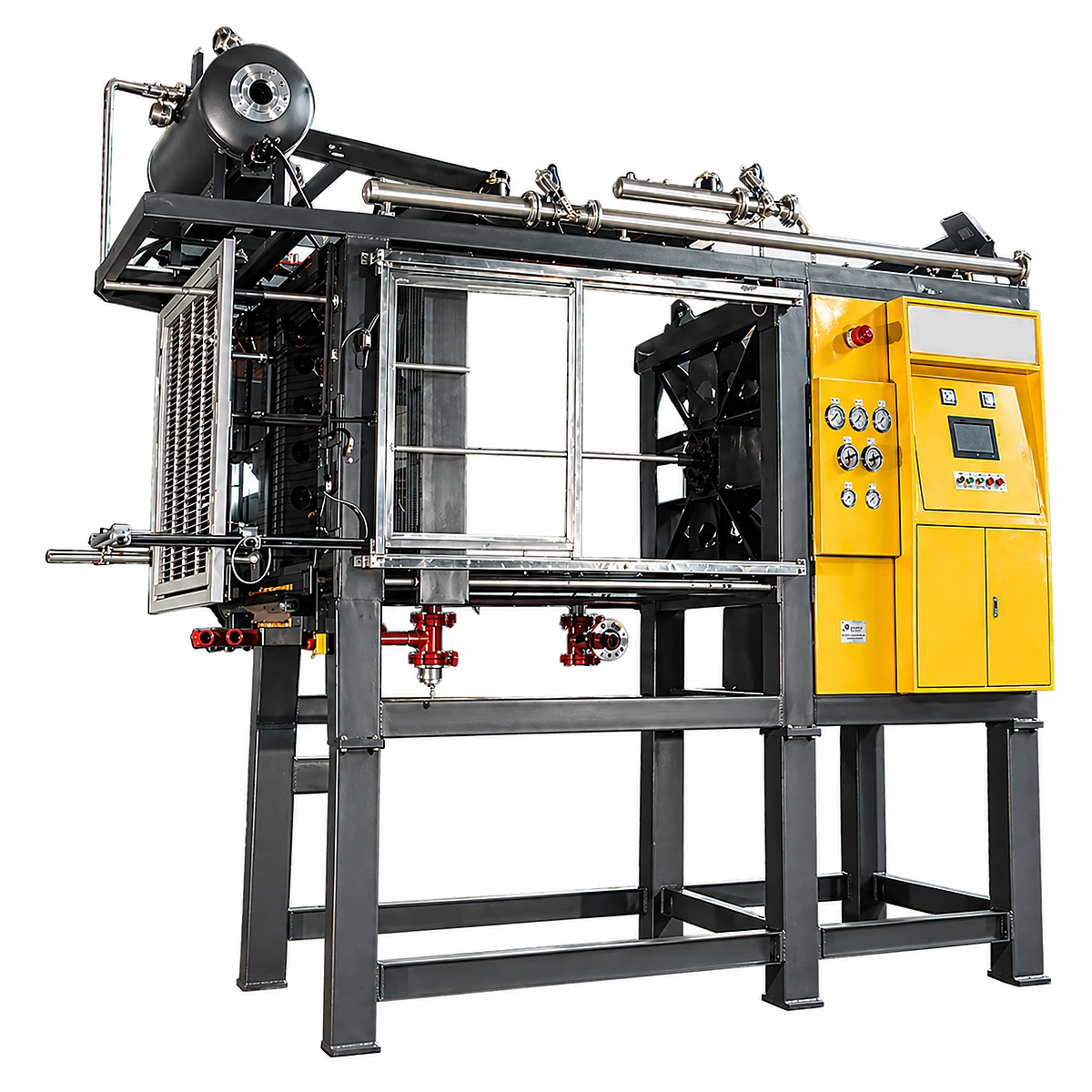
Eight engineered subsystems that make this machine production-grade. Each component is sourced, built, and tested for industrial duty cycles.
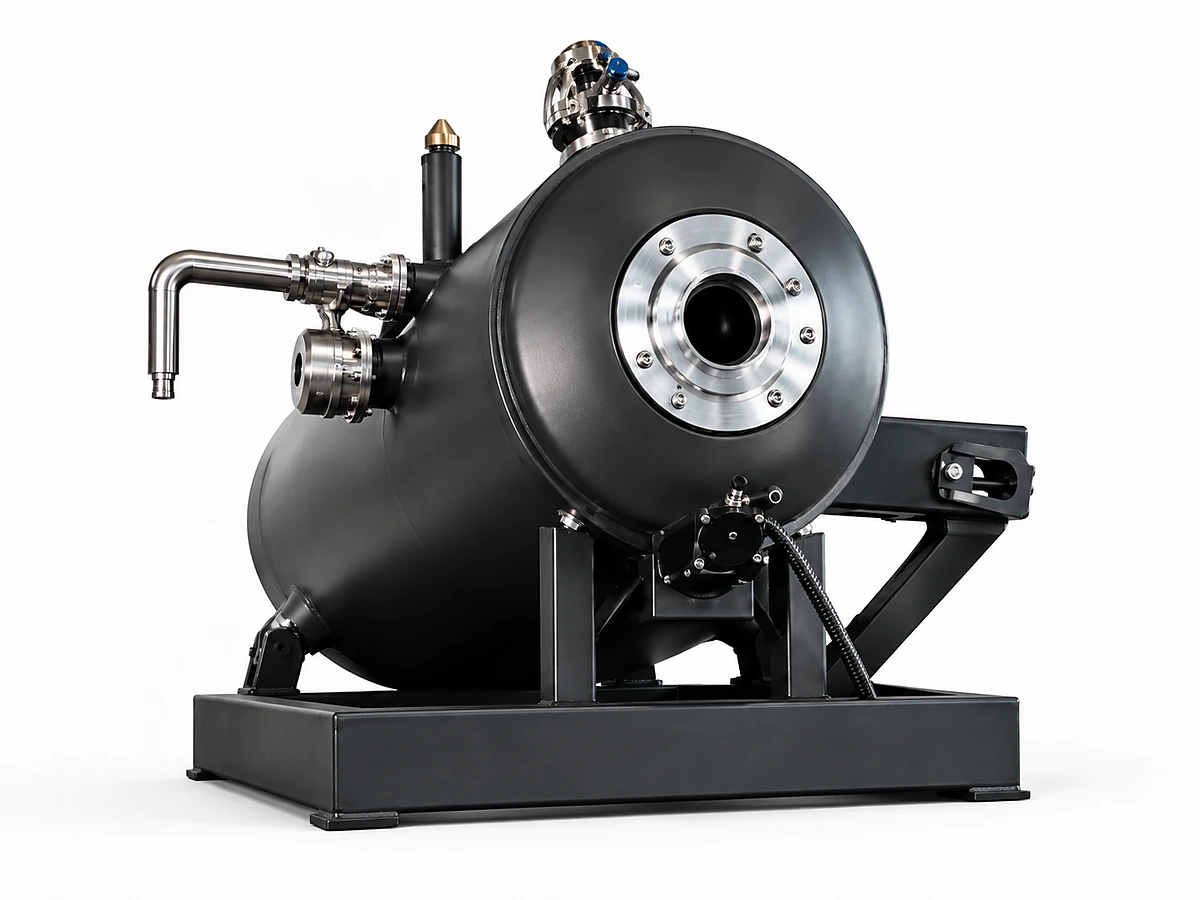
1. Steam Tank
Function
Stores steam for stable heating and consistent molding performance — the buffer between the steam boiler and the mold chamber.
Engineering Details
Working steam pressure 0.4-0.8 MPa. AISI 304 stainless steel pressure vessel, TUV / Bureau Veritas certified. Insulated to minimize heat loss between molding cycles.
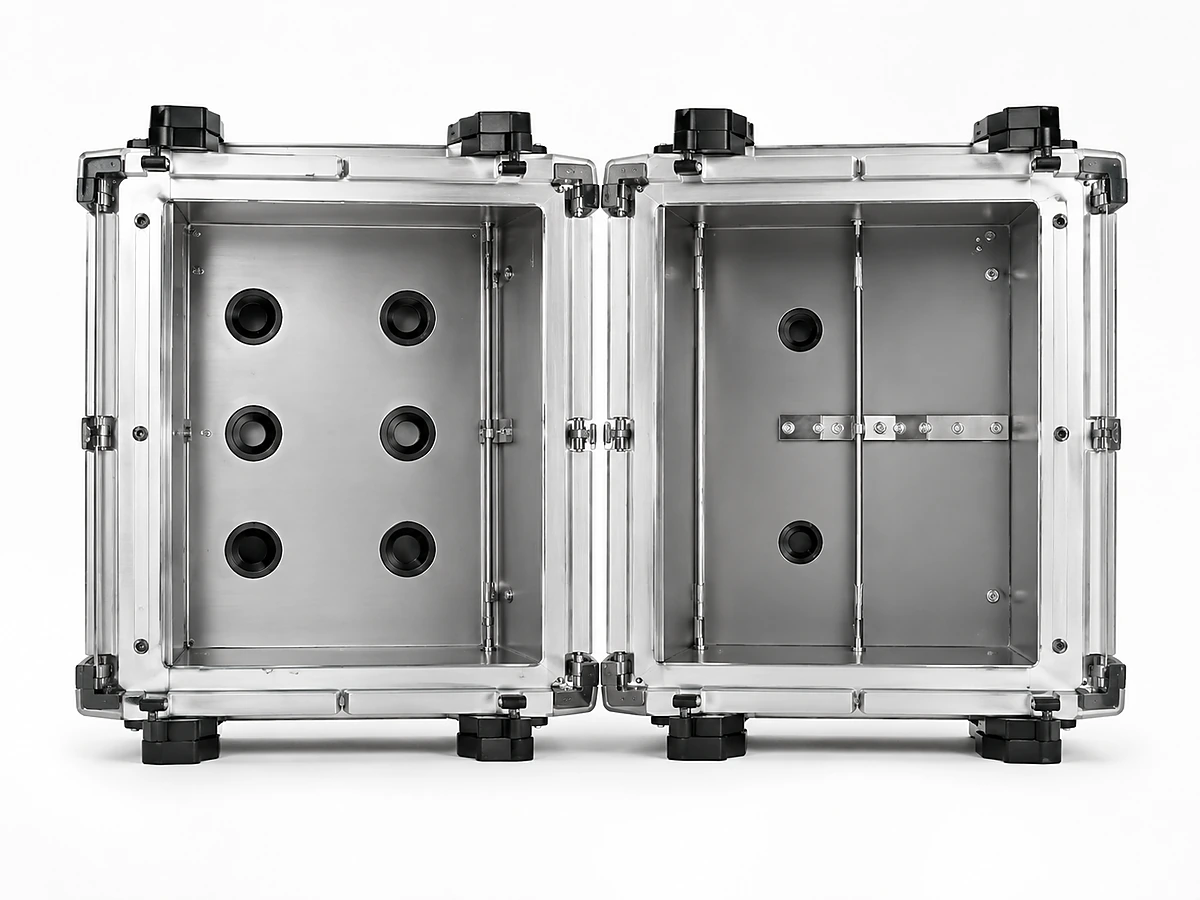
2. Mold (Custom-Designed)
Function
Custom-designed molds ensure precise shape, smooth surface, and high dimensional accuracy — the core of EPS shape molding quality.
Engineering Details
Cast or CNC-machined 6061 aluminum. Surface anodized for durability + clean release. Engineered steam channels for uniform heating. Vent pin holes (Ø 0.5 mm) prevent air-trap defects. Quick-change locking system — 4-6 hour mold swap.
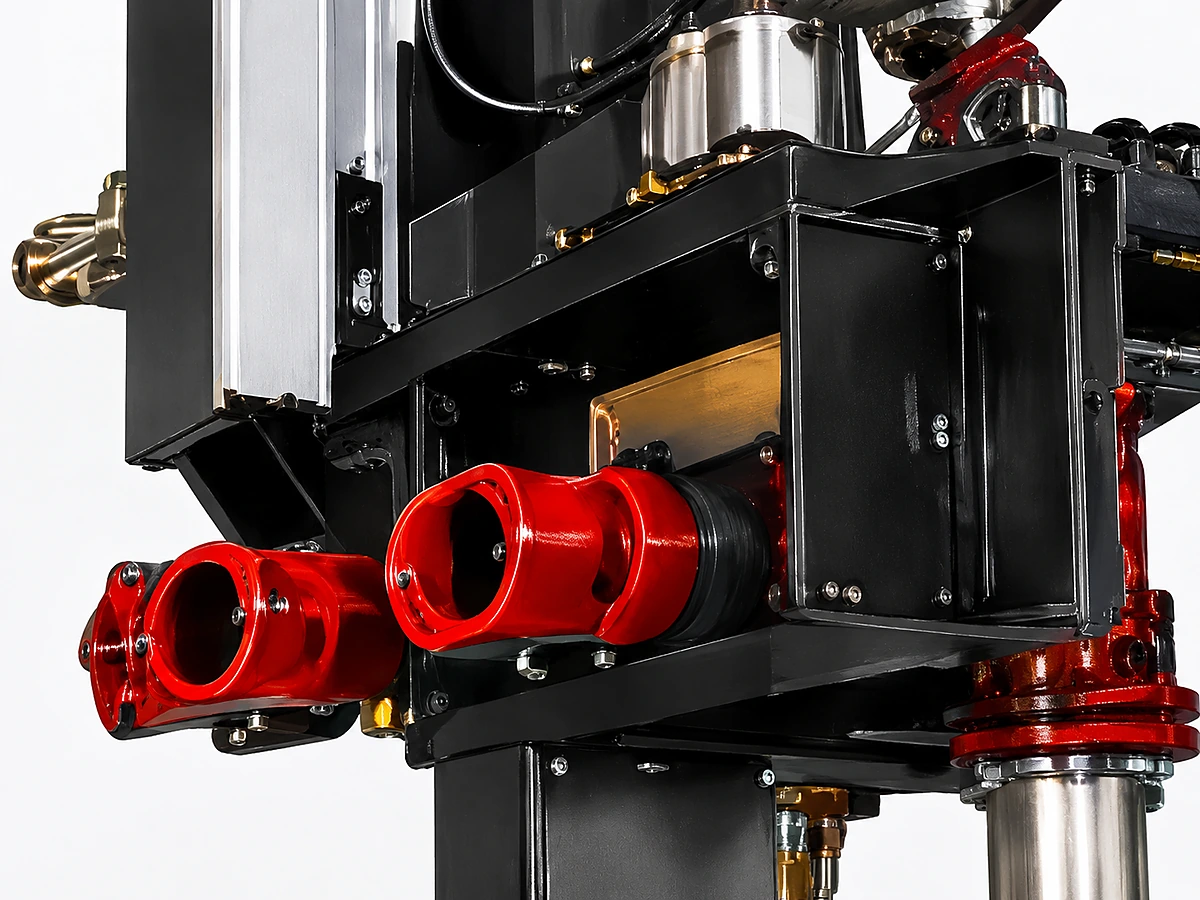
3. Steam Valve
Function
Distributes steam evenly into the mold chamber to ensure uniform preheating across complex product geometries — direct factor in bead fusion consistency.
Engineering Details
Gemu-Germany or Burkert-Germany proportional valves. PLC-controlled solenoid array, 2-4 independent steam zones. Closed-loop pressure regulation 0.08-0.12 MPa during steam burst.
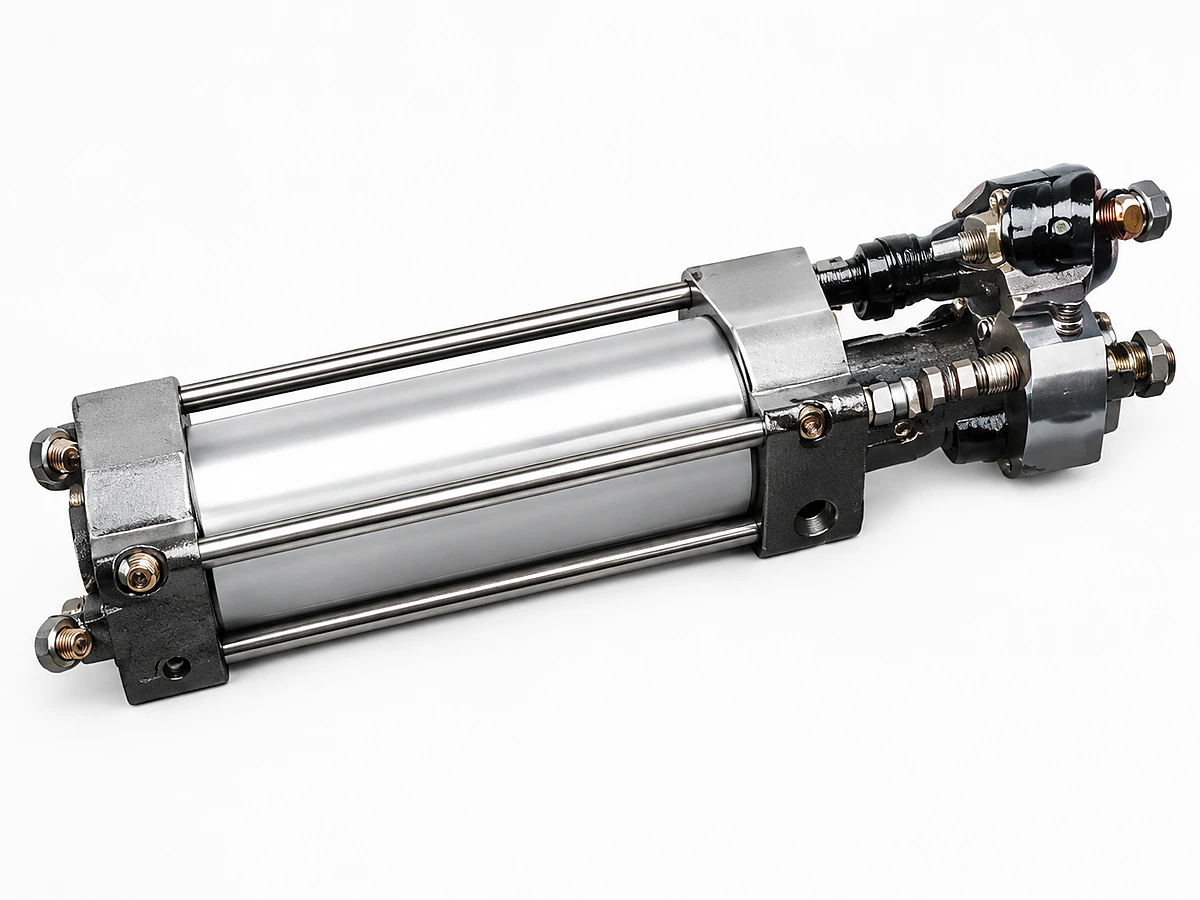
4. Air Cylinder
Function
Pneumatic actuator that drives mold opening, closing, and product ejection with consistent timing and gentle release — protects the mold-release coating for million-cycle service life.
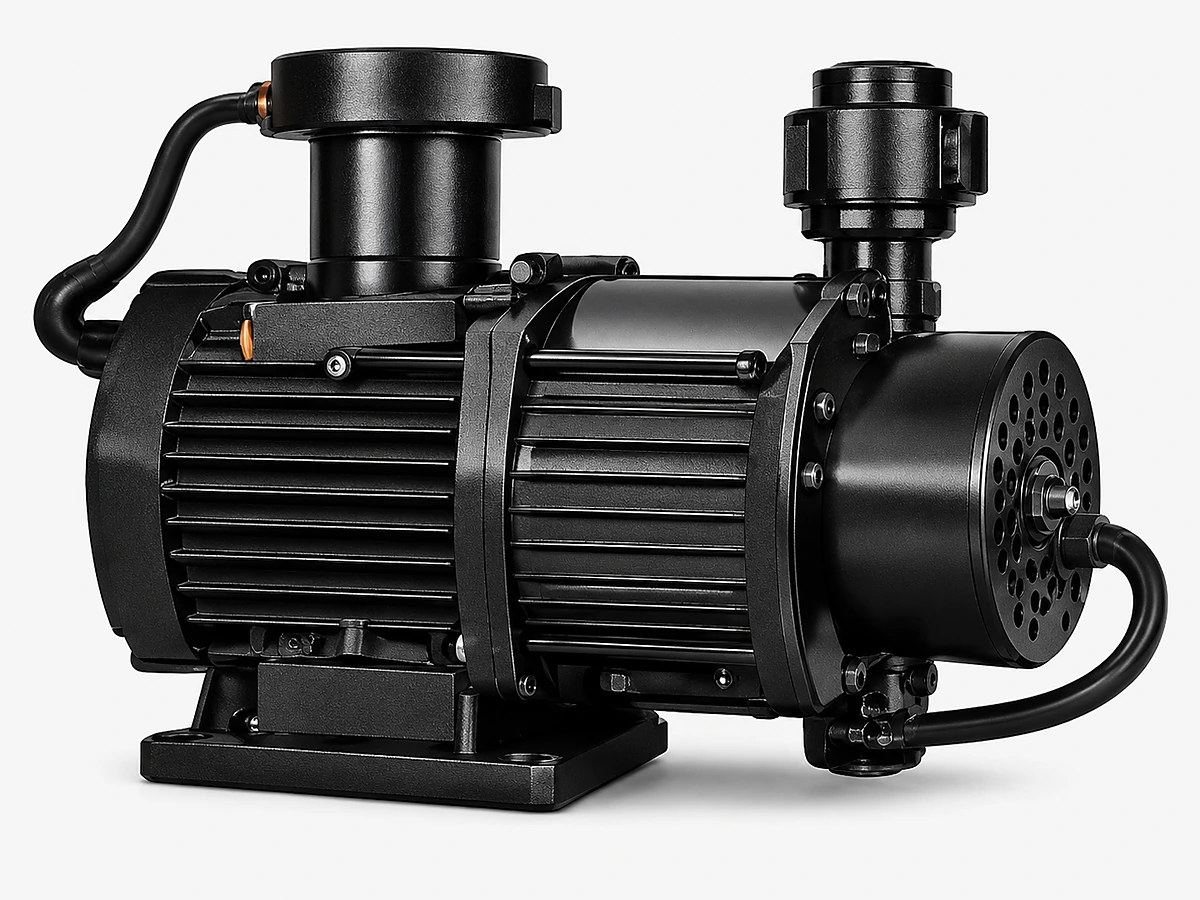
Removes air and residual moisture from the mold cavity for fast cycle times and dimensionally stable products — the single biggest factor in cutting cycle time 30-40% vs air-only cooling.
Engineering Details
Water-ring vacuum pump (7.5-11 kW Becker/Edwards equivalent). Cylindrical vacuum buffer tank. Reaches 0.06 MPa absolute pressure in 30-45 seconds. Cycle time 30-300s depending on product complexity.
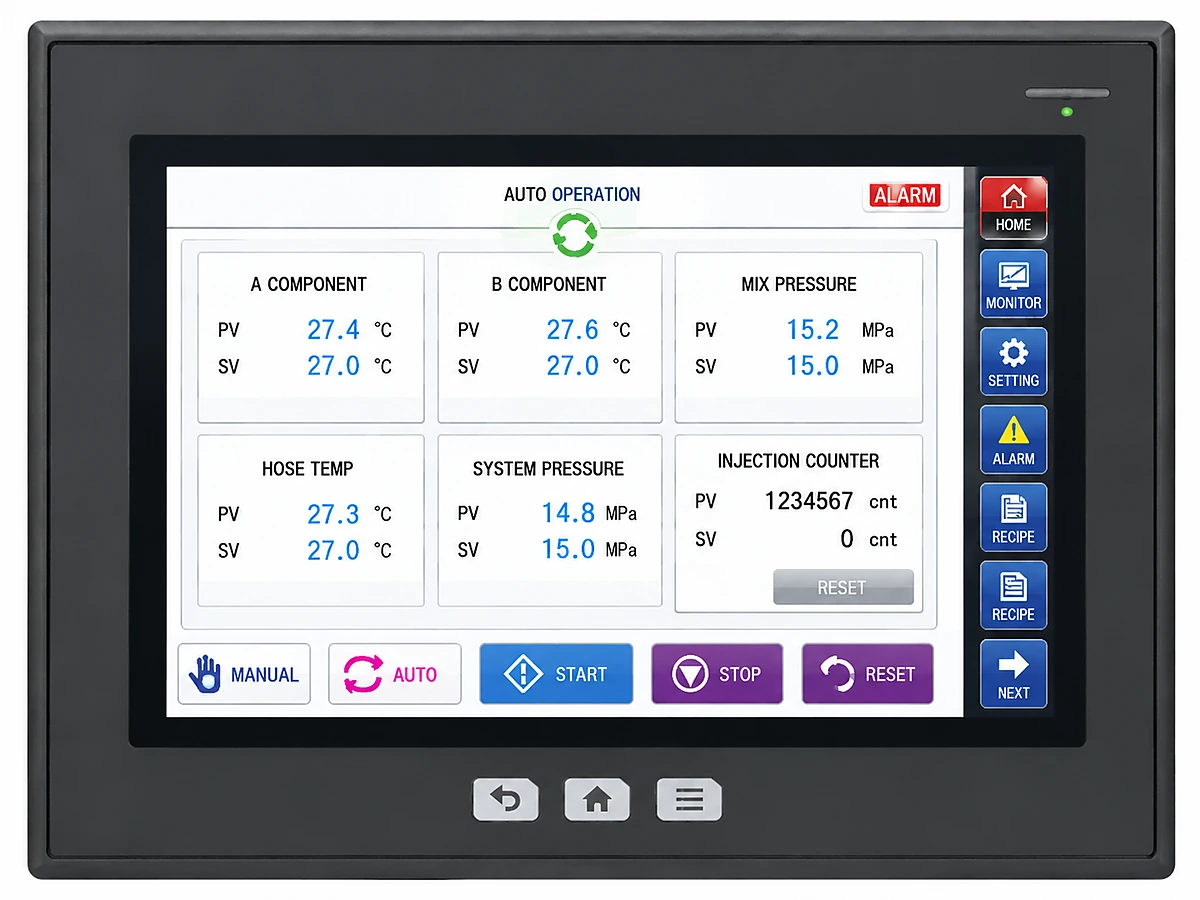
6. PLC Control System
Function
User-friendly interface with PLC system, pressure gauges and alarm indicators for easy operation and monitoring — recipes per product SKU for quick changeover.
Engineering Details
Siemens S7-1200 PLC + 10-12" Weintek HMI touch screen. 99-recipe storage library. USB recipe export; optional Ethernet/IP for MES integration. 380V / 50Hz / 3-Phase. Multi-user accounts (operator/supervisor/maintenance) with audit trail.
Spécifications Techniques
3 models
Paramètre
SM-1000
SM-1200
SM-1400
Tier
Entry / Small batch
Mid-range / Most popular
Premium / Large-format
Mold Platen Size (L×W)
1,000 × 800 mm
1,200 × 1,000 mm
1,400 × 1,200 mm
Max Product Size
950 × 750 × 300 mm
1,150 × 950 × 350 mm
1,350 × 1,150 × 400 mm
Cycle Time
45-120 seconds
60-150 seconds
75-180 seconds
Steam Pressure
0.08-0.12 MPa
0.08-0.12 MPa
0.08-0.12 MPa
Clamping Force
15 tons (hydraulic)
25 tons (hydraulic)
40 tons (hydraulic)
Steam Consumption
5-10 kg / cycle
8-15 kg / cycle
12-22 kg / cycle
Cooling Method
Vacuum + water spray
Vacuum + water spray
Vacuum + water spray
Voltage
380V / 50Hz (220V/60Hz optional)
380V / 50Hz (220V/60Hz optional)
380V / 50Hz (220V/60Hz optional)
Installed Power
18 kW
25 kW
40 kW
Ejection System
Hydraulic + pneumatic dual-stage
Hydraulic + pneumatic dual-stage
Hydraulic + pneumatic dual-stage
Mold Change Time
4-6 hours quick-change
4-6 hours quick-change
4-6 hours quick-change
Density Range
15-50 kg/m³
15-50 kg/m³
15-50 kg/m³
Compatible Beads
EPS / EPP / fast-cycling / flame-retardant
EPS / EPP / fast-cycling / flame-retardant
EPS / EPP / fast-cycling / flame-retardant
Machine Weight
6,500 kg
8,500 kg
12,000 kg
Dimensions (L×W×H)
3,400 × 2,200 × 2,800 mm
3,800 × 2,400 × 3,000 mm
4,300 × 2,700 × 3,300 mm
Control System
Siemens S7-1200 PLC + 10" Weintek HMI
Siemens S7-1200 PLC + 10" Weintek HMI
Siemens S7-1200 PLC + 12" Weintek HMI
Certifications
CE + ISO 9001
CE + ISO 9001
CE + ISO 9001
* Les spécifications sont susceptibles d'être modifiées sans préavis. Contactez-nous pour les données techniques les plus récentes.
Ce que Cette Machine Résout
Trois problèmes de production éliminés par cette machine — avec des solutions ingénieriques et mesurables.
Le Problème 1
Un cycle de moulage de formes de 60-90 secondes plafonne la production journalière et gonfle le coût à la pièce
Comment Cette Machine le Résout
Le serrage hydraulique du SM-1200 et la circulation fermée de vapeur permettent des cycles de 45-60 secondes avec des billes fast-cycling pour caisses à poisson et inserts standard (typique 60-90 s pour emballage général, 120-150 s pour pièces automobiles épaisses). Configuration fast-cycle sur billes high-fusion 14-25 kg/m³ : production +50-70 %.
Le Problème 2
Les condensats piégés provoquent des pièces humides et déformées qui échouent au contrôle qualité
Comment Cette Machine le Résout
Doubles ports de séchage sous vide et drainage automatique des condensats délivrent une humidité résiduelle ≤0,5 % dans la pièce finie ; le taux de rejet QC tombe sous 1,5 %.
Le Problème 3
Les changements fréquents de moules pour différentes références coûtent 2-4 heures à chaque fois
Comment Cette Machine le Résout
Plateau de moule à changement rapide et interface de serrage standardisée réduisent l'échange d'insert de moule même format à ~45 minutes (reconfiguration complète du plateau + tuyauterie vapeur pour un autre format prend encore 4-6 heures) — la production en petites séries devient économique.
Principe de Fonctionnement
Le SM-1200 est une mouleuse de formes automatique pour pièces EPS/EPP sur mesure. Les billes pré-expansées sont chargées dans une cavité de moule fermée ; la vapeur saturée fusionne les billes selon la forme finale de la pièce ; le séchage sous vide élimine l'humidité ; le serrage hydraulique libère la pièce refroidie. Les 1 200 désignent la taille du plateau en mm.
Step 1
1. Fermeture du Moule
Le serrage hydraulique ferme les demi-moules à 25 MPa de pression de service.
Step 2
2. Remplissage des Billes
Injecteurs pneumatiques remplissent uniformément la cavité par plusieurs portes.
Step 3
3. Chauffage Vapeur
Vapeur saturée à pression d'injection croisée 0,15-0,20 MPa (depuis réservoir vapeur 0,4-0,8 MPa via régulateur, réduisant à pression de service 0,08-0,12 MPa dans la cavité du moule) fusionne les billes en 15-25 s.
Step 4
4. Vide & Refroidissement
Doubles ports de vide éliminent l'humidité ; l'eau de refroidissement abaisse la pièce à 50 °C.
Step 5
5. Éjection
Le moule s'ouvre ; les éjecteurs pneumatiques poussent la pièce finie.
Avantages de Performance Ingénieriques
Chaque avantage soutenu par des spécifications mesurables — pas d'allégations marketing sans données.
Temps de Cycle
45-60 s (fish box, fast-cycle beads)
vs typical packaging 60-90 s / thick automotive 120-150 s
La circulation fermée de vapeur et le double vide réduisent le cycle de 40-50 % sur billes high-fusion 14-25 kg/m³. Le cycle réel dépend de l'épaisseur de la pièce, de la densité, du refroidissement du moule et de la pression d'alimentation vapeur.
Humidité Résiduelle
≤0.5%
vs industry typical 1-2%
Une humidité plus faible signifie des pièces dimensionnellement stables directement à la sortie de la ligne.
Temps de Changement de Moule
~45 min (quick-insert) / 4-6 hr (complete)
vs industry typical 2-4 hours
L'échange d'insert de moule de même format utilise l'interface de serrage standardisée — ~45 min. La reconfiguration complète du plateau + tuyauterie vapeur pour un format différent prend 4-6 heures (norme de l'industrie).
Production Horaire
~640 pieces/h (8-cavity fish box × 80 cyc/h)
vs single-cavity: 60-80 pcs/h
Calcul exemple : moule caisse à poisson 8-empreintes cycle 45s = 80 cyc/h × 8 = 640 caisses/h. Moules multi-empreintes requis pour gros volumes ; moules mono-empreinte adaptés aux grandes pièces (noyaux de casque, blocs ICF) à 60-80 pcs/h.
Applications de Production Réelles
Voyez où cette machine s'intègre dans des usines réelles.
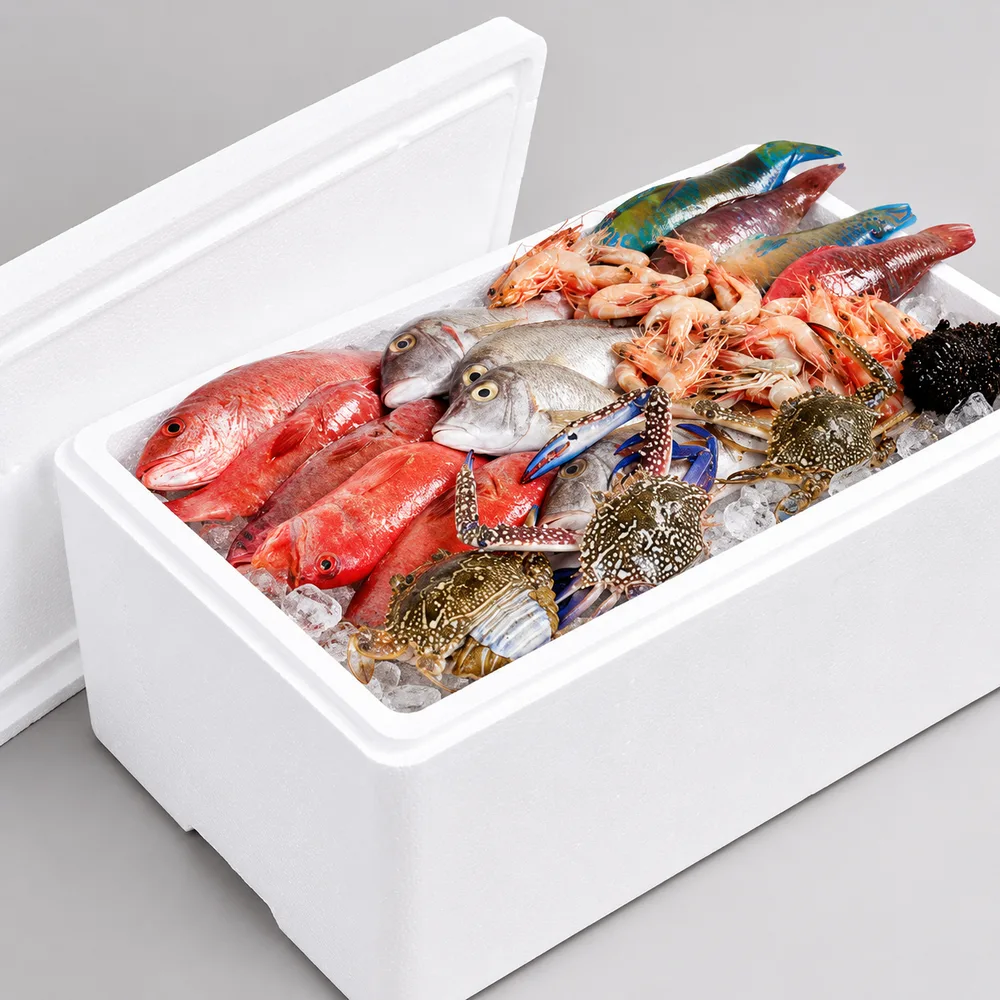
Fish box and aquaculture foam-box production for cold-chain seafood industry — primary EPS shape-molded product worldwide
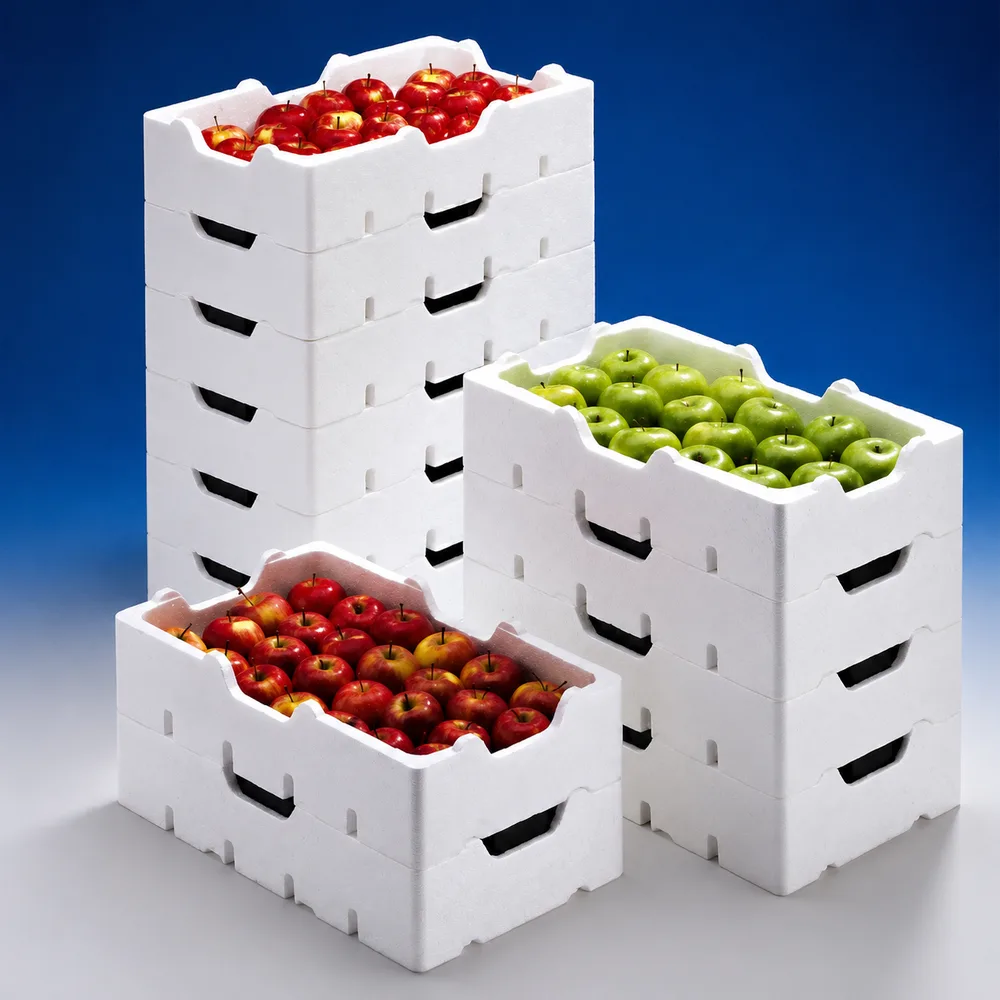
Fruit and produce packaging inserts for export pallets — lightweight 15-18 kg/m³ density molded to fit specific produce shapes
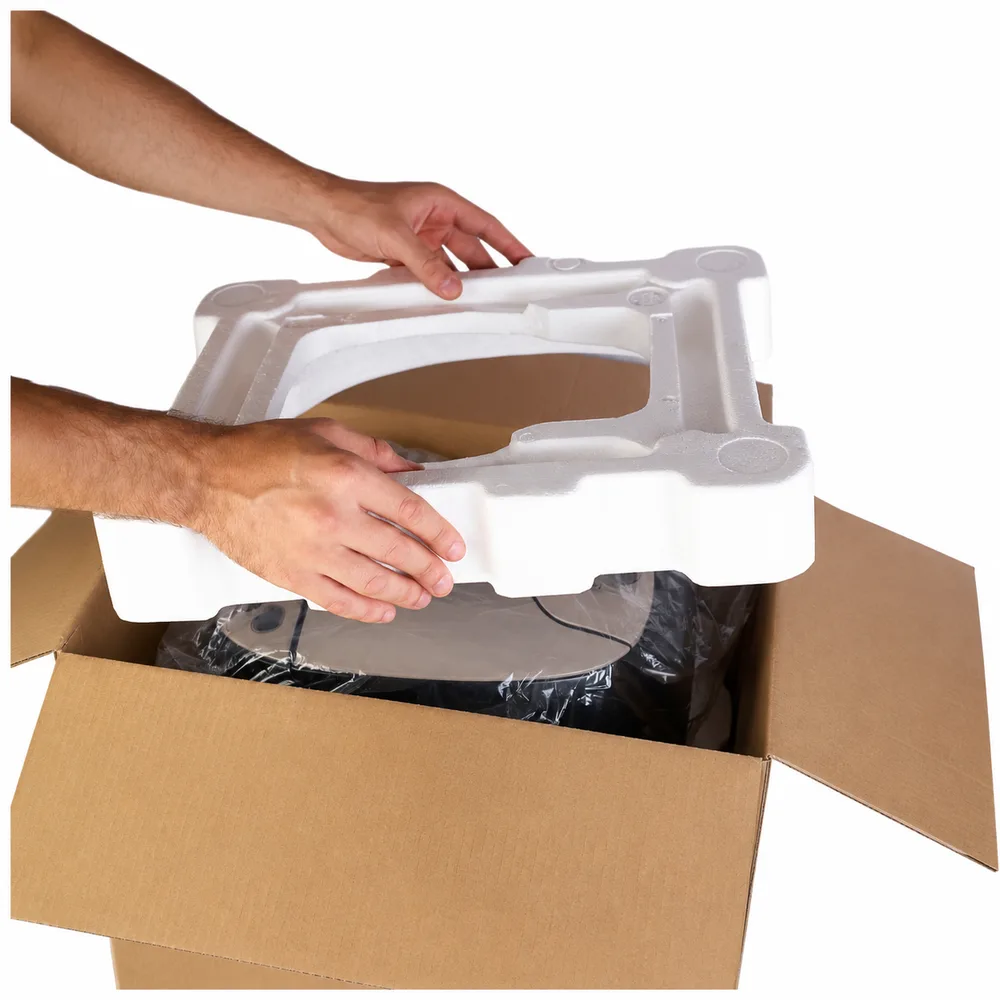
Electronics and appliance protective foam — refrigerator cushions, TV protectors, monitor inserts
Configuration de la Machine
Composants de qualité industrielle de marques mondiales établies — chaque pièce traçable.
Composant
Marque / Spéc.
Détail
Contrôleur PLC
Siemens S7-1200
Stockage de recettes pour plusieurs références ; sauvegarde sur carte SD.
HMI
Siemens / Weintek
HMI couleur 10 pouces ; analyse du temps de cycle ; affichage OEE.
Système Hydraulique
Yuken
25 MPa, bloc de vannes 6 stations, circuit de dégagement d'urgence.
Pompe à Vide
Becker
À palettes rotatives sèches, 60 m³/h, fonctionnement double-port.
Électrovanne Vapeur
Burkert
Action rapide ; temps de réponse ≤30 ms pour cycles courts.
Plateau de Moule
SUS440 Stainless
1 200 × 1 000 mm ; alignement par broches à changement rapide.
Études de Cas Clients
Détails clients disponibles sur demande.
RussiaAnnée: 2023
Configuration
3 × SM-1200 + 12 jeux de moules, 50 t/mois de caisses à poisson
Résultat
Conditionneur de produits de la mer basé à Mourmansk a remplacé d'anciennes mouleuses italiennes ; le temps de cycle est passé de 75 s à 42 s, coût énergétique en baisse de 22 %.
SpainAnnée: 2024
Configuration
1 × SM-1200 + moules d'emballage sur mesure
Résultat
OEM d'inserts de protection pour verres à vin ; le changement rapide de moule permet la rotation de 8 références par poste.
Maintenance & Safety
A clear schedule keeps the line running. Built-in safety systems protect operators and product alike.
Maintenance Schedule
Daily (every shift)
Inspect mold cavity for bead residue or surface damage. Verify hydraulic pressure (25-ton spec) at clamping. Check steam pressure gauges (0.08-0.12 MPa). Clean ejector pin holes of bead debris. Test e-stop function. Reset product counter at shift start.
Weekly
Lubricate hydraulic cylinder seals and ejector pin mechanisms. Inspect water-ring vacuum pump impeller. Check pneumatic bead-fill guns for wear. Drain steam condensate from low points. Verify mold-release coating condition (re-apply if showing wear).
Monthly
Open mold; clean cavity interior with food-grade detergent. Inspect aluminum mold for cracks or wear (visible at parting line first). Service vacuum pump water seal. Recalibrate steam pressure transducers. Backup PLC recipes to USB.
Semi-Annual
Inspect hydraulic clamping cylinder for seal wear. Replace water-ring vacuum pump seal. Recalibrate load cells. Verify ejector pin alignment (±0.1mm spec). Re-apply mold-release coating per OEM schedule.
Annual
Major overhaul: replace hydraulic cylinder seals (5,000h spec), service Siemens PLC battery, recertify pressure-relief safety system, update PLC firmware per Siemens advisories, refresh operator training including quick-change mold procedure.
Safety Features
CE certification per EN 60204-1 + EN ISO 13849-1 PLd for safety-related control systems
Pressure-relief valve on steam chamber at 0.18 MPa setpoint (2× operating pressure)
Hydraulic safety interlock prevents steam injection until 25-ton clamping force achieved
Two emergency-stop mushrooms (operator panel + machine side) — Category 0 stop within 100ms
Mold-open safety guard prevents operator hand-trap during clamping cycle
Vacuum pressure relief prevents implosion if condenser blockage occurs
Thermal cutoff in electrical cabinet (>60°C) — auto-shutdown logged for audit
Product-ejection clearance sensor halts ejector if foreign object detected in discharge path
Live Footage
See This Machine Running
Real ChinaEps production line footage from customer factories — not stock video.
The questions buyers ask most often before placing an order.
How is the SM-1200 different from the BM-1400 block-molding machine?
Three categories of difference. (1) Output: SM-1200 makes finished-shape products (fish boxes, cooler boxes, packaging inserts) ready for sale; BM-1400 makes blocks that need a downstream cutting step. (2) Mold: SM-1200 uses custom cavity inserts (one per product SKU); BM-1400 uses one standard block cavity. (3) Cycle: SM-1200 60-150 seconds per part; BM-1400 5-7 minutes per block. Use SM-1200 for finished-shape packaging and consumer products; use BM-1400 for cut-to-size insulation and geofoam.
What products can be made on a single SM-1200, and how long does mold changeover take?
Any finished EPS shape that fits within the 1,200×1,000×350mm work envelope. Common: fish boxes, cooler boxes, fruit-tray inserts, helmet liners, automotive bumper inserts, refrigerator cushions. A same-format quick-insert swap takes about 45 minutes; a complete platen and steam-piping reconfiguration for a different format takes 4-6 hours. Most customers run 3-8 different SKUs per machine.
How are custom molds designed and made — what is the lead time?
Customer provides 3D CAD file (STEP or IGES format) of the desired finished product, or a physical sample we can reverse-engineer. ChinaEps engineering does mold design (1-2 weeks), customer approves, then mold manufacturing (4-6 weeks). Total custom mold lead time 6-8 weeks. Cast aluminum is standard; cost varies with cavity count, part complexity and tolerance requirements — send us the CAD file or sample for a mold quotation.
What bead density range does the SM-1200 handle, and how does cycle time scale?
15-50 kg/m³ density range. Lower density (15-20 kg/m³ — typical for fish boxes and lightweight packaging) cycles 60-90 seconds. Mid-density (25-30 kg/m³ — automotive parts) cycles 100-130 seconds. Higher density (40-50 kg/m³ — premium FR-grade) cycles 130-150 seconds.
Can the SM-1200 work with EPP and fast-cycling EPS beads?
Yes — both. EPP requires slightly higher steam pressure (0.10-0.14 MPa) and longer cycles (15-25% more time). Fast-cycling EPS reduces cycle time 20-30% — particularly attractive for high-volume cooler-box producers. Mold material (aluminum) and clamping system are compatible with all bead types.
What is the steam boiler requirement?
Minimum 0.5 ton/h steam boiler at 0.15 MPa working pressure. Most customers run a 1.0 ton/h boiler to cover SM-1200 + upstream PE-1400 pre-expander + downstream operations. ChinaEps can quote the matching boiler + softener + condensate-return system.
Can the SM-1200 ship to 220V/60Hz markets?
Yes — factory build option. We swap hydraulic pump motor, vacuum pump motor, contactors, and VFD to 220V/60Hz equivalents. PLC and HMI are voltage-flexible. No price difference; 2-3 week lead time adjustment.
How many pieces per day, and how does that scale with product type?
At 90-second cycles (typical fish boxes): 40 cycles/hour × 8 hours = 320 cycles per shift. Multi-cavity molds (4-up or 6-up for small products) push this to 1,200-2,000 pieces/shift. Double-shift operation reaches 24,000+ pieces/day on small products like fruit-tray inserts.
What is the integration path with PE-1400 and downstream operations?
Standard line: PE-1400 → aging silo (24-72h) → SM-1200 → automated stacker (ST1200) → wrapping machine (SPLM). The SM-1200 PLC has analog/digital I/O for upstream/downstream handshaking. Most line integrations complete in 5-7 days on-site.
What is the operator training requirement?
Two options: (1) factory training in Qingdao for 2-3 days during pre-shipment testing (you cover travel); (2) on-site training for 3-5 days during commissioning (you cover travel + accommodation). Training covers PLC recipe management, mold changeover, troubleshooting common defects, and maintenance schedule. Materials in EN / ZH / ES / PT / FR / RU / AR.
Is the SM-1200 the same as a thermocol making machine?
Yes. "Thermocol" is the common name for EPS (expanded polystyrene) in India and South Asia, so a thermocol making machine and an EPS shape molding machine are the same equipment. The SM-1200 covers the full thermocol product range — disposable tableware, sheets, boxes, and decorative items. We ship to thermocol manufacturers across India, Bangladesh, Sri Lanka, and Nepal with CE certification and a 5-year warranty.
Can the SM-1200 make thermocol plates, cups, and dona?
Yes. The SM-1200 thermocol making machine produces thermocol plates, cups, dona (disposable bowls), trays, and boxes by steam-fusing EPS beads in custom aluminium molds. A single SM-1200 with a multi-cavity dona/plate mold produces 200-400 thermocol items per hour; swap molds in under 45 minutes to switch between thermocol plate making, cup making, and dona making on the same machine. We supply the complete thermocol plate making machine line — pre-expander, SM-1200 shape molder, and your choice of plate, cup, or dona molds.
Prêt à Construire Votre Ligne de Production EPS/EPP ?
Obtenez une solution clé en main personnalisée — tarifs compétitifs, technologie éprouvée et service après-vente complet de notre équipe d'ingénieurs.