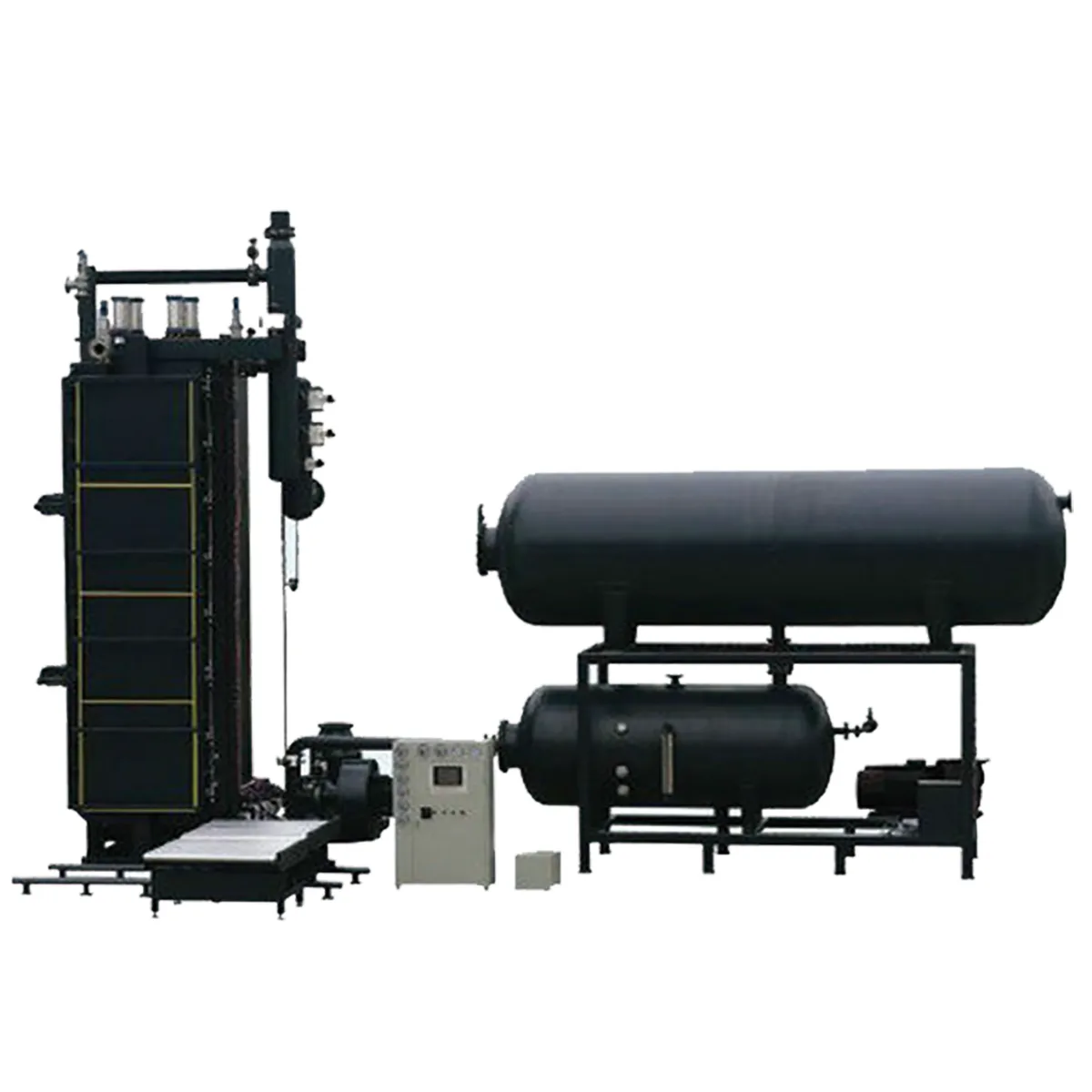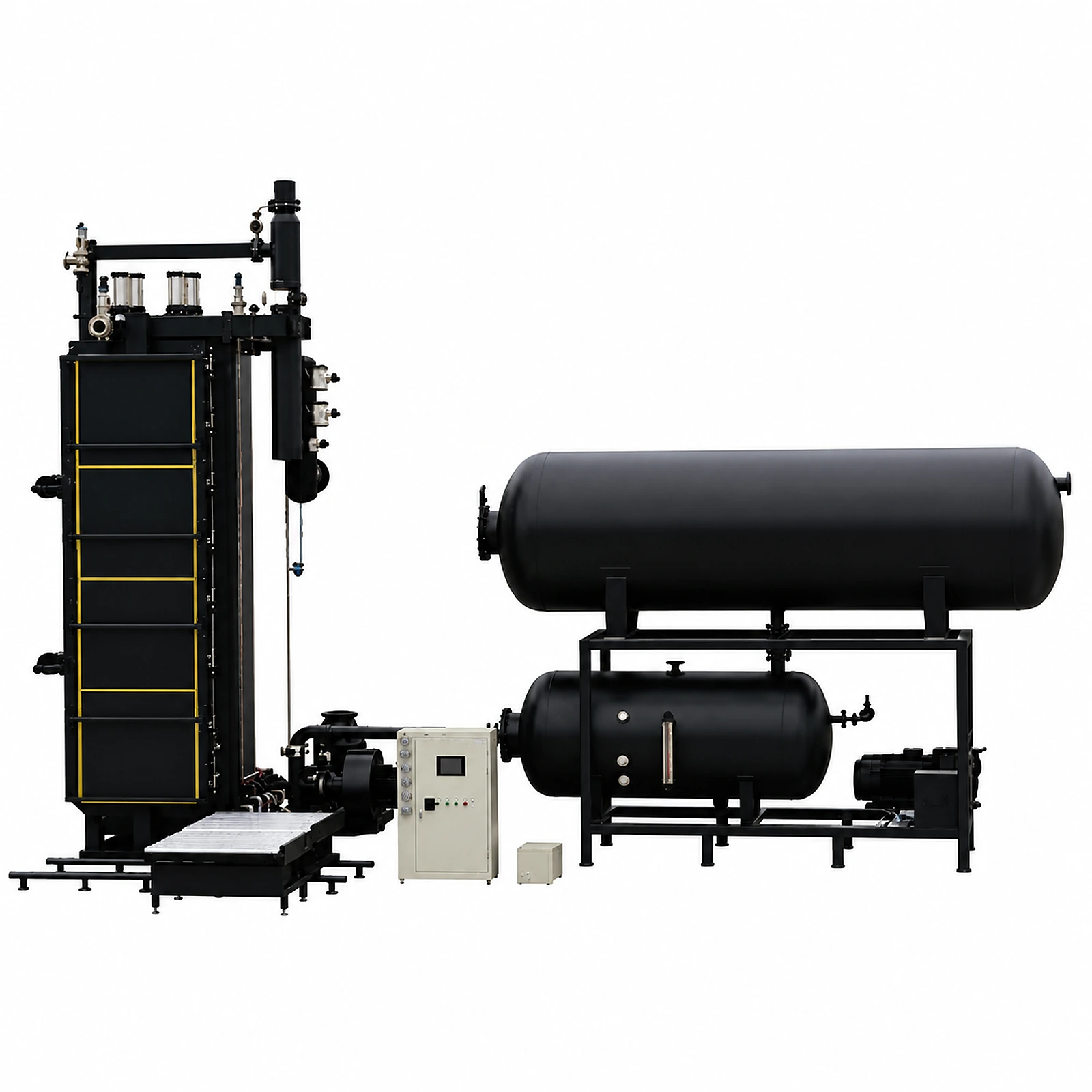
An EPS block molding machine for packaging starts at $40,000–$65,000 (BM-1200) and produces standard foam blocks that are CNC hot-wire cut into any packaging shape—fish boxes, cooler inserts, electronics cushioning—with zero per-design tooling cost. This eliminates the $3,000–$8,000 mold fee and 25–40 day lead time required by shape molding. A mid-range BM-1200 (4 sizes) line typically pays back within 14–18 months at 60% utilization, producing 40–80 packaging pieces per block. (See full ROI calculation →)
EPS block molding is a steam-driven fusion process that bonds pre-expanded polystyrene beads into large rectangular blocks (typically 3,000–6,000 mm long), which are then hot-wire cut into custom packaging shapes—fish boxes, cooler inserts, electronics cushioning, and fruit trays. The finished material conforms to the densities defined under ASTM C578 for rigid cellular polystyrene, the U.S. standard most South American packaging buyers cross-reference against locally-tested foam grades, and aligns with the block density and quality guidance published by EUMEPS (European Manufacturers of EPS), the industry body most European and Latin American buyers use to benchmark supplier claims. For multi-SKU operations, block molding offers lower tooling costs and faster design changes than dedicated shape molding.
Consider a mid-size packaging supplier in São Paulo receiving orders for 15 different protective insert designs each quarter. Commissioning a dedicated mold for every shape would cost $3,000–$8,000 per design and take 25–40 days per mold. A block molding line paired with a CNC hot-wire cutter eliminates per-shape tooling entirely. The operator produces standard blocks, programs cutting paths in software, and delivers the first samples within 48 hours. With Brazil’s packaging market valued at $40.12 billion in 2026 and growing at 4.14% CAGR (Mordor Intelligence, 2025), demand for cost-flexible foam packaging equipment is accelerating across the region—a trend tracked by the EPS Industry Alliance in its annual market reports.
How EPS Block Molding Machines Work for Packaging
Block molding is the steam-fusion stage of EPS production: pre-expanded beads are pressed into a rectangular cavity, bonded with saturated steam, cooled under vacuum, then ejected as a rigid block ready for downstream cutting into finished packaging products.
The Block Molding Process
The cycle follows four stages. First, pre-expanded beads (aged 12–24 hours after initial expansion) are pneumatically fed into the mold cavity. Second, steam at 0.7–1.2 bar penetrates the bead bed for 60–120 seconds, fusing adjacent beads through surface melting. Third, vacuum cooling or water cooling reduces the block’s internal temperature from roughly 90°C to below 60°C so it holds its shape. Fourth, hydraulic rams eject the finished block. Total cycle time ranges from 4 to 8 minutes per block depending on density and dimensions (Chinese EPS Equipment Association, 2024).
From Block to Packaging: The Cutting Step
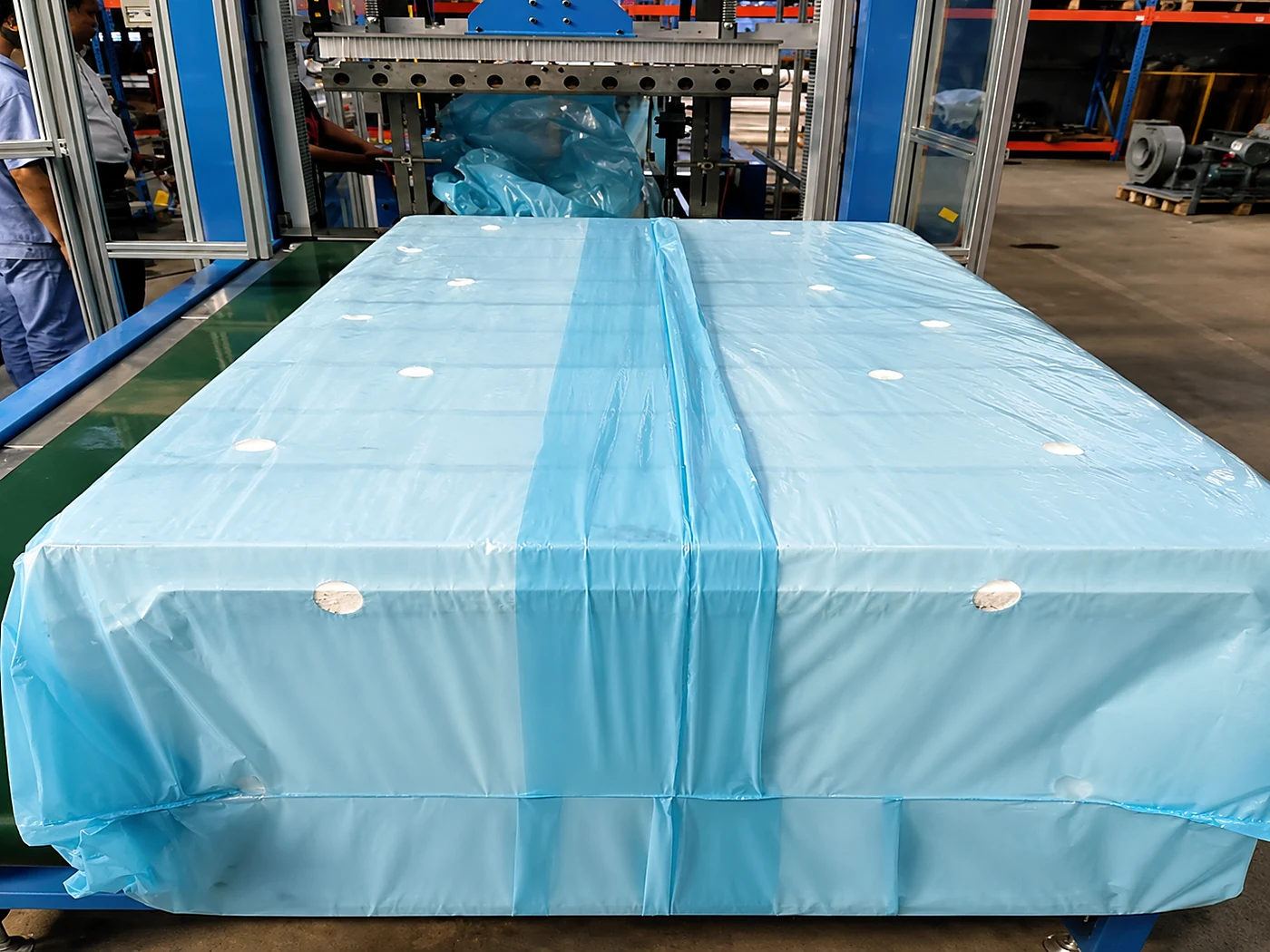
Raw blocks move to a hot-wire cutting station—either manual or CNC-controlled. CNC cutters accept CAD files and slice blocks into complex 3D packaging shapes with tolerances of ±1 mm. A single 6,000 × 1,250 × 1,000 mm block can yield 40–80 individual electronics inserts or 20–30 fish boxes, depending on nesting efficiency. Offcuts are recyclable: they feed back into the pre-expander as regrind material, reducing raw material waste to under 5%. Learn more about EPS recycling equipment and the closed-loop process. The global EPS market reached $11.92 billion in 2024 and is projected to grow at 8.54% CAGR through 2033 (Straits Research, 2024), driven partly by this kind of closed-loop material efficiency.
| Packaging Product | Density (kg/m³) | Typical Dimensions (mm) | Recommended Machine Type |
|---|---|---|---|
| Fish boxes (seafood export) | 18–22 | 600 × 400 × 300 | Block molding + CNC cutter |
| Cooler / insulated boxes | 15–20 | 500 × 350 × 350 | Block molding + hot-wire cutter |
| Electronics inserts | 12–18 | Custom per device | Block molding (low MOQ) or shape molding (high MOQ) |
| Fruit trays | 20–25 | 400 × 300 × 80 | Shape molding (high volume) or block molding (short runs) |
Block Molding vs Shape Molding: Which Is Right for Your Packaging?
Block molding suits operations needing design flexibility and low per-shape tooling costs; shape molding suits high-volume, single-design production runs where cycle speed matters most.
| Factor | Block Molding | Shape Molding |
|---|---|---|
| Equipment investment | $40,000–$150,000 | $50,000–$200,000 |
| Per-design tooling cost | $0 (software-based cutting) | $3,000–$8,000 per mold |
| Design flexibility | Unlimited shapes via CNC programming | One shape per mold |
| Cycle time per unit | 4–8 min per block, then cutting time | 60–120 sec per molded part |
| Minimum order per design | 1 piece | 5,000–10,000 pieces (to justify mold cost) |
| Best for | Multi-SKU packaging, prototyping, export fish boxes | Single-design mass production (helmets, cups, trays) |
| Surface finish | Cut surface (slightly rough) | Molded surface (smooth) |
| Limitations | Slower per-unit output at scale | High upfront mold cost, long lead time for new designs |
When to Choose Block Molding
Block molding is the right choice when your operation handles 10 or more packaging designs per year, when order quantities per design fall below 5,000 units, or when you need to deliver samples to new customers within days rather than weeks. Packaging contract manufacturers serving multiple end clients in appliances, seafood, and agriculture typically recover their equipment investment 35–50% faster with block molding because they avoid repeated mold expenditures (ChinaEps internal project data, 2023).
When to Choose Shape Molding
Shape molding wins when you produce a single design at volumes above 50,000 units per year. The molded surface finish is smoother, and per-unit cycle time is 60–120 seconds versus 4–8 minutes for block production plus cutting. If your primary product is standardized—such as a single fish box size for an export cooperative—shape molding delivers lower per-unit cost at scale. For high-density protective inserts (electronics, appliance, automotive, medical), the shape molder is specified as a reinforced EPS packaging molding machine, not a standard fish-box molder. For a detailed comparison and buyer checklist, see our foam box molding machine guide.
Can You Use Both?
Yes. Many packaging operations in Chile, Peru, and Brazil run a block molding line for prototyping and short runs alongside a shape molding line for their top 2–3 highest-volume products. ChinaEps has installed combined lines in 14 South American facilities since 2018. The shared pre-expander and steam boiler reduce combined capital costs by approximately 20% compared to two fully independent lines.
Not sure which setup fits your production?
Tell us your target products, daily volume, and facility location — our engineers will recommend the right block size, machine model, and line layout within 48 hours. Get a free equipment proposal →
Key Specifications to Evaluate
Focus your evaluation on five specifications: block size, production capacity, steam consumption, cooling system type, and automation level. Each directly impacts your per-unit packaging cost.
Block Size and Dimensions
Block size determines how many finished packaging products you can nest from a single block. Standard machines produce blocks from 3,000 × 1,200 × 600 mm (entry-level) to 6,000 × 1,250 × 1,000 mm (high-capacity). For fish box production, a 4,000 × 1,200 × 800 mm block yields approximately 24 standard 600 × 400 × 300 mm fish boxes after cutting. Larger blocks improve nesting efficiency but require more floor space and higher steam input.
Production Capacity
Capacity is measured in blocks per 8-hour shift. Entry-level machines produce 15–20 blocks; high-capacity models reach 35–40 blocks. For a packaging operation targeting 500,000 fish boxes per year, you need roughly 20,800 blocks annually (at 24 boxes per block), which translates to approximately 87 blocks per working day—requiring two high-capacity machines running in parallel or three mid-range units.
Steam Consumption
Steam is the largest variable cost in EPS block production, accounting for 30–40% of operating expenses. Consumption ranges from 300 kg per cycle for small blocks to 800 kg per cycle for large, high-density blocks. Efficient steam management can reduce per-block energy cost by up to 25%. Read our detailed analysis on steam cost optimization for EPS production to calculate your specific boiler sizing and fuel costs.
Cooling System: Vacuum vs Water
Vacuum cooling reduces cycle time by 30–40% compared to water-only cooling by rapidly lowering internal block temperature. A vacuum-equipped BM-1200 (4 sizes) completes a cycle in approximately 5 minutes versus 7–8 minutes with water cooling alone. The trade-off is a higher equipment cost ($8,000–$15,000 for the vacuum system) and maintenance of the vacuum pump. For operations producing more than 25 blocks per shift, vacuum cooling pays for itself within 6–8 months through increased throughput.
Automation Level and PLC Control
Modern block molding machines use PLC (Programmable Logic Controller) systems—typically Siemens S7-1200 or Mitsubishi FX5U—to automate bead feeding, steam timing, cooling cycles, and ejection. Fully automated machines require 1 operator per line versus 3–4 for semi-automatic models. PLC-controlled machines also maintain density consistency within ±0.5 kg/m³, which matters for packaging that must meet ISO 7616 shock absorption specifications.
| Specification | BM-1200 | BM-1200 (4 sizes) | BM-1200 (4 sizes) | BM-1200 (4 sizes) |
|---|---|---|---|---|
| Block size (L × W × H mm) | 3000 × 1200 × 600 | 4000 × 1200 × 800 | 5000 × 1250 × 800 | 6000 × 1250 × 1000 |
| Block volume (m³) | 2.16 | 3.84 | 5.00 | 7.50 |
| Capacity (blocks/8h shift) | 15–20 | 22–28 | 28–35 | 35–40 |
| Steam consumption (kg/cycle) | 300–400 | 400–550 | 500–650 | 650–800 |
| Cycle time (minutes) | 6–8 | 5–7 | 5–6 | 4–6 |
| Cooling system | Water | Water + vacuum | Water + vacuum | Water + vacuum |
| PLC control | Siemens S7-1200 | Siemens S7-1200 | Siemens S7-1500 | Siemens S7-1500 |
| Hydraulic system | Standard | Standard | Servo-hydraulic | Servo-hydraulic |
| Power requirement (kW) | 45 | 65 | 85 | 110 |
| Machine weight (tons) | 8.5 | 12.0 | 16.5 | 22.0 |
The BM-1200 (4 sizes) block molding machine is the most popular model for South American packaging operations, balancing block size, throughput, and floor space requirements for facilities under 800 m².
What Does an EPS Block Molding Machine Cost?
Prices range from $15,000 for a basic semi-automatic unit to over $150,000 for a high-capacity fully automated line, with most packaging-grade machines falling in the $40,000–$80,000 range.
Price Ranges by Automation Level
Semi-automatic ($15,000–$30,000): Manual bead feeding and ejection, basic timer controls. Suitable for operations producing fewer than 15 blocks per shift. Requires 3–4 operators. Common in startup packaging workshops testing market demand before scaling.
Fully automatic ($40,000–$80,000): PLC-controlled bead feeding, steam, cooling, and ejection. 1–2 operators per line. This range covers the BM-1200 through BM-1200 (4 sizes) models and handles 90% of packaging production requirements. Most South American buyers select machines in this tier.
High-capacity automated ($80,000–$150,000+): Large-format blocks (BM-1200 (4 sizes) class), servo-hydraulic systems, advanced energy recovery, and remote diagnostics via IoT. Designed for operations producing 35+ blocks per shift or running 24-hour production schedules.
Total Cost of Ownership
The machine price represents only 40–50% of your total first-year investment. Budget for these additional costs: steam boiler ($8,000–$25,000), pre-expander ($10,000–$30,000), hot-wire cutting table or CNC cutter ($5,000–$40,000), installation and commissioning ($3,000–$6,000), shipping from China to South America ($4,000–$8,000 for a 40ft container, 30–45 days sea freight), and import duties (which vary by country—Brazil applies 14% on CNC industrial machinery under NCM 8477.80.90).
ROI Timeline for Packaging Operations
A mid-range packaging line (BM-1200 (4 sizes) + pre-expander + CNC cutter) with a total investment of approximately $120,000 typically reaches breakeven in 14–22 months. This assumes production of 20 blocks per shift, 250 working days per year, selling cut packaging at $8–$15 per cubic meter above raw material cost. Operations with established customer contracts often achieve payback in under 14 months. Calculate your specific packaging line ROI →
Buying from China for South American Packaging Operations
Purchasing EPS machinery from China requires attention to five areas: electrical compatibility, shipping logistics, certification verification, spare parts access, and installation support.
Voltage and Power Compatibility
South American electrical standards vary by country. Brazil uses 220V/380V 60Hz three-phase; Argentina and Chile use 380V 50Hz; Colombia uses 220V/440V 60Hz. ChinaEps configures motors, contactors, and PLC power supplies to match your country’s voltage and frequency before shipping. Confirm the specification sheet lists your exact voltage—retrofitting a 50Hz motor to 60Hz after delivery costs $1,500–$3,000 and delays production by 2–3 weeks.
Shipping and Import Logistics
A BM-1200 (4 sizes) ships in one 40-foot open-top container. Sea freight from Shanghai or Ningbo to Santos (Brazil), Callao (Peru), or San Antonio (Chile) takes 30–45 days. ChinaEps provides CIF pricing that includes freight and marine insurance. For import clearance, you need: commercial invoice, packing list, bill of lading, CE certificate, and certificate of origin (for countries with China trade agreements that reduce tariffs).
How to Verify CE Certification Is Genuine
Request the full CE technical file, not just the sticker. A legitimate CE certification includes: the Declaration of Conformity signed by the manufacturer, the notified body number (if applicable under Machinery Directive 2006/42/EC), the EN 60204-1 electrical safety test report, and the risk assessment document per ISO 12100:2010. Cross-check the notified body number on the EU NANDO database (ec.europa.eu/growth/tools-databases/nando). If the supplier cannot provide these documents, the CE mark is likely self-declared without proper testing.
Spare Parts and After-Sales Support
ChinaEps maintains spare parts inventories at partner warehouses in São Paulo (Brazil) and Lima (Peru), covering high-wear items: hydraulic seals, steam valves, proximity sensors, and PLC modules. Standard delivery within South America is 5–10 business days. For electrical components (Siemens PLCs, Schneider contactors), local Siemens and Schneider distributors stock compatible replacements, ensuring you are never dependent on a single supply chain from China.
On-Site Installation and Operator Training
ChinaEps sends 1–2 engineers for on-site installation, which takes 15–20 days including mechanical assembly, electrical connections, steam piping, PLC programming, and test runs. Operator training runs an additional 5–7 days and covers daily operation, density adjustment, preventive maintenance schedules, and basic troubleshooting. Training materials are available in Spanish and Portuguese. For a complete pre-purchase checklist, read 8 questions to ask before ordering from a Chinese EPS machine supplier.
How to Choose the Right Supplier
Evaluate suppliers on four criteria: manufacturing track record, third-party certifications, warranty terms, and communication capability in your language.
Manufacturing Experience
The EPS machinery sector in China includes over 200 manufacturers, but fewer than 30 have been operating for more than 15 years. Longevity matters because it indicates the supplier has survived multiple market cycles and has a proven parts supply chain. ChinaEps has manufactured EPS machinery since 1999—27 years of continuous production—and has installed equipment in over 60 countries. Ask any potential supplier for reference contacts in your region and verify them independently.
Certifications
At minimum, require CE certification (Machinery Directive 2006/42/EC), ISO 9001:2015 quality management, and ISO 14001:2015 environmental management. For the Brazilian market, INMETRO certification may be required for certain equipment categories. ChinaEps holds all three ISO certifications plus CE certification verified by TÜV Rheinland. View our certifications →
Warranty Terms
The industry standard warranty for Chinese EPS machinery is 1–2 years covering manufacturing defects. ChinaEps offers a 5-year comprehensive warranty on the machine frame, hydraulic system, and steam chamber—the three highest-cost components. This extended warranty reflects confidence in build quality and reduces your risk of unexpected capital expenditure during the first five years of operation. Confirm warranty terms in writing within the purchase contract, including whether the warranty covers parts only or parts plus labor.
Language and Communication
Miscommunication causes more project delays than manufacturing defects. Verify that your supplier has dedicated sales engineers who speak your language—not just translation software. ChinaEps employs native Spanish and Portuguese speakers on its international sales team, ensuring technical specifications, shipping documents, and training materials are accurate and culturally appropriate for South American buyers.
Ready to Start Your Packaging Production Line?
ChinaEps has supported packaging manufacturers across South America for 27 years, with installations in over 60 countries, a 5-year machine warranty, on-site installation by factory engineers, and dedicated Spanish and Portuguese support. Start with three steps:
- Browse block molding machines — Compare the BM-1200, BM-1200 (4 sizes), BM-1200 (4 sizes), and BM-1200 (4 sizes) specifications to find your fit.
- Request a custom quotation — Tell us your target products, daily output, and facility location. We provide a complete line proposal within 48 hours.
- Calculate your ROI — Use our calculator to estimate payback period based on your local material and energy costs.
Frequently Asked Questions
What size EPS block molding machine do I need for packaging?
For most packaging operations, a machine producing blocks of 4,000 × 1,200 × 800 mm (such as the BM-1200 (4 sizes)) provides the best balance of output and versatility. This block size yields 20–30 fish boxes or 40–60 electronics inserts per block. If your daily requirement exceeds 25 blocks, step up to the BM-1200 (4 sizes) or BM-1200 (4 sizes) for higher throughput without adding a second machine. Where the same insert repeats every week and cutting waste stops paying, the molded route is a dedicated EPS packaging production line at 30–50 kg/m³.
What is the difference between block molding and shape molding for packaging?
Block molding produces rectangular blocks that are cut into shapes afterward, requiring zero per-design tooling cost. Shape molding produces finished parts directly in a custom mold costing $3,000–$8,000 each. Choose block molding for multi-SKU operations with fewer than 5,000 units per design; choose shape molding for single-design runs above 50,000 units per year where smooth surface finish and per-unit speed matter most.
How much does an EPS block molding machine cost?
Semi-automatic machines cost $15,000–$30,000. Fully automatic PLC-controlled machines cost $40,000–$80,000. High-capacity automated lines cost $80,000–$150,000 or more. A complete packaging production line (machine, pre-expander, cutter, boiler) typically totals $100,000–$200,000 depending on capacity and automation level. ChinaEps provides CIF pricing inclusive of freight and insurance to South American ports.
How do I verify CE certification from a Chinese supplier?
Request the full CE technical file including the Declaration of Conformity, the notified body number, EN 60204-1 electrical safety test reports, and the ISO 12100:2010 risk assessment. Verify the notified body number on the EU NANDO database at ec.europa.eu/growth/tools-databases/nando. If the supplier provides only a sticker or a one-page certificate without the supporting technical file, the certification is likely not legitimate.
Can I get spare parts quickly in South America?
ChinaEps maintains spare parts stocks at partner warehouses in São Paulo and Lima, covering hydraulic seals, steam valves, sensors, and PLC modules. Delivery within South America takes 5–10 business days for stocked items. Electrical components (Siemens, Schneider) are also available through local distributors in every major South American city, so you are not solely dependent on shipments from China.
How long does installation take?
On-site installation by ChinaEps engineers takes 15–20 days, covering mechanical assembly, electrical wiring, steam piping, PLC programming, and commissioning test runs. Operator training adds 5–7 days. Total time from container arrival to production-ready status is typically 25–30 days. You should prepare your foundation, electrical supply, water connections, and steam boiler installation in advance to avoid delays.
What should I look for when buying from China?
Verify five things before signing a purchase order: manufacturing history (15+ years preferred), genuine CE and ISO certifications with supporting documentation, warranty terms in writing (industry standard is 1–2 years; ChinaEps offers 5 years), voltage configuration matching your country’s electrical standard, and references from existing customers in your region. Read our full checklist in the EPS machine buying guide.
How do I compare EPS block molding machine manufacturers before buying?
Compare manufacturers on five verifiable points, not brand reputation alone: (1) years in continuous production — fewer than 30 of China's 200+ EPS machinery makers have operated 15+ years; (2) a full CE technical file (Declaration of Conformity, notified body number, EN 60204-1 report) rather than a sticker; (3) ISO 9001:2015 and ISO 14001:2015 certificates you can verify with the issuing body; (4) written warranty length — industry standard is 1–2 years, ChinaEps offers 5 years on the frame, hydraulic system, and steam chamber; (5) local spare-parts stock and native-language sales support in your region. Request these five items in writing from every shortlisted supplier before comparing price.
What raw materials do I need?
You need three inputs: raw EPS beads (expandable polystyrene resin, typically grade F-MS or equivalent), steam from a gas or biomass boiler, and electricity. EPS resin consumption is approximately 16–25 kg per cubic meter of finished product depending on target density. A packaging operation producing 20 blocks per day at 18 kg/m³ density consumes roughly 1,400–1,800 kg of raw EPS beads daily. Major resin suppliers serving South America include Innova (Braskem) and Styrochem.
Related Reading
- EPS Block Molding Machine BM-1200 (4 sizes): Specs, Capacity & 2026 Price ($80K–$110K) — Extended reading in the same cluster.