Full factory blueprint — SM-1400 molder + mold tooling + $4.35/block cost breakdown. 38–49% gross margin at 500 blocks/day. Equipment list, process flow, and 6-month ROI for construction market entry.
Insulated Concrete Forms (ICF) built from Expanded Polystyrene are quietly transforming how residential and commercial buildings are constructed across North America, Europe, and increasingly across emerging markets in South America, Southeast Asia, and Africa. ICF blocks serve as the permanent formwork into which concrete is poured, creating walls that combine structural concrete strength with continuous EPS insulation — achieving thermal resistance (R-value) properties defined under ASTM C578 of R-22 to R-44 depending on block geometry, compared to R-13 to R-19 for a standard wood-framed wall with cavity insulation.
For factory owners and investors evaluating a new production line, EPS ICF blocks represent one of the most attractive segments in the entire EPS manufacturing landscape. Demand is rising structurally due to tightening energy codes worldwide, and the manufacturing process leverages well-proven EPS shape molding technology. This guide covers everything you need to know — from market context and equipment selection to step-by-step production process, mold design, factory planning, and investment analysis — to make an informed decision about entering this market.
What Are ICF Blocks and Why Is Global Demand Surging?
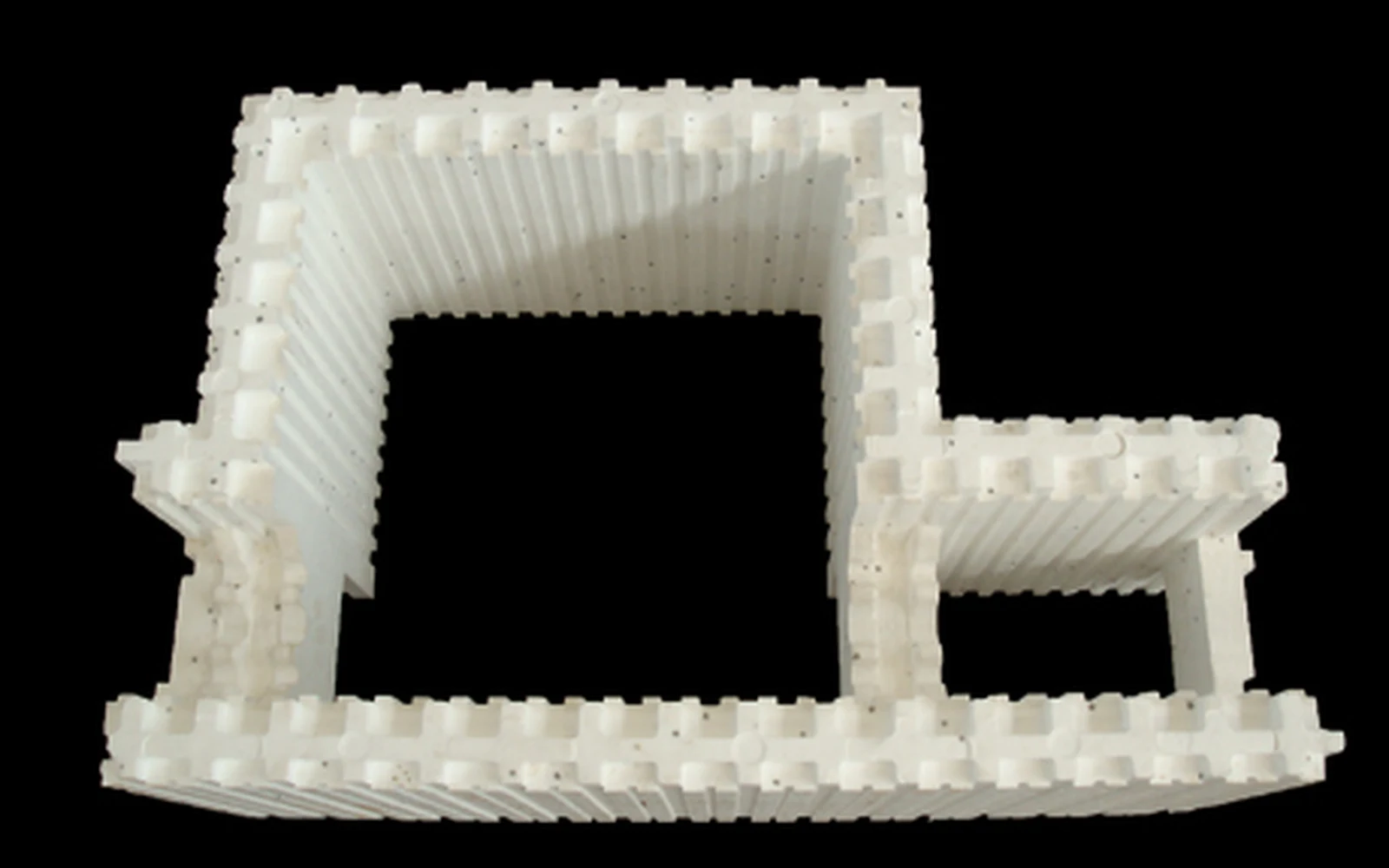
An ICF block is a hollow EPS form, typically molded in a flat panel, waffle grid, or post-and-beam profile, that interlocks with adjacent blocks to construct walls. Concrete is poured into the hollow cores and reinforced with rebar, creating a composite wall system. The EPS remains in place permanently, providing insulation on both interior and exterior faces. Plastic or steel ties embedded in the foam connect the two EPS face panels and create the structural web that holds the concrete.
The most common ICF block format — the flat wall block — produces a finished wall with two continuous 65 mm to 76 mm EPS panels on either side of a concrete core that is typically 150 mm, 200 mm, or 250 mm thick. Total wall thickness ranges from 250 mm to 400 mm depending on structural and insulation requirements.
Market Growth Drivers
The global ICF market was valued at approximately $1.4 billion in 2023 and is projected to reach $2.6 billion by 2030, representing a compound annual growth rate (CAGR) of approximately 9.2%. Several structural forces are driving this growth:
- Tightening energy codes: The European Union's Energy Performance of Buildings Directive (EPBD) and the US Department of Energy's updated IECC standards require walls to achieve R-20 or higher in most climate zones — a threshold that ICF construction meets easily while conventional wood framing requires complex multilayer assemblies.
- Net-zero building mandates: More than 40 countries have enacted net-zero building targets for new construction by 2030–2040. ICF is one of the few wall systems that can meet these targets without requiring active HVAC systems of extraordinary capacity.
- Construction labor shortages: ICF construction reduces skilled labor requirements by 25–35% compared to conventional framing because the block system is designed for fast, foolproof installation. In markets where construction labor is scarce or expensive, this advantage is compelling for builders.
- Disaster resilience: ICF walls have demonstrated 4-hour fire ratings and resistance to hurricane-force winds up to 400 km/h. In regions prone to hurricanes, earthquakes, or wildfires, insurance companies and building codes are increasingly incentivizing or mandating more resilient wall systems.
- Acoustic performance: The mass-and-insulation combination of ICF walls achieves Sound Transmission Class (STC) ratings of 50–55, compared to 36–38 for standard wood-frame walls, making ICF highly attractive for multi-family residential construction in dense urban areas.
Complete EPS ICF Production Line: Equipment Breakdown
A complete ICF block production line consists of five equipment stages, each performing a distinct function. Understanding the role, specifications, and interdependencies of each stage is essential for configuring a production line that matches your capacity targets and budget.
Stage 1: EPS Pre-Expander
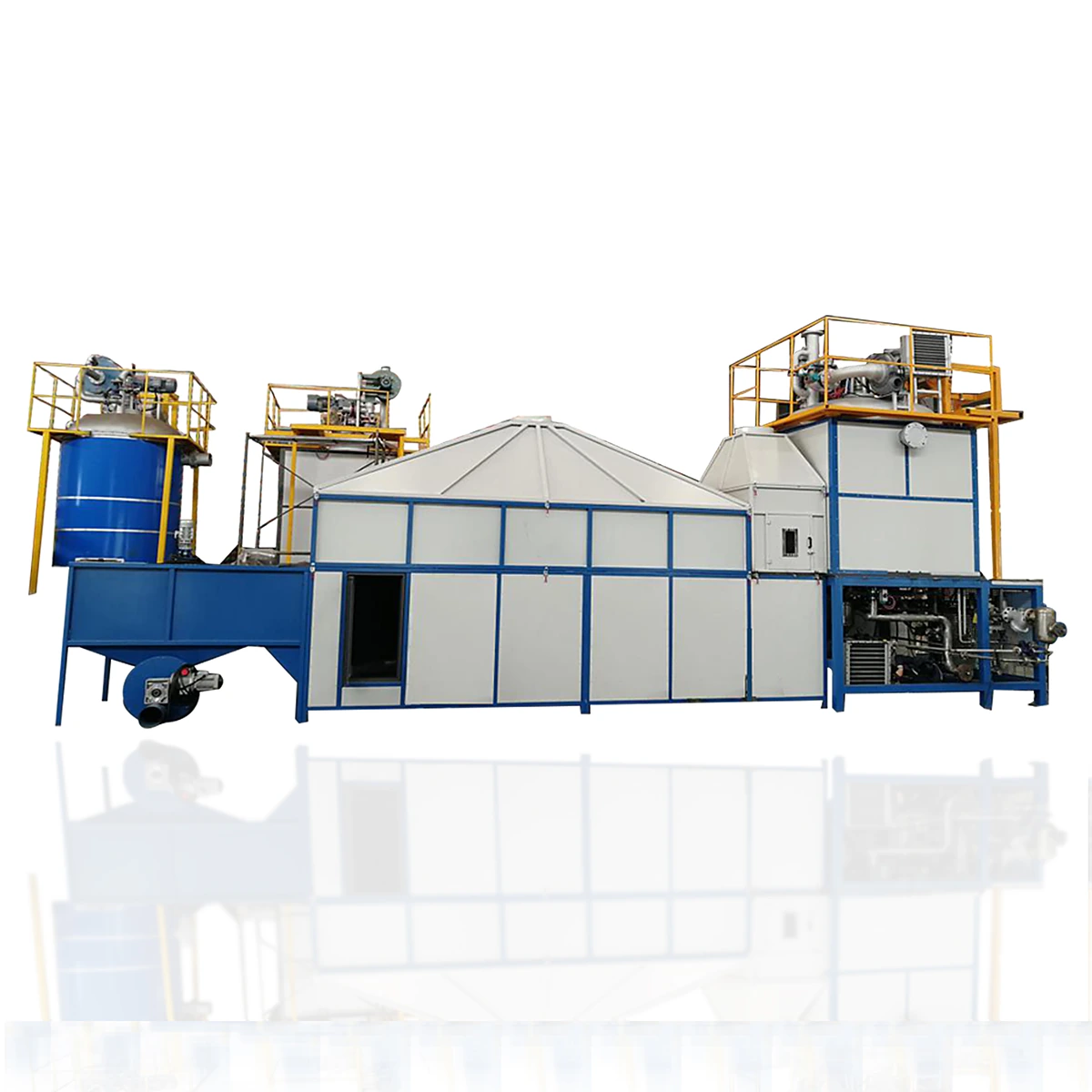
The production process starts with raw EPS beads — polystyrene resin pellets containing 5–7% pentane as a blowing agent, with raw bead diameters typically ranging from 0.3 mm to 1.6 mm. The pre-expander subjects these raw beads to steam at 0.08–0.15 MPa, causing the pentane to vaporize and the polystyrene to expand 40–80 times the original bead volume.
For ICF block production, target densities are typically 18–25 kg/m³ — somewhat higher than standard insulation EPS (12–18 kg/m³) because ICF blocks need to withstand the hydrostatic pressure of wet concrete during construction and repeated mechanical contact on job sites. The PE-1400 pre-expander with its 1,400 mm barrel is a practical choice for mid-volume ICF lines producing 500–2,000 ICF blocks per day, offering output of 400–800 kg/h of expanded beads at target densities.
Steam consumption at ICF densities (20–25 kg/m³) averages 28–35 kg of steam per cubic meter of expanded beads produced. A fluidized bed dryer attached to the pre-expander removes residual surface moisture before the beads enter the aging silos.
Stage 2: Aging Silos
Freshly expanded EPS beads are not ready for molding immediately. The cells inside each bead contain a mix of pentane vapor and steam condensate. Aging allows atmospheric air to diffuse into the cells through the permeable bead walls, replacing the condensate and normalizing internal pressure. Simultaneously, residual pentane partially escapes, reducing the risk of over-expansion during molding.
Aging time for ICF production is typically 12–24 hours at ambient temperature (above 15°C). Aging silos must hold enough expanded bead volume to buffer between pre-expander output and molding machine consumption — at minimum 8–10 hours of production. A standard ICF production line uses cylindrical mesh silos of 80–200 m³ total capacity. Beads are conveyed pneumatically from silos to the molding machine fill guns using blowers and 200–300 mm diameter conveying pipes with smooth bends.
Stage 3: EPS Shape Molding Machine
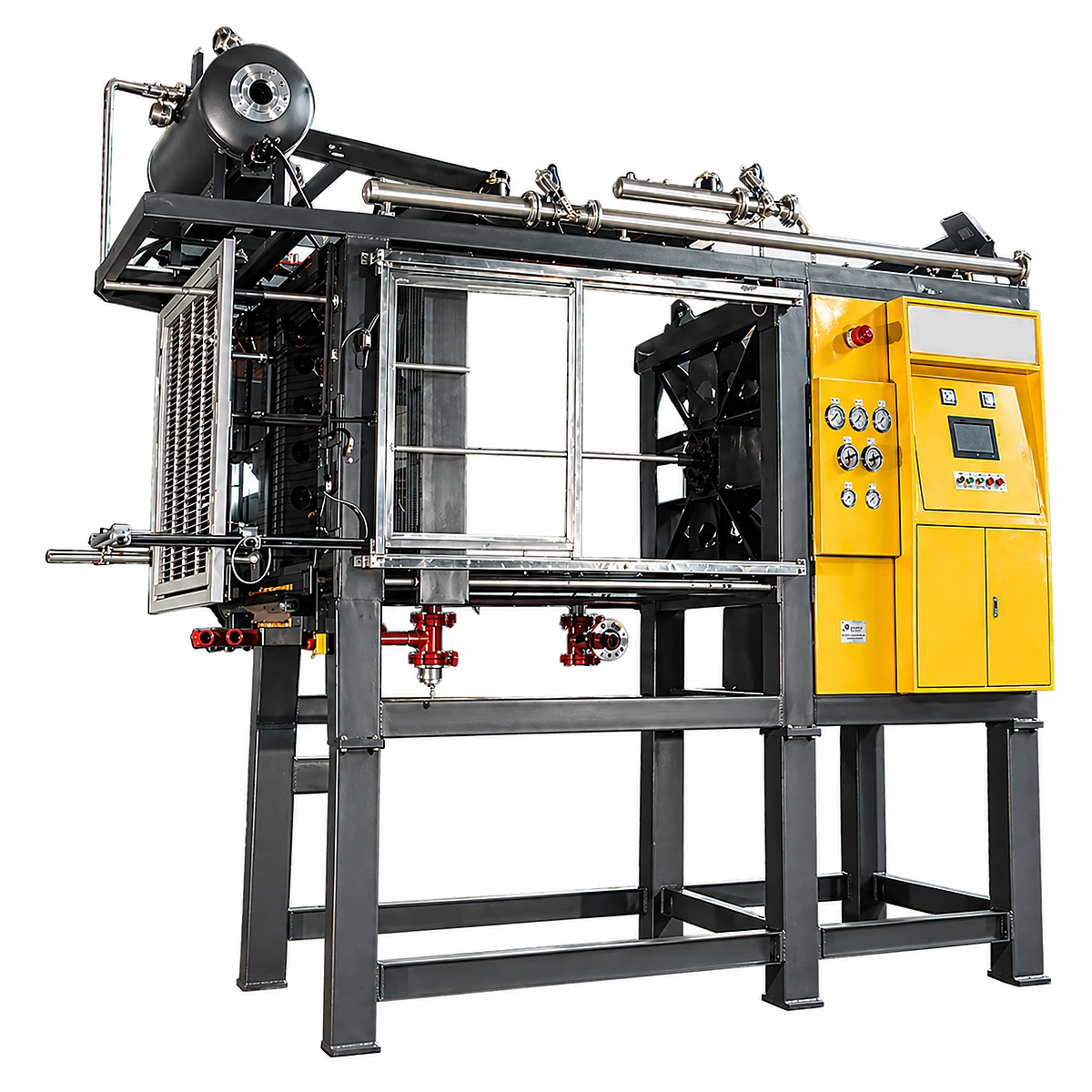
The shape molding machine is the core production unit for ICF blocks. Unlike block molding machines that produce large rectangular slabs for subsequent cutting, shape molding machines produce finished ICF blocks directly in a custom mold cavity — the block exits the machine ready for use with the correct geometry, web pockets, and interlocking profiles already formed.
The molding cycle for ICF blocks involves four phases: pneumatic filling of the mold cavity with aged EPS beads, steam injection and fusion (steam pressure 0.08–0.12 MPa, cycle time 60–120 seconds depending on block geometry and density), vacuum-assisted water cooling (30–60 seconds), and mechanical ejection. Total cycle time per mold is typically 90–180 seconds for standard flat-wall ICF blocks.
ChinaEps offers three shape molding machine sizes suited to ICF production:
- SM-1200 (small): 1,000 × 800 mm platen — suitable for single-cavity ICF block molds up to 1,000 mm long. Best for startups or lines producing smaller specialty ICF profiles.
- SM-1200: 1,200 × 1,000 mm platen — the most popular choice for standard ICF production. Accommodates 2-cavity molds for 600 mm blocks or single-cavity molds for 1,200 mm flat-wall blocks.
- SM-1200 (large): 1,400 × 1,200 mm platen — recommended for high-volume operations or production of oversized ICF formats (1,200 mm × 400 mm or larger). The SM-1400 supports 2-cavity production of standard ICF blocks, effectively doubling output per cycle.
Stage 4: Cutting Machine (Optional for ICF)
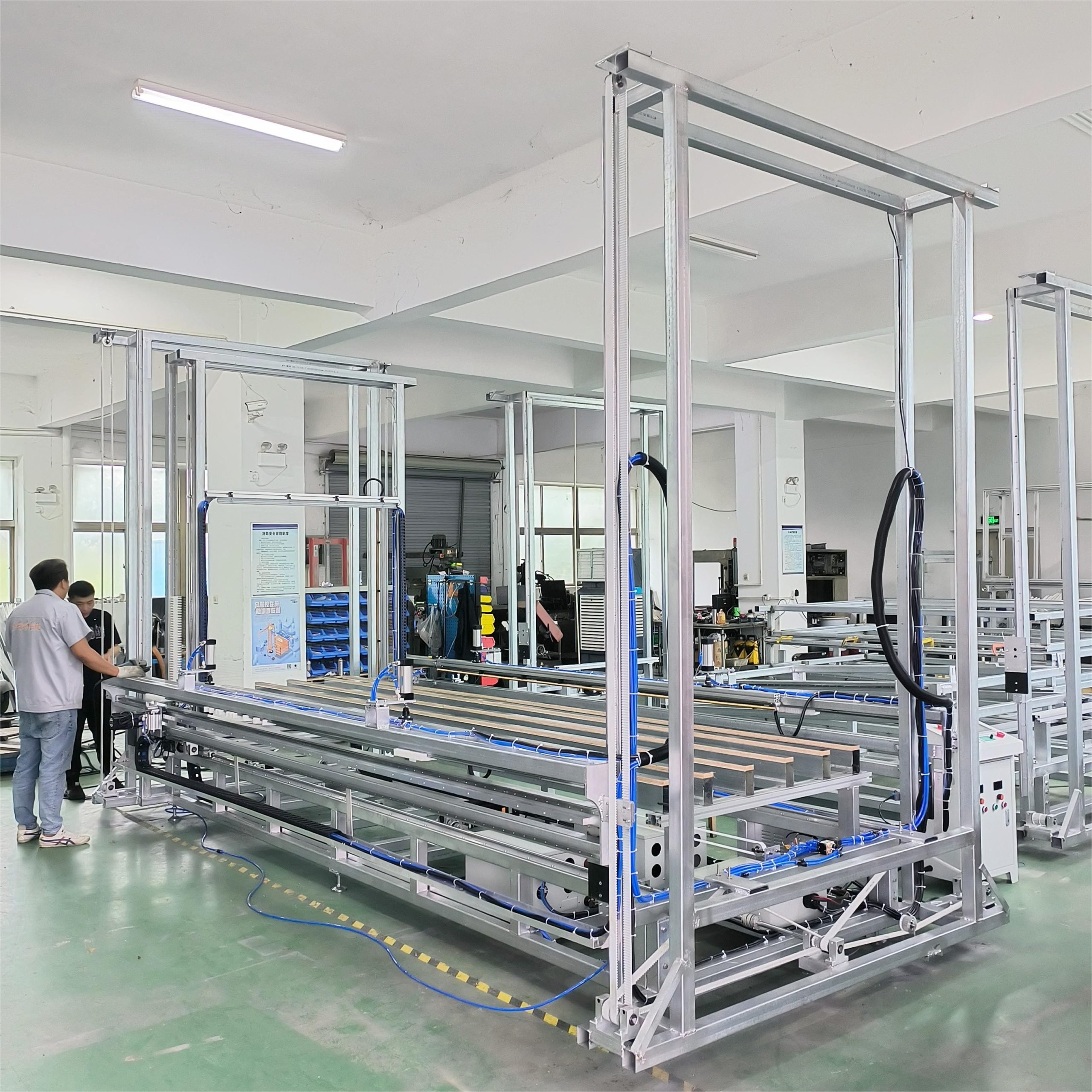
While shape-molded ICF blocks are dimensionally complete as they exit the mold, some producers use a CM-4000 cutting machine as a secondary trimming station to remove molding flash, achieve tighter dimensional tolerances on interlocking surfaces, or customize block heights for specific market requirements. Hot-wire cutting achieves tolerances of ±0.5 mm on cut faces, ensuring tight block-to-block fit during construction.
For producers who want to supply multiple ICF block heights from a single mold, a cutting station adds flexibility — the base mold produces the maximum height block, and cutting trims to shorter variants without requiring additional molds.
Stage 5: Quality Inspection and Stacking
Quality control for ICF blocks covers four parameters: dimensional accuracy (length, width, height within ±2 mm), density verification (target ±1.5 kg/m³), visual inspection for voids, surface defects, or under-fused areas, and compression strength (minimum 100 kPa at 10% strain for 20 kg/m³ ICF-grade EPS). Approved blocks are stacked on pallets, typically 20–40 blocks per pallet depending on block size, shrink-wrapped, and moved to finished goods storage or direct shipping.
ICF Production Line Equipment Summary
| Stage | Equipment | Key Specification | Role |
|---|---|---|---|
| 1 | Pre-Expander (PE-1400) | 400–800 kg/h output | Expand raw EPS beads to target density |
| 2 | Aging Silos | 80–200 m³ total capacity | Stabilize beads 12–24h before molding |
| 3 | Shape Molding Machine (SM-1200 / SM-1400) | 90–180 s cycle time | Steam-fuse beads into finished ICF blocks |
| 4 | Cutting Machine (CM-4000) | ±0.5 mm tolerance | Optional: trimming, flash removal, height customization |
| 5 | QC Station + Stacking | Dimensional + density + visual | Verify block quality before dispatch |
Step-by-Step ICF Block Manufacturing Process
Understanding the full manufacturing process — including the specific parameters at each stage — is essential for operating a production line efficiently and achieving consistent block quality.
Step 1: Raw Material Receiving and Storage
Raw EPS beads are delivered in 25 kg paper bags or bulk containers (typically 1,000 kg big-bags or pneumatic tanker trucks for high-volume operations). Raw beads must be stored in a dry, well-ventilated warehouse above 5°C to prevent moisture absorption, which can cause surface defects during pre-expansion. Optimal storage temperature is 15–25°C. Beads have a shelf life of 6–12 months from the date of manufacture — pentane content decreases over time, reducing the achievable expansion ratio.
Step 2: Pre-Expansion
Raw beads are fed into the pre-expander barrel and subjected to steam at 0.08–0.12 MPa for 60–150 seconds per batch. The target expanded bead density for ICF production is 18–22 kg/m³. The operator monitors density by periodically sampling expanded beads and measuring by the displacement method (weigh a known volume). Steam time and temperature are adjusted to hit the target density within ±1 kg/m³.
Freshly expanded beads discharge onto a fluidized bed dryer where warm air at 40–50°C removes surface moisture within 10–15 minutes. Moisture content in dried beads should be below 3% before entering aging silos.
Step 3: Aging (12–24 Hours)
Dried expanded beads are conveyed pneumatically to aging silos. Silo filling pressure should not exceed 0.05 MPa to avoid bead-on-bead abrasion that generates fine particles ("fines"). Fines accumulate in mold corners during filling and create surface defects and weak spots in finished blocks. Aging duration for ICF-density beads (18–22 kg/m³) is typically 14–18 hours at ambient temperatures above 20°C, or up to 24 hours in cold climates.
During aging, the beads increase slightly in diameter as air diffuses in — the volume of aged beads is typically 5–10% greater than freshly expanded beads. This volumetric increase must be factored into silo sizing calculations.
Step 4: Shape Molding (Steam Fusion in ICF Mold)
Aged beads are conveyed from silos to the shape molding machine's fill guns. The ICF mold is closed (clamping force: 100–300 kN depending on mold size) and beads are injected pneumatically into the cavity under filling pressures of 0.05–0.08 MPa. Proper filling is critical — underfilling leads to voids; overfilling causes excessive density and distorted block geometry.
The molding cycle steam phases proceed as follows:
- Cross steam (forward): Steam at 0.08–0.10 MPa from one side, 8–15 seconds. Heats the bead bed and begins inter-bead fusion.
- Cross steam (reverse): Steam from the opposite side, 8–15 seconds. Ensures uniform heating through the full block thickness.
- Autoclave steam: Steam simultaneously from both sides at 0.09–0.12 MPa, 15–30 seconds. Completes fusion and reaches target surface temperature of 110–118°C.
Total steam phase duration for standard flat-wall ICF blocks (250 mm wide) is 35–65 seconds. Fusion quality is verified by the "ball test" — a correctly fused EPS sample breaks through the bead boundaries rather than at the bead surfaces when torn apart.
Step 5: Cooling
After the steam phase, cooling water is sprayed on the external mold surfaces while vacuum is applied to the mold cavity interior (vacuum pressure: 0.06–0.08 MPa). Vacuum cooling extracts heat from inside the EPS block, reducing internal steam pressure and preventing post-mold expansion. Cooling time for ICF blocks is typically 40–80 seconds. The block is ready for ejection when its surface temperature drops below 50°C.
Step 6: Demolding and Inspection
The mold opens and ejector pins push the block out. The block is immediately checked for completeness — missing corners, under-fused surfaces, or visible voids disqualify the block from first-quality grade. Second-quality blocks (minor cosmetic defects only, no structural compromise) may be sold at a discount or recycled. Recycled EPS from rejected blocks is granulated and can be re-incorporated into new raw material at up to 5–10% blend ratio without significant quality impact.
Step 7: Post-Mold Stabilization, Cutting (Optional), and Stacking
Fresh blocks should rest for at least 30–60 minutes before stacking or packaging — they are slightly warm and dimensionally softer immediately after demolding. Blocks for standard markets are palletized (20–40 per pallet), shrink-wrapped, labeled, and moved to finished goods storage. Blocks requiring cutting are processed through the CM-4000 cutting station before palletizing.
ICF Mold Design: The Key to Product Quality
The ICF EPS mold is arguably the single most important determinant of ICF block quality, production speed, and product versatility. Unlike raw material grades or machine settings — which can be adjusted in operation — the mold determines the fundamental geometry and performance characteristics of the block you can produce.
Common ICF Block Profiles
Three main ICF wall systems drive the majority of global ICF block demand:
- Flat wall system: The most widely used ICF format globally. Both EPS face panels are flat and uniform in thickness (typically 65–76 mm each), connected by evenly spaced plastic or steel ties. The concrete core is constant thickness — 150 mm, 200 mm, or 250 mm. The uniform concrete core simplifies structural engineering and allows standard wall construction practices. Typical block dimensions: 1,200 × 300 × 250 mm (L × H × W), with weight of 1.8–2.2 kg per block.
- Waffle grid system: The EPS panels have alternating thick and thin zones, creating a concrete wall with a waffle-grid pattern of vertical and horizontal concrete columns. Uses 20–30% less concrete than flat wall systems at equivalent structural performance. More complex mold geometry and higher mold cost, but significant material savings at high volume.
- Post-and-beam system: Creates discrete vertical (post) and horizontal (beam) concrete members within an otherwise EPS-filled wall. Maximizes insulation value (highest R-value per wall thickness) but lower structural capacity per unit area than flat wall. Popular in residential construction in cold climates.
Standard ICF Block Dimensions
The most common ICF block dimensions globally are:
| Dimension | North America | Europe | Emerging Markets |
|---|---|---|---|
| Block Length | 1,219 mm (48 in) | 1,200 mm | 1,000–1,200 mm |
| Block Height | 305 mm (12 in) | 250–300 mm | 250–300 mm |
| Total Wall Width | 254–356 mm (10–14 in) | 250–350 mm | 250–300 mm |
| EPS Panel Thickness (each side) | 65–76 mm | 60–80 mm | 50–70 mm |
| Concrete Core Thickness | 152 mm (6 in) | 150–200 mm | 150–200 mm |
Mold Materials and Construction
ICF molds for shape molding machines are typically constructed from aluminum alloy (6061-T6 or equivalent). Aluminum offers the ideal combination of thermal conductivity (important for even steam heating and rapid cooling), machinability (complex tie-pocket geometries can be machined to ±0.1 mm tolerance), and weight (an ICF mold for the SM-1200 weighs 80–150 kg, manageable for installation and mold changes).
Mold service life for aluminum ICF molds is typically 500,000–1,000,000 production cycles with proper maintenance — at 500 cycles per day, that represents 3–5 years of production life before mold replacement or refurbishment.
Key mold design parameters that directly affect block quality and production speed include:
- Steam vent distribution: Steam vents (typically 5–8 mm diameter, spaced 60–100 mm apart) must provide even steam access to all areas of the mold cavity. Poor steam distribution causes density variations and fusion defects.
- Fill gun positions: ICF molds require 4–8 fill gun positions depending on cavity volume and geometry. Fill gun positioning must ensure complete bead fill without dead zones.
- Ejector pin layout: ICF blocks have thin face panels that can tear during ejection. Ejector pins must be distributed to apply even ejection force without creating localized stress concentrations.
- Interlocking geometry: The male/female interlocking profiles on block tops and bottoms must be machined to tight tolerances (±0.3 mm) for consistent block-to-block fit on the construction site.
Factory Layout and Planning for ICF Production
A well-planned factory layout minimizes material handling distances, ensures safe steam and electrical infrastructure, and allows future capacity expansion without costly reconstruction. The following planning parameters are based on standard ICF production lines.
Minimum Floor Space Requirements
- Small plant (1 molding machine, 300–600 blocks/day): 800–1,000 m² total — including production area (400 m²), aging silo area (200 m²), finished goods storage (200 m²).
- Medium plant (2 molding machines, 600–1,500 blocks/day): 1,200–1,800 m² total.
- Large plant (3+ molding machines, 1,500+ blocks/day): 2,500–4,000 m².
Ceiling height is a critical but frequently overlooked requirement. Aging silos are 4–6 meters tall; production buildings must have a clear height of at least 6 meters, and 8 meters is preferred to allow silo installation and overhead conveying pipe routing without conflicts.
Utility Requirements
| Utility | Specification (1 molding machine line) | Notes |
|---|---|---|
| Steam Boiler | 500–800 kg/h capacity, 0.4–0.8 MPa working pressure | Gas, diesel, or biomass fuel; include condensate return system |
| Compressed Air | 2–4 m³/min at 0.6–0.8 MPa | For mold clamping, bead conveying, and pneumatic controls |
| Process Water | 5–10 m³/h circulation (with cooling tower) | Closed loop preferred; water consumption 0.5–1 m³/day makeup |
| Electricity | 80–150 kVA installed capacity | 3-phase, 380V/50Hz (or local equivalent); VFD recommended for conveying blowers |
| Ventilation | 15–20 air changes/hour in production area | Required to manage pentane accumulation below LEL (lower explosive limit) |
Staffing Requirements
A standard single-line ICF production operation running two shifts (16 hours/day) requires:
- Production operators: 2 per shift × 2 shifts = 4 total. Duties: monitor pre-expander, manage silo filling, operate molding machine, perform visual QC.
- Material handling/forklift: 1 per shift × 2 shifts = 2 total.
- Maintenance technician: 1 (day shift only), on-call for evening shift.
- Supervisor/QC: 1 per shift = 2 total, or 1 supervisor managing both shifts with overlap.
- Total: 8–10 workers for a single-line operation producing 500–800 blocks/shift.
Expanding to two molding machines does not require doubling the workforce — shared pre-expander operation, supervision, and material handling means a two-machine line typically needs only 12–15 workers total.
Investment Analysis: Costs, ROI and Market Potential
The investment decision for an ICF block production line depends on equipment cost, production capacity, local selling prices, and raw material costs. Here is a realistic framework based on data from production lines commissioned in 2024–2025.
Equipment Investment
| Configuration | Daily Output | Equipment Investment (USD) | Notes |
|---|---|---|---|
| Starter line (SM-1000, 1 shift) | 200–400 blocks/day | Quote on request | PE-1400 + SM-1000 + silos + 1 mold set + ancillaries |
| Standard line (SM-1200, 2 shifts) | 800–1,200 blocks/day | Quote on request | PE-1400 + SM-1200 + silos + 2 mold sets + CM-4000 + ancillaries |
| High-volume line (SM-1400, 2 shifts) | 1,500–2,500 blocks/day | Quote on request | PE-1400 + SM-1400 + silos + 2-cavity molds + CM-4000 + ancillaries |
Equipment cost is typically 60–70% of total project investment. Additional costs include civil works and building (if constructing new, cost per square meter varies by local construction rates), steam boiler (priced according to capacity and fuel type), and electrical installation (priced according to site requirements), plus working capital for 60–90 days of raw material inventory. Contact our team for a detailed cost breakdown for your project.
Raw Material and Production Costs
Raw EPS bead prices vary by region and market conditions but typically range from $1,200 to $1,600 per metric ton (2024 global average, CFR major ports). Material consumption for ICF blocks at 20 kg/m³ density is approximately 20 kg of EPS per cubic meter of finished block volume. A standard 1,200 × 300 × 250 mm flat-wall ICF block has a net EPS volume of approximately 0.045 m³ (subtracting the concrete core and tie volumes), meaning raw material cost per block varies with current EPS bead pricing — contact us for a current per-block material cost estimate.
Raw materials (EPS beads) typically represent 55–65% of total production cost, with energy (steam + electricity: 15–20%), labor (10–15%), and overhead (10–15%) making up the remainder.
Revenue and ROI Projections
ICF block selling prices vary considerably by market and distribution channel:
- Factory direct to contractors: pricing per block (standard flat-wall, 1,200 mm format) varies by market — contact us for current rates.
- Distribution through builders merchants: retail per-block pricing runs higher than factory-direct; contact us for a market-specific estimate.
- Export (containerized): FOB pricing per block depends on destination market — contact us for a quote to your port.
For a standard line producing 1,000 blocks per day at a factory price of $4.50/block, running 25 production days per month:
- Monthly revenue: 1,000 × 25 × $4.50 = $112,500
- Monthly raw material cost: ~55–65% of production cost, tracking current EPS bead prices
- Monthly energy cost: ~15–20% of production cost
- Monthly labor cost: ~10–15% of production cost (varies significantly by country)
- Monthly gross profit: the remainder after material, energy, and labor costs — contact us for a projection tailored to your market
At these parameters, a $320,000 total project investment (equipment + civil + working capital) achieves payback in approximately 12–18 months. Markets with strong ICF demand growth and limited local production competition can support higher selling prices and shorter payback periods. Markets with existing well-established ICF producers will require more aggressive pricing during market entry.
Key Risk Factors
Investors should model sensitivity to three key variables: EPS raw material price fluctuations (a 20% increase in bead prices compresses gross margin by approximately 8–10 percentage points), local market demand depth (ICF is a specialty product requiring market development with builders and architects, not a commodity with instant distribution), and competition from alternative wall systems (AAC blocks, precast concrete, and conventional masonry compete with ICF on cost in many markets).
How Much Do ICF Blocks Cost? Pricing Breakdown for Manufacturers
ICF block production cost ranges from $3.50 to $7.00 per block depending on size, density, and production volume. The largest cost component is EPS raw material (55–65% of total), followed by energy (15–20%), labor (10–15%), and mold amortization (5–8%). Here is a detailed breakdown based on a standard 1200 × 300 × 250 mm ICF block at 20 kg/m³ density:
| Cost Component | Per Block | % of Total |
|---|---|---|
| EPS raw beads (1.8 kg × $1.40/kg) | $2.52 | 58% |
| Steam energy | $0.65 | 15% |
| Electricity | $0.22 | 5% |
| Labor (2 operators) | $0.52 | 12% |
| Mold amortization | $0.25 | 6% |
| Packaging & overhead | $0.19 | 4% |
| Total production cost | $4.35 | 100% |
At a wholesale selling price of $6.00–$8.50 per block (varies by region), this yields a gross margin of 38–49%. Larger blocks and thicker wall profiles command higher prices but consume more raw material proportionally. Production volume is the key lever — a factory running 1,000+ blocks per day achieves 15–20% lower per-unit costs through bulk resin pricing, reduced energy waste, and better labor utilization.
For comparison, imported ICF blocks in North America typically retail at $8–$14 per block, meaning local manufacturing with Chinese equipment offers a significant cost advantage. Request a quote for a complete ICF production line and we will provide a customized cost model for your target market.
Related Reading
- EPS Recycling: Equipment, Process & Business Opportunity — Add a recycling line alongside your ICF production to process scrap and reduce raw material costs by 8–15%.
- How to Set Up an EPS Factory: Complete Planning Guide — Comprehensive factory planning guide covering layout, utilities, and investment for all EPS product lines.
- How to Calculate EPS Machine ROI — Use our ROI framework to model the financial case for your ICF production investment.
- Steam Energy Cost Optimization in EPS Production — ICF shape molding consumes significant steam; learn how to cut costs by 30%.
Frequently Asked Questions
What is the minimum investment to start an ICF block production line?
A functional starter ICF production line — comprising a PE-1400 pre-expander, SM-1000 shape molding machine, aging silos, one complete ICF mold set, and required ancillary equipment — can be configured with equipment cost typically making up 60–70% of total project investment. Add civil works, utility installation, and working capital for a small-scale operation producing 200–400 ICF blocks per day. Contact our engineering team for a detailed quotation tailored to your production target and site conditions.
How does ICF block production differ from standard EPS shape molding?
ICF blocks require somewhat higher EPS density (18–25 kg/m³ vs. 12–18 kg/m³ for standard insulation EPS), which means longer steam exposure and slightly higher energy consumption per block. The mold design is significantly more complex than simple packaging molds, incorporating the interlocking geometry and tie-pocket profiles that define the block's construction performance. Beyond these differences, the core equipment and process — pre-expansion, aging, shape molding, QC — are identical to other EPS shape molding applications.
Can the same shape molding machine produce both ICF blocks and other EPS products?
Yes. EPS shape molding machines are designed for mold interchangeability. An SM-1200 or SM-1200 (large) can run ICF molds, fish box molds, packaging molds, and other profile molds by swapping mold sets — typically a 30–60 minute changeover. This flexibility is highly valuable for producers who want to serve multiple markets, using ICF molds during the construction season peak and switching to packaging molds to fill capacity in off-peak periods.
What building codes and certifications do ICF blocks need to meet?
Requirements vary by market. In the United States, ICF products are evaluated under ICC-ES acceptance criteria AC91 and typically must demonstrate compliance with ASTM E119 (fire resistance), ASTM E72 (structural), and ASTM C578 (EPS material properties). In Europe, CE marking under EN 13163 (EPS thermal insulation products) is the baseline requirement, with additional national technical approvals (ETAs) often needed for structural applications. In emerging markets, local building codes vary widely — many accept products that comply with US or EU standards as a proxy for quality. Engage local building authorities and certification bodies early in the market entry process.
How long does it take to set up an ICF production line from order to first production?
From confirmed equipment order to first production typically takes 90–150 days, broken down as follows: equipment manufacturing lead time (45–75 days for standard configurations), international shipping (15–30 days depending on destination), installation and commissioning (10–20 days), operator training and process optimization (5–10 days). Civil works and utility installation run in parallel and must be substantially complete before equipment arrives. ChinaEps provides complete installation supervision and operator training as standard, and our engineering team can begin preliminary site planning discussions immediately after inquiry to minimize overall timeline.