Cutting EPS steam costs by 25–35% is achievable with five proven upgrades: vacuum-assisted cooling (saves 15–20%), condensate heat recovery (8–15%), variable steam pressure control (5–10%), full pipe and platen insulation (5–10%), and PLC-based automatic cycle optimization (5–8%). For a mid-size factory producing 50–100 m³/day, these fixes save $20,000–$52,000 per year in fuel costs, with the fastest payback under 6 months.
Industry definition: Steam energy cost in EPS production refers to the total thermal energy expense incurred during expandable polystyrene bead pre-expansion and block or shape molding. According to European Manufacturers of EPS (EUMEPS) industry benchmarks, steam accounts for 40–60% of total manufacturing energy costs — making it the single largest controllable operating expense in EPS factories, ranging from $50,000 to $150,000 per year for mid-sized facilities.
If you operate an EPS production facility, steam is almost certainly your largest energy expense. Across the global EPS industry, steam generation accounts for 40–60% of total production energy costs. For a mid-sized factory producing 50–100 m³ of EPS per day, that translates to $50,000–$150,000 per year in fuel costs alone — a figure that many factory owners accept as unavoidable. It is not.
Modern EPS machinery, combined with smart process engineering, can reduce steam consumption by 25–35% compared to equipment designs from 10–15 years ago. This guide explains where your steam goes, why it is so expensive, and the five most impactful strategies for cutting steam costs through intelligent machine selection and process optimization.
1. Why Steam Dominates EPS Production Costs
Steam serves two critical functions in EPS manufacturing: bead expansion in the pre-expander and bead fusion in the molding machine. In both cases, steam provides the thermal energy needed to soften polystyrene to its glass transition temperature (~100 °C) and vaporize residual pentane blowing agent, which inflates the cell structure.
The Energy Flow
Here is a simplified breakdown of where energy goes in a typical EPS block molding cycle:
| Energy Sink | % of Total Cycle Energy | Notes |
|---|---|---|
| Heating the EPS beads to fusion temperature | 25–35% | The useful work — this is what you are paying for |
| Heating the mold walls and structure | 15–25% | Wasted energy; mold heats up and cools down every cycle |
| Condensate losses | 10–15% | Steam condenses in pipes and mold before reaching beads |
| Radiation and convection losses from pipes and machine | 10–15% | Heat escaping from uninsulated surfaces |
| Steam trap and valve losses | 5–10% | Leaking or malfunctioning steam traps |
| Boiler inefficiency | 10–20% | Combustion efficiency, blowdown, standby losses |
The striking insight is that only 25–35% of the energy you pay for actually goes into making your product. The rest is lost in the machine, the piping, and the boiler. This is precisely why there is so much room for improvement. These loss ratios are consistent with thermal efficiency data published by the U.S. Department of Energy Advanced Manufacturing Office for industrial steam systems across manufacturing sectors.
2. Steam Consumption by Machine Type
Different EPS processing stages consume steam at very different rates. Understanding the breakdown helps you target optimization efforts where they have the greatest impact.
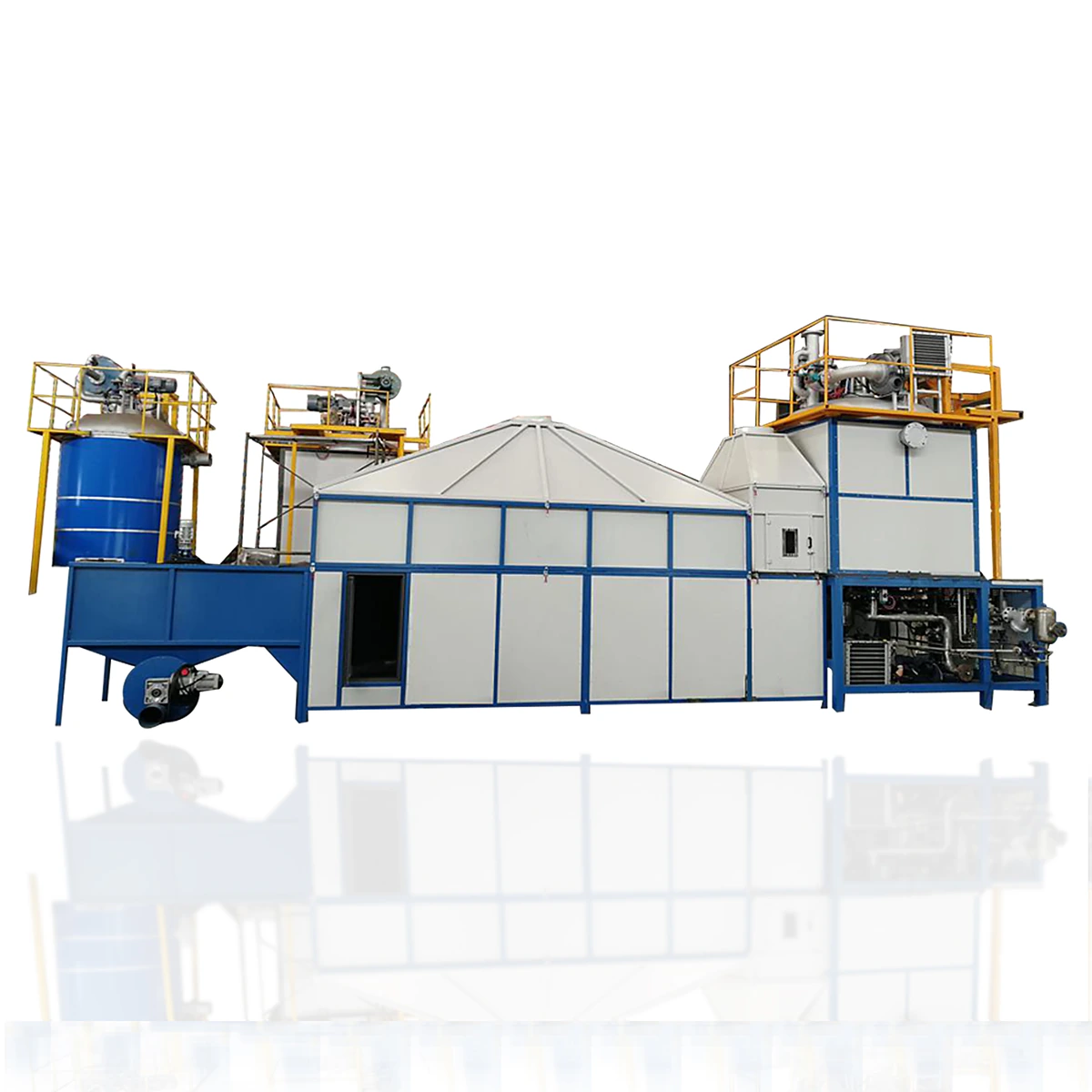
2.1 Pre-Expander
The pre-expander is the first point of steam consumption. Batch pre-expanders typically consume 15–25 kg of steam per cubic meter of expanded beads (at final product density). Continuous pre-expanders are generally 10–15% more steam-efficient than batch units because they maintain a steady operating temperature rather than heating up and cooling down between batches.
Steam pressure requirement: 0.5–1.0 bar (low pressure, which means lower boiler operating pressure is acceptable).
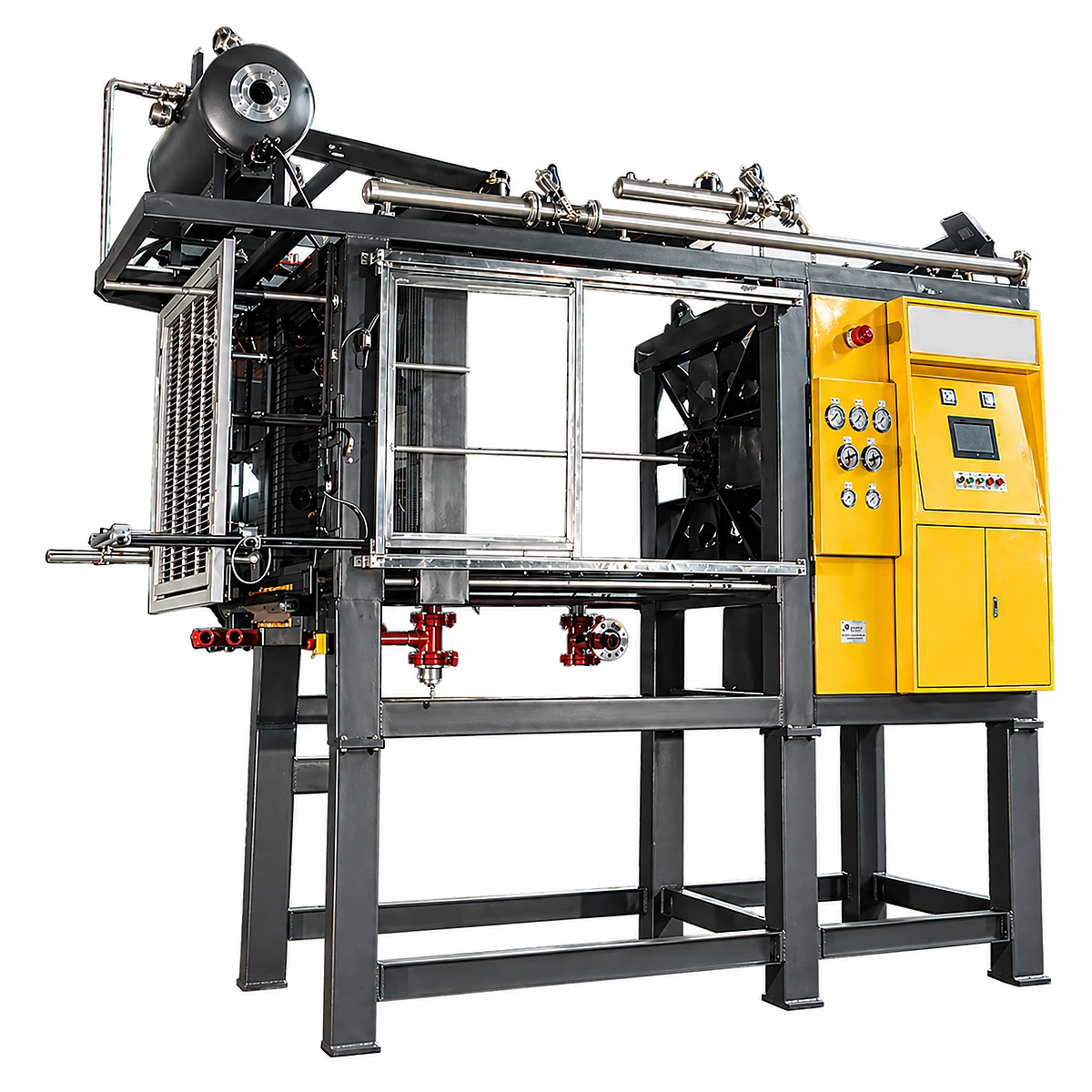
2.2 Block Molding Machine
The block molding machine is the largest single consumer of steam in most EPS production lines. Typical steam consumption ranges from 25–45 kg of steam per cubic meter of finished block, depending on product density, machine generation, and cooling method:
| Block Molding Machine Type | Steam Consumption (kg/m³) | Cycle Time (minutes) |
|---|---|---|
| Older design (pre-2010), no vacuum cooling | 40 – 55 | 8 – 12 |
| Standard modern design, basic vacuum cooling | 30 – 40 | 5 – 8 |
| Advanced design, full vacuum + heat recovery | 22 – 32 | 4 – 6 |
The difference between an older machine (50 kg/m³) and a modern energy-efficient machine (25 kg/m³) is a 50% reduction in steam per unit of product. At scale, this translates to tens of thousands of dollars per year.
2.3 Shape Molding Machine
Shape molding machines produce custom-shaped EPS parts (packaging inserts, helmets, decorative elements). Steam consumption per kilogram of product is generally higher than block molding because:
- Mold surface area relative to product volume is much larger (complex shapes with thin walls)
- More steam energy is wasted heating metal mold tooling relative to the foam product
- Shorter filling depths mean proportionally more surface heating
Typical shape molding steam consumption: 30–60 kg steam per cubic meter of product, with high variability depending on part geometry and mold design.
3. Energy Efficiency Comparison: Old vs. Modern Machines
The following table compares a complete EPS block production line from 2010 vintage against a modern 2024–2025 vintage line, both producing the same output: 50 m³/day of 15 kg/m³ insulation boards.
| Parameter | 2010 Vintage Line | Modern Line (2024–2025) | Improvement |
|---|---|---|---|
| Pre-expander steam (kg/m³) | 22 | 17 | −23% |
| Block molding steam (kg/m³) | 45 | 28 | −38% |
| Total steam per m³ | 67 | 45 | −33% |
| Daily steam consumption (kg) | 3,350 | 2,250 | −1,100 kg/day |
| Annual steam (at 300 days) | 1,005,000 kg | 675,000 kg | −330,000 kg/year |
| Annual fuel cost (natural gas at $0.06/kg steam) | $60,300 | $40,500 | −$19,800/year |
| Block molding cycle time | 9 min | 5.5 min | −39% (more output per shift) |
| Electrical consumption (kWh/m³) | 8.5 | 6.0 | −29% |
A modern production line saves approximately $19,800 per year in steam costs alone at 50 m³/day production. At higher production volumes (100+ m³/day), the savings exceed $40,000 annually. Over a 10-year machine life, this represents $200,000–$400,000 in cumulative energy savings — often exceeding the machine's original purchase price.
4. Five Ways Modern Machines Reduce Steam Consumption
The 30%+ steam reduction achieved by modern EPS machines comes from five key engineering improvements. When evaluating new equipment on our products page, look for these specific features.
Key Definitions
- Expansion ratio — the volumetric increase from raw EPS bead to expanded bead, typically 20:1 to 50:1, directly determining final product density and steam demand per unit volume. Official spec: expansion ratio is defined per ISO 11752:2019 (Expandable Polystyrene Molding and Extrusion Materials).
- Steam consumption rate — measured in kilograms of steam per cubic meter of finished EPS product (kg/m³), the primary benchmark for comparing machine energy efficiency across manufacturers and generations. According to the U.S. Department of Energy, industrial steam systems typically operate at 50–85% thermal efficiency.
- Bead density tolerance — the acceptable variation in expanded bead density within a single batch, expressed as ± kg/m³. Tighter tolerances require more precise steam control, which modern PLC systems achieve at lower energy cost than manual operation.
4.1 Vacuum-Assisted Cooling
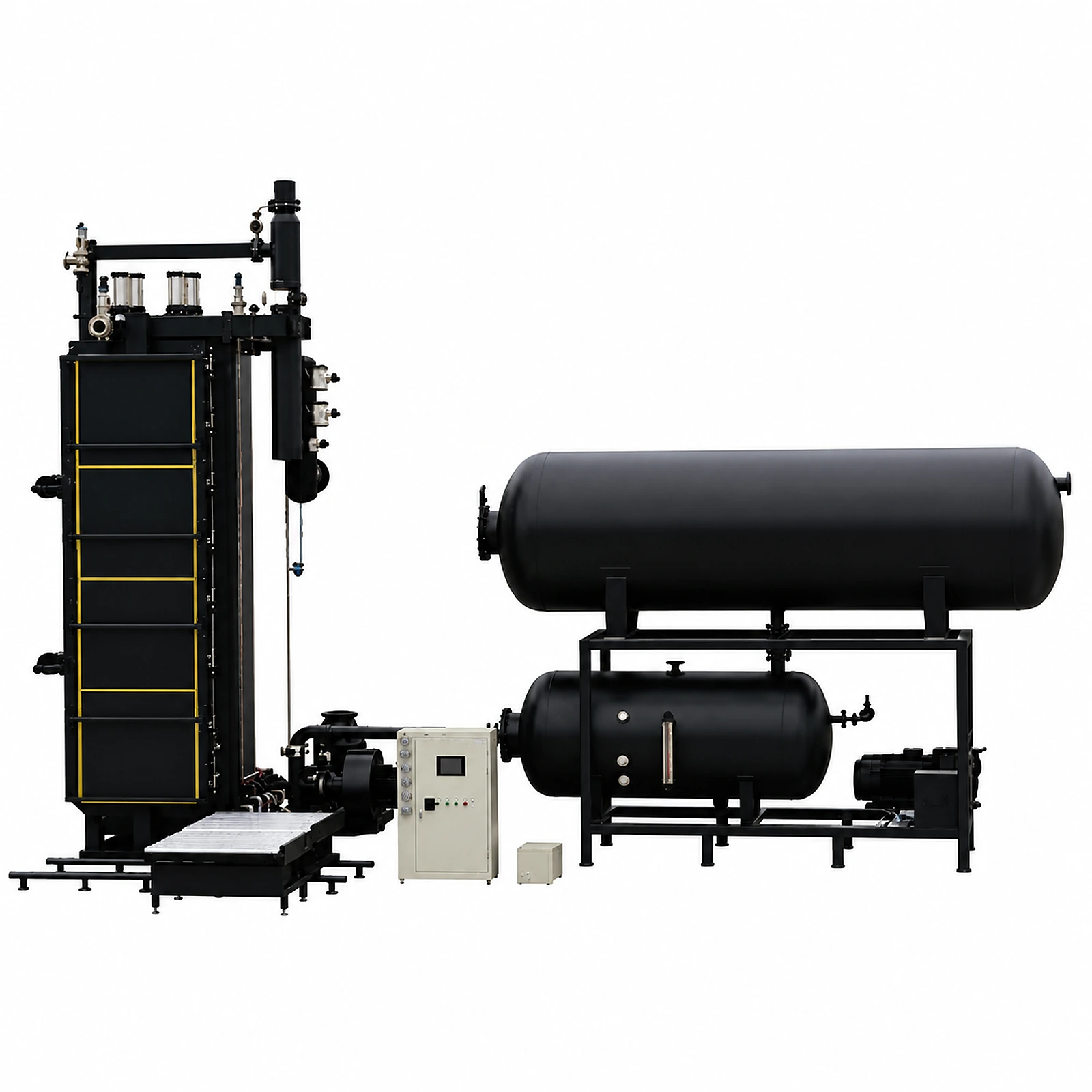
Vacuum cooling is the single most impactful energy-saving technology in modern EPS block molding. After the steam fusion phase, a vacuum pump rapidly evacuates the mold chamber, reducing pressure to 0.05–0.15 bar. This drops the boiling point of residual water in the block to 30–55 °C, causing rapid evaporative cooling without additional energy input.
Impact:
- Reduces cooling time by 40–60% compared to water spray cooling alone
- Reduces total cycle time by 25–40%
- Eliminates the need to re-heat the mold from a cold water-cooled state, saving the steam that would be required to bring the mold back to operating temperature
- Produces drier blocks with lower residual moisture, improving product quality and reducing drying time
A machine without vacuum cooling is, by modern standards, obsolete for block molding applications. The vacuum system adds $8,000–$15,000 to the machine cost but saves $5,000–$12,000 per year in energy, delivering payback in 12–18 months.
4.2 Heat Recovery Systems
During the cooling phase, large amounts of thermal energy are removed from the block and mold in the form of hot water and steam. Modern machines capture this energy rather than venting it to atmosphere:
- Condensate return: Hot condensate from the mold (80–95 °C) is returned to the boiler feed water tank, reducing the energy needed to heat fresh boiler feed water from ambient temperature. This alone saves 8–12% of boiler fuel.
- Flash steam recovery: High-pressure condensate releases flash steam when it drops to lower pressure. Capturing and reusing this steam for pre-heating molds or pre-expansion reduces waste.
- Exhaust air heat exchangers: Heat from exhaust air and vacuum pump discharge is used to pre-heat incoming combustion air for the boiler or to warm the factory space in winter.
Impact: Heat recovery systems typically save 8–15% of total steam consumption, with payback periods of 12–24 months.
4.3 Variable Steam Pressure Control
Older machines operate at a fixed steam pressure throughout the fusion phase, typically set at the maximum required for the densest product. Modern machines use programmable multi-stage steam pressure profiles:
- Cross-steaming phase: Lower pressure (0.3–0.5 bar) to purge air from the bead bed and begin initial heating
- Fusion phase: Optimal pressure for the specific product density (0.6–1.0 bar for standard insulation, higher for high-density products)
- Stabilization phase: Reduced pressure to prevent over-fusion at block surfaces while allowing heat to penetrate to the core
By matching steam pressure to each phase of the cycle, modern machines avoid the waste of applying maximum pressure when it is not needed.
Impact: Variable pressure control reduces steam consumption by 5–10% and also improves product quality by eliminating surface over-fusion.
4.4 Machine and Pipe Insulation
This is the simplest and cheapest improvement, yet it is surprisingly often neglected. Uninsulated steam pipes, mold platens, and machine structures radiate heat continuously during operation. Proper insulation includes:
- Steam supply pipes: Mineral wool or calcium silicate insulation reduces heat loss by 90%+ compared to bare pipe
- Mold platen backs and sides: Insulating non-contact surfaces of the mold reduces the energy wasted heating metal that does not contact the product
- Condensate return pipes: Insulating hot condensate lines preserves the thermal energy being returned to the boiler
- Machine frame: Thermal breaks and insulation panels on the machine structure reduce radiant losses
Impact: Proper insulation reduces overall steam consumption by 5–10%. For existing facilities, adding insulation to uninsulated pipes is one of the highest-ROI investments available, often paying back in 3–6 months.
4.5 Intelligent Automation and Process Control
Modern PLC-controlled machines optimize every cycle automatically, reducing waste from human variability:
- Automatic steam timing: The control system monitors mold pressure and temperature in real time, ending the steam phase as soon as fusion is complete rather than running a fixed timer. This prevents over-steaming, which wastes energy and can degrade product quality.
- Density-based recipe management: Pre-programmed recipes for each product density automatically adjust steam pressure, timing, and cooling parameters, eliminating operator guesswork.
- Predictive maintenance alerts: Monitoring steam trap performance, vacuum pump efficiency, and valve operation detects degradation before it becomes a costly energy leak.
- Production data logging: Tracking steam consumption per block over time allows you to identify efficiency trends and maintenance needs.
Impact: Automation typically reduces steam waste by 5–8% compared to manual operator control, while also improving product consistency.
5. ROI of Upgrading Old Machines
For factory owners operating equipment that is 10–15 years old, the question is: does upgrading to modern, energy-efficient machines pay for itself? The answer, in most cases, is a decisive yes.
Upgrade Scenario
Consider a factory replacing a 2010-vintage block molding machine with a modern ChinaEps block molding machine, maintaining the same production volume of 50 m³/day.
| Factor | Value |
|---|---|
| Cost of new block molding machine (installed) | $110,000 |
| Residual/scrap value of old machine | $8,000 |
| Net upgrade investment | $102,000 |
| Annual steam savings | $19,800 |
| Annual electricity savings | $3,750 |
| Annual maintenance savings (fewer breakdowns, modern components) | $4,000 |
| Additional revenue from faster cycle times (same hours = more output) | $12,000–$30,000 |
| Total annual benefit | $39,550–$57,550 |
| Payback period | 1.8–2.6 years |
When you factor in the additional revenue from increased production capacity (faster cycles mean more blocks per shift), the upgrade often pays for itself in under 2 years. Over a 10-year machine life, the cumulative benefit is $300,000–$500,000. For detailed ROI modeling methodology, see our EPS machine ROI calculator guide.
6. Case Study: Complete Energy Audit and Optimization
To illustrate the combined impact of all five strategies, consider a real-world optimization scenario for a factory producing 80 m³/day of EPS insulation boards at 15 kg/m³ density, operating 300 days/year.
Baseline (Before Optimization)
| Parameter | Value |
|---|---|
| Total steam consumption | 60 kg/m³ |
| Daily steam | 4,800 kg |
| Annual steam | 1,440,000 kg |
| Boiler fuel (natural gas) | $86,400/year |
| Boiler efficiency | 82% |
| Steam pipe insulation | Partial, degraded |
| Heat recovery | None |
| Vacuum cooling | None (water spray only) |
After Optimization: Phased Approach
| Optimization Step | Investment | Steam Reduction | Annual Savings | Payback |
|---|---|---|---|---|
| 1. Repair/replace insulation on all steam pipes | $3,000 | −7% | $6,050 | 6 months |
| 2. Install condensate return system | $5,000 | −10% | $8,050 | 7 months |
| 3. Retrofit vacuum cooling system | $12,000 | −15% | $10,950 | 13 months |
| 4. Upgrade to modern block molding machine | $110,000 | −12% (additional) | $7,500 + productivity gains | 2–3 years |
| 5. Boiler upgrade + economizer | $18,000 | −8% | $5,200 | 3.5 years |
| Combined effect | $148,000 | −42% (combined) | $37,750+/year | ~3.9 years blended |
The phased approach is important. Steps 1 and 2 are low-cost, fast-payback improvements that should be done immediately regardless of plans for major equipment upgrades. Step 3 (vacuum cooling retrofit) is mid-range and delivers the largest single improvement. Steps 4 and 5 are larger capital investments with longer payback but greater long-term impact.
After all five optimizations, this factory's steam cost drops from $86,400 to approximately $50,100 per year — a reduction of $36,300 annually, or 42%. Over 10 years, that is $363,000 in cumulative savings against a $148,000 investment.
7. Selecting Energy-Efficient Equipment
When purchasing new EPS machinery, make energy efficiency a primary selection criterion. Here is what to look for:
- Ask for specific steam consumption data (kg steam per m³ of product at your target density). Compare across manufacturers using the same units and density assumptions.
- Verify vacuum cooling is included in the block molding machine. If it is optional, get the price and calculate the payback — it almost always makes financial sense.
- Check for condensate return provisions. Is the machine designed with proper condensate drainage and return connections?
- Evaluate insulation quality. Are steam chambers, platens, and pipes properly insulated as delivered, or is this left to the customer?
- Assess the control system. Does it support multi-stage steam profiles, automatic cycle optimization, and energy consumption monitoring?
ChinaEps designs all current-generation machines with energy efficiency as a core engineering priority. Browse our complete product range or contact our technical team for energy consumption specifications tailored to your production scenario. For guidance on evaluating manufacturers comprehensively, see our EPS machine buying guide.
8. Beyond the Machine: Boiler and System-Level Optimization
The machine is only one part of the steam system. Boiler selection and operation significantly affect total energy cost:
- Boiler sizing: An oversized boiler operating at low load is inefficient. Match boiler capacity to your actual peak steam demand, with 15–20% headroom.
- Boiler efficiency: Modern condensing gas boilers achieve 95%+ efficiency. If your boiler is below 85%, upgrading or adding an economizer (exhaust gas heat recovery) is cost-effective.
- Fuel selection: Natural gas is the cleanest and most efficient conventional fuel. Biomass boilers offer lower fuel costs in some regions. Electric boilers eliminate combustion losses entirely and are optimal where electricity is cheap and clean.
- Water treatment: Scale buildup from untreated water reduces boiler efficiency by 2–5% per millimeter of scale. Proper water treatment is a low-cost, high-impact measure.
- Steam distribution: Minimize pipe runs, insulate everything, maintain steam traps, and eliminate leaks. A single failed-open steam trap can waste $1,000–$3,000 per year in fuel.
Conclusion
Steam energy is the largest controllable cost in EPS production. The combination of modern machinery with vacuum cooling, heat recovery, variable steam control, proper insulation, and intelligent automation can reduce your steam costs by 30–42%. For a factory producing 50–100 m³/day, this represents $20,000–$40,000 or more in annual savings — money that goes directly to your bottom line.
Whether you are building a new production line or optimizing an existing facility, energy-efficient equipment selection is one of the highest-return decisions you will make. Explore ChinaEps's energy-efficient EPS machinery or request a consultation with our engineering team to evaluate your specific energy optimization opportunities.
Frequently Asked Questions
How much steam does an EPS block molding machine consume per cubic meter?
Modern block molding machines with vacuum cooling consume 25–35 kg of steam per cubic meter of EPS product at 15 kg/m³ density. Older machines without vacuum cooling may consume 40–55 kg/m³. The total line consumption (including pre-expander) is typically 40–50 kg/m³ for modern equipment and 55–70 kg/m³ for older equipment.
Is it worth retrofitting vacuum cooling to an existing machine?
In most cases, yes. A vacuum cooling retrofit costs $8,000–$15,000 and reduces both cycle time (by 25–40%) and steam consumption (by 15–20%). The combined benefit of energy savings and increased production capacity typically delivers payback in 10–18 months. However, very old machines (20+ years) may not be worth retrofitting if other components are also nearing end of life.
What type of boiler is best for EPS production?
Natural gas fire-tube boilers are the most common choice, offering a good balance of efficiency (90–95%), cost, and reliability. Electric steam boilers are increasingly attractive where electricity costs are low (below $0.08/kWh) because they achieve near-100% efficiency and eliminate combustion-related maintenance. Biomass boilers offer the lowest fuel cost in many regions but require more space, handling infrastructure, and maintenance.
How can I measure my factory's actual steam consumption?
Install a steam flow meter on the main steam header supplying your production equipment. Vortex-type or orifice-plate meters are common choices for industrial steam metering. Correlate steam consumption with production volume (m³ of product) to calculate your kg steam/m³ ratio. Compare this against the benchmarks in this article to identify your efficiency gap.
Does product density affect steam consumption?
Yes, significantly. Higher-density EPS products require more steam per cubic meter because there is more polystyrene mass to heat per unit volume. As a rough guide, doubling the product density from 15 to 30 kg/m³ increases steam consumption per m³ by 30–50%. However, steam consumption per kilogram of product remains relatively constant across densities.
What is the environmental impact of reducing steam consumption?
For a natural gas boiler, every 1,000 kg of steam saved avoids approximately 70–80 kg of CO2 emissions. A factory saving 330,000 kg of steam annually (as in our comparison example) reduces CO2 emissions by approximately 23–26 tonnes per year. Beyond environmental benefit, many jurisdictions are implementing carbon pricing mechanisms that make emission reductions directly financially valuable.
What is the typical steam consumption per ton of finished EPS product?
For standard density EPS insulation (15 kg/m³), a modern production line consumes approximately 2.7–3.3 tonnes of steam per tonne of finished EPS product. This includes both pre-expansion and block molding stages. Older lines may consume 4.0–4.7 tonnes of steam per tonne of product. Converting from volume-based (kg/m³) to weight-based (kg/kg) metrics helps compare efficiency across different product densities.
How does barrel diameter affect pre-expander energy efficiency?
Larger barrel diameters (1,600–2,200 mm) are more energy-efficient per unit of output than smaller barrels (800–1,200 mm) because the surface-area-to-volume ratio decreases with size. This means proportionally less heat is lost through the barrel walls relative to the volume of beads being expanded. However, larger barrels require longer steam penetration time to heat the center of the bead mass, so optimal efficiency depends on matching barrel size to your actual production volume. Oversized barrels running partial loads waste more energy than right-sized equipment.