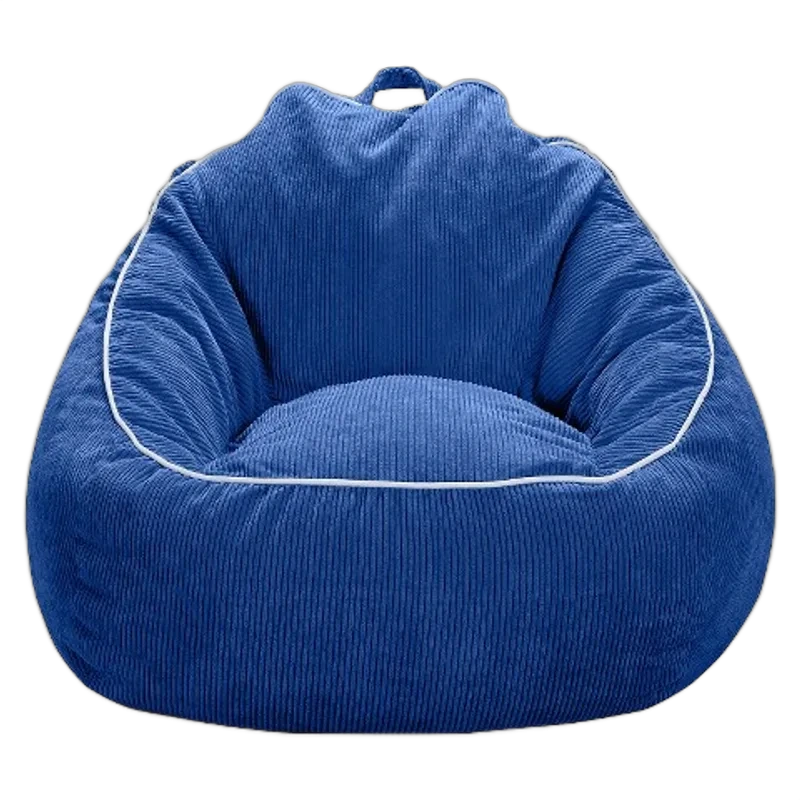
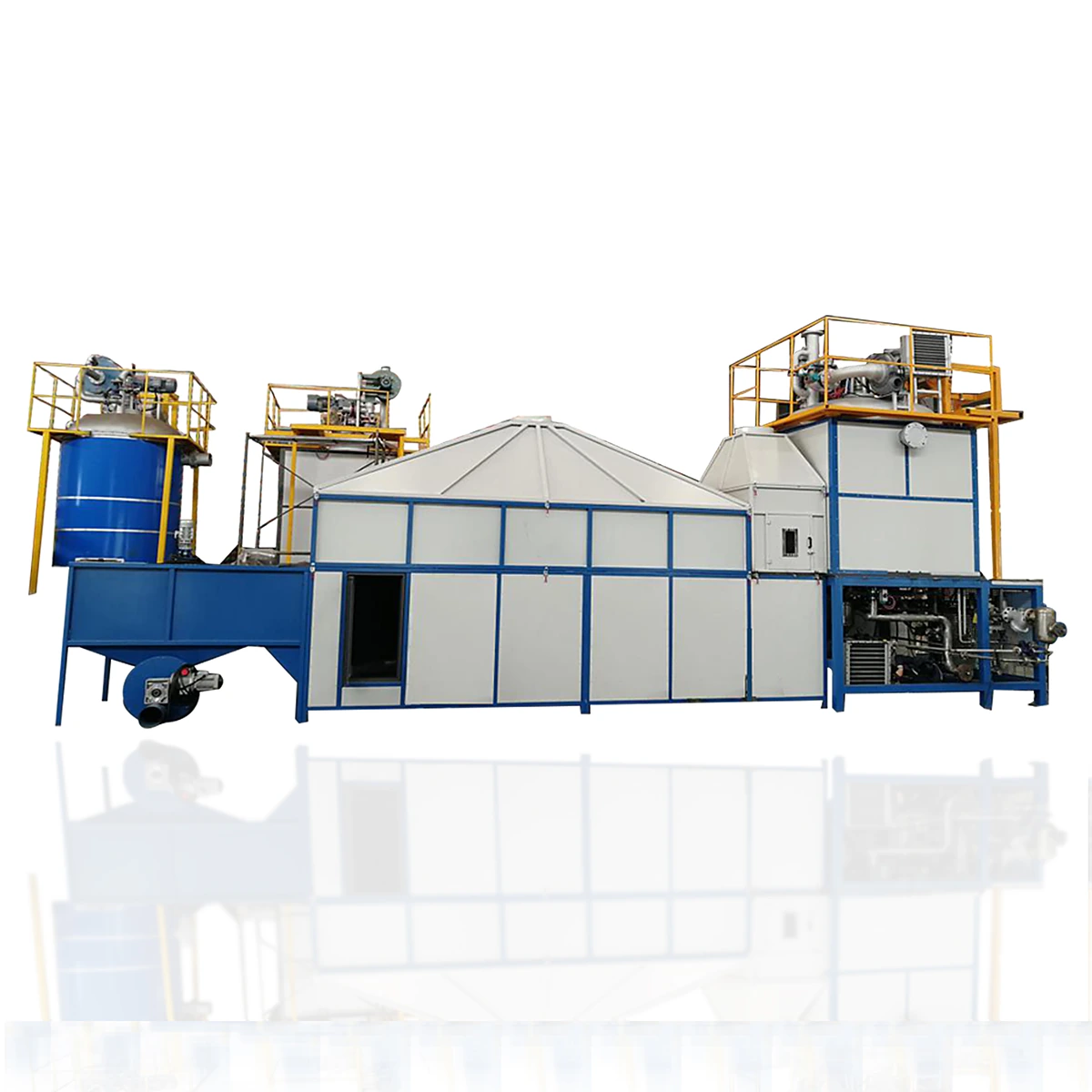
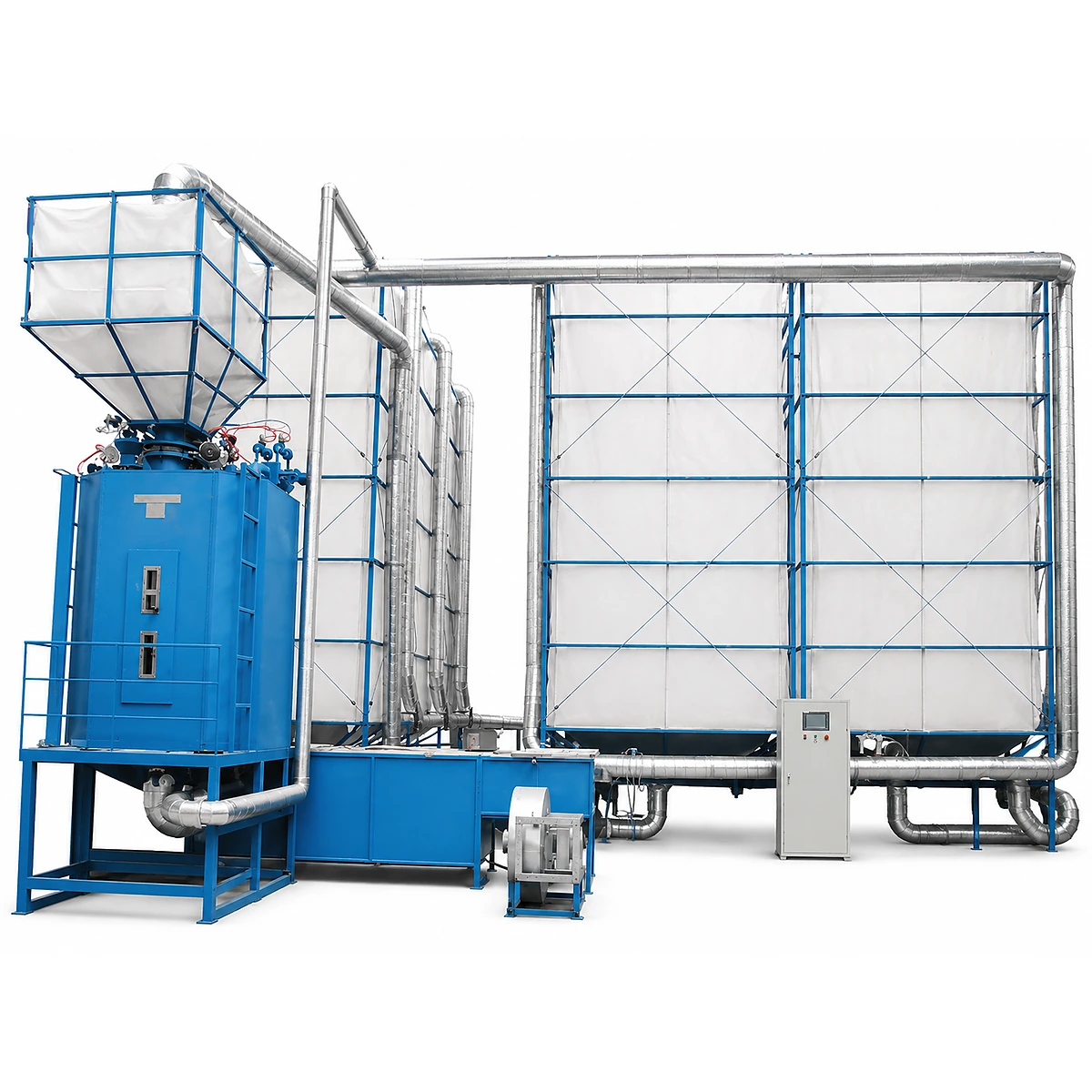
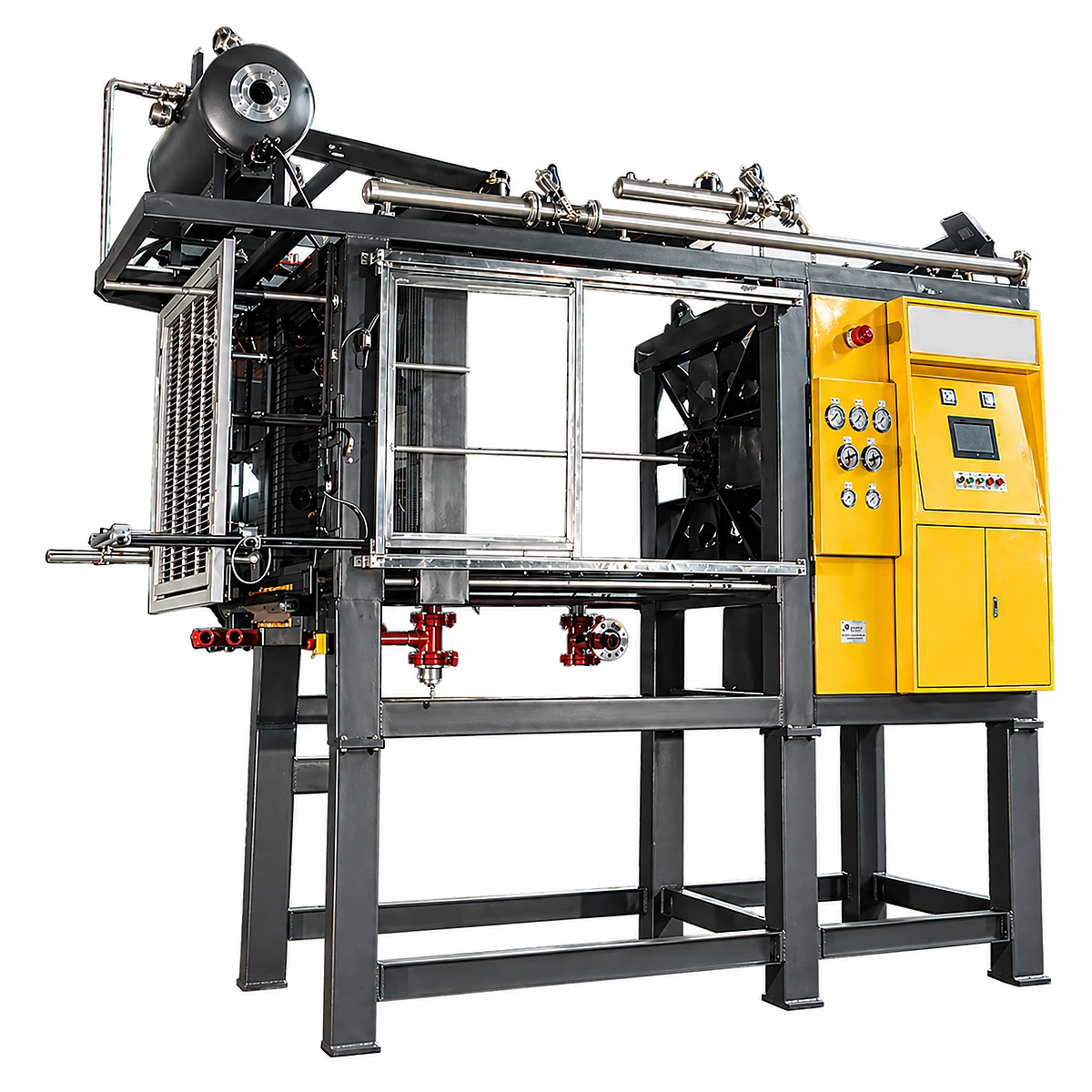
موسع أولي SPJY لحبيبات EPS الصغيرة (3-7 مم) بالإضافة إلى محطة تعبئة وزنية أوتوماتيكية، مصنّعة في مصنعنا الخاص. يغطي خط واحد كراسي أكياس الفاصولياء والوسائد وأسرّة الحيوانات الأليفة بالإضافة إلى حشو الملء السائب box filler لتغليف ملء الفراغات. 50-200 kg/ساعة من الحبيبات الجاهزة.
خط تعبئة أكياس الفاصولياء EPS هو منشأة من مرحلتين تنتج حبيبات EPS ناعمة بحجم 3-7 مم وتعبئها بالوزن: موسع أولي للحبيبات الصغيرة يوسّع الحبيبات الخام 0.4-0.6 مم إلى 8-15 kg/m³، وفاصل دوامي يزيل الدقائق الناعمة، ويغذي مخزون الصوامع المُعتَّق محطة تعبئة وزنية بدقة ±1%. لا توجد ماكينة تشكيل قوالب — الحبة نفسها هي المنتج، لذا يزوّد خط واحد كلاً من كراسي أكياس الفاصولياء والوسائد وأسرّة الحيوانات الأليفة وحشو الملء السائب box filler لتغليف ملء الفراغات. الإنتاج 50-200 kg/ساعة من الحبيبات الجاهزة، أو 400-1,600 كجم لكل وردية 8 ساعات، بمرجل 0.3-0.5 طن.
This Solution Solves
The real pain points operators in this industry face every day.
Fill weight drifts from bag to bag
Manual filling typically runs ±5-10%. An underfilled bag is invisible on the pallet and obvious to the buyer who paid by weight; an overfilled one is margin given away on every single unit.
Fine beads cling to everything once the line starts
3-7 mm bead picks up static in pneumatic transfer. Without grounding it sticks to operators, machine frames and walls — the workshop turns into a mess, filling slows down, and staff complain.
Fines and dust travel with the bead into the bag
Unseparated fines make the finished fill dusty and block filling nozzles. They come back as complaints about powder inside the product — the fastest way to lose a repeat account.
Every buyer wants a different size and a different pack weight
Bean bag chairs, pet beds and loose box filler are the same bead at different grades and fill weights. Resetting the line by hand for each order costs a shift and invites mistakes.
How We Solve It
Specific technical answers ChinaEps engineers into this production line.
1
Challenge
Hold fill weight inside ±1% on every bag
Our Answer
The filling station weighs gravimetrically on load cells and cuts off at target weight; a scale check then re-verifies every bag before it is tagged.
Differentiator
±1% against the ±5-10% typical of manual filling.
2
Challenge
Keep static off the beads and out of the workshop
Our Answer
ESD-grounded floor, air shower and anti-static treatment of the transfer line are part of the base spec, not a paid option.
Differentiator
Static control designed in, not retrofitted after the first complaint.
3
Challenge
Get the fines out before they reach the bag
Our Answer
A cyclone separator pulls fines off the pre-expander discharge and routes the good bead into 3 / 5 / 7 mm grades on the way to the silos.
Differentiator
Fines removal and size sorting in one pass — no second pre-expander needed to offer a fine and a coarse grade.
4
Challenge
Switch between bean bag fill and loose box filler without a rebuild
Our Answer
PLC recipes store bag size and target weight (50L / 100L / 200L / 300L). The operator picks the recipe and the same line fills either product.
Differentiator
One line, two markets — comfort products and protective loose fill — with no shape molder in the plant.
What This Line Produces
End products this turnkey line is engineered to manufacture.
Bean bag chair (small / medium / large)
Lounge bean bag (gaming / TV viewing)
Pet bed bean bag (small / medium / large dog)
Yoga + meditation cushion
Pregnancy pillow
Cervical / orthopedic neck pillow
Floor cushion
Outdoor / pool bean bag
Production Flow
From raw material to finished product — six stages, fully integrated.
Step 1
EPS Raw Material
Small-bead grade beads (E-501 / B-501, 0.4-0.6mm) from supplier.
Step 2
Pre-expander
Beads pre-foamed to 3-7mm size, density 8-15 kg/m³.
Step 3
Cyclone Separation
Fines removed, bead-size sorted (3 / 5 / 7mm grades).
Step 4
Aging + Storage Silo
4-12h aging + multi-size silo storage.
Step 5
Bag Loading + Gravimetric Fill
Inner liner bag loaded, gravimetric fill to recipe weight.
Step 6
Heat-Seal + Zip Closure
Inner liner heat-welded, outer cover zip-sealed.
Step 7
Visual QC + Scale Check
Double-check per bag for fill weight + sealing.
Step 8
Tag + Pack
SKU / batch / date tag printed, bag wrapped for shipping.
Line Composition
Production line subsystems
The full production line is composed of these core subsystems — each one engineered as a self-contained module.
Before equipment arrival, the buyer needs to prepare the following on-site infrastructure.
Floor area
250-400 m²
Ceiling height
>= 5 m
Electrical
Three-phase 380V / 50Hz, 60-100 kW
Steam supply
Local boiler 0.3-0.5 T
Cooling water
10-15 m³/h tower
Compressed air
4-5 m³/min compressor
Anti-static
Full workshop ESD-grounded floor essential
Why ChinaEps for This Solution
Engineering specifically tuned for this application — not a generic line.
Small-Bead Pre-Expansion Expertise
3-7mm bead is harder than 10-15mm fish-box bead — requires precise steam control + cyclone fines removal. Our SPJY pre-expander is tuned for this size range.
Gravimetric Filling +/-1% Accuracy
Bean bag fluffiness depends on bead weight per bag. +/-1% gravimetric ensures consistent product quality + brand reputation. Manual filling typically +/-5-10%.
Static Control + Workshop Design
Fine beads accumulate static = clinging to operator + workshop. Our line includes grounded floor / air shower / anti-static treatment as part of base spec.
Low Steam Load = Low OPEX
Bean bag is pre-expansion only (no shape molding) — steam load 1/3 of fish box. Boiler 0.3-0.5T is enough. Significantly lower utility OPEX.
Utility Consumption Calc
Steam · Air · Cooling Water
Per-equipment + total demand for sizing your boiler, compressor, and cooling tower.
Steam Consumption (small-bead pre-expander)
Equipment
Per Unit
Qty
Total
EPS Pre-expander (small-bead)
40-80 kg/h
1
40-80 kg/h
Cyclone heating
20-40 kg/h
1
20-40 kg/h
Pipeline loss (=10%)
-
-
6-12 kg/h
Total Steam Demand
-
-
66-132 kg/h
RecommendationRecommended boiler: 0.3 T/h (lowest among solutions — pre-expansion only, no shape molding). 0.5T for 4+ pre-expanders.
Compressed Air Consumption
Equipment
Per Unit
Qty
Total
Pre-expander + pneumatic transfer
0.5-1.0 m³/min
1
0.5-1.0 m³/min
Filling station pneumatics
0.3-0.6 m³/min
2
0.6-1.2 m³/min
Cyclone + dust collection
0.5-1.5 m³/min
1
0.5-1.5 m³/min
Anti-static air shower
0.2-0.4 m³/min
-
0.2-0.4 m³/min
Total Air Demand
-
-
1.8-4.1 m³/min
RecommendationRecommended air compressor: 4-5 m³/min at 0.6 MPa. Air storage 2 m³. Air dryer essential (humidity affects bead static).
Cooling Water Consumption
Equipment
Per Unit
Qty
Total
Pre-expander cooling
2-3 m³/h
1
2-3 m³/h
Cyclone cooling
1-2 m³/h
1
1-2 m³/h
Total Circulating Water
-
-
3-5 m³/h
Actual Make-up Water (8h)
-
-
3-6 m³/day
RecommendationRecommended cooling tower: 10-15 m³/h. Water pool: 5-8 m³.
Container Plan
20GP / 40HQ Loading Configurations
Pre-engineered container loading for your line size — daily output 800-30,000+ pieces.
Option 3: 2 x 40HQ — Recommended Comfort-Products Plant
3-4 fill stations + comfort SKU library, daily 1,000-1,500 bags
40HQ #1 — Bead Production
Pre-expander1-2 sets
Fluidized Dryer1 set
Cyclone1 set
Storage Silos6-8 pcs
Multi-size Routing1 set
40HQ #2 — Filling + QC
Filling Stations3-4 sets
Heat Sealers3-4 sets
Load Cells3-4 sets
Tag Printer1 set
Anti-static Full Coverage1 set
Auto Bag Loader1 set
Spare1 batch
Local-purchase recommendation: Steam boiler, air compressor, cooling tower, and water tank are not shipped from China — local purchase saves freight, matches local voltage / certifications, and reduces total project cost by 15-25%.
Frequently Asked Questions
What bead size do I need for bean bag?
3-5mm is standard for bean bag chairs (soft + fluffy). 5-7mm for pet beds (more support). 3mm for premium ergonomic pillows. Cyclone separator sorts sizes from one pre-expander batch.
Why does the line not include a shape molder?
Bean bag is filled with loose beads, not molded. The product is the pre-expanded bead itself + the filled bag. So no shape molder, just pre-expander + filling station.
Why is anti-static so important?
Small 3-7mm beads accumulate static when moving through pneumatic transfer. Without grounding, beads cling to workers, machine, walls = mess + slow filling + worker complaints. Grounded floor + air shower is essential.
How much steam vs fish box line?
About 1/3. Bean bag only needs pre-expansion (~80-130 kg/h steam). Fish box adds shape molding (+400-500 kg/h). Major boiler OPEX saving.
Can I produce different bag sizes on one line?
Yes. PLC stores bag-size recipe (50L / 100L / 200L / 300L). Operator selects size at filling station, gravimetric fills to spec weight. No machine change needed.
What is the per-bag filling speed?
15-60 seconds depending on bag size. Small (50L) = 15-20s, medium (100L) = 25-35s, large (200-300L) = 45-60s. 2-station line can fill 500-800 bags/day.
Can this line also produce loose fill for protective packaging?
Yes. Loose fill is the same pre-expanded bead — you keep the pre-expander, the silos and the gravimetric station, and simply skip the liner heat-sealer. Nothing else in the line changes, because there is no shape molder in it to begin with. Buyers usually order a coarser bead for void fill than for bean bag chairs, and the cyclone sorts both grades out of one batch.
What loose-fill box filler output does a 0.5 T boiler support?
A 0.3-0.5 T/h boiler covers the whole steam demand of this line — 66-132 kg/h in total: 40-80 kg/h for the pre-expander, 20-40 kg/h for cyclone heating, plus about 10% pipeline loss. That supports 50-200 kg/h of finished bead, which is 400-1,600 kg of loose fill per 8-hour shift. A medium two-station plant fills 500-800 bags a day at 15-60 seconds per bag depending on bag size.
Does box filler mean the loose EPS bead or the machine that fills the box?
In EPS terms the box filler is the material: loose pre-expanded bead poured into a carton as protective void fill. That is what this line produces, together with the gravimetric station that packs it into bags by weight. ChinaEps builds the bead production and bagging side of it — we do not supply general-purpose automatic case or carton filling machines for other goods. If you need molded protective inserts instead of loose fill, the EPS packaging production line is the page you want.
What bead size and density do box filler buyers usually specify?
The line pre-expands raw 0.4-0.6 mm grade (E-501 / B-501) to 3-7 mm at 8-15 kg/m³, and the cyclone sorts each batch into 3 / 5 / 7 mm routes. Finer bead flows and settles better in small cartons; coarser bead gives more support and bridges larger voids. Because both come out of the same pre-expander batch, you can quote a fine and a coarse grade without buying a second machine.
Tell Us Your Production Goals
Share your capacity targets, product specs, and budget — our engineers design the optimal line for your factory.