
Expanded polypropylene (EPP) foam density is engineered across a 20–200 g/L range, with each density band matched to a specific application: automotive bumper cores at 45–75 g/L, protective packaging inserts at 25–45 g/L, returnable dunnage at 30–60 g/L, and safety cushioning (helmet liners, child seats) at 60–90 g/L. Density is set at the pre-expansion stage by controlling steam temperature, residence time, and bead loading rate — not adjustable afterwards. This guide gives the complete density-by-application table, the process parameters that lock in each density, and the mechanical trade-offs (impact recovery vs. compressive strength) that make density the single most important spec on any EPP purchase order. Pair with our EPS vs EPP vs ETPU material guide for material-level comparison and our EPP manufacturing complete guide for the full production process.
1. What EPP Foam Density Actually Measures
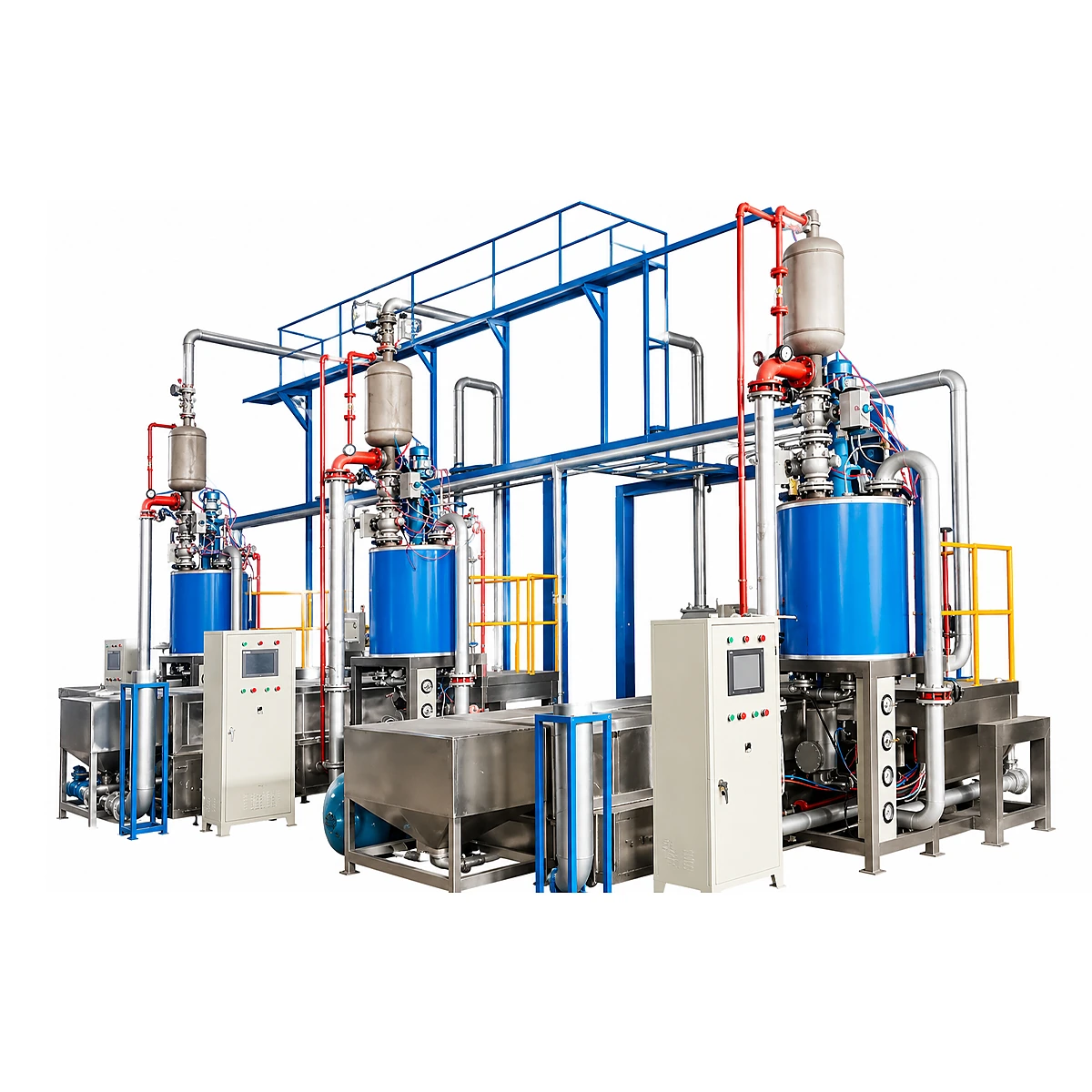
EPP foam density is expressed in grams per liter (g/L) or equivalently kilograms per cubic meter (kg/m³). It is the mass of the cellular foam per unit volume — including both the polypropylene cell walls and the entrained gas. Density is set during the pre-expansion stage, when raw impregnated PP beads are exposed to saturated steam and the blowing agent (typically CO₂ or butane per US EPA HFC guidance) vaporises and expands each bead volumetrically.
Three process levers control the final density:
- Steam temperature (120–140 °C): higher temperature = more blowing-agent vaporisation = lower density.
- Residence time (60–180 s): longer time = more complete expansion = lower density.
- Bead loading rate (kg/hour): lower loading = more steam energy per bead = lower density.
Once the pre-expanded beads exit the expander at the target density, they are aged 24–48 hours (pressure equalisation) and then loaded into a shape molding machine. The finished part inherits the pre-expansion density with a small compression factor from the mold clamping cycle.
2. EPP Density Range Table by Application
| Application | Density Band (g/L) | Why This Density |
|---|---|---|
| Automotive bumper core (crash absorption) | 45–75 | Balances impact absorption at 25 km/h low-speed collision with 200+ impact-recovery cycles |
| Automotive dashboard core / headrest | 30–50 | Structural filler; low density minimises weight while meeting NVH damping |
| Electronics protective packaging inserts | 25–45 | Cushioning + surface non-marring; recovers shape after moderate drops |
| Returnable dunnage / automotive shipping trays | 30–60 | Durability across 100+ shipping cycles; ISO 4180-compliant impact resistance |
| Helmet liners / bicycle head-protection | 60–90 | EN 1078 impact-attenuation standard requires this density band |
| Child car seats / EPP safety cushioning | 60–90 | ECE R44/R129 crash energy-absorption spec |
| Cold-chain temperature-insulation shells | 30–50 | Low density = high closed-cell content = best thermal insulation R-value |
| HVAC ductwork insulation | 50–80 | Balances thermal insulation with structural rigidity for self-supporting duct |
| Industrial reusable pallets / container inserts | 80–120 | Load-bearing capacity 500 kg static, 250 kg dynamic |
| Ultra-high-density structural composites | 150–200 | Approaches semi-rigid polypropylene; specialty aerospace / medical applications |
3. Mechanical Trade-offs Across the Density Range
EPP density is not a "higher is always better" spec. Each application band represents an engineered compromise:
- Impact absorption: peaks in the 45–75 g/L band. Below 30 g/L the cell walls are too thin to absorb sustained impact; above 90 g/L the material becomes too stiff and transmits impact through the structure.
- Compressive strength: scales roughly linearly with density. A 45 g/L part supports 0.15 MPa compressive load; a 90 g/L part supports 0.45 MPa.
- Weight economy: below 30 g/L, weight savings vs polypropylene solid are 90%+; at 60 g/L the saving drops to 70%; at 100 g/L it is under 50%.
- Thermal insulation: R-value peaks between 30–50 g/L where closed-cell content is maximised; above 80 g/L cell walls thicken and heat conduction increases.
- Recovery after compression: EPP's hallmark 200+ impact-recovery cycles hold across all density bands, but recovery time under sustained compression is slower at higher densities.
4. Density Measurement: How to Verify What You Received
On incoming inspection, cut a 100 × 100 × 30 mm sample from three positions in the shipment: outer corner, mid-batch, opposite corner. Weigh each sample on a 0.1 g scale. Density = mass ÷ (0.1 × 0.1 × 0.03) × 1,000 = mass / 3 g per L. Repeat five times per sample to average out cell-wall variability. Acceptable batch variance is ±5% of nameplate density for automotive-grade EPP and ±10% for packaging-grade. Reject batches outside this window — density drift downstream causes molding cycle inconsistency and finished-part reject rates above 5%.
For contract quality assurance, insist on ISO 845 apparent density test certification from your bead supplier and record the density at time of shipment on the delivery note.
5. Sourcing EPP by Density from China: Pricing and Lead Time
ChinaEps supplies pre-expanded EPP beads and integrated shape-molding machinery for the full 20–200 g/L range. Pricing scales with density:
- 20–45 g/L (packaging grade): FOB China at bulk market rates for standard-fusion beads; 3-week lead time; MOQ 5 tons.
- 45–75 g/L (automotive grade): 15–20% premium for controlled cell-uniformity beads; 4-week lead time; MOQ 5 tons; CE material data sheet included.
- 75–120 g/L (structural / cushioning grade): 30% premium for high-density controlled expansion; 5-week lead time; MOQ 3 tons.
- 120–200 g/L (specialty): quote by project; typically 6–8 week lead time; MOQ negotiable.
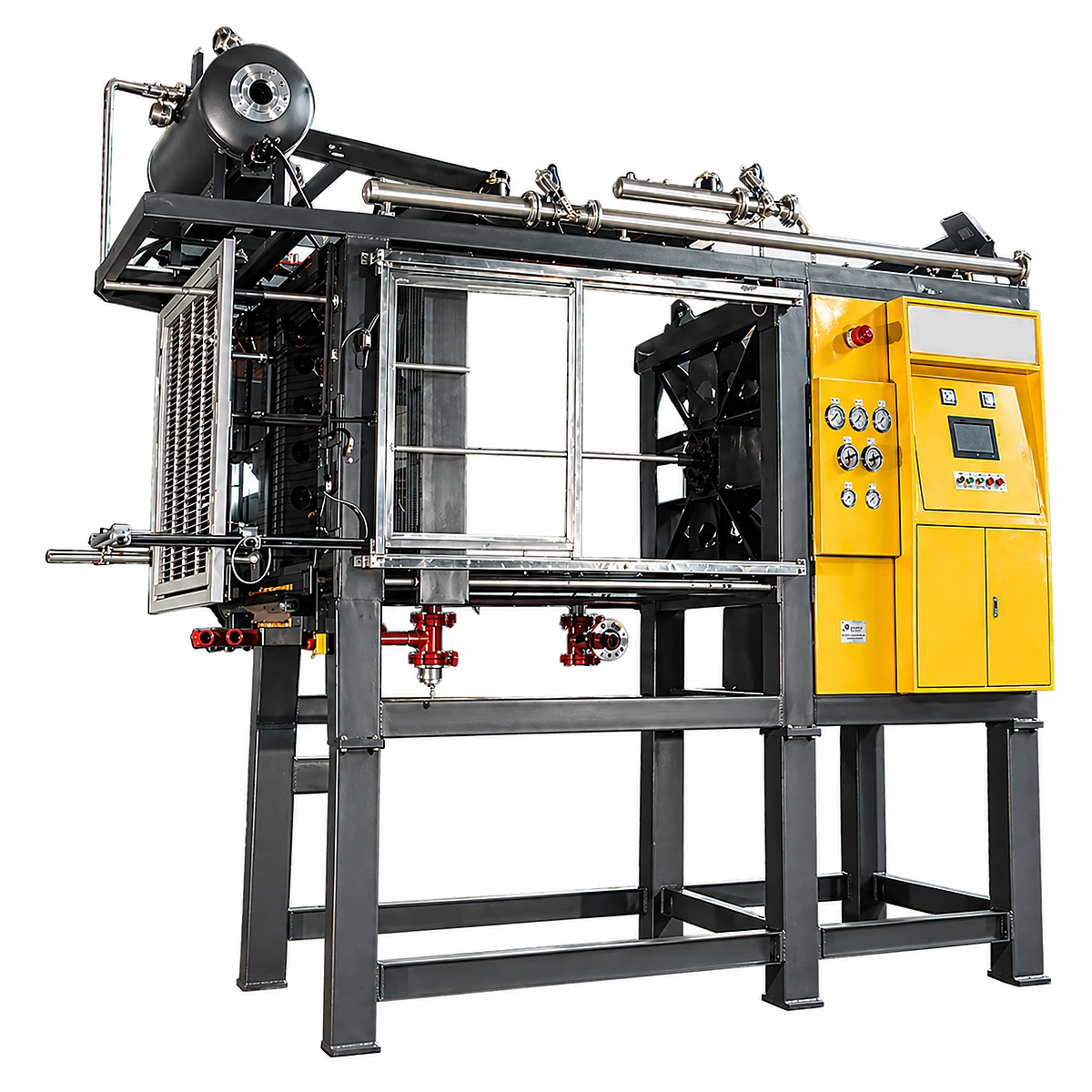
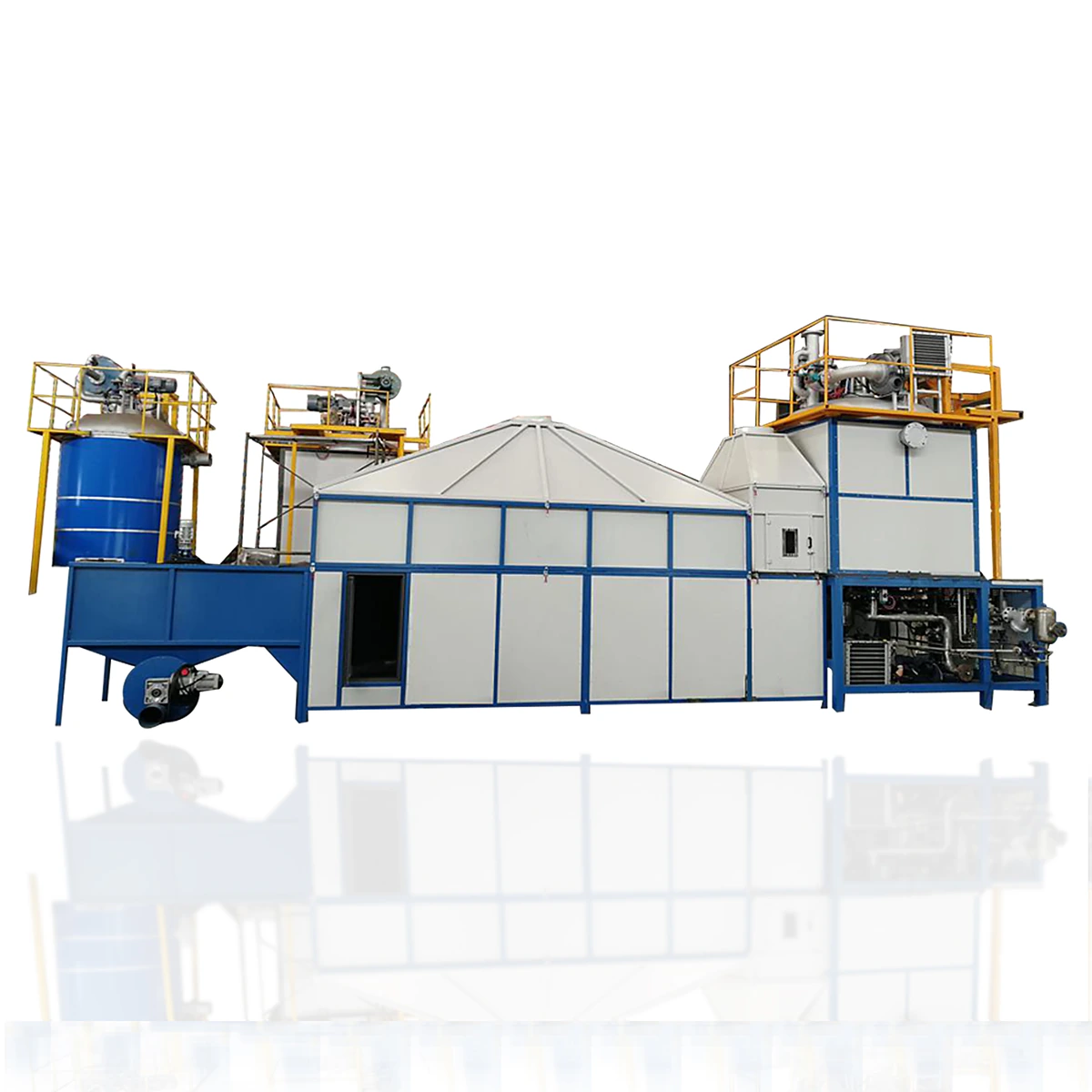
For factory-side integration — where you manufacture both the beads and the final molded parts on-site — see our EPP secondary foaming machine specifications and EPP manufacturing complete guide for full line integration.
Frequently Asked Questions
What is EPP density?
EPP density is the mass of expanded polypropylene foam per unit volume, quoted in grams per litre (g/L) or the numerically identical kilograms per cubic metre (kg/m³). Commercial EPP is produced from roughly 20 g/L to 200 g/L, and the value is locked in during pre-expansion — steam temperature, residence time and bead loading rate decide where in that range a batch lands. Because compressive strength, impact absorption, insulation performance and part weight all scale with it, density is the first specification to fix on any EPP enquiry.
Is EPP density quoted in g/L or kg/m³?
Both, and they are the same number: 1 g/L = 1 kg/m³. A 60 g/L automotive core and a 60 kg/m³ automotive core are the identical material. European datasheets tend to use kg/m³ while Asian bead suppliers usually quote g/L, so no conversion is needed between them — the only unit that does need converting is pounds per cubic foot, where 1 g/L = 0.0624 lb/ft³ (so 60 g/L ≈ 3.75 lb/ft³).
What is the standard EPP foam density for automotive applications?
Automotive-grade EPP density ranges from 30–75 g/L depending on component. Bumper cores that absorb low-speed collision energy use 45–75 g/L. Dashboard cores, headrests, and interior structural fillers use 30–50 g/L to prioritise weight reduction. High-density 60–90 g/L EPP appears in safety-critical cushioning (child seat crash-cores) where ECE R44/R129 crash absorption is mandated.
Can EPP foam density be adjusted after manufacturing?
No. Density is set irreversibly at the pre-expansion stage. Once beads are aged and molded, the finished part density is fixed. To change density, the entire pre-expansion cycle must be repeated with new bead loading. This is why buyers must specify density at the order stage, not retrofit it.
What EPP density gives the best impact absorption?
The 45–75 g/L band delivers peak impact absorption for most applications. Below 45 g/L the cell walls buckle under sustained load; above 75 g/L the material stiffens and transmits impact energy through the structure rather than absorbing it. This is why automotive bumper cores concentrate in this band.
How does EPP density compare to EPS density?
EPS densities run 12–35 g/L for packaging and 20–50 g/L for construction insulation — significantly lower than EPP. EPP tolerates higher densities because its polypropylene backbone gives better multi-cycle recovery. See our full EPS vs EPP comparison for the density-by-application overlap.
What density does ChinaEps recommend for cold-chain shipping containers?
30–50 g/L is optimal for cold-chain shells because low density maximises closed-cell content and R-value insulation. Above 60 g/L thermal conductivity increases as cell walls thicken. For contract cold-chain projects specify 40 g/L as the starting point and adjust based on hold-time and payload temperature-sensitivity requirements.
Ready to source EPP beads or a full production line by density spec? Contact ChinaEps for a quote with your target density band, monthly volume, and destination country — we typically respond within 24 hours with FOB pricing and lead time.