Why EPS Raw Material Grade Selection Determines Your Production Outcome
Expandable polystyrene beads are not a commodity with a single specification. The same general category of material—EPS raw material—spans five distinct grades, each engineered for different processing conditions, end-use applications, and regulatory requirements. Choosing the wrong grade creates problems that no amount of machine tuning can fix: inconsistent density, poor surface finish, failed fire certifications, or unsellable final products.
This guide covers the five grades that account for the overwhelming majority of global EPS consumption: Standard, Fast-Cycling, Flame Retardant, Graphite-Enhanced, and High-Density. For each grade, you will find the physical properties, typical pricing as of Q2 2026, and the specific production scenarios where each performs best.
Data references throughout this article draw on published specifications from EUMEPS (European Manufacturers of EPS), the industry body that sets voluntary standards for EPS production and sustainability, as well as the thermal and structural performance benchmarks established under ASTM C578-22.
The 5 EPS Raw Material Grades at a Glance
| Grade | Density Range (kg/m³) | Pentane Content | Key Applications | Price Range ($/ton, FOB China) |
|---|---|---|---|---|
| Standard Grade | 10–30 kg/m³ | 5.5–7.0% | Packaging, general insulation, blocks | $1,100–$1,350 |
| Fast-Cycling Grade | 12–25 kg/m³ | 5.0–6.5% | High-speed shape molding, large-volume production | $1,200–$1,450 |
| Flame Retardant Grade | 15–30 kg/m³ | 5.5–7.0% | B1/B2 construction insulation, facades, roofing | $1,350–$1,700 |
| Graphite-Enhanced Grade | 14–22 kg/m³ | 5.0–6.5% | ETICS façade systems, passive house, premium insulation | $1,500–$1,900 |
| High-Density Grade | 25–40 kg/m³ | 4.5–6.0% | Structural infill, load-bearing panels, cold chain | $1,300–$1,600 |
Prices as of Q2 2026. Subject to petrochemical feedstock fluctuations. Quantities below 20 tons typically carry a 5–10% premium.
Grade 1: Standard EPS Grade
Physical Properties
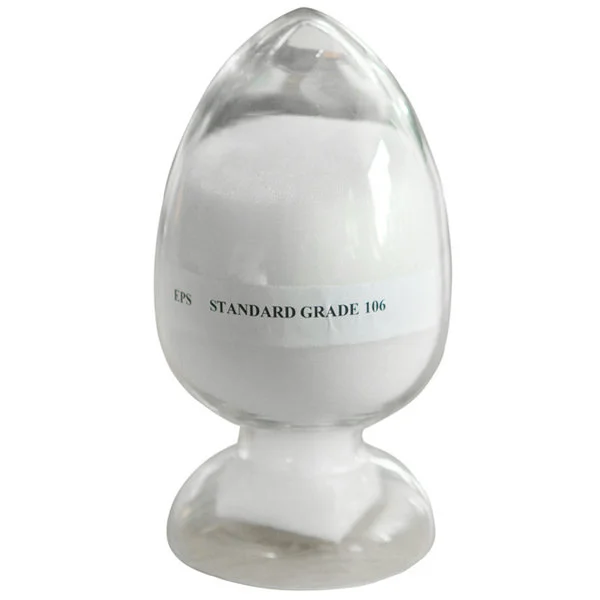
Standard-grade EPS beads are the industry baseline. Raw bead diameter before expansion typically falls between 0.5 and 2.5 mm, with the processor selecting the appropriate size for their target product density. Pentane content runs between 5.5% and 7.0% by weight. Post-expansion bulk density typically ranges from 10 to 30 kg/m³.
Standard grade processes cleanly across a wide range of steam pressures (0.8–1.2 bar) and temperature profiles, making it compatible with virtually all EPS machinery configurations on the market.
Where Standard Grade Works Best
- Protective packaging: Electronics, appliances, white goods, fragile industrial components. Density typically 15–20 kg/m³.
- Block-and-cut insulation: Flat slab insulation for walls, floors, and roofs where fire reaction classification is not mandatory. Density 15–25 kg/m³.
- Fish boxes and cold chain packaging: Density 20–30 kg/m³ for rigidity and moisture resistance.
- Decorative architectural elements: Cornices, columns, moldings. Low density (10–15 kg/m³) allows post-processing with hot wire or CNC.
Sourcing Considerations
Standard grade is the most liquid grade in spot trading and carries the lowest price premium. The full EPS manufacturing process—from raw bead pre-expansion through molding and curing—relies on bead pentane retention. Standard-grade beads have a shelf life of approximately 90 days when stored at temperatures below 25°C and away from direct sunlight.
Grade 2: Fast-Cycling EPS Grade
What Makes It Different
Fast-cycling EPS grade reduces the total molding cycle time by 20–35% compared with standard grade. This is achieved through modified bead morphology (higher surface area-to-volume ratio), tighter pentane concentration control (typically 5.0–6.5%), and surfactant coatings that accelerate steam penetration into the bead mass.
The result: faster fusion, faster vacuum cooling, and earlier mold opening without product deformation. For high-volume shape molding operations running 24-hour schedules, the productivity gain translates directly to output capacity—more parts per shift from the same machine footprint.
Where Fast-Cycling Grade Works Best
- High-volume shape molding: Automotive components, appliance void fillers, repetitive packaging formats.
- Thin-wall products: Items with wall thickness below 20 mm where rapid steam penetration is critical.
- Multi-cavity molds: Where each additional 10 seconds per cycle represents significant annual output loss.
- Operations running 2+ shifts: The ROI on the grade premium (~8–10% over standard) is recovered within the first quarter at production scales above 500 m³/month.
Machine Compatibility
Fast-cycling grade extracts maximum benefit on machines with efficient vacuum cooling systems. Before committing, review your machine’s cooling specification. Our guide to EPS pre-expander selection covers how pre-expander configuration affects downstream cycle performance.
Grade 3: Flame Retardant EPS Grade
The Fire Classification Requirement
In construction applications, building codes in most export markets require EPS to demonstrate measurable fire resistance. Standard EPS does not meet B1 (low flammability) or B2 (self-extinguishing) classifications required under EN 13163 or national equivalents.
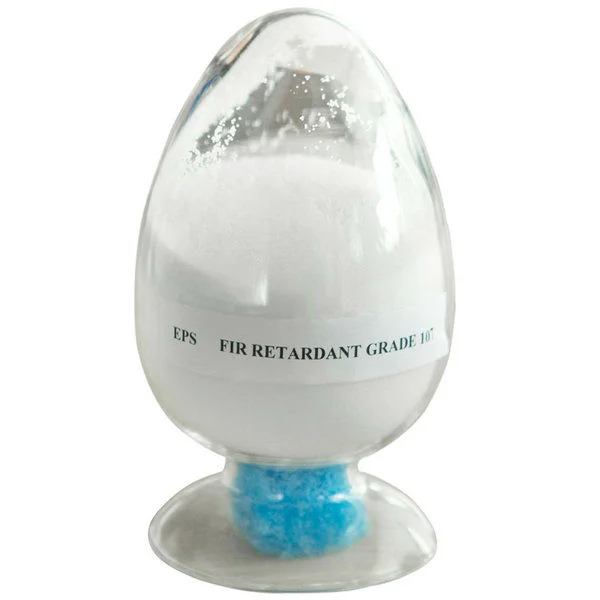
Flame retardant EPS grade incorporates polymeric flame retardants (PolyFR)—the HBCD alternatives since phase-out under the Stockholm Convention. The additive content typically runs at 1.5–3.5% by mass. Properly formulated, FR-grade EPS achieves:
- B2 (DIN 4102) / E (EN 13501-1): Self-extinguishing within 10 seconds. Suitable for most residential external wall insulation.
- B1 (DIN 4102) / D-s2,d0 (EN 13501-1): Low flammability. Required for many commercial and high-rise applications.
For detailed classification differences and China sourcing guidance, see our guide on flame retardant EPS beads grades and China sourcing.
Certification and Documentation
When sourcing FR-grade EPS from China, require: fire classification test report (EN 13501-1), substance declaration confirming PolyFR (not HBCD), REACH compliance declaration (for EU buyers), and batch-level CoA with FR additive content verification.
Grade 4: Graphite-Enhanced EPS Grade (Grey EPS)
The Thermal Performance Leap
Graphite-enhanced EPS incorporates graphite particles that reduce thermal conductivity through radiation absorption and reflection within the bead cell structure. While standard EPS delivers λ of approximately 0.033–0.038 W/(m·K), graphite-enhanced grade achieves 0.030–0.033 W/(m·K) at equivalent density—a 15–25% improvement.
The practical implication: a graphite EPS board at 100 mm thickness provides insulation equivalent to a standard EPS board at 120–130 mm.
Physical Characteristics
- Color: Grey to dark grey
- Bead diameter: 0.3–1.5 mm (smaller beads optimize graphite distribution)
- Pentane content: 5.0–6.5%
- Bulk density post-expansion: 14–22 kg/m³
- Thermal conductivity λ: 0.030–0.033 W/(m·K) at 10°C mean temperature
Processing Differences
Graphite particles absorb infrared radiation during pre-expansion, so beads heat faster and can over-expand if steam time is not reduced by approximately 5–10%. Most operators recalibrate within two or three trial batches. Most commercial graphite EPS grades include FR treatment (B2 minimum), but verify independently.
Grade 5: High-Density EPS Grade
When Structural Performance Defines the Specification
High-density EPS grade produces finished products in the 25–40 kg/m³ range. At these densities, EPS develops compressive strength of 150–300 kPa at 10% deformation (per ASTM C578), qualifying it for structural infill, geotechnical, and load-bearing applications.
Bead formulation uses smaller initial bead sizes (0.3–1.0 mm) and lower pentane content (4.5–6.0%).
Where High-Density Grade Works Best
- Geotechnical lightweight fill (EPS Geofoam): Under highways, bridge approaches, and embankments. ASTM D6817 specifies EPS22 through EPS40 density grades.
- Structural insulated panels (SIPs): EPS core bonded between OSB or steel facings.
- Heavy industrial packaging: Large machinery, turbine components, heavy medical equipment.
- Below-grade insulation: Under-slab insulation subject to soil load.
Production Notes
High-density grade requires longer pre-expansion hold times and 24–36 hours maturing before molding. Rushing the maturing step produces under-fused products with reduced mechanical strength. The complete EPS factory setup guide covers silo sizing and maturing capacity planning. Quality control for high-density EPS places higher weight on compressive strength testing—see our quality control and defects guide for structural-grade testing protocols.
How to Choose the Right EPS Grade: A Decision Framework
Grade selection follows a logical hierarchy of constraints:
Step 1: Fire Classification Required?
If your product goes into building envelopes in any regulated market, you need FR grade or graphite grade (most graphite grades include FR treatment). Do not substitute non-FR grade based on price.
Step 2: Thermal Performance Target Beyond Standard Grade?
If your specification requires λ ≤ 0.032 W/(m·K), graphite-enhanced grade is the only EPS option.
Step 3: Structural Compressive Strength Required?
For load-bearing, geofoam, or reusable heavy packaging at 25+ kg/m³, only high-density grade raw material delivers this economically.
Step 4: Is Cycle Time Your Primary Constraint?
Above 300 m³/month on shape molding lines, fast-cycling grade should be your default for non-FR, non-structural products.
Step 5: Default to Standard Grade
If none of the above constraints apply, standard grade offers the broadest processing window, lowest price, and widest supplier base.
EPS Raw Material Price Drivers in 2026
- Styrene monomer tracking: EPS raw material price tracks closely with styrene monomer (SM) price, following crude oil and benzene markets.
- Chinese domestic demand: Post-2025 construction recovery has tightened supply, applying upward pressure on export spot prices since Q1 2026.
- PolyFR additive cost: FR-grade premium reflects PolyFR cost ($3,500–$5,000/ton), adding $80–$150/ton to FR-grade price over standard.
- Graphite premium: Held at roughly $400–$550/ton over standard through 2025–2026.
- Shipping: FCL rates from Chinese east coast ports to Europe approximately $1,800–$2,400/40HC.
For volume buyers (above 50 tons/month), quarterly formula pricing linked to styrene monomer index provides more predictable procurement costs than spot purchasing.
Frequently Asked Questions
- What is the typical bead size range for EPS raw material?
- Standard EPS beads range from 0.3 mm to 2.5 mm in diameter before expansion. Packaging grades typically use 0.8–2.0 mm; high-density and graphite grades use smaller beads in the 0.3–1.0 mm range.
- What pentane content should I specify when ordering?
- Standard and FR grades: 5.5–7.0%. Fast-cycling and graphite grades: 5.0–6.5%. High-density grade: 4.5–6.0%. Always request a Certificate of Analysis confirming pentane content at delivery.
- How long can EPS raw material be stored before processing?
- Standard grade: ~90 days under proper conditions. Fast-cycling: 60–75 days. Graphite: 75–90 days. High-density: up to 120 days due to lower pentane content. Always check supplier-specified shelf life.
- What is the difference between B1 and B2 flame retardant classification?
- B2 (self-extinguishing) is baseline for residential construction under DIN 4102. B1 (low flammability) is required for commercial and high-rise buildings. B1-certified EPS carries a 10–20% price premium over B2.
- Can I mix EPS grades from different suppliers?
- Mixing grades in the same batch is strongly discouraged and produces inconsistent density, fusion quality, and mechanical properties. Process existing inventory to completion before introducing new material.
- What is the minimum order quantity for specialty EPS grades from China?
- Standard: 10–20 tons. FR, graphite, fast-cycling: 20–40 tons. High-density: 15–30 tons. Small-lot premium of 5–10% for orders below minimums.
- How does Chinese EPS pricing compare to European suppliers?
- Chinese EPS typically prices at 15–25% below European ex-works prices. Landed cost advantage after freight and duty is usually 8–15% for standard grade and 10–18% for specialty grades.
- Is graphite EPS always flame retardant?
- Most commercial graphite EPS grades include FR treatment (B2 minimum), but this is not universal. Always verify fire classification independently from thermal performance specifications.
- What quality tests should I require on every shipment?
- At minimum: bead size distribution, pentane content (GC method), bulk density post-expansion, moisture content (<0.5%), and for FR grades, flame retardant additive content. Our quality control guide provides detailed incoming inspection protocols.
- How does bead size affect processing and product quality?
- Smaller beads produce smoother surfaces, more uniform density, and better inter-bead fusion—important for thin-wall shapes. Larger beads expand faster and are preferred for thick block molding where surface finish is not critical.
Summary: Matching Grade to Application
- Standard grade delivers the broadest processing flexibility and lowest cost for packaging and non-regulated insulation.
- Fast-cycling grade unlocks 20–35% higher output on shape molding lines where throughput defines profitability.
- Flame retardant grade is the only compliant choice for construction applications in regulated markets.
- Graphite-enhanced grade achieves 15–25% better thermal performance at equivalent density for premium insulation.
- High-density grade opens structural, geotechnical, and heavy-duty applications that standard EPS cannot serve.
EPS industry production and sustainability benchmarks are maintained by PlasticsEurope, whose annual data summaries provide independent context for material performance claims across grades.