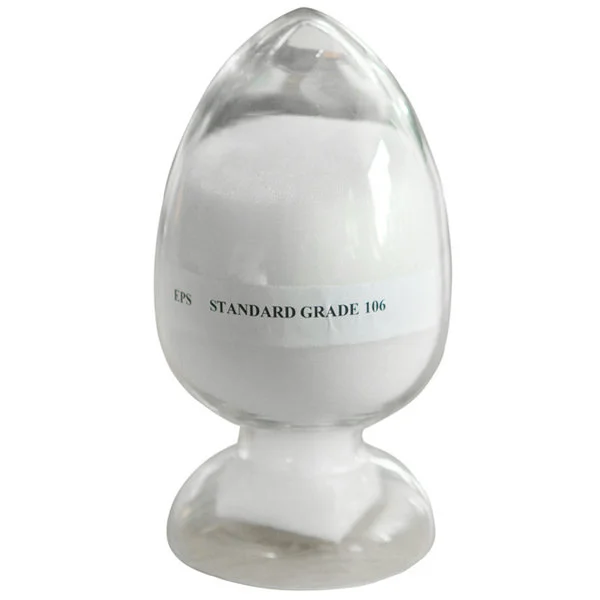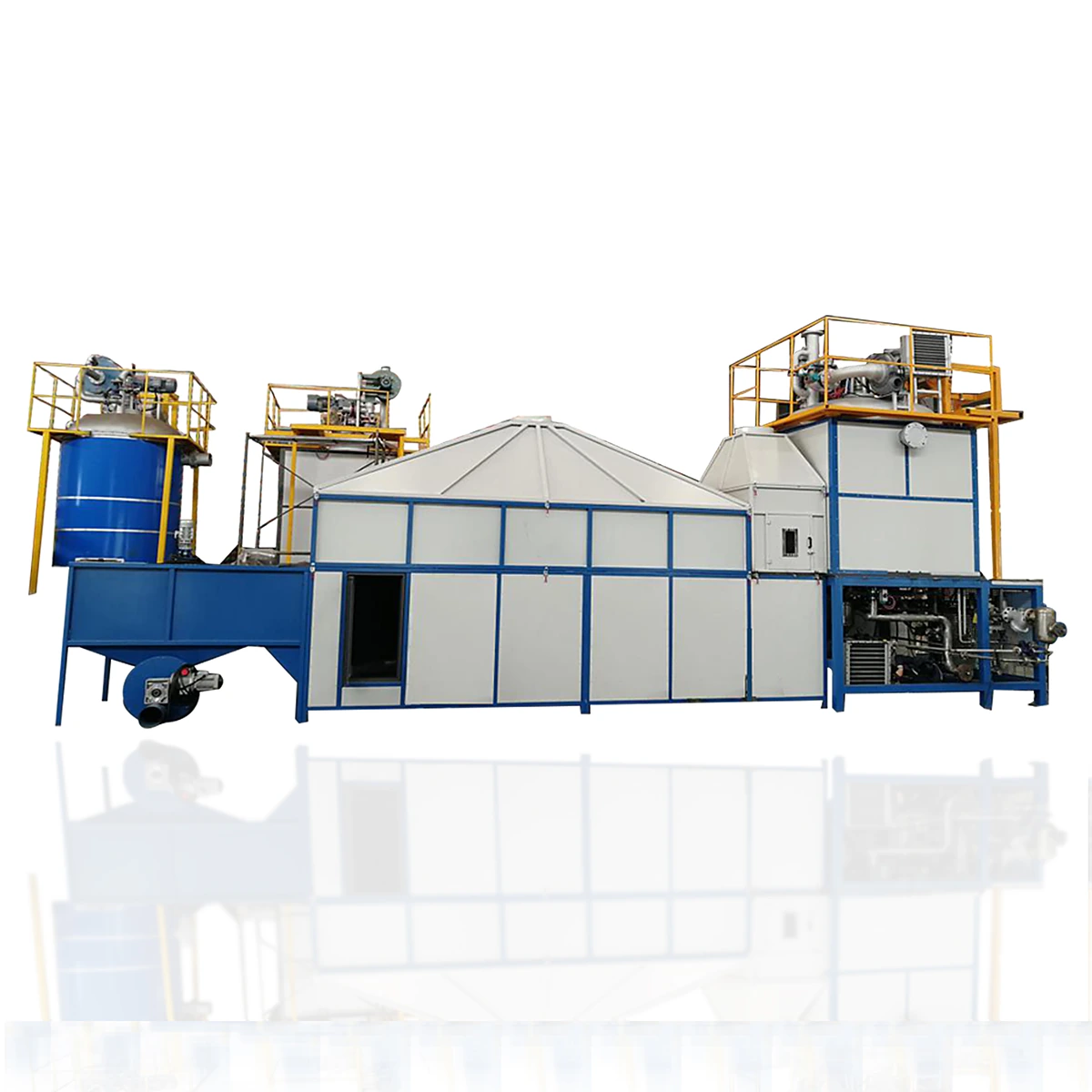
Fast-cycling EPS beads promise 20–30% shorter molding cycles — but the number that decides whether they pay for themselves is not the cycle time, it is your machine's utilization. On a shape-molding line that is genuinely capacity-constrained (running two or three shifts, turning away orders, or quoting long lead times), a 25% faster cycle converts almost directly into 25% more sellable parts from the same machine, floor space, and headcount, and the modest price premium on the bead is paid back in weeks. On a line that already sits idle half the day, the same bead just makes the machine wait faster and the ROI collapses. This guide separates the two situations honestly: what fast-cycling beads actually change on the floor, the three levers that create the return, a worked payback example you can copy with your own numbers, where the upgrade does not make sense, and a sourcing checklist. Read it alongside our fast-cycling B-series bead datasheet (grades B-301 to B-501, 20–30% faster, MOQ 5 tons FOB China) and the EPS raw-material grades pillar for how this grade sits against standard, high-expansion, and flame-retardant beads.
What "Fast-Cycling" Actually Changes on the Floor
A standard EPS molding cycle spends most of its clock in two phases: steam fusion (heating the pre-expanded beads until their surfaces soften and weld together) and cooling/stabilization (holding the mold under vacuum and water spray until the block or part is dimensionally stable enough to demold without warping). Fast-cycling grades are engineered — through bead-size distribution, blowing-agent balance, and surface characteristics — to fuse at a slightly lower energy input and, more importantly, to release heat and stabilize faster, which shortens the cooling phase that dominates total cycle time.
The practical result on a well-tuned line is a total cycle that drops by roughly 20–30% versus a comparable standard grade at the same density and part quality. That is a genuine process change, not a marketing figure — but it only materializes if your steam pressure, cooling water, vacuum, and pre-expansion and aging are already dialed in. A poorly-tuned line will not see the full benefit, and under-aged beads produce weak fusion regardless of grade. Match the expectation to the state of your process.
The Three ROI Levers
Faster cycles create value through three separate mechanisms. How much each one is worth depends entirely on your plant, which is why a generic "X% ROI" claim is meaningless.
- Throughput (usually the biggest lever). If the machine is the bottleneck — you are demand-constrained, running full shifts, or quoting long lead times — a 25% faster cycle means up to 25% more parts per shift from the same capital equipment. Each extra part carries your full contribution margin (selling price minus material and variable cost), and that margin is what pays back the bead premium. This lever is large precisely because it avoids buying a second machine.
- Energy per part. Shorter fusion and cooling phases mean less steam and less cooling-water pumping per part. Steam is typically the single largest energy cost in EPS molding, so a shorter, lower-energy cycle trims utility cost on every part you make — whether or not the machine is the bottleneck. The US EPA's guidance on industrial energy efficiency frames process-cycle reduction as one of the highest-return efficiency measures in continuous manufacturing, and steam-intensive foam molding is a textbook case.
- Labor and fixed-cost dilution. A machine operator, the floor space, the depreciation, and the supervision are largely fixed per shift. Producing more parts in the same shift spreads those fixed costs across more units, lowering fully-loaded cost per part even before you count the extra margin from selling them.
Illustrative Calculation — Not a Universal Guarantee
The prices, payback periods, and ROI numbers below use assumed inputs for raw-material cost, electricity, steam, labor, tariffs, sale price, and factory utilization. Actual results vary significantly by country and site. Send your local cost inputs to info@chinaeps.net for a country-specific model.
Worked ROI Example (Copy It With Your Own Numbers)
The figures below are an illustrative model, not a specific customer result — plug in your real cycle time, price, and volume. It shows the method, which is the part that transfers.
| Input | Standard Bead | Fast-Cycling Bead |
|---|---|---|
| Molding cycle time | 200 s | 150 s (−25%) |
| Effective run time / shift (8 h, 80% uptime) | 23,040 s | 23,040 s |
| Parts per shift (per cavity set) | ~115 | ~153 (+38) |
| Contribution margin per part | $4.00 | $4.00 |
| Extra margin per shift | — | +$152 |
| Bead premium (illustrative) | — | ~+$60–100 / ton |
In this bottleneck scenario, the extra 38 sellable parts per shift add about $152 of contribution margin per shift per machine. At one ton of bead feeding several shifts of output, a $60–100/ton premium is recovered almost immediately — often inside the first full week of production — after which the throughput gain is close to pure margin. The exact payback is sensitive to only four numbers: your current cycle time, your uptime, your margin per part, and the bead premium. Note the two figures that must be equal for the comparison to be honest: density and part quality. If the faster cycle only works by making a lighter, weaker part, that is a spec change, not an ROI gain. Hold density constant (verify against ASTM C578 if you make insulation board) and compare like for like.
Where Fast-Cycling Does NOT Pay
An honest supplier tells you when to skip the upgrade. Fast-cycling beads are the wrong choice — or a marginal one — when:
- The machine is not your bottleneck. If your line already runs one shift with idle hours, faster cycles just extend the idle time. The throughput lever (the big one) is zero; you are left only with the smaller energy and fixed-cost savings, which may not cover the premium.
- Your line is not tuned to exploit it. Fast-cycling grades reward tight steam, vacuum, cooling, and aging control. On an under-maintained or poorly-aged line the full 20–30% never appears — fix the process first, then the bead pays off.
- You need the lowest possible density. Like most engineered grades, fast-cycling formulations trade a slice of maximum expansion for their cycle advantage. If your product genuinely needs ultra-low density loose-fill, match the grade to the part instead.
- Demand is soft. Extra capacity is only worth money if you can sell it. In a slow order book, invest the premium elsewhere until demand returns.
Fast-Cycling Grade Map (B-Series)
| Grade | Bead Size | Typical Density | Best For |
|---|---|---|---|
| B-301 | 1.0–1.6 mm | 18–28 g/L | High-throughput block / insulation |
| B-302 | 0.8–1.2 mm | 18–30 g/L | Medium-detail shape molding at volume |
| B-401 | 0.6–0.9 mm | 22–33 g/L | High-cavity-count packaging |
| B-501 | 0.4–0.6 mm | 25–33 g/L | Thin-wall / precision fast-cycle parts |
Choose the grade by part geometry and target density first, then let the fast-cycling formulation do the cycle work. If you run several grades, adding a fast-cycling line is a parameter-set change on the same machine, not a re-engineering job — see the EPS quality-control and defects guide to keep fusion and dimensional stability in spec as you shorten the cooling phase.
Payback Calculation: A 5-Step Method
- Measure your true cycle time on the target part with your current standard bead — average several cycles, not a best case.
- Confirm the machine is the bottleneck. Is it running full shifts with orders waiting? If not, stop here — the throughput lever won't fire.
- Estimate the faster cycle (apply a conservative 20%, not 30%) and compute extra parts per shift at your real uptime.
- Multiply extra parts × contribution margin per part to get extra margin per shift, then annualize across your shift pattern.
- Divide the bead premium (per-ton premium × annual tonnage) into that extra margin. If payback is under a few weeks — as it usually is on a real bottleneck — the upgrade is a clear yes.
Sourcing Checklist: Buying Fast-Cycling Beads That Actually Cycle Faster
A "fast-cycling" label is only worth what the data behind it proves. Before you order, ask the supplier for:
- A stated cycle-reduction range against a named standard grade at equal density — not a bare "faster" claim.
- Certificate of Analysis per batch with bead-size distribution and measured density, since both drive the cycle result.
- Fusion and dimensional-stability data so you can confirm the faster cycle still yields in-spec parts. Pentane is flammable — see the NIOSH pocket guide on pentane for the storage and handling class your logistics and warehouse must plan for.
- Aging guidance — the recommended aging window before molding, because under-aged fast-cycling beads are the top cause of weak-fusion complaints.
- A sample-order path (MOQ 5 tons FOB) so you can validate the cycle gain on your own line before committing to volume.
A supplier that can produce all five is genuinely set up to deliver a cycle gain you can bank. For grade selection against your part and a cycle-time comparison on your target density, see the fast-cycling B-series datasheet, pair it with a matched pre-expander for consistent bulk density, and contact ChinaEps for a sample against your current standard bead.
Frequently Asked Questions
How much faster are fast-cycling EPS beads?
Fast-cycling B-series beads typically shorten the total molding cycle by 20–30% versus a comparable standard grade at the same density and part quality, mainly by fusing at a slightly lower energy input and stabilizing faster so the cooling phase — which dominates cycle time — is shorter. The realized gain depends on how well your steam, vacuum, cooling, and aging are tuned; a conservative 20% is the right number for a payback calculation.
When do fast-cycling beads actually pay for themselves?
When the molding machine is your bottleneck — running full shifts with orders waiting or long lead times. In that case a 25% faster cycle produces up to 25% more sellable parts from the same equipment, and each extra part carries your full contribution margin, so the modest per-ton bead premium is usually recovered within the first weeks of production. If the machine already sits idle, the throughput lever is zero and the ROI is weak.
Do faster cycles reduce part quality or density?
They should not. A legitimate fast-cycling comparison holds density and part quality constant and only shortens the cycle. If a "faster" result is achieved by molding a lighter, weaker part, that is a specification change, not an ROI gain — hold density constant (verify against ASTM C578 for insulation board) and compare like for like. Ask the supplier for fusion and dimensional-stability data at your target density.
Will fast-cycling beads work on my existing molding machine?
Generally yes. Fast-cycling grades are a parameter-set change, not a machine change — you tune steam dwell, vacuum, and cooling to the new grade and respect the recommended aging window. The prerequisite is a reasonably well-maintained line; an under-tuned or poorly-aged process will not see the full 20–30% benefit, so fix the process first if fusion is already inconsistent.
What is the minimum order for fast-cycling EPS beads?
ChinaEps supplies fast-cycling B-series beads (grades B-301 to B-501) at an MOQ of 5 tons FOB China. We recommend a sample order first so you can measure the actual cycle reduction on your own line and part before committing to volume, since the realized ROI is specific to your cycle time, uptime, margin per part, and the bead premium.