EPS (Expanded Polystyrene) foam is made in 6 stages: raw polystyrene beads containing 5–7% pentane blowing agent are pre-expanded with steam to 40–80× their original volume, aged in silos for 6–24 hours to stabilize, then fused in a block molding machine at 0.08–0.15 MPa steam pressure into large blocks (typically 4,000 × 1,200 × 1,000 mm). These blocks are cut into sheets, panels, or 3D shapes, with an optional shape molding path for direct-to-mold production of packaging inserts, fish boxes, and ICF building blocks. Total cycle from raw beads to finished product: 24–48 hours.
EPS is one of the most widely produced packaging and insulation plastics — the US EPA tracks polystyrene volumes in municipal solid waste — so understanding exactly how it is manufactured is the first step to producing it efficiently and recycling it responsibly.
Whether you are evaluating an EPS manufacturing investment or simply want to understand how the foam products around you are made, this guide walks through each production stage with the specific temperatures, pressures, and equipment involved.
Stage 1: Raw Material — Expandable Polystyrene Beads
EPS production starts with tiny, transparent polystyrene beads (0.3–2.5 mm diameter) that contain dissolved pentane gas as a blowing agent. These beads are produced by suspension polymerization of styrene monomer. The pentane content (typically 5–7% by weight) is what makes them “expandable” — when heated, the pentane vaporizes and inflates each bead into a closed-cell foam sphere.
Key bead grades include:
- Standard white EPS — general insulation and packaging (density range 10–30 kg/m³)
- Flame retardant EPS — construction applications requiring DIN 4102-B1 or EN 13501 fire classification
- Graphite EPS (grey) — 20% better thermal performance for premium insulation boards
- Fast-cycling EPS — shorter molding cycles for high-volume plants (20–30% faster)
Raw bead cost ranges from $1,200–$2,000/ton depending on grade and supplier location, with China-origin beads typically 15–25% below European pricing.
Stage 2: Pre-Expansion
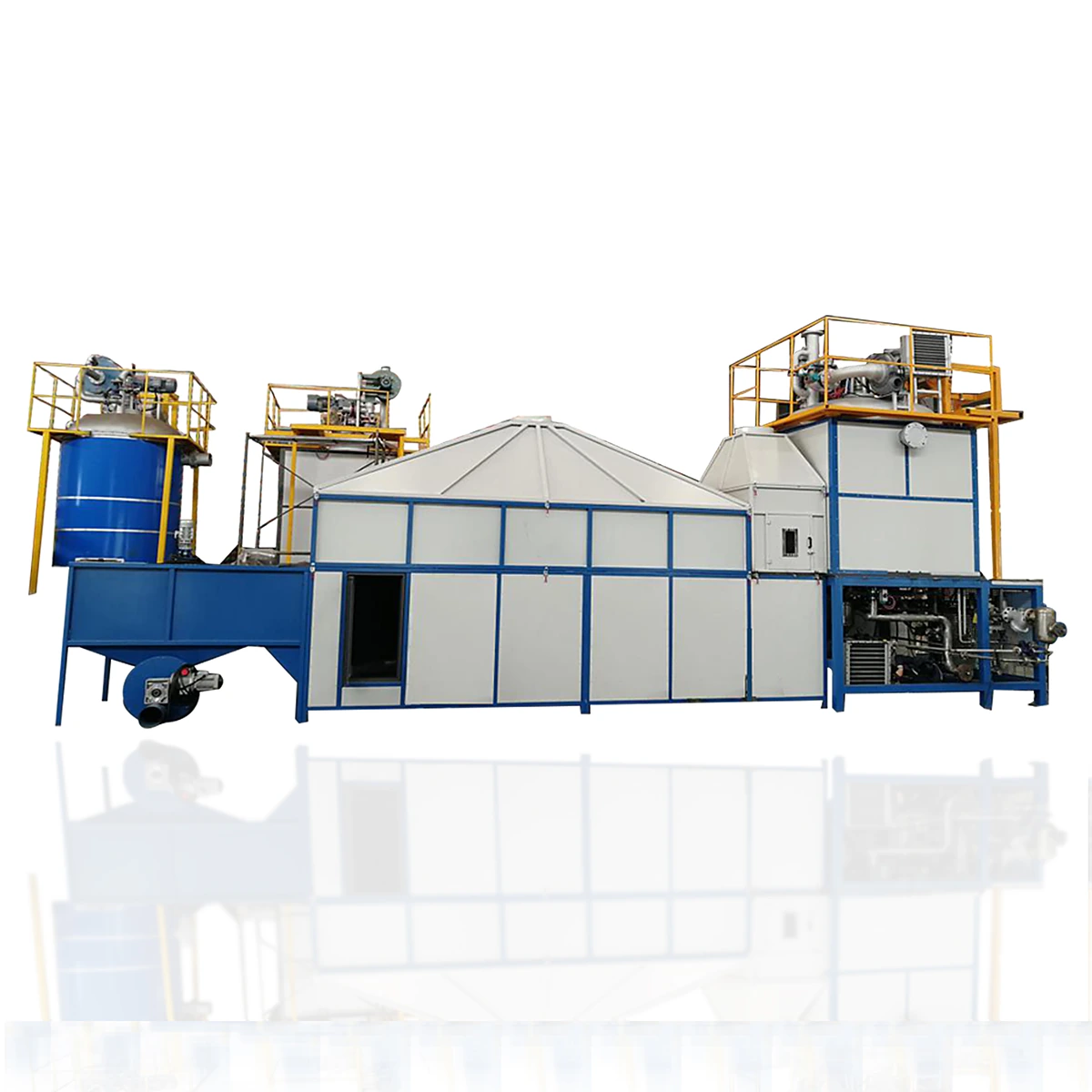
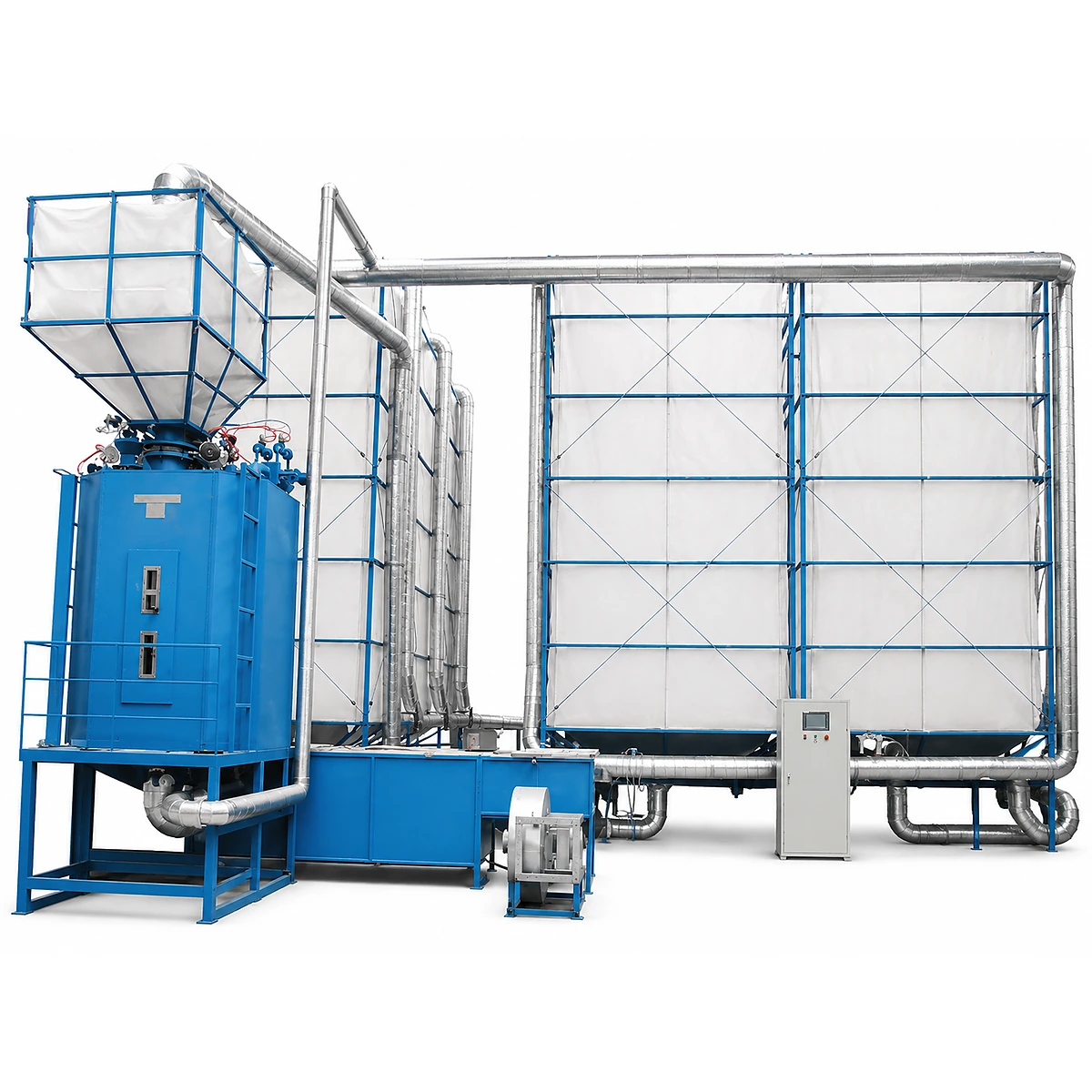
Raw beads are fed into a pre-expander machine where saturated steam (95–105°C, 0.02–0.05 MPa) heats them for 60–180 seconds. The pentane vaporizes, expanding each bead 40–80 times its original volume. The target density is controlled by adjusting steam temperature and exposure time — more steam = lower density = lighter foam.
Two types of pre-expanders are used:
- Batch pre-expanders — process fixed quantities per cycle, achieving ±0.5 kg/m³ density consistency. Best for plants under 3,000 kg/day.
- Continuous pre-expanders — constant-feed design achieving 30–50% higher throughput. Best for plants above 3,000 kg/day.
After expansion, beads are pneumatically conveyed to a fluidized bed dryer that removes surface moisture in 2–5 minutes before transfer to storage silos.
Stage 3: Aging (Silo Storage)
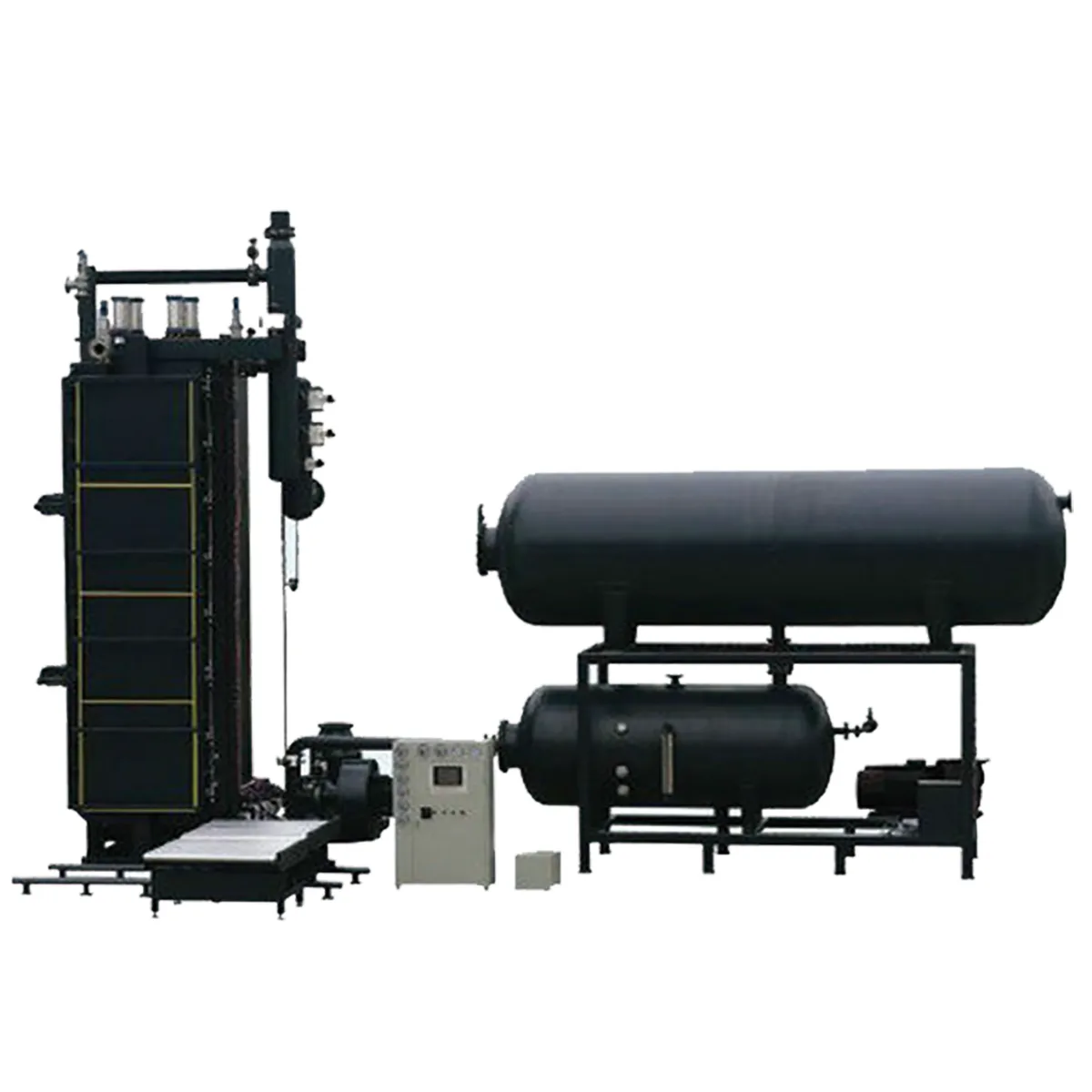
Freshly expanded beads are unstable — the pentane vapor inside creates a partial vacuum as it cools and condenses. Beads must rest in an EPS aging silo for 6–24 hours (12 hours is the typical industry standard) while:
- Air diffuses into the cells, equalizing internal pressure
- Residual pentane escapes (reducing from ~3% to <1%)
- Moisture content drops to <1%
Skipping or shortening the aging step causes soft blocks, poor fusion between beads, and surface defects that increase reject rates by 10–20%.
Stage 4: Block Molding
Aged beads are pneumatically injected into a block molding machine — a large rectangular chamber with perforated walls. The molding cycle has 4 phases:
- Fill (15–30 sec) — air pressure pushes beads into every corner of the mold
- Steam (20–45 sec) — steam at 0.08–0.15 MPa passes through the beads, softening their surfaces so adjacent beads fuse together permanently
- Cool (60–180 sec) — water spray and vacuum cooling stabilize the block (this is the longest phase and the main bottleneck)
- Eject (10–15 sec) — the mold opens and pushes out a finished block
A standard block measures 4,000 × 1,200 × 1,000 mm (4.8 m³). At 18 kg/m³ density, one block weighs ~86 kg. Modern machines produce 8–15 blocks/hour depending on density and cooling system efficiency. Steam consumption typically accounts for 35–50% of total operating cost.
Stage 5: Cutting
Molded blocks are stored for 24–72 hours for final dimensional stabilization, then cut into finished products using EPS cutting machines:
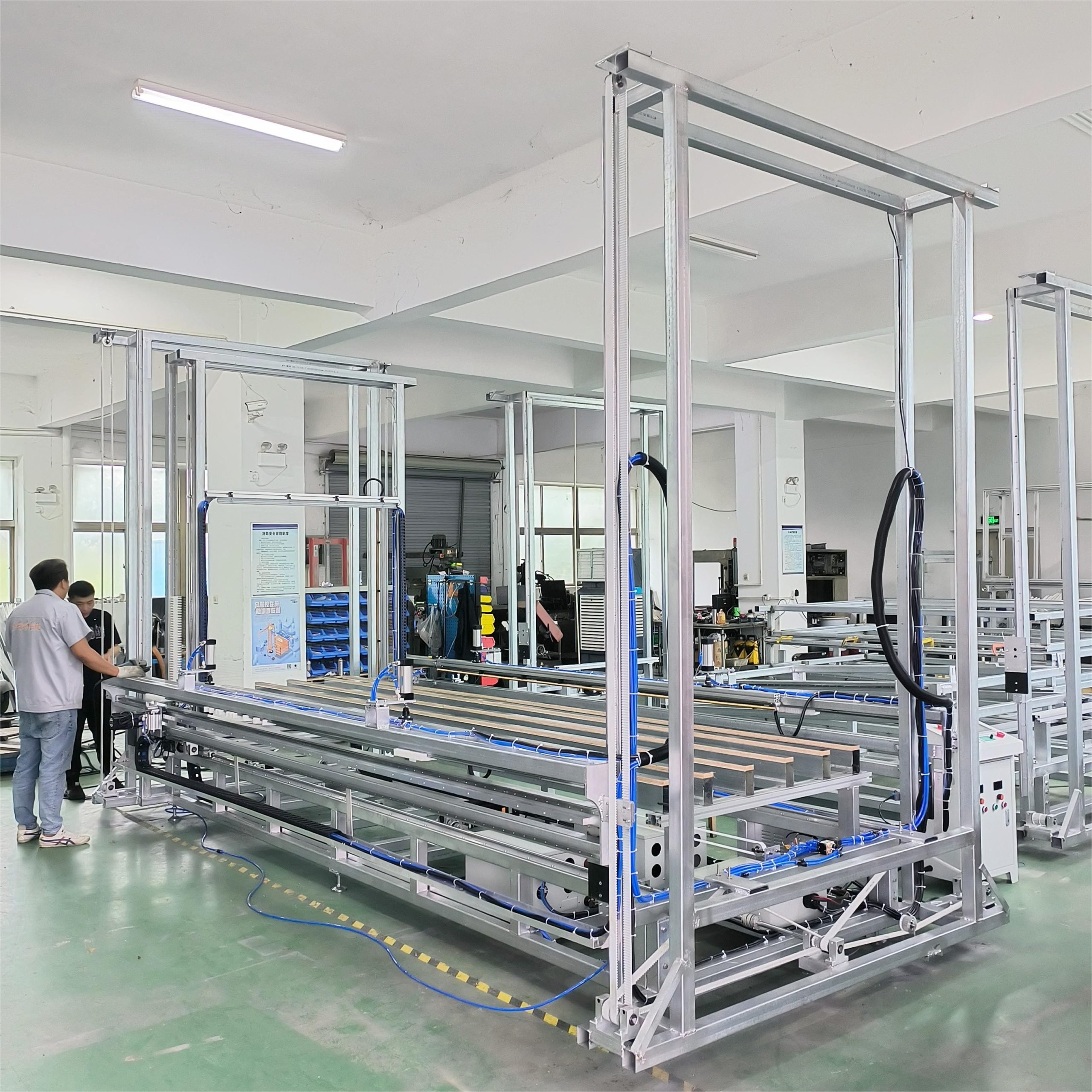
- Hot wire cutting — heated nichrome wire melts through EPS for straight cuts (sheets, boards). Speed: 3–8 m/min, accuracy: ±1 mm.
- Automatic cutting lines — multi-wire systems that slice an entire block into 10–50 sheets in one pass. Accuracy: ±0.5 mm.
- CNC shape cutting — computer-controlled hot wire for complex 3D profiles (architectural moldings, custom packaging). Accuracy: ±0.5 mm.
Off-cut waste (typically 5–15% of block volume) is granulated and recycled back into the production line or processed into recycled EPS pellets.
Stage 6 (Optional): Shape Molding
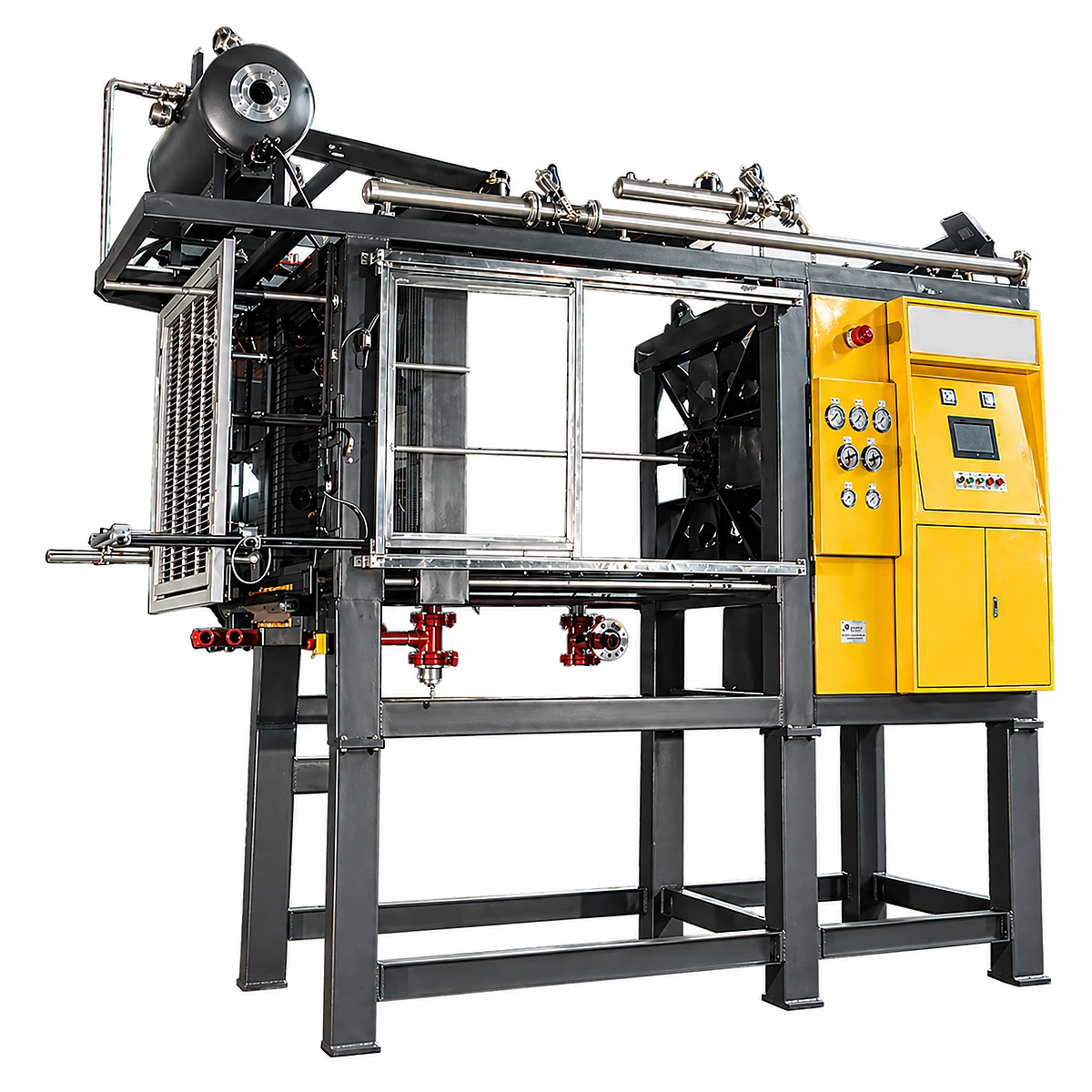
For products requiring exact geometries — fish boxes, helmet liners, appliance packaging, ICF blocks — a shape molding machine produces finished parts directly from aged beads without the block molding + cutting path. Beads are injected into a custom aluminum mold and steam-fused in 45–90 seconds per cycle. Shape molding is economical above 5,000 identical parts/month.
The same six-stage logic carries over to EPP (expanded polypropylene), with one extra machine and different set points: EPP beads must first be impregnated with CO2 or butane in a pressurised autoclave, and the molder has to be rated to 3.5 bar rather than the 1.5 bar an EPS line runs. If you are weighing the two materials before committing to a line, the EPP manufacturing process is documented stage by stage at the same level of parameter detail as above.
Complete EPS Production Line: Equipment & Investment
| Stage | Equipment | Investment Range | Key Spec |
|---|---|---|---|
| Pre-Expansion | Pre-Expander (PE-900 to PE-2000) | $18,000–$55,000 | 150–1,500 kg/h |
| Aging | Silo System (mesh/steel) | $5,000–$25,000 | 50–500 m³ capacity |
| Block Molding | Block Molding Machine (BM-1200 to BM-1200 (4 sizes)) | $35,000–$120,000 | 8–15 blocks/h |
| Cutting | Hot Wire / CNC / Automatic Line | $12,000–$90,000 | ±0.5–1 mm accuracy |
| Shape Molding (optional) | Shape Molding Machine (SM-1000 to SM-1400) | $25,000–$90,000 | 45–90 sec/cycle |
| Recycling | Crusher + Cold Compactor / Pelletizer | $8,000–$45,000 | 50–300 kg/h |
Total line investment for a mid-scale factory (2,000–4,000 kg/day): $150,000–$350,000. See our complete factory setup guide for detailed planning and ROI calculations.
Frequently Asked Questions
How long does it take to make EPS foam from scratch?
The complete process from raw beads to finished product takes 24–48 hours. Pre-expansion takes 2–3 minutes, but the mandatory aging step (6–24 hours) and post-molding stabilization (24–72 hours for cutting-grade blocks) extend the total lead time.
What temperature is needed to make EPS foam?
Pre-expansion requires 95–105°C steam. Block molding uses slightly higher steam pressure (0.08–0.15 MPa, corresponding to 100–112°C). EPS softens at 80°C and deforms above 100°C, which is why steam temperature control is critical for product quality.
Is EPS manufacturing environmentally harmful?
Modern EPS production uses pentane (not CFCs or HCFCs) as the blowing agent — pentane has zero ozone depletion potential. Energy consumption is relatively low compared to other plastics (EPS is 98% air by volume). Production waste is 100% recyclable on-site. The main environmental concern is end-of-life management, which is addressed through mechanical recycling into pellets for reuse.
What is the difference between EPS and Styrofoam?
“Styrofoam” is a trademarked brand name (owned by DuPont, formerly Dow Chemical) for extruded polystyrene (XPS), which is a different product made by a continuous extrusion process. What most people call “styrofoam” is actually EPS — expanded polystyrene made by the bead molding process described in this article. EPS has visible bead structure; XPS has a smooth, uniform cross-section.
How much does it cost to produce 1 ton of EPS foam?
Production cost varies by density and scale: raw material ($1,200–$2,000/ton of beads) + steam energy ($80–$150/ton of finished EPS at 18 kg/m³) + electricity ($30–$60/ton) + labor ($20–$50/ton). Total production cost: approximately $1,400–$2,300/ton, with gross margins of 35–55% on finished products sold at $2,500–$4,500/ton.
Can EPS be made without pentane?
Pentane is currently the only commercially viable blowing agent for bead-process EPS. Research into CO²-blown and water-blown alternatives continues, but none have achieved the density control and cell structure quality required for commercial production as of 2026. All major EPS bead producers (BASF, INEOS, Loyal, Xingda) use pentane.