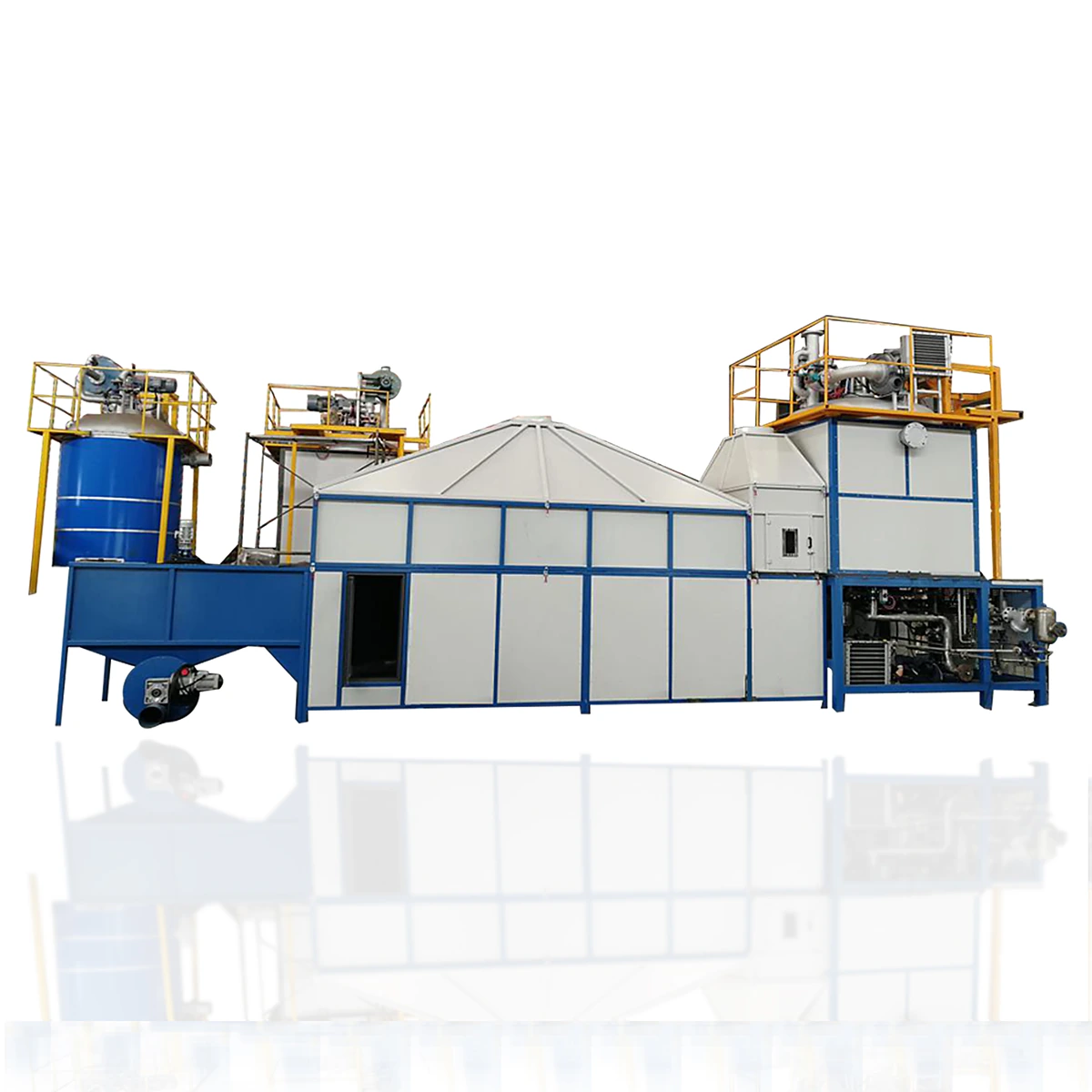
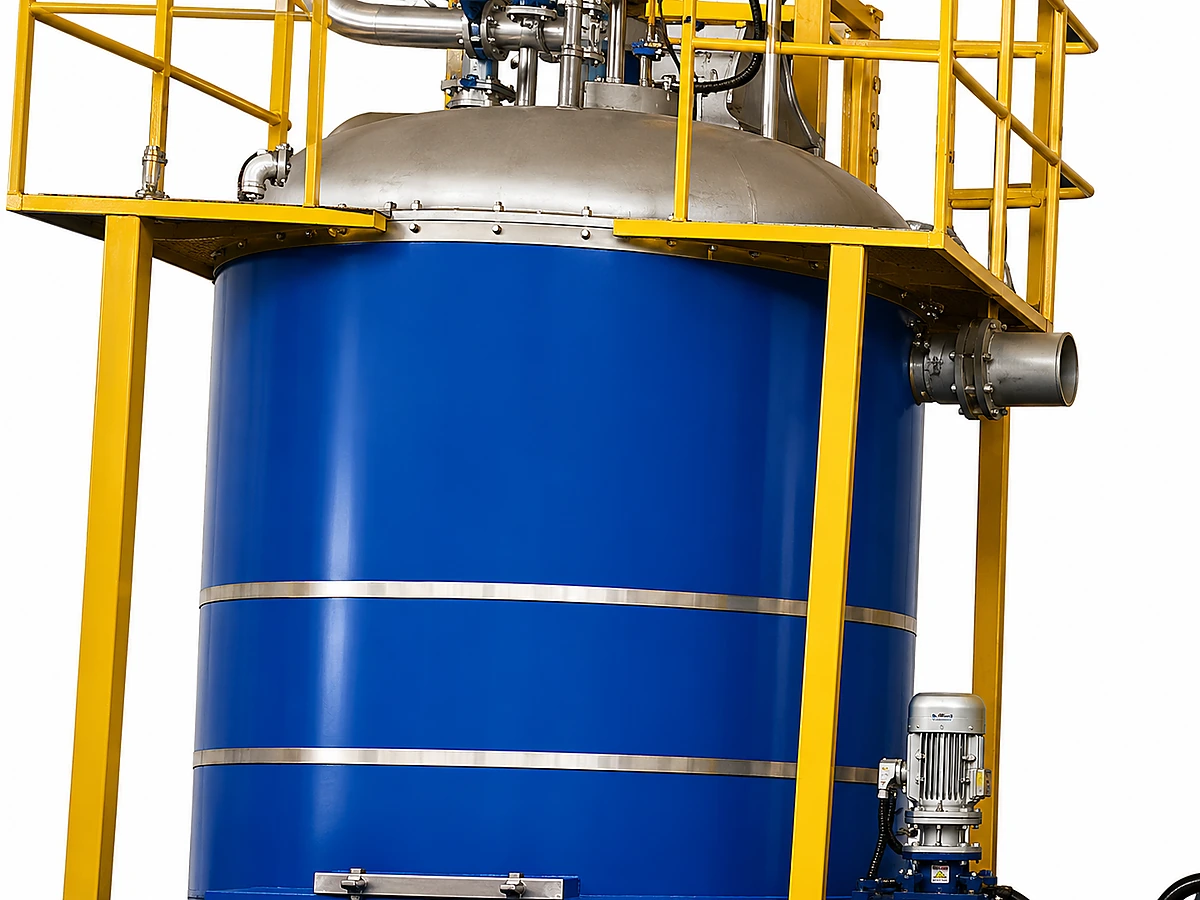
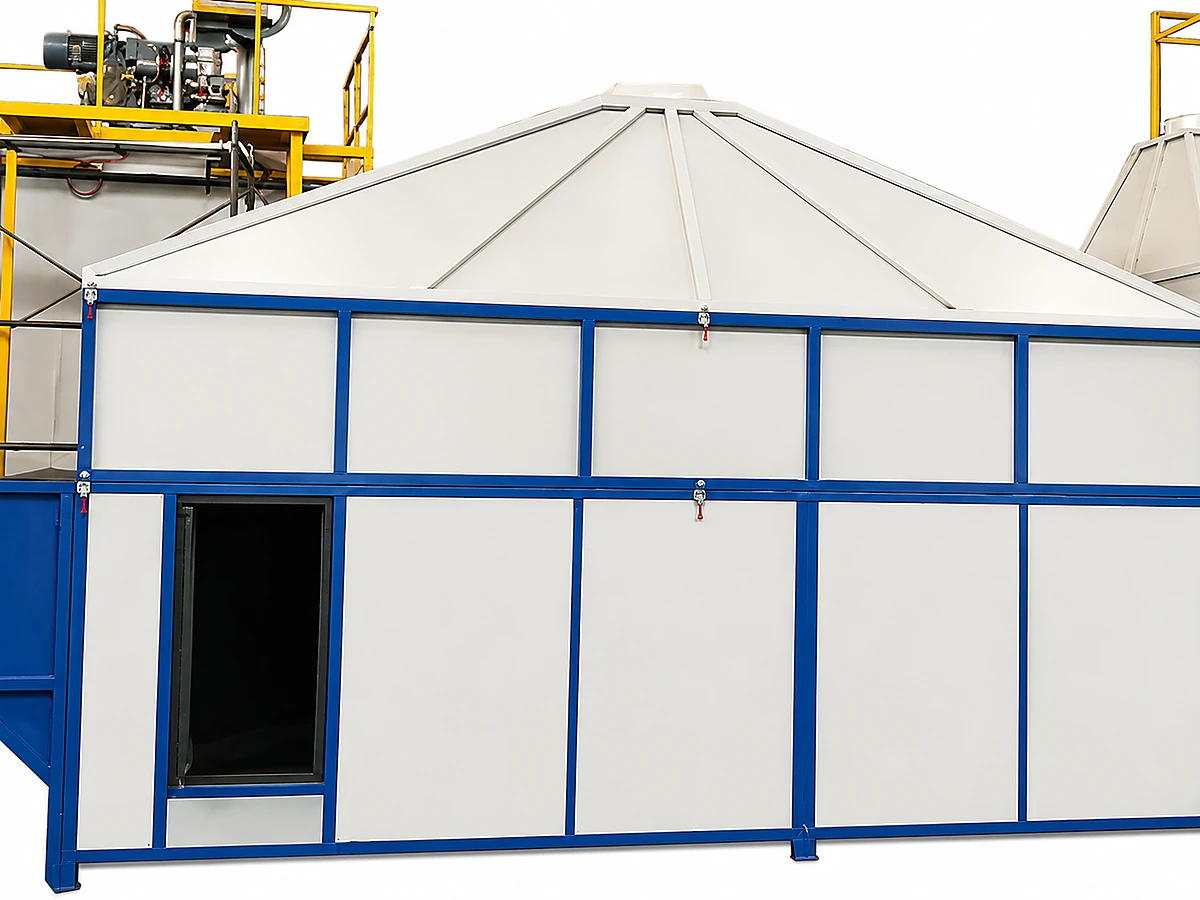
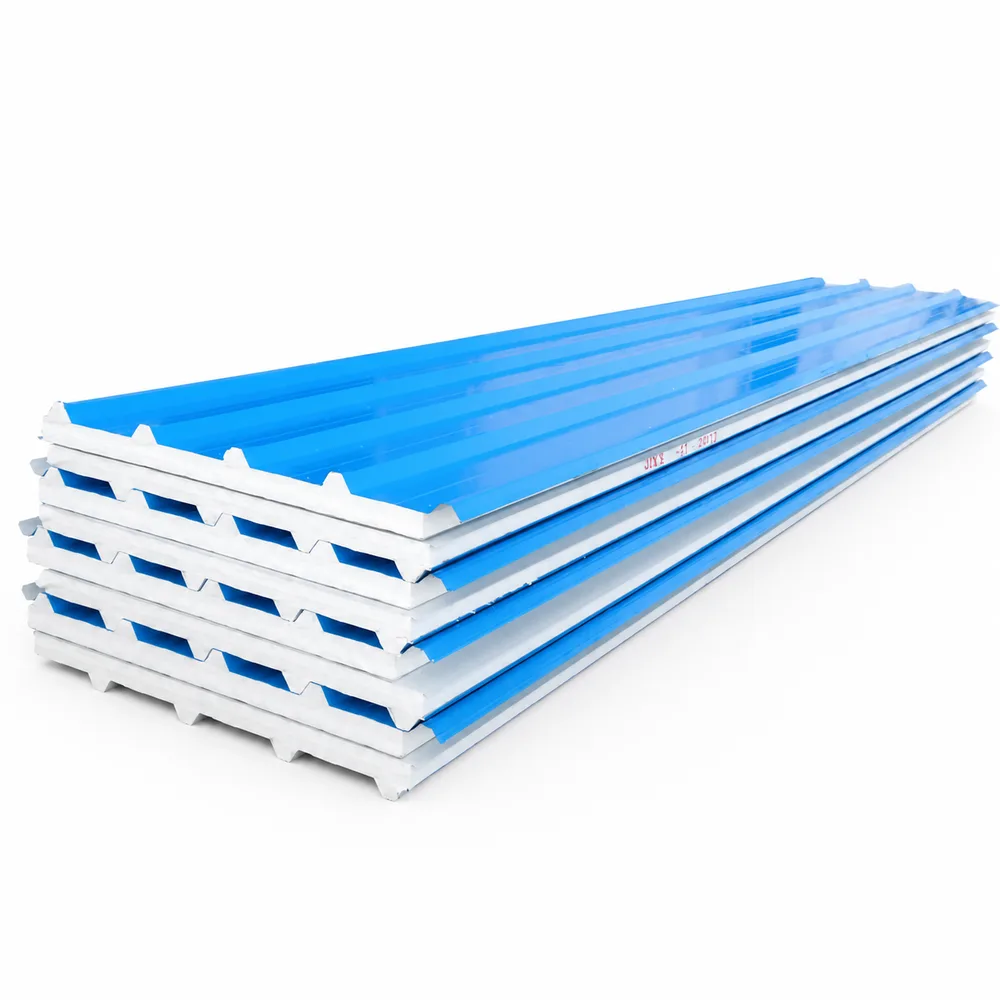
Double-layer 304 stainless steel with mineral wool insulation
Batch Capacity
700-900 kg/h (continuous batch cycle)
Target Density Range
8-30 kg/m³ (PLC-controlled batch density)
Density Variance
±0.5 kg/m³ batch-to-batch
Expansion Ratio
40-80× (raw bead to expanded volume)
Steam Pressure
0.18-0.23 MPa (closed-loop regulated)
Steam Consumption
80-100 kg per batch
Cycle Time
4-6 minutes per batch (depending on target density)
Agitator
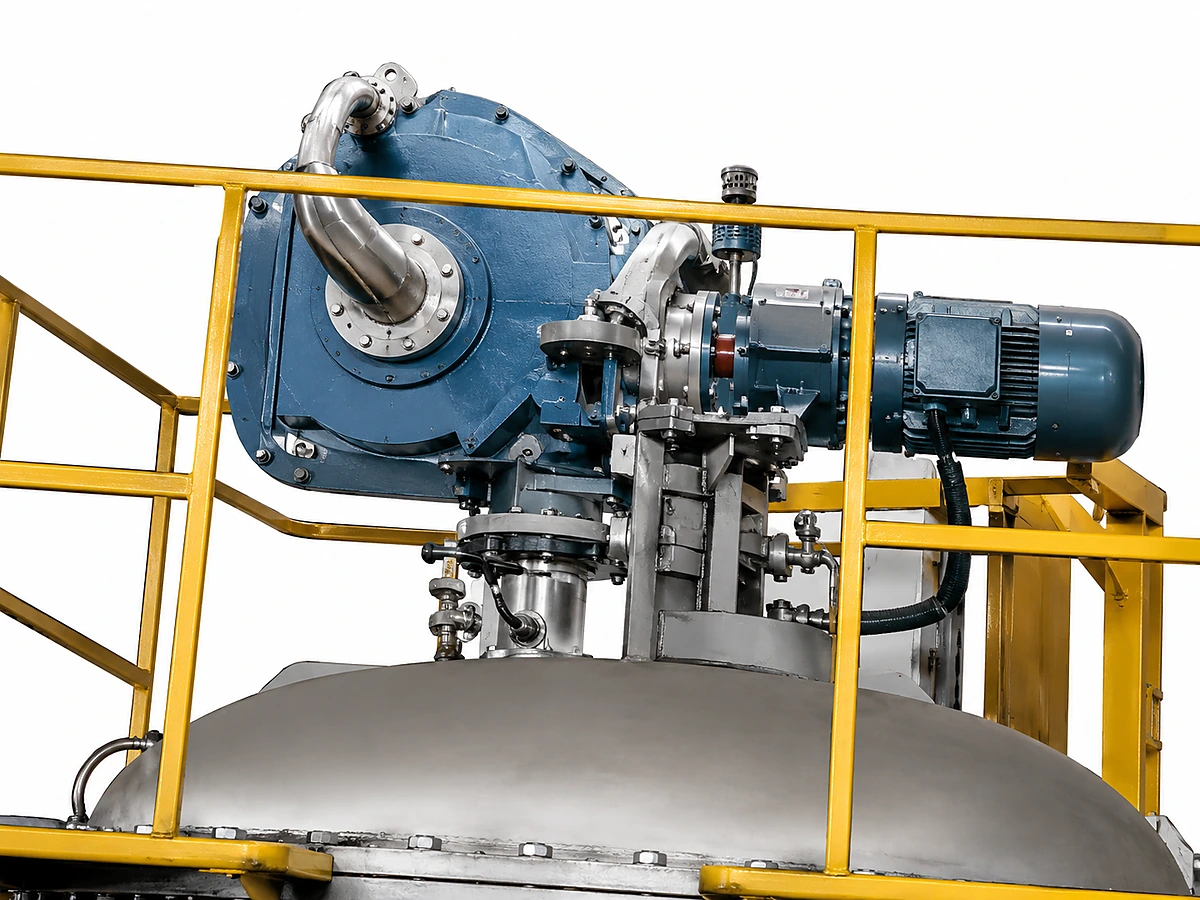
Bottom-driven 3-blade stainless steel agitator with 30:1 reducer
Weighing System
Electronic ±50g accuracy (5 kg load cell range)
Voltage
380V / 50Hz (220V / 60Hz on request)
Installed Power
30 kW total (agitator 7.5 kW + ancillaries)
Machine Weight
6,000 kg
Dimensions (L×W×H)
2,800 × 2,400 × 4,500 mm
Control System
Siemens S7-1200 PLC + 10.1" Weintek HMI
* Specifications are subject to change without notice. Contact us for the latest technical data.
What This Machine Solves
Three production problems eliminated by this machine — with engineered, measurable solutions.
The Problem
Inconsistent foam density wastes 8-15% of raw material per batch
How This Machine Solves It
PE-1400 uses a high-precision electronic weighing system + automatic material level detection to hold density variance under ±0.5 kg/m³, cutting raw material waste to 1-2%.
The Problem
Manual steam control causes uneven bead expansion and shape molding rejects
How This Machine Solves It
Closed-loop PLC steam pressure regulation (0.18-0.23 MPa) holds expansion ratio within ±2 times across all batches — downstream shape molding reject rate drops from 6-9% to under 2%.
The Problem
Long warm-up + slow batch cycles limit pre-expander throughput
How This Machine Solves It
Double-layer insulated barrel + steam recycling system shortens warm-up by 40% and trims the 700-900 kg/h cycle time vs older single-layer designs.
Inside the Machine — Core Components
Eight engineered subsystems that make this cutting line production-grade. Each component is sourced, built, and tested for industrial duty cycles.
1. Double-Layer Insulated Steel Barrel
Function
The main expansion chamber where raw EPS beads are heated by saturated steam injection. Double-layer construction with mineral-wool insulation cuts heat loss to the factory environment and reduces steam consumption by 30-40% vs single-layer barrels.
Engineering Details
1,400mm diameter, 304 stainless steel inner shell with 50mm mineral wool insulation under stainless outer shell. Working pressure rating 0.4 MPa (2× operating pressure for safety margin). Inspection port at top; conical bottom for clean discharge. Pre-heat time 8-12 minutes from cold start.
2. Closed-Loop Steam Control Manifold
Function
Regulates steam pressure into the barrel within ±0.005 MPa of setpoint. The closed-loop control is what makes density variance ±0.5 kg/m³ — manual valves can't hold this kind of consistency batch-to-batch.
Engineering Details
Pneumatically actuated control valve + redundant safety relief valve + digital pressure transducer. Setpoint 0.18-0.23 MPa adjustable on HMI. Steam recycling loop captures condensate back to boiler — energy savings 25-30% over open-vent designs.
3. Bottom-Driven 3-Blade Agitator
Function
Continuously stirs the expanding beads to prevent clumping, hot spots, and scorching. Bottom-drive design eliminates the seal leakage that plagues top-drive agitators after 6-12 months of service.
Engineering Details
3-blade 316 stainless steel agitator, 30:1 worm-gear reducer with 7.5 kW SEW Eurodrive motor. Variable-frequency speed control 15-45 RPM via VFD. Mechanical seal rated 10,000+ hours; replaceable from below without dismantling barrel.
4. Electronic Weighing Batch Loader
Function
Pre-weighs the exact mass of raw EPS beads for each batch (typically 8-18 kg depending on target density). The weighing accuracy directly determines final density consistency.
Engineering Details
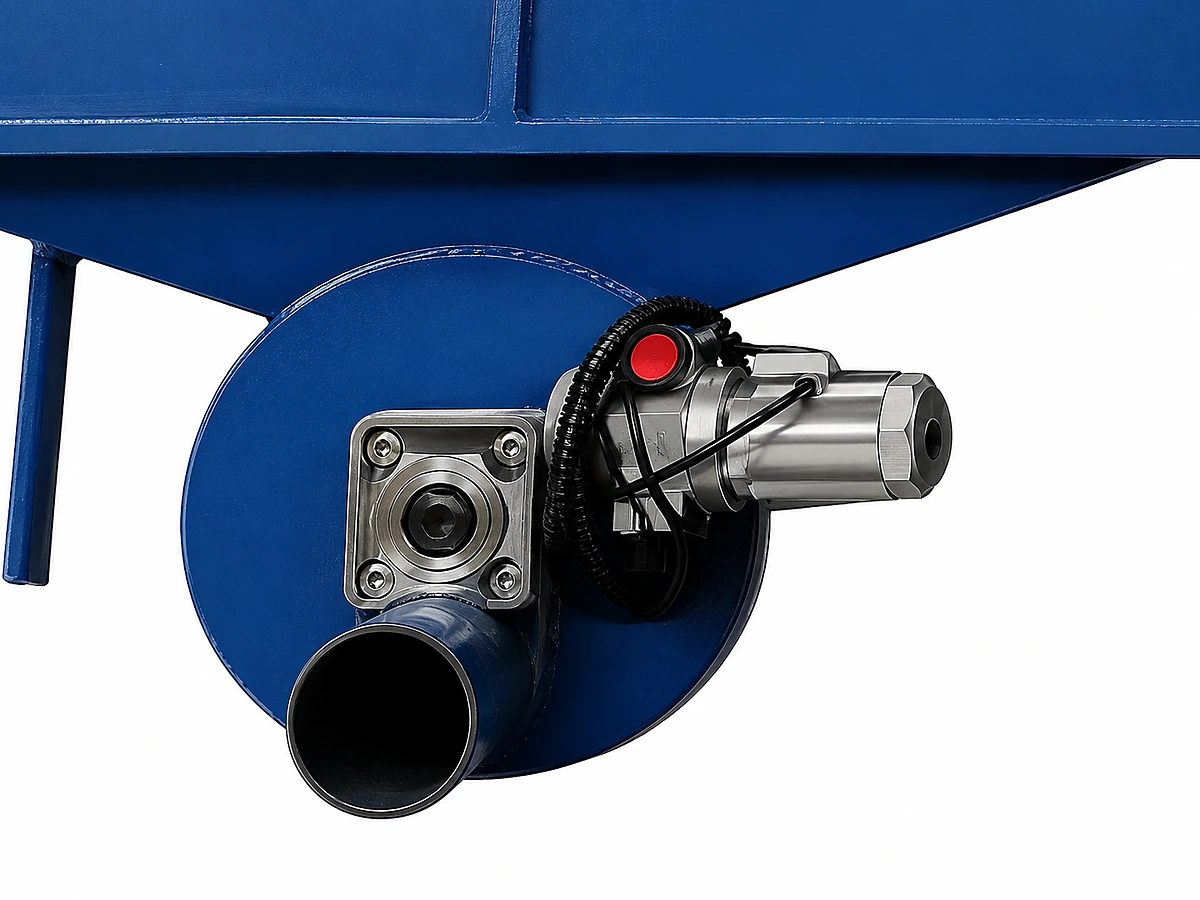
±50g accuracy via 5 kg load cells (German HBK or Mettler-Toledo). Pneumatic gate valve releases pre-weighed batch into barrel. PLC stores recipes per density grade; switching from 12 kg/m³ to 25 kg/m³ takes 30 seconds vs 15 minutes manual.
5. PLC + HMI Control System
Function
Supervises every parameter (steam pressure, temperature, batch mass, agitator speed, cycle timer, discharge sequence) in real time. Density recipe library + production logging enables QC traceability.
Engineering Details
Siemens S7-1200 PLC with 14 DI / 10 DO / 2 AI. Weintek MT8102iE 10.1" HMI with multilingual UI (EN/ZH/ES/PT/FR/RU/AR). USB recipe export for backup; optional Ethernet/IP for MES integration. Local fault log retains 1,000 events.
6. Fluidized Bed Dryer (Optional)
Function
Post-expansion stage that gently dries the freshly expanded beads before they enter the aging silo. Removes surface moisture that would otherwise cause clumping during the 24-72h aging period.
Engineering Details
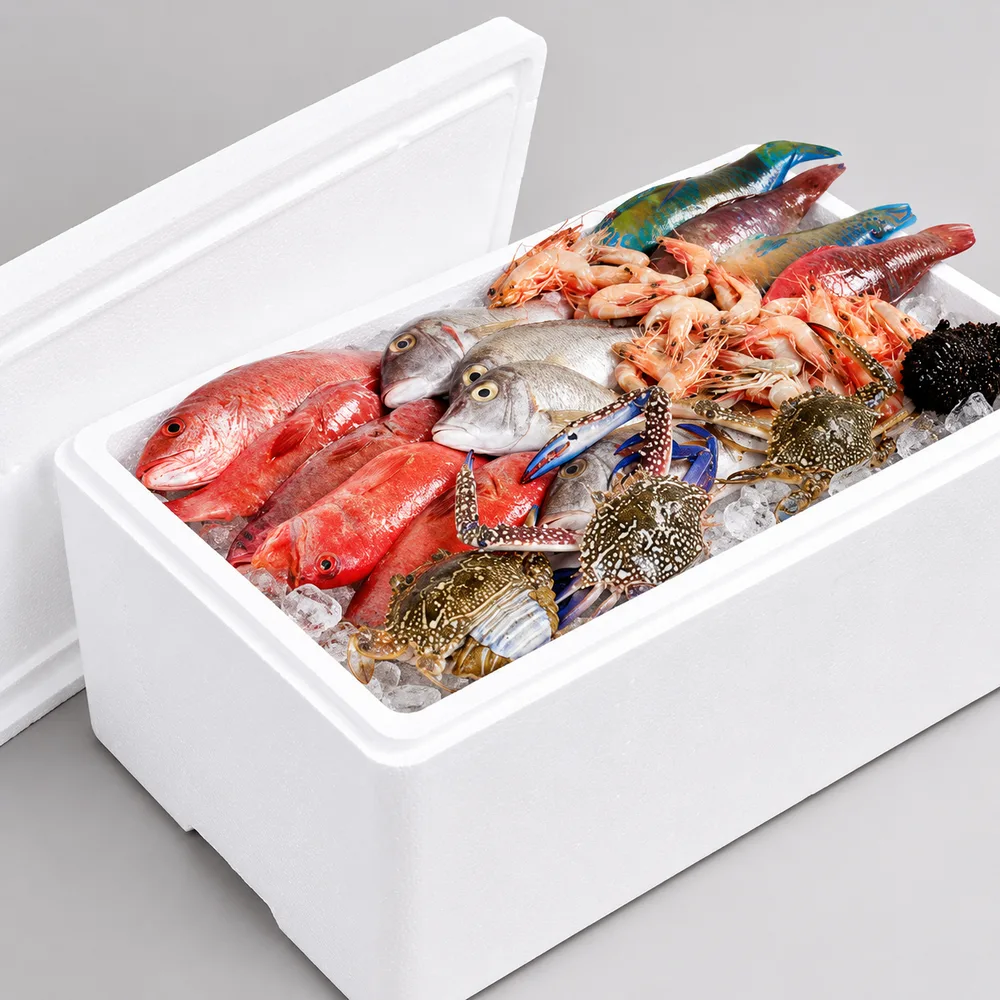
Vibrating perforated tray with hot-air flow; bead dwell time 5-10 minutes. Drying temperature 35-50°C (gentle enough to prevent shrinkage). Cyclone separator captures fines for recycling. Optional add-on — recommended for cold-chain or fish-box producers.
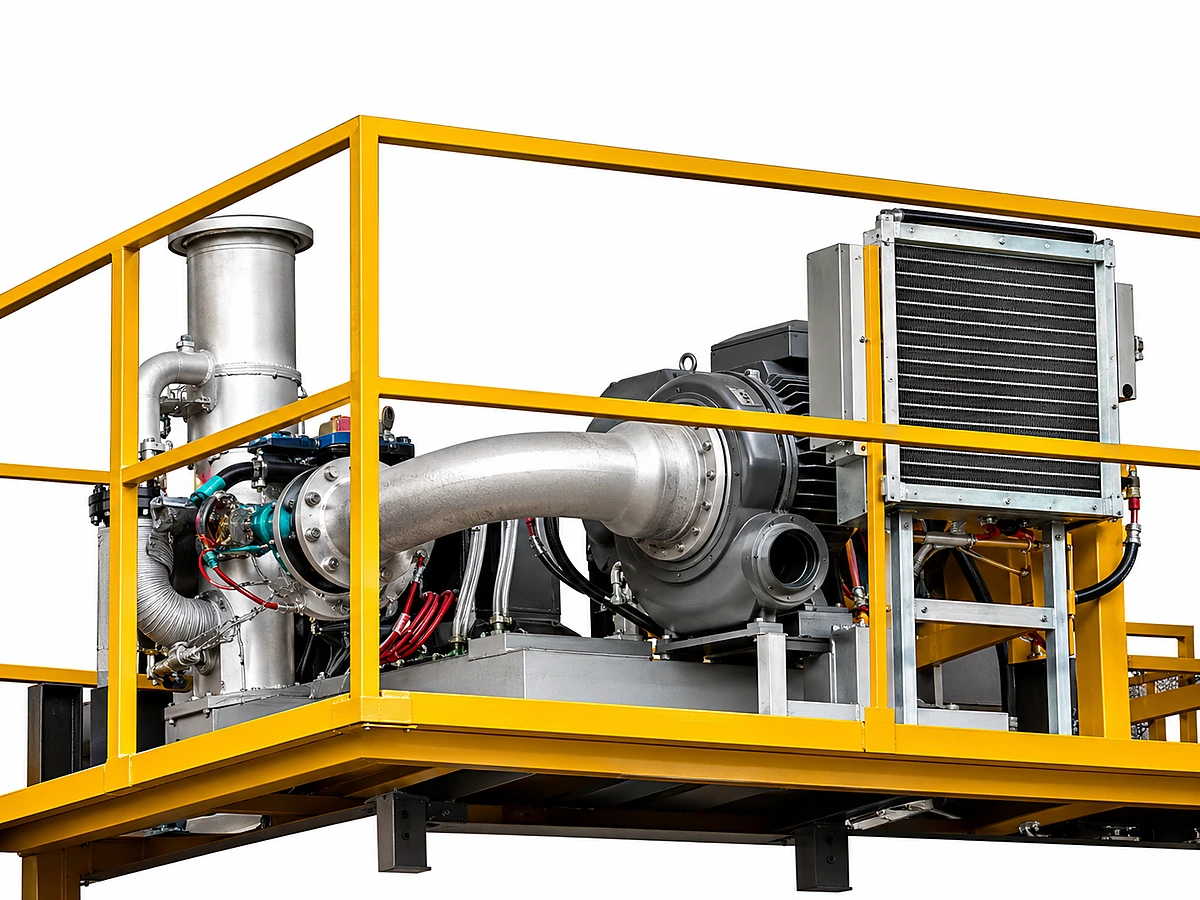
7. Pneumatic Discharge System
Function
Conveys expanded beads from the barrel to the aging silo (10-30m away). Pneumatic conveying is the industry standard — no mechanical augers or belts to damage the delicate freshly-expanded beads.
Engineering Details
Roots blower-based pneumatic conveyor, Ø150mm stainless steel duct. Conveying rate matched to batch discharge rate. Anti-static design prevents bead accumulation in elbows. Cyclone separator at silo inlet — 99% bead capture, 1% fines returned to scrap recovery.
8. Safety & Emergency Systems
Function
Protects operators and equipment from steam pressure excursions and electrical faults. Critical for unattended operation in modern lights-out factories.
Engineering Details
Pressure relief valve set 0.30 MPa (above max operating). E-stop mushroom on operator panel + machine side. Steam pressure interlock prevents agitator start until barrel sealed. Thermal cutoff trips heating if cabinet > 60°C. CE certified per EN 60204-1 and EN ISO 13849-1 PLd.
Working Principle
PE-1400 expands raw EPS beads by injecting saturated steam into the 1,400 mm stainless-steel barrel. The PLC controls steam pressure, expansion time, and discharge weight; the agitator ensures uniform heating; finished beads are discharged automatically to the aging silo.
Step 1
1. Feed
Raw EPS beads loaded from feed hopper via electronic weighing (±50g accuracy).
Step 2
2. Inject Steam
Saturated steam (0.18-0.23 MPa) injected; agitator turns at 30-50 rpm for uniform expansion.
Step 3
3. Expand
Beads expand 40-80×, density falls to 12-30 kg/m³ depending on recipe.
Step 4
4. Discharge
Auto-discharge to aging silo when target density signaled by level sensor + density meter.
Step 5
5. Aging
Beads age 8-24 hours in fluidized-bed silo; ready for shape/block molding.
Engineered Performance Advantages
Every advantage backed by measurable specs — no marketing claims without data.
Energy Saving
25-35%
vs vs traditional single-layer pre-expanders
Double-layer insulation + steam recycling cuts steam consumption per ton of expanded bead.
Density Variance
±0.5 kg/m³
vs industry typical ±2-3 kg/m³
Electronic weighing + closed-loop PLC keeps every batch within tight tolerance — fewer downstream rejects.
Double-layer 304 food-grade stainless steel, 5+10 mm wall.
Customer Case Studies
Customer details available on request.
RussiaYear: 2024
Configuration
2 × PE-1400 + BM-6000 line, 25 t/day
Outcome
Replaced two aging Korean pre-expanders; raw material waste dropped from 12% to 2.5% in first quarter; payback in 14 months.
EgyptYear: 2025
Configuration
1 × PE-1400 + SM-1400 packaging line
Outcome
Local home-appliance OEM cut packaging cost 18% by switching from imported molded foam to in-house production.
Maintenance & Safety
A clear schedule keeps the line running. Built-in safety systems protect operators and product alike.
Maintenance Schedule
Daily (every shift)
Inspect steam manifold for leaks. Clean weighing hopper of bead residue. Check HMI fault log; clear non-critical alarms. Verify agitator runs smoothly at start-up — no unusual noise or vibration. Confirm pneumatic conveyor airflow.
Weekly
Inspect agitator shaft seal for moisture. Lubricate gear reducer per SEW spec (NLGI-2 grease, 50g). Drain condensate from steam line low points. Check VFD heatsink airflow. Verify load cell calibration with reference weight (5 kg ±0.05 kg target).
Monthly
Open inspection port; clean barrel interior with food-grade detergent. Inspect agitator blades for wear or pitting. Check pneumatic conveyor pipe for bead accumulation in elbows. Service air-prep filter/regulator. Backup PLC recipe library to USB.
Major overhaul: replace agitator mechanical seal (10,000h spec), recalibrate load cells, re-certify safety circuit per EN 60204-1, update PLC firmware if Siemens advisories apply, refresh operator training including density-recipe management.
Safety Features
CE certification per EN 60204-1 (machinery electrical safety) and EN ISO 13849-1 PLd (safety-related control systems)
Pressure relief valve at 0.30 MPa setpoint — vents safely if barrel over-pressurizes
Steam pressure interlock prevents agitator start until barrel is sealed and pressurized
Two emergency-stop mushrooms — operator panel + machine side — Category 0 stop within 100ms
Thermal cutoff in electrical cabinet (>60°C) — auto-shutdown logged for audit
The questions buyers ask most often before placing an order.
How is the PE-1400 different from the older PE-1200 / PE-900 batch pre-expanders?
Three main differences: (1) Bigger barrel (1,400mm vs 1,200mm) = higher batch capacity per cycle = lower cost per kg of expanded bead; (2) Closed-loop PLC steam regulation (vs older PE-1200 manual valves) = density variance ±0.5 kg/m³ vs 2-4 kg/m³; (3) Double-layer insulated barrel + steam recycling = 30-40% lower steam consumption vs single-layer designs. Net: PE-1400 is the sweet spot for medium-large factories (5,000-30,000 m² monthly output).
What density range can the PE-1400 achieve, and how accurate is it?
Target density range 8-30 kg/m³. Variance ±0.5 kg/m³ batch-to-batch on the same recipe. Lower densities (8-12 kg/m³) require slightly longer cycle times (5-6 min) for full expansion; higher densities (25-30 kg/m³) cycle faster (3-4 min). For super-low density (<8 kg/m³) or high-density (>30 kg/m³ FR-grade), consider PE-1800 instead.
Can the PE-1400 handle flame-retardant graphite EPS?
Yes for standard FR grades up to 30 kg/m³. The steam manifold + closed-loop control hold the precise temperature window FR additives need to activate without scorching. For higher-density FR (30-45 kg/m³) used in premium high-rise construction, PE-1800 is recommended due to its higher steam capacity.
What is the steam boiler requirement to operate the PE-1400?
Minimum 0.5-ton/h steam boiler at 0.4 MPa working pressure. Most customers run a 1-ton/h boiler to cover the PE-1400 + downstream block molding (BM-1400) + shape molding (SM-1200) lines. ChinaEps can quote the matching boiler if needed.
How long is the wear life on the agitator mechanical seal?
Rated 10,000+ hours of operation (typically 2-3 years of single-shift use). Replacement is a 2-hour job — accessible from below without dismantling the barrel. Spare seal kit ships with every machine. We use Burgmann or John Crane seals (European spec).
Does the PE-1400 ship to 220V/60Hz countries?
Yes — factory build option. We swap the agitator motor (SEW Eurodrive 220V/60Hz variant), VFD, and contactors. PLC and HMI are voltage-flexible. No price difference; 2-3 week lead time adjustment.
What is the cycle time, and how many batches per hour?
Cycle time 4-6 minutes per batch depending on target density. At 5-minute average cycles, the PE-1400 runs 12 batches/hour = ~108 kg of finished beads/hour at 9 kg/batch = 700-900 kg/h finished throughput depending on density. Two-shift operation reaches 14+ tons/day.
Can the PE-1400 integrate with my existing aging silos and block molding line?
Yes — the pneumatic discharge system has standard Ø150mm flanges that connect to any cyclone-equipped aging silo. The PLC has analog and digital I/O for upstream/downstream handshaking (start interlock with boiler, discharge ready signal to silo). Most retrofits complete in 1-2 days on site.
What is the operator training requirement?
Two options: (1) factory training at Qingdao for 2-3 days during pre-shipment testing (you cover travel); (2) on-site training at your facility for 3-5 days commissioning + training (you cover travel + accommodation). Training covers PLC recipe management, density tuning, troubleshooting, maintenance schedule. Materials in EN / ZH / ES / PT / FR / RU / AR.
How is the PE-1400 packed and shipped?
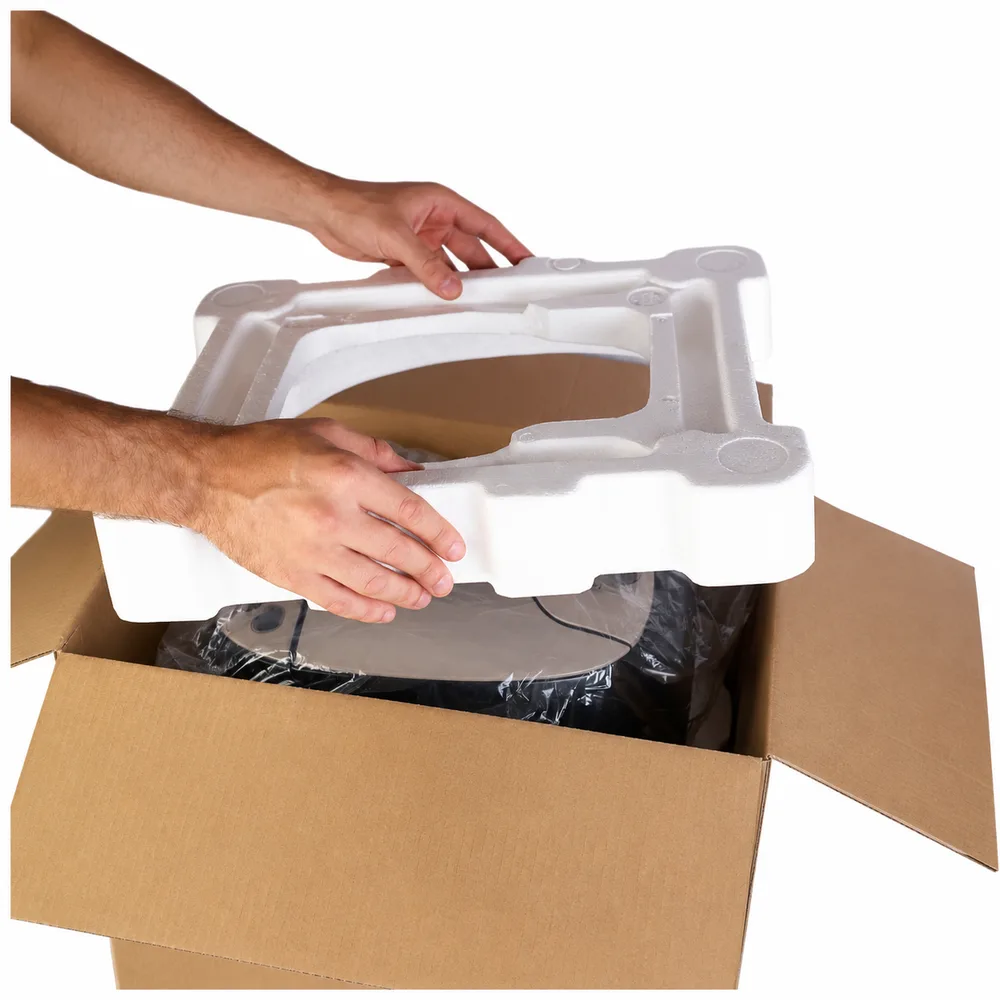
One 40HQ container fits the PE-1400 + electrical cabinet + spare parts kit. Barrel is shipped fully assembled (no risk of seal misalignment during reassembly). All steel surfaces oil-coated and shrink-wrapped against salt-air corrosion. Sensitive electronics in foam-lined wooden crates. Total weight ~6,500 kg.
Build a Complete EPS Line
This machine integrates into the full ChinaEps production flow — upstream, downstream, and auxiliary equipment from one supplier.