Boiler capacity for an EPS production line is not the sum of every machine's maximum steam rating — it is the peak simultaneous steam demand plus a practical operating margin. A pre-expander, shape molding machine, or block molding machine may look fine on paper, but the line cannot hold that output if the steam system cannot maintain stable pressure once several machines enter their steam stage at the same time. This guide walks through the method we use for an initial boiler-capacity assessment: which machines actually consume steam, how to calculate simultaneous demand with load factors, why pipe diameter and pressure loss matter as much as the boiler nameplate, when a steam accumulator earns its cost, and the 15 data points we ask for before quoting a steam system. Pair with our EPS aging silo guide for the upstream utility and our how EPS foam is made for the full process.
1. Why We Pay Close Attention to Steam in EPS Factory Design
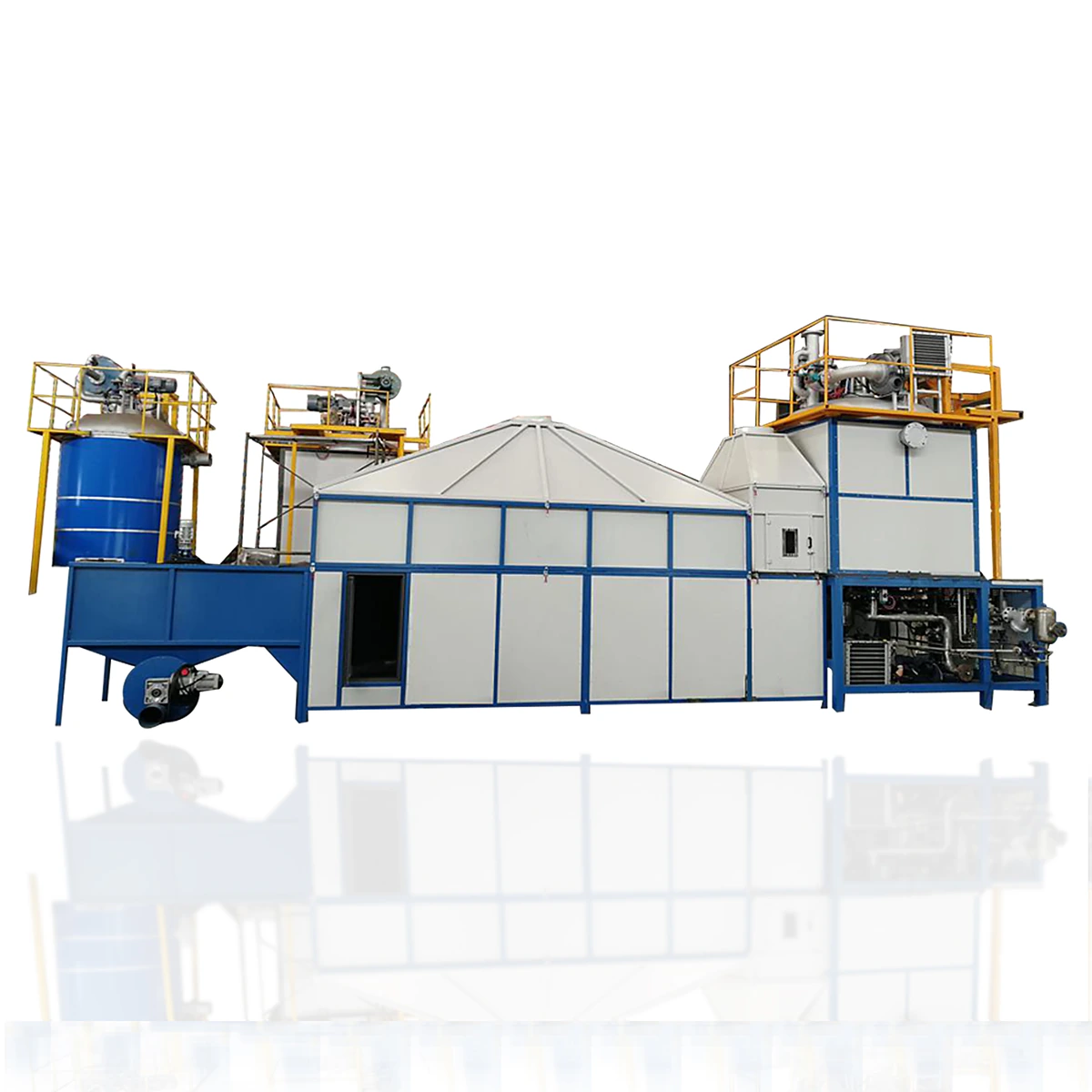
Steam is one of the most important utilities in expanded polystyrene manufacturing. It is used primarily during EPS bead pre-expansion, shape molding, and block molding. During pre-expansion, steam heats the beads and activates the expansion process. During shape molding and block molding, steam heats the beads inside the mold so their surfaces soften and fuse together.
Stable steam supply therefore affects much more than machine cycle time. If steam pressure or steam quality changes significantly during production, we may also see changes in pre-expanded bead density, bead fusion, product strength, surface quality, block uniformity, cycle time, product moisture, and overall production consistency. For this reason, when we design an EPS line, we treat the steam system as part of the production process rather than as a separate utility added at the end of the project.
2. Which Machines in an EPS Factory Actually Use Steam?
One of the first things we do is separate the factory equipment into steam users and non-steam users.
| Equipment | Included in Steam Calculation? | Main Steam Function |
|---|---|---|
| EPS Pre-Expander | Yes | Expanding raw EPS beads |
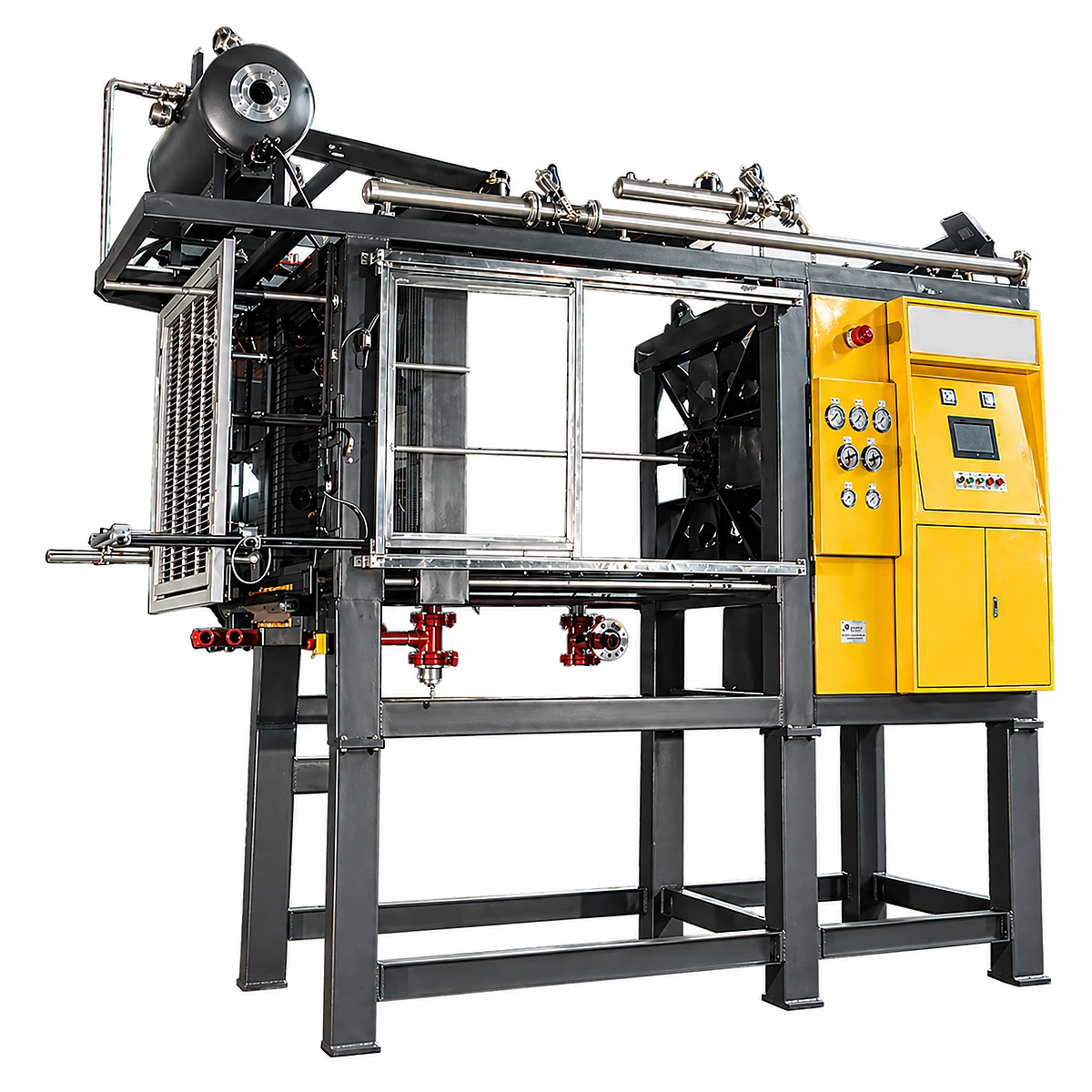
| EPS Shape Molding Machine | Yes | Heating and fusing beads in the mold |
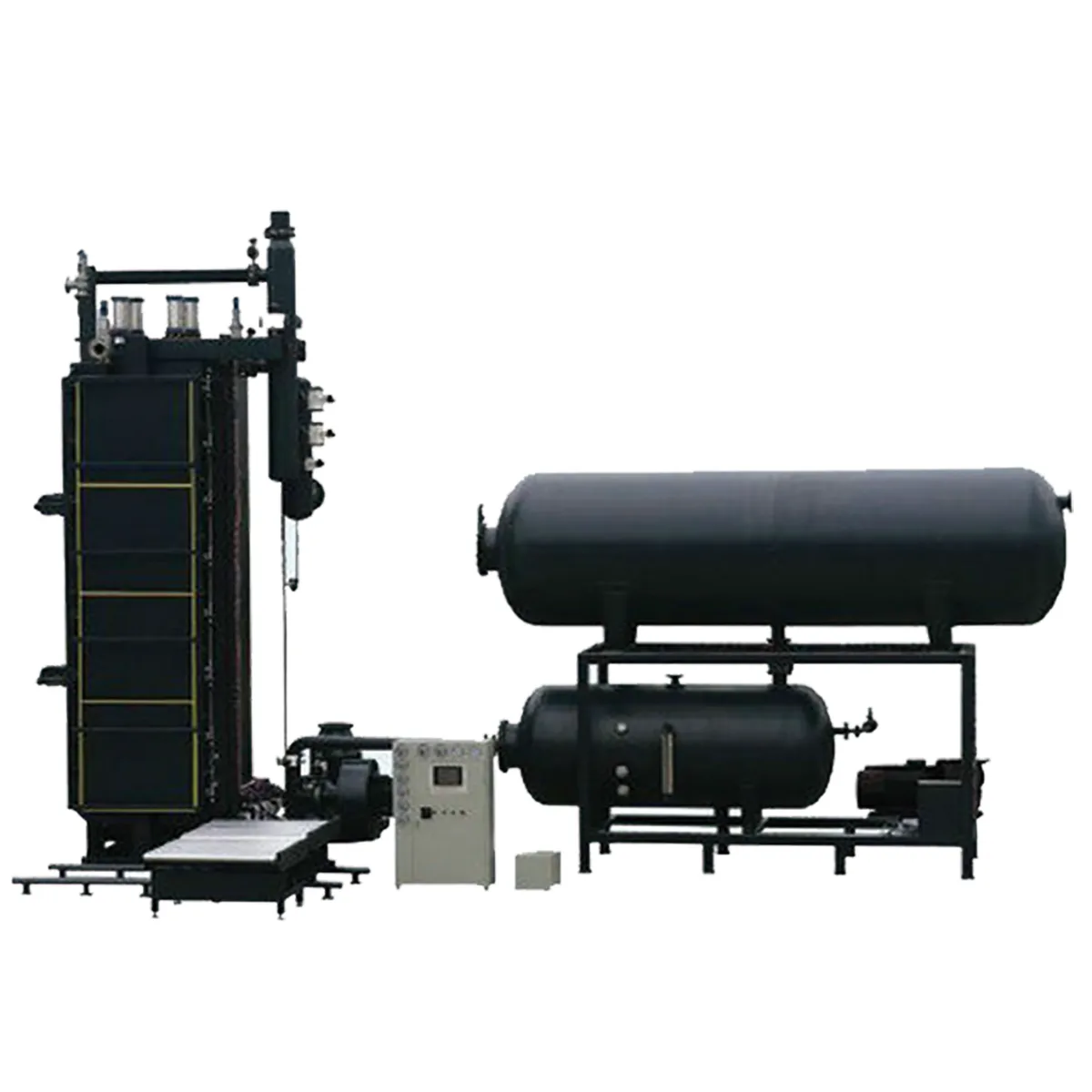
| EPS Block Molding Machine | Yes | Heating and fusing large EPS blocks |
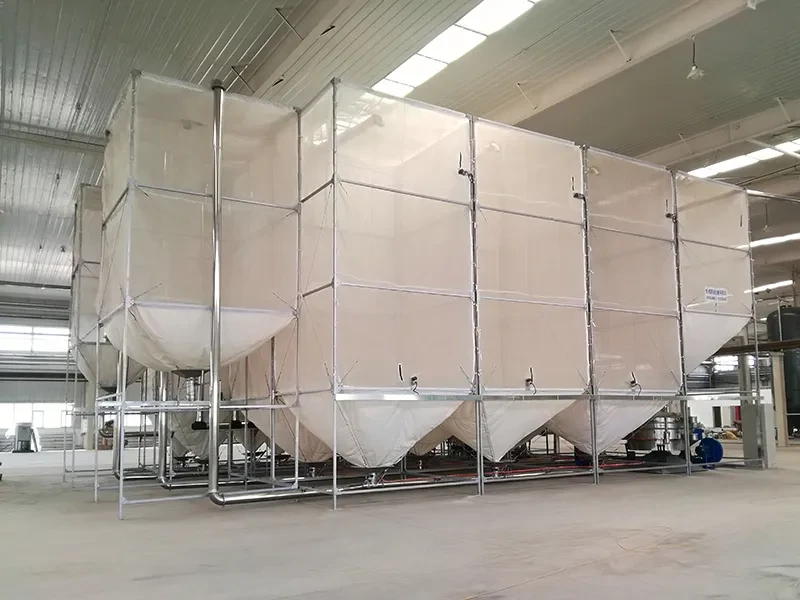
| Aging Silo | No | No direct process steam |
| EPS Cutting Machine | No | No direct process steam |
| Crusher | No | Normally no steam |
| Vacuum System | No direct process steam | Supports cooling and molding |
| Conveying System | No | Material transfer |
This distinction matters. We do not calculate boiler size according to total installed electrical power, total machine quantity, or workshop size. Instead, we identify the machines that actually consume steam and then analyze how they operate during a production cycle.
3. Why We Do Not Simply Add All Machine Steam Consumption
A common approach is to take the maximum steam consumption of every machine and add the numbers together. For example, a factory might have 1 pre-expander, 4 shape molding machines, and 1 block molding machine. If we simply add the maximum consumption of all six machines, the result may appear to be the required boiler capacity — but this can be misleading.
EPS molding machines normally operate in cycles. A typical shape molding cycle includes mold closing, material filling, steam heating, bead fusion, cooling, vacuum, mold opening, and demolding. The machine does not consume maximum steam during every stage — high steam demand is concentrated mainly during heating and fusion. The same is true for many block molding processes.
Therefore, we normally distinguish between connected steam load, average steam consumption, simultaneous steam load, and peak steam demand. The connected load may be much higher than the steam demand that actually occurs at one moment. At the same time, average hourly consumption may be too low to represent short periods when several machines request steam together. This is why we focus heavily on peak simultaneous demand.
4. The Basic Boiler Sizing Method We Use
For an initial assessment, we simplify the calculation as:
Required Boiler Capacity ≈ Peak Simultaneous Steam Demand + System Allowance
Peak demand can be estimated from:
Peak Steam Demand = Σ (Machine Steam Demand × Simultaneous Load Factor)
This is only a preliminary engineering method. Before finalizing a project, we also consider steam pressure required by each machine, pipe distance, pipe diameter, pressure loss, boiler response time, startup conditions, condensate recovery, production scheduling, future expansion, and steam accumulator requirements. The important point is that we calculate the steam system as a whole, not only the boiler nameplate capacity.
5. Step 1 — We List Every Steam-Using Machine
Our first step is to establish a steam-load table using actual technical information from our equipment specifications, existing machine nameplates, supplier data, customer production records, or on-site measurements from existing factories.
| Equipment | Quantity | Steam Demand |
|---|---|---|
| Pre-Expander | 1 | ___ kg/h |
| Shape Molding Machine | 4 | ___ kg/h each |
| Block Molding Machine | 1 | ___ kg/h |
| Other Steam Users | — | ___ kg/h |
We prefer this approach because two factories with the same daily output may have very different steam requirements. A factory producing EPS fish boxes may have many shape molding machines operating on short repetitive cycles. An EPS insulation-board factory may have fewer machines but a large block molding machine with significant short-term steam demand. The boiler should therefore match the real production process.
6. Step 2 — We Look at Peak Demand, Not Only Average Consumption
Average steam consumption is useful for estimating fuel consumption and operating cost, but it is not enough for sizing the steam supply system. Consider one shape molding machine: over one hour, it spends time on filling, steaming, cooling, vacuum, and demolding. Its average steam consumption may appear moderate, but during the steam stage, the instantaneous flow can be much higher.
Now imagine six machines. If several enter the steam stage at almost the same moment, total demand can rise sharply. If the boiler and piping system cannot respond quickly enough, steam-header pressure may drop — leading to slower mold heating, longer molding cycles, incomplete bead fusion, variable product quality, and unstable production rhythm. This is why we always ask how machines are expected to run together.
7. Step 3 — We Calculate Simultaneous Steam Demand (Worked Example)
Consider a simplified example. Suppose a factory has 1 pre-expander at 300 kg/h, 4 shape molding machines at 250 kg/h each, and 1 block molding machine at 500 kg/h.
The total connected load is: 300 + (4 × 250) + 500 = 1,800 kg/h. If we simply used this number, we might conclude the factory needs at least 1,800 kg/h of boiler capacity — but that assumes every machine consumes its full rated steam demand at exactly the same time, which may not happen in the real production cycle.
For illustration, suppose our initial production analysis uses these load factors: pre-expander 0.70, shape molding group 0.65, block molding machine 0.80. Then the estimated simultaneous demand becomes:
| Equipment | Connected Load | Load Factor | Simultaneous Demand |
|---|---|---|---|
| Pre-expander | 300 kg/h | 0.70 | 210 kg/h |
| 4 × Shape molding | 1,000 kg/h | 0.65 | 650 kg/h |
| Block molding | 500 kg/h | 0.80 | 400 kg/h |
| Total estimated simultaneous demand | 1,260 kg/h | ||
We would then continue evaluating short-duration peaks, steam distribution loss, startup conditions, required operating margin, boiler response, and future expansion. This example only illustrates our calculation logic — we do not use the same load factors for every factory. Actual load factors depend on cycle time, mold count, product type, and how production is scheduled.
8. Step 4 — We Add a Practical Capacity Margin
We normally do not recommend selecting a boiler that must run continuously at its absolute limit. Real factories experience morning startup, cold steam piping, different product cycles, higher production demand, seasonal temperature changes, boiler fouling, machine additions, maintenance conditions, and pressure-recovery requirements.
For preliminary planning, a project may sometimes use a margin in the range of approximately 10–25%, but we do not treat this as a fixed rule. The correct allowance depends on factory size, boiler technology, number of molding machines, steam-demand variability, steam accumulator configuration, production schedule, and expansion plan. A customer who expects to install several additional shape molding machines in the next two years may reasonably choose a different steam-system strategy from a factory with no expansion plan.
9. How We Size Steam for a Small EPS Factory (Fish Box Example)
Suppose a customer plans to produce EPS fish boxes with 1 pre-expander, 2 shape molding machines, and 1 working shift per day. We would not immediately recommend a boiler based only on the two molding machines. Instead, we would ask:
- What fish-box size will you produce?
- How many cavities are in each mold?
- What is the actual cycle time?
- How many boxes per day are required?
- Will both molding machines run continuously?
- Will the pre-expander operate while molding machines are producing?
- What steam pressure does each machine require?
- How far is the boiler room from the molding area?
Our calculation process follows this sequence: Target Product Output → Machine Configuration → Steam Demand per Machine → Simultaneous Production Pattern → Peak Steam Demand → Steam-System Allowance → Recommended Boiler Range. This gives a more realistic starting point than selecting a boiler only from the number of machines.
10. How We Evaluate a Medium Shape Molding Factory
Consider a larger factory with 1 automatic pre-expander, 6 shape molding machines, and a central vacuum system. One of the most important questions here is: how many molding machines are likely to enter the steam stage at the same time? If all six have similar cycle timing, their steam stages may overlap, producing a large short-duration peak.
We may then consider several solutions: increase boiler capacity, increase main steam-header capacity, add steam storage, use a steam accumulator, adjust machine production timing, or stagger molding cycles. The best solution is not always a larger boiler — sometimes better cycle coordination can reduce peak steam demand while maintaining the required hourly production.
11. How We Evaluate an EPS Insulation Board Factory
An EPS board factory usually has a different steam-load profile from a packaging plant. Typical equipment includes a pre-expander, aging silos, a block molding machine, and an EPS cutting line. The block molding machine becomes particularly important in the calculation because it may involve large mold volume, high short-duration steam demand, longer heating periods, significant condensate generation, and high sensitivity to uniform heating.
If steam cannot enter the block mold evenly, we may see poor bead fusion inside the block, uneven density, long molding cycles, wet blocks, dimensional instability, and cutting problems after aging. This is why we do not use exactly the same boiler-sizing assumptions for an EPS board plant and an EPS packaging plant.
12. Why We Check Steam Pressure at the Machine, Not Just at the Boiler
Customers sometimes tell us "our boiler pressure is high enough." Our next question is always: what is the steam pressure at the machine inlet while several machines are operating? These two values can be very different. Between the boiler and the molding machine, steam passes through long pipe runs, multiple elbows, valves, filters, pressure-reducing devices, branch pipes, and steam separators. Pressure can also fall when several machines request steam simultaneously.
Therefore, we focus on the usable pressure at the machine, not only the pressure displayed on the boiler. A boiler can have sufficient nominal pressure while the molding machine still receives inadequate steam because of distribution-system losses.
13. Why We Also Check Steam Pipe Diameter
Another issue we sometimes see is a factory installing a larger boiler but still experiencing low steam pressure at the machines. One possible reason is an undersized steam pipe. If the main steam header cannot carry the required flow, the factory may experience pressure loss, slow mold heating, longer cycle time, unstable production, wet steam, and excessive condensate. This is why we consider main steam-header diameter, branch-pipe diameter, pipe length, flow velocity, insulation, pressure drop, and valve configuration together — a larger boiler cannot fully compensate for a poorly designed steam-distribution network.
14. Why Steam Quality Matters as Much as Steam Quantity
Enough steam quantity is not the only requirement — we also want stable steam quality. Excessive wetness or condensate can affect heat transfer inside EPS equipment. Poor steam conditions may contribute to uneven heating, poor bead fusion, longer molding cycles, increased product moisture, surface-quality variation, and unstable process control. For this reason, the steam-distribution system may include steam separators, steam traps, correct pipe slope, condensate drainage points, and proper insulation. The objective is to deliver consistent usable steam to the machine, not just enough steam on paper.
15. Why We Recommend Condensate Recovery When Practical
After steam transfers its heat to the process, part of it becomes condensate — still containing useful thermal energy and already treated water. When project conditions allow, we often recommend evaluating a condensate-return system. Potential benefits include reducing fresh boiler-feed water, water-treatment demand, fuel consumption, boiler heating load, and wastewater discharge. The actual economic benefit depends on condensate temperature, return distance, recovery percentage, fuel price, water-treatment cost, and factory operating hours. We evaluate condensate recovery as part of the utility design rather than making a fixed savings claim.
16. When We Consider a Steam Accumulator
Not every EPS factory needs a steam accumulator, but it can be useful where steam demand is highly cyclic. For example, a factory with several shape molding machines may have moderate average consumption but strong short-term demand peaks. A steam accumulator can buffer short peak demand, reduce steam-header pressure fluctuation, improve boiler response, and stabilize machine operation.
We are more likely to evaluate one when we see many molding machines, a large peak-to-average demand difference, repeated pressure drops, fast molding cycles, or limited boiler response. The decision should be based on the production pattern rather than simply the number of machines.
17. How We Use Machine Cycle Scheduling to Control Peak Demand
Boiler sizing and machine scheduling are connected. Consider six shape molding machines — if all six enter their high-steam stage at the same time, the steam system must respond to a large peak. But if we stagger their cycles (Machine 1 steams, then Machine 2, then Machine 3, then Machine 4), the peak may be distributed more evenly. In some projects this can help reduce steam-demand fluctuation without necessarily reducing total hourly output. A good factory design is not simply a collection of machines — the machines, steam system, vacuum system, compressed air, cooling water, and material handling should work together as one production system.
18. Which Boiler Fuel Do We Recommend?
There is no single boiler fuel that is best for every EPS factory. We first ask what energy sources are available locally.
| Boiler Type | Why Customers Consider It | What We Evaluate |
|---|---|---|
| Natural Gas | Clean combustion and good control | Gas infrastructure and price |
| LPG | Flexible in some regions | Storage and fuel cost |
| Diesel | Widely available in many markets | Operating cost and emissions |
| Biomass | Potentially lower fuel cost | Fuel handling and maintenance |
| Electric | No combustion at point of use | Electrical capacity and power price |
Our recommendation depends on local fuel price, energy availability, environmental requirements, boiler maintenance capability, production schedule, and local regulations. A boiler with a low purchase price may not necessarily have the lowest long-term operating cost.
19. One Large Boiler or Two Smaller Boilers?
For medium and large EPS factories, customers sometimes ask whether they should install one large boiler or two smaller units. Both strategies can work.
One larger boiler offers a simpler utility system, fewer control points, lower installation complexity, and simpler daily operation — but it may become a single point of failure. If it stops, a large part of the EPS production process may also stop.
Two smaller boilers offer production redundancy, more flexible maintenance, partial-load operation, and easier future production adjustment in some factories — but require more piping, more controls, more auxiliary equipment, and higher installation complexity.
We normally make this decision based on factory production risk, number of shifts, maintenance capability, expected expansion, and local service conditions.
20. How We Diagnose an Existing Steam System That Cannot Keep Up
Sometimes customers already have an EPS factory but experience unstable production. Typical symptoms include steam pressure drops when several machines start, shape molding cycles becoming longer during peak hours, pre-expander density changing between batches, unstable bead fusion, slow morning startup, the boiler remaining at maximum firing for long periods, and operators manually delaying one machine while another is steaming.
These symptoms may indicate insufficient steam capacity — but we do not immediately conclude the boiler is too small. We also check for undersized steam piping, steam trap failure, excessive condensate, poor pipe insulation, valve restriction, boiler-control problems, and poor cycle scheduling. Replacing the boiler without identifying the real bottleneck may not solve the problem.
21. Common Boiler Sizing Mistakes We See in EPS Projects
- Using only average steam consumption — this does not show short-duration peak demand.
- Adding every machine's maximum demand — this may oversize the boiler if all machines do not operate at peak load simultaneously.
- Ignoring simultaneous machine cycles — several shape molding machines can create a large peak if their steam stages overlap.
- Ignoring steam pipe pressure loss — adequate boiler pressure does not guarantee adequate machine-inlet pressure.
- Leaving no capacity for expansion — adding machines later can overload the original steam system.
- Ignoring condensate recovery — this can increase water and fuel consumption unnecessarily.
- Using the same boiler rule for every EPS product — fish-box production, industrial packaging, shape molding, and block molding have different process patterns.
- Focusing only on boiler size — the header, branches, steam traps, drainage, insulation, and production scheduling matter as well.
22. What We Need Before Calculating Your Boiler Capacity
For an initial EPS factory steam assessment, we normally ask for:
- Finished EPS product
- Target daily output
- Number of shifts
- Working hours per shift
- Pre-expander model and quantity
- Shape molding machine quantity
- Block molding machine quantity
- Steam requirement of each machine
- Required machine inlet pressure
- Factory dimensions
- Boiler-room location
- Approximate steam-pipe distance
- Available fuel
- Future expansion plan
- Condensate-recovery requirement
With this information, we can evaluate the steam requirement together with the machine configuration.
23. Frequently Asked Questions
How do we determine the boiler size for an EPS factory?
We calculate it from the steam-using machines, their production cycles, expected simultaneous operation, peak steam demand, system loss, and required operating margin. Daily output alone is not enough to determine boiler capacity.
Do all EPS machines need steam?
No. We mainly include pre-expanders, shape molding machines, and block molding machines in the process-steam calculation. Cutting equipment, aging silos, and most conveying systems do not normally require direct process steam.
Can an undersized boiler reduce EPS production capacity?
Yes. If the steam system cannot maintain sufficient pressure, mold heating may take longer and production cycles can increase. It may also affect bead fusion and process stability.
Do we simply add the steam consumption of every EPS machine?
Usually not. We also analyze whether the machines are likely to enter their high-steam stages at the same time. Both connected load and simultaneous peak load need to be understood.
Do we always recommend a steam accumulator?
No. We mainly consider one when a factory has significant short-term steam peaks, many cyclic molding machines, or repeated pressure fluctuations.
Can we help calculate steam demand for an existing EPS factory?
Yes. If you provide the existing machine configuration, production cycle, current boiler information, steam pressure, and production problems, we can help evaluate where the steam-system bottleneck may be.
Conclusion: Our Boiler Sizing Sequence
When we design an EPS production line, we do not treat the boiler as a utility that can be selected after all the machines have already been purchased. Our usual planning sequence is: confirm your finished EPS product and target capacity → determine the required EPS machines → review the steam demand of each machine → analyze simultaneous production cycles → estimate peak steam demand → evaluate piping and system losses → reserve a practical operating margin → recommend the boiler and steam-system configuration.
Our goal is not to recommend the largest boiler possible. We aim to design a steam system that can maintain stable pressure during real production, support the required molding cycle, and leave reasonable room for future changes.
If you are planning a new EPS factory or expanding your existing production line, send us your finished EPS product, target output, machine quantity, working schedule, available fuel, and factory dimensions. We can help you evaluate the EPS machine configuration, estimated steam demand, boiler capacity, utility requirements, and complete production-line layout.