Investing in an EPS machine typically runs $120K–$500K, with a 14–30 month breakeven: this guide covers step-by-step TCO, revenue model and payback formula. Includes BM-1200 (4 sizes) block line worked example with real cost data.
Investing in an EPS machine is a significant capital decision. Whether you are launching a new foam manufacturing business or expanding an existing production line, the question is never simply "How much does the machine cost?" The real question is: "When will this machine pay for itself, and how much profit will it generate after that?"
This guide provides a complete, step-by-step framework for calculating the return on investment (ROI) of EPS machinery. We will walk through total cost of ownership, revenue modeling, ROI formulas, payback period calculations, and a fully worked real-world example using a BM-1200 (4 sizes) block molding machine producing insulation boards. Whether you are building a business plan for investors or making an internal capital expenditure decision, this guide will give you the numbers you need.
1. Understanding Total Cost of Ownership (TCO)
The purchase price of an EPS machine is typically only 30–50% of your first-year total cost. Ignoring the other components leads to dangerously optimistic ROI projections. A complete TCO analysis must include the following categories.
1.1 Machine and Equipment Cost
This includes the primary machine plus all ancillary equipment needed for a complete production line:
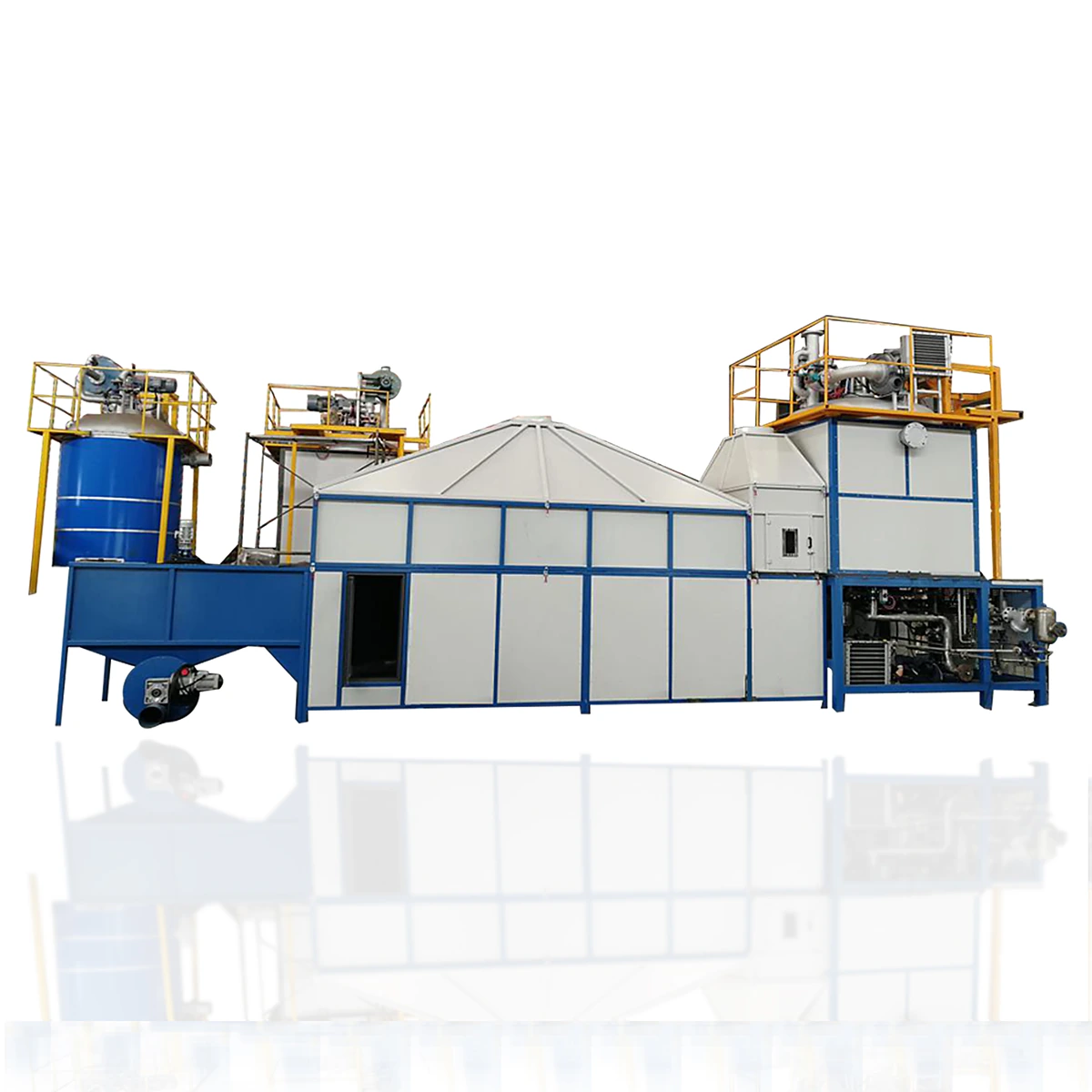
- Pre-expander (batch or continuous)
- Aging silos (fluidized bed storage for expanded beads)
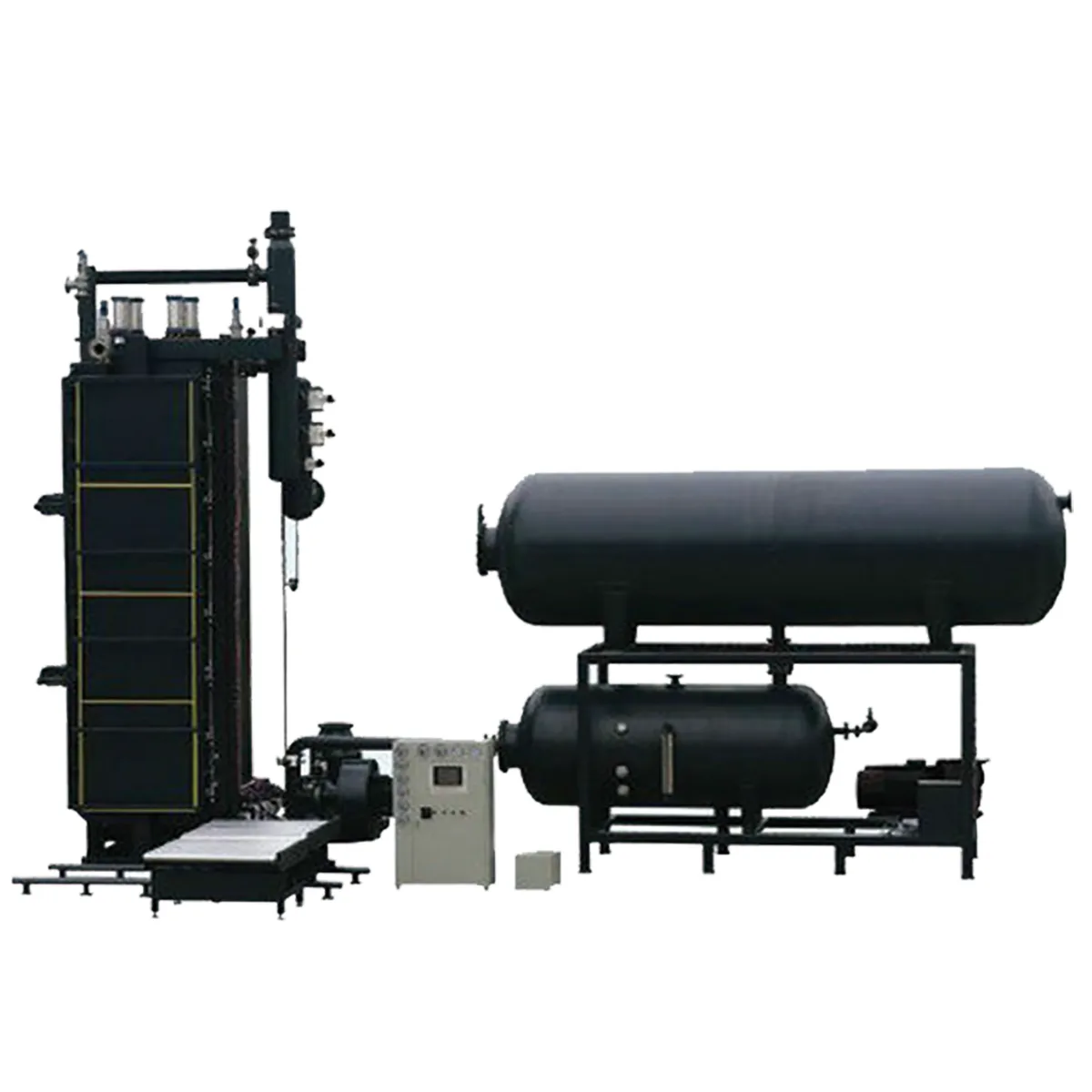
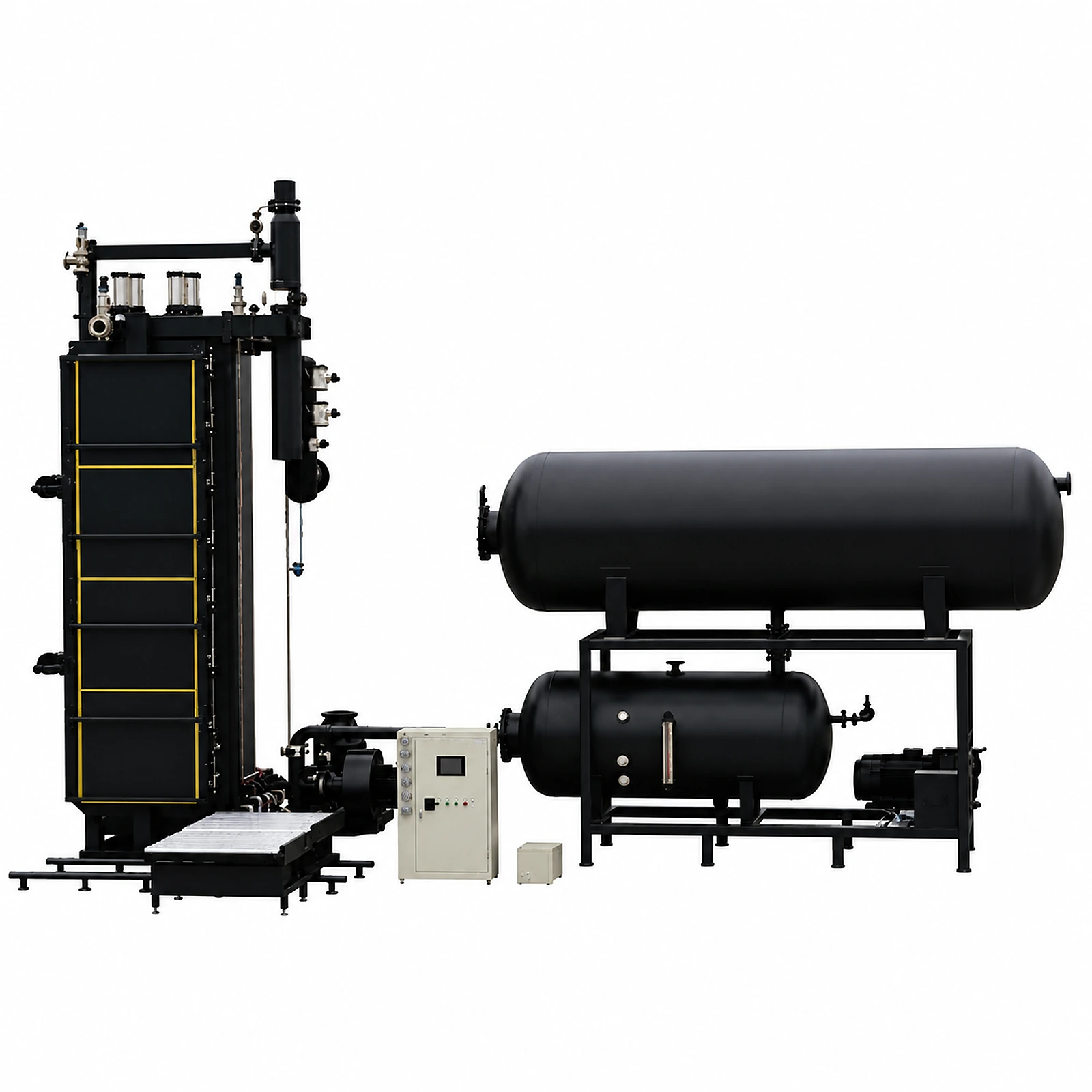
- Block molding machine (the core production unit)
- Block cutting system (hot wire or CNC)
- Vacuum system and steam generator/boiler
- Material handling (pneumatic conveyors, hoppers, scales)
- Control system and automation (PLC, SCADA, sensors)
For a mid-capacity EPS block molding line capable of producing 40–60 m³ per day, the total equipment package from a Chinese manufacturer like ChinaEps typically ranges from $120,000 to $280,000, depending on automation level and configuration. Explore available configurations on our products page.
1.2 Installation and Commissioning
- Shipping and logistics: Sea freight from China to destination port, plus inland transport. Budget $8,000–$25,000 depending on distance and volume.
- Foundation and civil works: Concrete pads, drainage, steam piping infrastructure. Budget $5,000–$20,000 depending on site readiness.
- Installation labor: ChinaEps provides installation supervision engineers; local labor for mechanical and electrical connections is typically $3,000–$8,000.
- Commissioning and training: Usually included by reputable manufacturers. Budget 1–2 weeks of on-site commissioning time.
1.3 Utilities Infrastructure
- Steam boiler: If you do not already have a boiler, this is often the single largest ancillary cost. A 2-ton/hour steam boiler suitable for a mid-range EPS line costs $15,000–$40,000 depending on fuel type (gas, oil, biomass, or electric).
- Electrical supply: Upgrading your facility's electrical service to handle the machine's power requirements (typically 80–200 kW for a complete line). Budget $2,000–$10,000.
- Compressed air system: If not already available, an industrial compressor costs $3,000–$8,000.
- Water supply and treatment: Cooling water circuit, condensate return. Budget $1,000–$5,000.
1.4 Annual Operating Costs
These are recurring costs that directly affect your ongoing profitability:
| Operating Cost Category | Typical Range (Annual) | Notes |
|---|---|---|
| Raw material (EPS beads) | 60–75% of total production cost | Largest single variable cost |
| Steam / fuel | 10–20% of production cost | See our guide on steam energy optimization |
| Electricity | 3–8% of production cost | Motors, vacuum pumps, controls, lighting |
| Labor | 5–15% of production cost | Varies enormously by country and automation level |
| Maintenance and spare parts | 2–5% of machine value per year | Budget higher for older machines |
| Molds and tooling | Variable | One-time per product; $500–$5,000 per mold |
2. Revenue Calculation
Revenue depends on three factors: production volume, product type, and selling price. Here is how to calculate each.
2.1 Production Volume
Your machine's rated capacity is a theoretical maximum. Real-world production is typically 70–85% of rated capacity due to:
- Mold change time (if producing multiple products)
- Machine warm-up and cool-down periods
- Maintenance downtime (scheduled and unscheduled)
- Raw material quality variations affecting cycle times
- Operator skill and shift scheduling
Formula:
Effective Daily Output (m³) = Rated Capacity (m³/cycle) × Cycles per Day × Utilization Rate (0.70–0.85)
2.2 Product Mix and Selling Price
EPS product selling prices vary dramatically by application and market:
| Product Type | Typical Selling Price (USD/m³) | Density Range (kg/m³) |
|---|---|---|
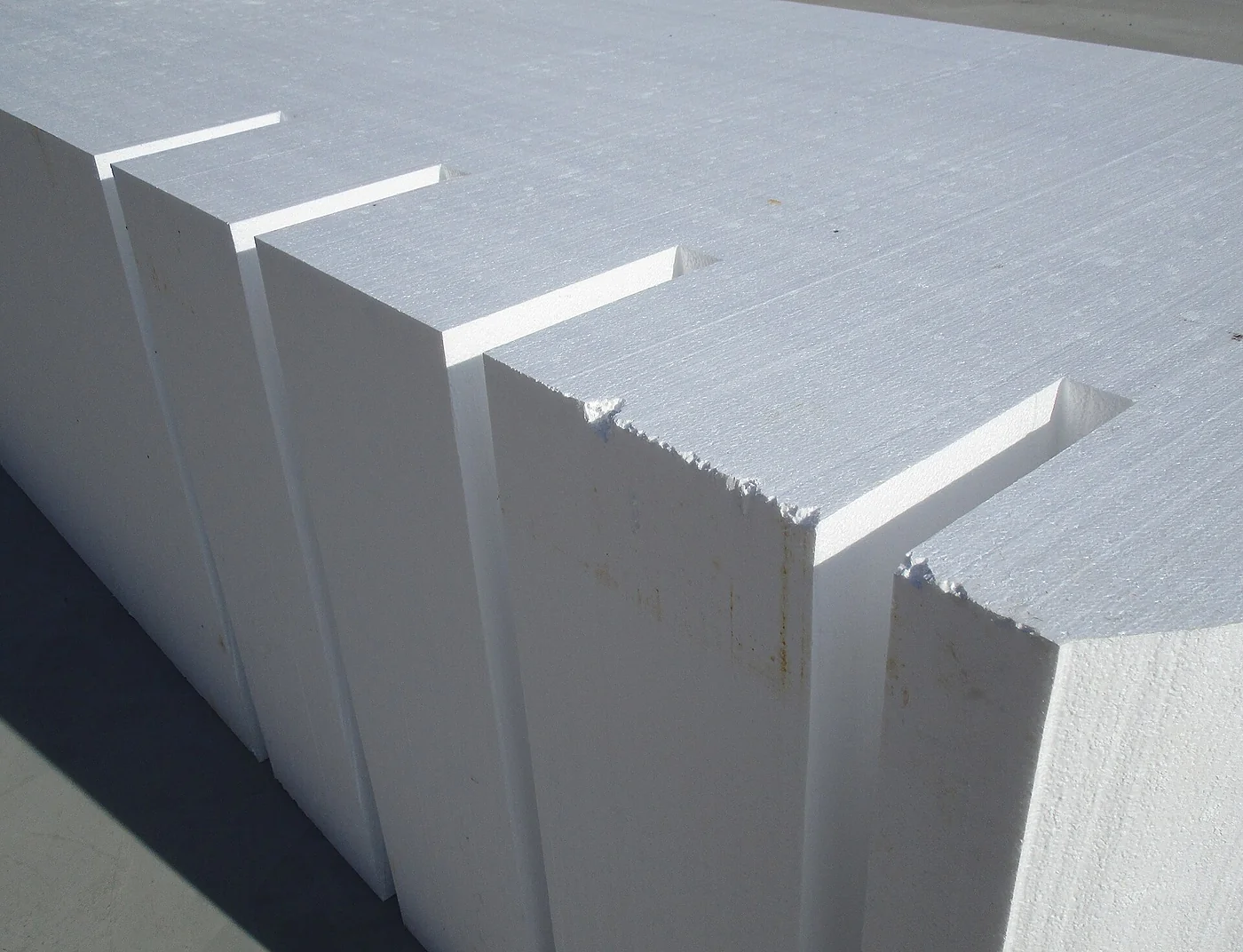
| Construction insulation boards | $30 – $60 | 12 – 20 |
| Packaging blocks / sheets | $25 – $50 | 10 – 18 |
| Custom molded packaging | $50 – $150 | 15 – 25 |
| ICF (Insulated Concrete Forms) | $80 – $200 | 25 – 35 |
| Decorative moldings | $60 – $120 | 15 – 25 |
| Geofoam blocks | $35 – $70 | 12 – 30 |
2.3 Annual Revenue Formula
Annual Revenue = Effective Daily Output (m³) × Working Days per Year × Average Selling Price (USD/m³)
3. ROI and Payback Period Formulas
3.1 Simple ROI
Simple ROI measures the percentage return on your investment over a given period:
Simple ROI (%) = [(Total Revenue − Total Costs) / Total Investment] × 100
Where Total Investment = machine cost + installation + utilities infrastructure (your initial capital outlay), and Total Costs = annual operating costs over the measurement period.
3.2 Payback Period
Payback period tells you how many months or years it takes to recover your initial investment from operating profits:
Payback Period (months) = Total Initial Investment / Monthly Net Profit
Where Monthly Net Profit = Monthly Revenue − Monthly Operating Costs
3.3 Net Present Value (NPV) for Advanced Analysis
For more sophisticated financial analysis, discount future cash flows to present value. This accounts for the time value of money and is particularly important when comparing EPS machinery investment against alternative uses of capital:
NPV = Σ [Net Cash Flow in Year t / (1 + discount rate)^t] − Initial Investment
A positive NPV means the investment generates value above your required rate of return.
4. Worked Example: BM-1200 (4 sizes) Block Molding Machine
Let us walk through a complete ROI calculation for a realistic production scenario using a ChinaEps BM-1200 (4 sizes) block molding machine producing EPS insulation boards.
4.1 Scenario Parameters
| Parameter | Value |
|---|---|
| Target product | EPS insulation boards, 15 kg/m³ density |
| Block size | 1.2 m × 1.0 m × 4.0 m = 4.8 m³ per block |
| Cycle time | 6 minutes per block |
| Operating hours | 16 hours/day (2 shifts), 300 days/year |
| Utilization rate | 80% |
| Selling price | $45/m³ (insulation boards, cut to standard sizes) |
| EPS bead price | $1.20/kg |
4.2 Initial Investment Calculation
| Item | Cost (USD) |
|---|---|
| BM-1200 (4 sizes) block molding machine | $95,000 |
| Continuous pre-expander | $22,000 |
| Aging silos (6 units) | $8,000 |
| Block cutting line (hot wire) | $18,000 |
| Vacuum system | $12,000 |
| Material handling and conveyors | $7,000 |
| PLC control system | $6,000 |
| Steam boiler (2 ton/hr, gas-fired) | $28,000 |
| Shipping and logistics | $15,000 |
| Installation and commissioning | $9,000 |
| Total Initial Investment | $220,000 |
4.3 Production Volume Calculation
- Cycles per hour: 60 min / 6 min = 10 cycles/hour
- Daily cycles: 10 × 16 hours × 0.80 utilization = 128 cycles/day
- Daily output: 128 × 4.8 m³ = 614.4 m³/day
Wait — that is far higher than 50 m³/day. Let us correct this. In practice, block molding cycles are longer than the pure steam/cooling time because they include mold filling, pressurization, steaming, cooling, and demolding. A realistic 6-minute cycle with all auxiliary operations and a single-cavity mold produces:
- Blocks per 16-hour day: (16 × 60 / 6) × 0.80 = 128 blocks
- However, a single BM-1200 (4 sizes) processes one block at a time, so: 128 × 4.8 m³ = 614 m³
For our 50 m³/day scenario (a more conservative production target suitable for a new market entrant), we calculate based on fewer operating hours or a smaller block size. Let us recalibrate:
- Target: 50 m³/day
- With 4.8 m³ blocks: 50 / 4.8 = ~10.4 blocks/day, which is approximately 1 block per hour over a single 10-hour shift
- This implies a conservative startup operation building market demand
Annual production: 50 m³/day × 300 days = 15,000 m³/year
4.4 Annual Revenue
15,000 m³ × $45/m³ = $675,000/year
4.5 Annual Operating Costs
| Cost Item | Calculation | Annual Cost (USD) |
|---|---|---|
| Raw material (EPS beads) | 15,000 m³ × 15 kg/m³ × $1.20/kg | $270,000 |
| Steam / fuel (natural gas) | ~$3.50/m³ of EPS produced | $52,500 |
| Electricity | ~$1.00/m³ of EPS produced | $15,000 |
| Labor (4 operators, 1 shift) | Varies by country; assuming $800/month each | $38,400 |
| Maintenance and spare parts | 3% of equipment value | $6,600 |
| Packaging and logistics | $0.50/m³ | $7,500 |
| Overhead (rent, insurance, admin) | Estimate | $24,000 |
| Total Annual Operating Cost | $414,000 |
4.6 ROI and Payback
- Annual Net Profit: $675,000 − $414,000 = $261,000
- Monthly Net Profit: $261,000 / 12 = $21,750
- Simple ROI (Year 1): ($261,000 / $220,000) × 100 = 118.6%
- Payback Period: $220,000 / $21,750 = 10.1 months
This means the machine pays for itself in under 11 months at 50 m³/day production, with strong ongoing profitability after that. As production ramps up toward full machine capacity, margins improve further because fixed costs (labor, rent, maintenance) are spread over more volume.
5. Factors That Accelerate ROI
- Higher-value products: Switching from commodity insulation boards ($45/m³) to custom packaging ($80–$150/m³) or ICF blocks ($100+/m³) dramatically increases revenue per cubic meter. The same machine, same operating costs, higher margin.
- Energy efficiency: Modern machines with vacuum cooling, heat recovery systems, and variable steam pressure controls can reduce energy costs by 20–30%. Read our detailed guide on steam energy cost optimization.
- Automation: Automated material handling, block feeding, and cutting reduce labor requirements and increase throughput consistency.
- Volume ramp-up: Moving from single-shift to double-shift operation roughly doubles output with only marginal increases in fixed costs. Your payback period drops proportionally.
- Vertical integration: Adding in-house recycling of production waste (edge trims, off-spec blocks) recovers 5–10% of raw material costs.
6. Factors That Slow ROI
- Overcapacity for your market: Buying a machine too large for your actual sales volume means you are paying for capacity you cannot utilize. A 100 m³/day machine running at 20% utilization has a much worse ROI than a 30 m³/day machine running at 80%.
- Raw material price volatility: EPS bead prices fluctuate with crude oil and styrene monomer markets. A 20% price spike in beads can significantly impact margins in the short term.
- Underestimating installation costs: Inadequate site preparation, unexpected electrical upgrades, or boiler compliance requirements can add $10,000–$30,000 to your initial investment.
- Poor maintenance practices: Neglecting preventive maintenance leads to unplanned downtime, which is the silent killer of ROI. Budget 2–5% of machine value annually for maintenance.
- Insufficient market development: The machine can only generate revenue if you have customers. Factor in 3–6 months of market development time before reaching steady-state production volumes.
7. Common ROI Mistakes
Having worked with hundreds of factory owners worldwide, ChinaEps has observed these recurring mistakes in ROI analysis:
- Using rated capacity instead of effective capacity. Always apply a 70–85% utilization factor. New operations should use 65–70% for the first year.
- Ignoring the boiler investment. If you do not already have a steam boiler, this can add 15–25% to your total investment. It is the most frequently overlooked cost.
- Calculating labor at current rates for 10-year projections. Labor costs in most emerging markets are rising 5–10% annually. Factor in escalation or invest in automation to lock in labor savings.
- Not accounting for seasonal demand. In many markets, EPS insulation demand is seasonal (construction season). Your cash flow model should reflect actual monthly sales patterns, not smooth annual averages.
- Comparing machine prices without comparing total line costs. A $60,000 machine that requires $80,000 in auxiliary equipment is more expensive than a $90,000 machine that comes with integrated auxiliary systems. Always compare complete line prices. See our buying guide for what to ask manufacturers.
8. Building Your Own ROI Model
Use this framework to build a customized ROI model for your specific situation:
- List all initial costs (machine, ancillary equipment, shipping, installation, boiler, electrical, civil works).
- Define your production scenario (product type, density, daily volume, operating days per year).
- Calculate annual revenue using conservative selling prices and realistic utilization rates.
- Calculate annual operating costs line by line (materials, energy, labor, maintenance, overhead).
- Compute payback period and ROI using the formulas above.
- Run sensitivity analysis: What happens if bead prices rise 15%? If you only achieve 60% of target sales in Year 1? If energy costs double? A robust business case survives pessimistic assumptions.
For assistance building a detailed ROI model tailored to your specific market and production plan, contact ChinaEps's technical sales team. We regularly help customers develop business cases for new EPS production facilities, including market-specific pricing data and energy cost estimates.
Conclusion
EPS machinery investment offers some of the strongest ROI figures in the polymer processing industry, with payback periods commonly under 18 months for well-planned operations. The key to a reliable ROI calculation is thoroughness: account for all costs, use realistic (not optimistic) production assumptions, and stress-test your model against adverse scenarios. The worked example above — a BM-1200 (4 sizes) block molding machine producing 50 m³/day of insulation boards — demonstrates a payback period of approximately 10 months and first-year ROI exceeding 100%.
If you are ready to explore EPS machinery investment, start by reviewing ChinaEps's complete product lineup and then request a customized quotation for your production requirements.
Frequently Asked Questions
What is a realistic payback period for an EPS machine?
For a well-configured EPS block molding line operating at 70–85% utilization, payback periods typically range from 8 to 18 months. Shape molding machines producing higher-value custom products can achieve payback in as little as 6–10 months. The largest variables are your local selling price, energy costs, and production volume.
Should I buy the largest machine I can afford?
Not necessarily. The optimal machine size matches your realistic market demand within 12–18 months of startup. Buying oversized equipment increases your initial investment and fixed costs without proportionally increasing revenue until you can fill the capacity. Start with a machine that you can run at 70%+ utilization from Month 3 onward, with the option to add a second machine or shift later.
How do I account for EPS bead price fluctuations in my ROI model?
Run three scenarios: base case (current bead price), pessimistic (+15–20%), and optimistic (−10%). Your investment should still have a positive ROI under the pessimistic scenario. Additionally, consider locking in bead supply contracts for 6–12 months when prices are favorable, and build 2–3 months of raw material inventory as a buffer.
Does automation improve ROI enough to justify the extra cost?
In markets with labor costs above $600/month per operator, the answer is almost always yes. A fully automated block molding and cutting line can reduce staffing from 6–8 operators to 2–3, saving $30,000–$60,000 per year in many markets. The automation upgrade typically costs $15,000–$40,000 and pays back within 6–12 months through labor savings alone, not counting the quality and consistency improvements.
What ongoing costs do first-time buyers most commonly underestimate?
The three most underestimated costs are: (1) boiler fuel — steam generation is 40–60% of your energy bill; (2) mold costs for shape molding operations — each new product requires a new mold at $500–$5,000; and (3) initial market development period — most new operations take 3–6 months to reach steady-state sales volume, during which you are bearing fixed costs with reduced revenue.
Can I start with a used EPS machine to reduce my initial investment?
Used machines can reduce upfront cost by 40–60%, but they come with significant risks: higher energy consumption (older designs lack modern efficiency features), limited or no warranty, difficulty sourcing spare parts, and shorter remaining service life. In most cases, a new machine from a reputable manufacturer like ChinaEps offers better 5-year TCO than a used machine of equivalent capacity. Review our quality assurance standards to understand what you get with new equipment.
Sources & Further Reading
- CEN European Standardization Body
- EPA Sustainable Materials Management
- ASTM C578 Standard for Rigid Cellular Polystyrene
Related Reading
- Fast-Cycling EPS Beads ROI: Do 20-30% Faster Cycles Actually Pay Off? — Extended reading in the same cluster.
- Used EPS Machine Price Guide 2026: Refurbished vs New (Cost, Risk, Warranty) — Extended reading in the same cluster.