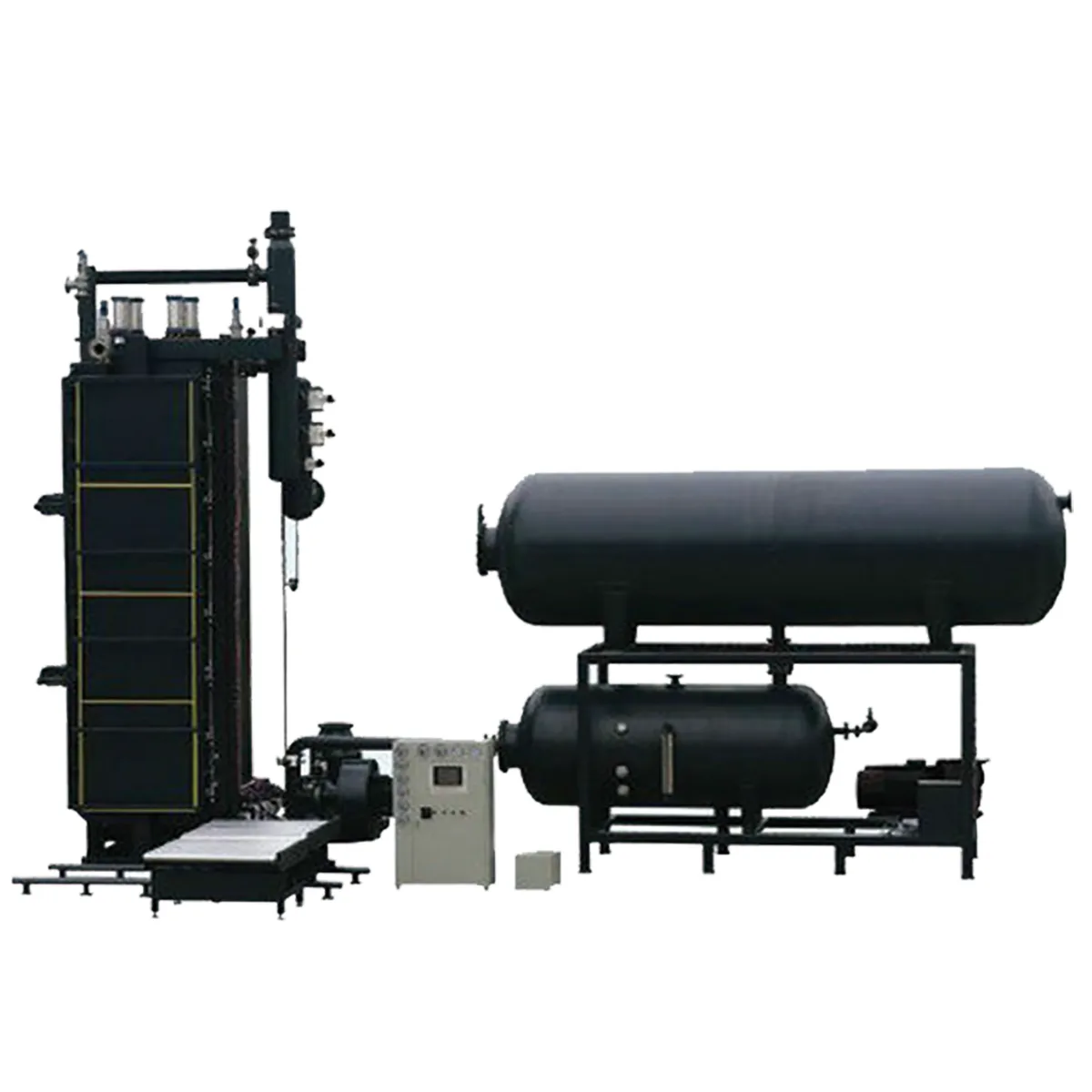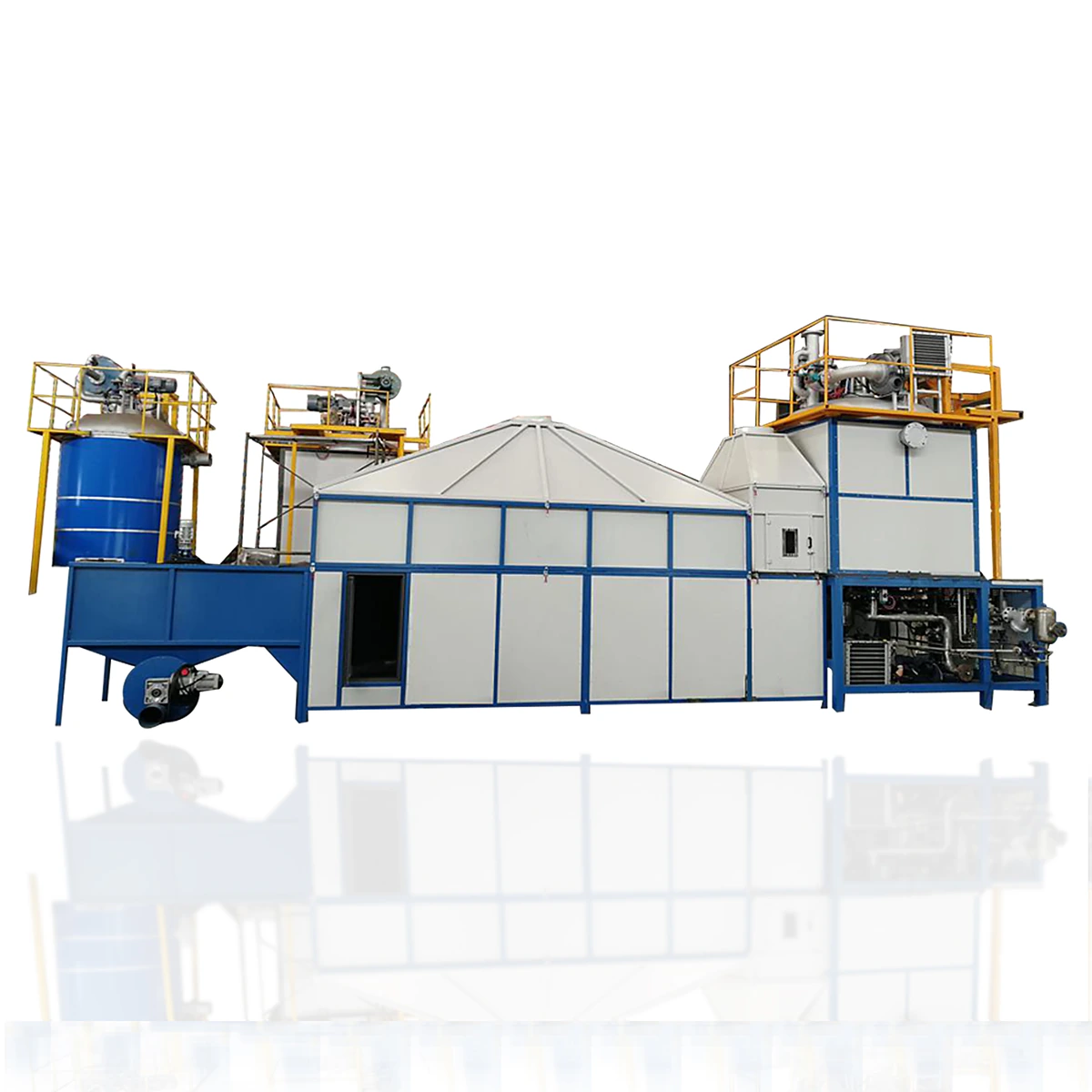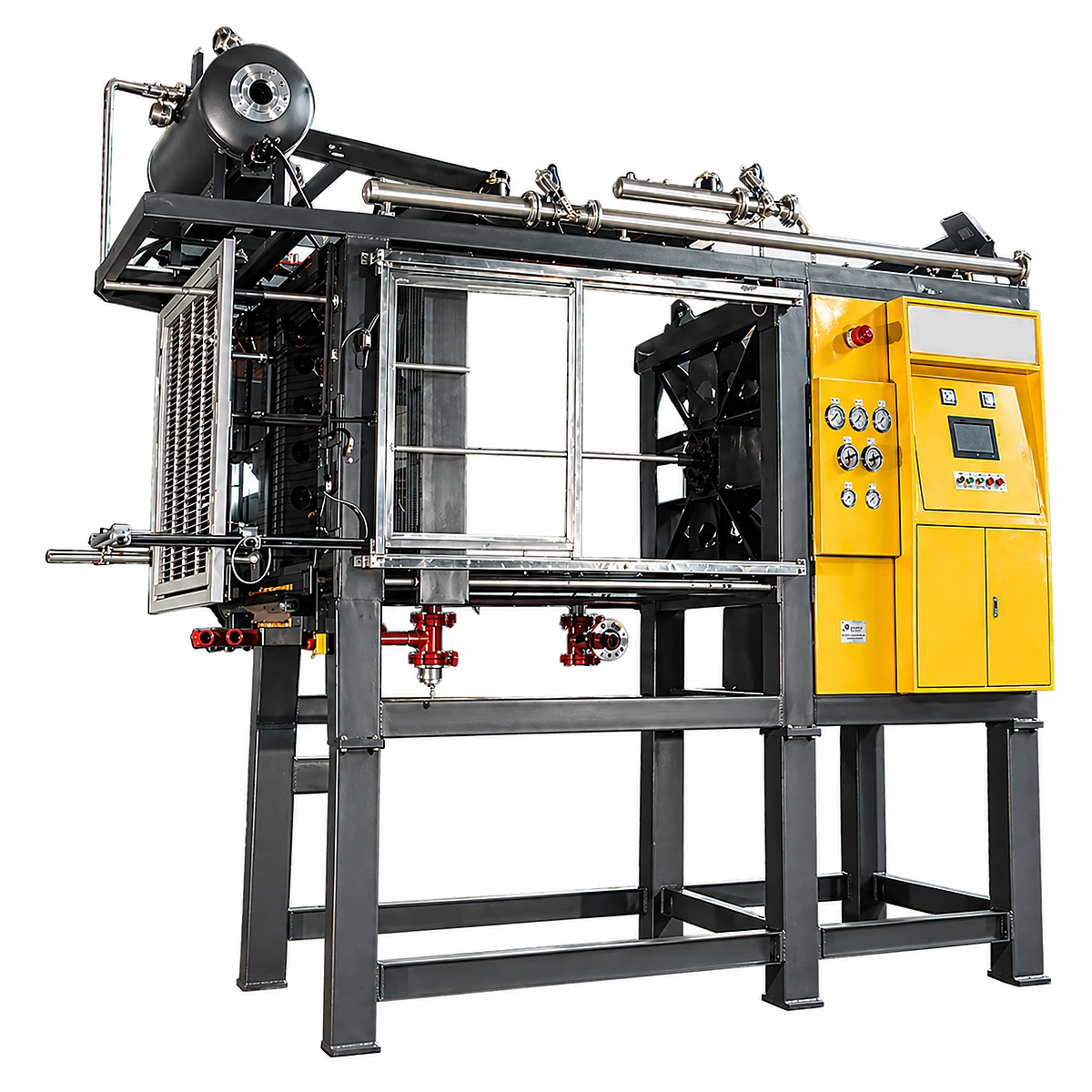
China EPS machinery is the pre-expander, block-molding, shape-molding, cutting, milling and recycling equipment used to produce expanded polystyrene foam, manufactured in China and sold FOB from about $15,000 for a single machine to $500,000+ for a complete automated line — typically 40–60% below European equivalents. Buying it safely comes down to two things: eight verification questions on capacity, configuration, utilities, automation, support, installation, spare parts and warranty — and a supplier document pack (business licence, EC Declaration of Conformity, ISO 9001 certificate, factory acceptance test record) checked before the deposit is paid.
China manufactures more EPS machinery than any other country in the world. The scale of production means you can find equipment at nearly every price point, from budget machines to fully automated, export-quality production lines. That range is both an opportunity and a risk: buy from the right manufacturer, and you get world-class equipment at 40–60% less than European equivalents. Buy from the wrong one, and you face costly delays, quality issues, and inadequate support.
This guide presents the 8 critical questions every buyer should ask before placing an order for EPS machinery from China. For each question, we explain what to ask, why it matters, and what red flags to watch for. Use this as your pre-purchase checklist to protect your investment and set your production line up for success.
Illustrative Calculation — Not a Universal Guarantee
The prices, payback periods, and ROI numbers below use assumed inputs for raw-material cost, electricity, steam, labor, tariffs, sale price, and factory utilization. Actual results vary significantly by country and site. Send your local cost inputs to info@chinaeps.net for a country-specific model.
2026 China EPS Machinery Price Overview
Before diving into the eight questions, here is the current pricing landscape for EPS machinery from China as of Q2 2026. These figures represent FOB China prices from established manufacturers with CE certification and documented export history:
| Machine Type | Model Example | Price Range (FOB China) | Key Specification |
|---|---|---|---|
| Block Molding Machine | BM-1200 series (1,400×800×400 mm block) | $25,000–$45,000 | 8–12 blocks/hour, Siemens PLC |
| Block Molding Machine (Large) | BM-1600 / BM-1800 (1,800×1,200×600 mm block) | $40,000–$70,000 | 5–8 blocks/hour, vacuum cooling |
| Shape Molding Machine | SM-1200 | $30,000–$80,000 | Custom mold, 60–120s cycle time |
| Pre-Expander (Batch) | PE-900 – PE-2000 (SPJY series) | $15,000–$35,000 | 1–2 tons/hour capacity |
| Pre-Expander (Continuous) | Continuous two-stage pre-expander | $40,000–$65,000 | 3+ tons/hour, 24/7 operation |
| EPS Cutting Line | CNC hot wire cutter | $8,000–$25,000 | Horizontal + vertical cutting |
| Recycling System | Crusher + de-duster + compactor | $12,000–$30,000 | 100–300 kg/hour throughput |
| Complete Production Line (Basic) | 50–100 m³/day | $80,000–$150,000 | 1-shift operation, semi-automatic |
| Complete Production Line (Mid-Range) | 100–300 m³/day | $150,000–$300,000 | 2-shift, Siemens PLC, vacuum cooling |
| Complete Production Line (High-End) | 300+ m³/day | $300,000–$500,000+ | Fully automated, 3-shift, SCADA-ready |
Key 2026 market trends:
- Energy efficiency is now the top buyer priority. Steam consumption per cycle has dropped 15–20% over the past 3 years thanks to improved vacuum cooling and insulation design. Ask every manufacturer for their kg-steam-per-m³ figure.
- EPP machinery demand is growing fast. EPP (Expanded Polypropylene) requires higher steam pressure (3–6 bar vs. 0.8–1.2 bar for EPS) and specialized molds. If you anticipate EPP production in the future, factor this into your equipment selection now. The main tools in EPP production — autoclave, pre-expander, aging silos, steam-chest molder, mould tooling, boiler — are listed machine by machine with their operating specs. See our EPS vs EPP comparison for material-level details.
- Automation ROI breakpoint has shifted. With rising labor costs globally, full automation now pays back in 18–24 months in most markets (down from 30–36 months five years ago).
- Lead times are normalizing. Post-pandemic supply chain disruptions have largely resolved; expect 45–75 days manufacturing plus 15–45 days shipping to most destinations.
Prices last updated: April 2026. All prices are approximate and vary based on configuration, certifications, and order volume. Contact ChinaEps for a precise quotation based on your requirements.
Question 1: What Is My Actual Production Capacity Requirement?
What to Ask Yourself
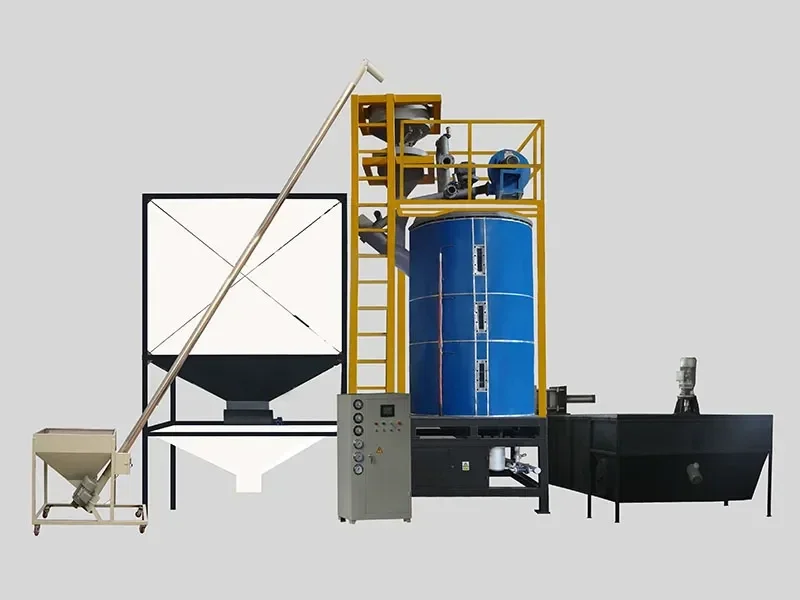
Before you speak to any manufacturer, define your target daily and annual production volumes in cubic meters (m³) of finished foam product. Factor in:
- Current market demand (confirmed orders or realistic sales projections)
- Projected demand growth over 3–5 years
- Product mix (block molding vs. shape molding, density ranges)
- Planned operating shifts (1-shift, 2-shift, or 3-shift operation)
- Seasonal demand variations
Why It Matters
Machine capacity directly determines your investment size. An undersized machine limits revenue; an oversized machine increases your capital cost and payback period without proportional benefit. As we discussed in our ROI calculation guide, machine utilization rate is one of the most important factors in investment return.
Red Flags
- A manufacturer who pushes you toward their largest (most expensive) machine without understanding your market
- Capacity claims that seem unrealistically high for the machine size (always ask for the cycle time breakdown: fill time + steaming time + cooling time + demolding time)
- No distinction between theoretical maximum capacity and realistic operating capacity
Good vs. Bad Answers
| Good Sign | Red Flag |
|---|---|
| Manufacturer asks about your target market, product types, and growth plans before recommending a machine size | Manufacturer immediately quotes their most popular (or most expensive) model without asking about your needs |
| Capacity is specified with clear assumptions: density, block size, cycle time, utilization rate | A single "capacity" number with no context or assumptions |
Question 2: What Exactly Is Included in the Machine Configuration?
What to Ask the Manufacturer
Request a complete equipment list with model numbers, specifications, and brand names for every component. Key items to verify:
- Core machine (block molding machine or shape molding machine)
- Pre-expander (batch or continuous, what capacity)
- Aging silos (how many, what volume)
- Vacuum system (pump type, capacity)
- Material handling (pneumatic transport, weighing)
- Control system (PLC brand — Siemens, Mitsubishi, or local Chinese brand)
- Block cutting system (if applicable)
- Software and HMI (human-machine interface)
Why It Matters
The quoted price for an "EPS production line" can vary by $50,000 or more depending on what is and is not included. Some manufacturers quote only the core machine, leaving you to source and integrate the pre-expander, vacuum system, and cutting line separately — often at higher total cost and with integration risks. A published, itemised list is the fastest way to check a quotation against reality: our EPS fish box production line page names all 20 items, marks which are optional, and states which three (boiler, air compressor, cooling tower) we deliberately leave to local purchase.
Red Flags
- Vague equipment lists ("includes all necessary auxiliary equipment")
- PLC and electrical components from unknown brands (quality and spare parts availability are concerns)
- No mention of the vacuum system, which is critical for cycle time and energy efficiency
- Cutting system not included or quoted as a costly add-on
Good vs. Bad Answers
| Good Sign | Red Flag |
|---|---|
| Detailed equipment list with specifications, brand names, and photos of each component | One-line item: "Complete EPS line — $X" |
| Clear statement of what is and is not included (e.g., "boiler not included; we recommend X specification") | Discovering after purchase that critical components were not included |
Question 3: What Are the Steam and Power Requirements?
What to Ask
- Steam consumption per cycle and per cubic meter of product (kg steam/m³)
- Required steam pressure and temperature
- Recommended boiler capacity (tons/hour)
- Total electrical power requirement (kW) for the complete line
- Compressed air requirements (m³/min at what pressure)
- Cooling water requirements (flow rate and temperature)
Why It Matters
Steam is the single largest energy cost in EPS production, typically accounting for 40–60% of total energy expenditure. If the manufacturer cannot provide precise steam consumption data, they either have not tested the machine properly or are hiding poor efficiency. These utility specifications also determine whether your existing facility can support the equipment or whether you need infrastructure upgrades. For a deeper analysis of steam costs, see our guide on steam energy optimization in EPS production.
Red Flags
- Inability to provide specific steam consumption figures ("depends on many factors" without providing any baseline data)
- Steam consumption per m³ that is significantly higher than industry benchmarks (above 50 kg steam per m³ for block molding at 15 kg/m³ density suggests poor efficiency)
- No mention of vacuum cooling (without vacuum-assisted cooling, cycle times are longer and energy consumption is higher)
Good vs. Bad Answers
| Good Sign | Red Flag |
|---|---|
| Specific figures: "28–35 kg steam per m³ at 15 kg/m³ density, 0.8 bar steam pressure" | "It varies" or no data available |
| Complete utility specification sheet provided as part of quotation | You have to ask multiple times for utility requirements |
Question 4: What Level of Automation Is Available?
What to Ask
- What operations are automated vs. manual in the base configuration?
- What optional automation upgrades are available and at what cost?
- How many operators are required per shift for the proposed configuration?
- Can automation be upgraded later, or must it be specified at purchase time?
- What PLC platform is used and can it integrate with plant-level SCADA systems?
Why It Matters
Automation affects labor costs, product consistency, throughput reliability, and safety. In markets with rising labor costs, the ROI of automation upgrades can be substantial — as discussed in our ROI guide. However, automation also increases complexity, and in markets with abundant low-cost labor, a simpler machine may be more appropriate.
Red Flags
- Automation described only in vague terms ("fully automatic" without specifying which operations)
- No option for remote monitoring or diagnostics (standard in modern machines)
- Proprietary control systems that cannot be serviced by third-party PLC technicians
Good vs. Bad Answers
| Good Sign | Red Flag |
|---|---|
| Clear automation breakdown: "Automatic bead filling, automatic steam/cooling cycle, manual block extraction; auto extraction available as $X upgrade" | "Fully automatic production line" with no detail |
| Uses industry-standard PLC (Siemens S7-1200/1500, Mitsubishi FX/Q series) | Unknown or proprietary PLC brand with no local service availability |
Question 5: What After-Sales Support Do You Provide?
What to Ask
- Do you have service engineers who can travel to my country for installation and troubleshooting?
- What are your response times for technical support inquiries?
- Do you offer remote diagnosis via video call or machine data connection?
- Do you have reference customers in my region I can contact?
- What languages does your technical support team speak?
- Is there a local agent or distributor in my country?
Why It Matters
After-sales support is arguably the single most important differentiator between Chinese EPS machinery manufacturers. The machine will eventually need troubleshooting, spare parts, or process optimization assistance. A manufacturer who is unreachable after payment is a manufacturer who will cost you far more in downtime than you saved on the purchase price.
Red Flags
- No reference customers, or unwillingness to provide references
- Communication only via email with response times measured in days, not hours
- No engineers available for international travel
- Technical support available only in Chinese
- No remote diagnostic capabilities
Good vs. Bad Answers
| Good Sign | Red Flag |
|---|---|
| Provides 3+ reference customers in your region with contact details | No references or only domestic Chinese references |
| English-speaking technical support team with WhatsApp/video call availability | Communication delays exceeding 48 hours during the quoting process |
Question 6: What Installation and Training Is Included?
What to Ask
- How many engineer-days of on-site installation supervision are included?
- What are the customer's responsibilities during installation (civil works, electrical connections, rigging)?
- Is operator training included? How many days? How many operators can attend?
- Is a detailed installation manual provided in English (or your local language)?
- What commissioning tests are performed, and what acceptance criteria apply?
- What happens if commissioning reveals performance issues?
Why It Matters
Improper installation is one of the most common causes of early machine problems. Inadequate operator training leads to poor product quality, excessive waste, and premature component wear. The cost of a manufacturer's installation engineer traveling to your site is trivial compared to the cost of troubleshooting installation errors remotely over months.
Red Flags
- Installation supervision not included or offered only as an expensive add-on
- "We will guide you by video call" as the primary installation support method for complex production lines
- No formal commissioning test protocol
- Training described only as "on-site training during commissioning" with no defined scope or duration
Good vs. Bad Answers
| Good Sign | Red Flag |
|---|---|
| 10–20 days of on-site installation and commissioning included in the price, with travel expenses clearly defined | Installation guidance by video call only, or installation supervision quoted as $500/day extra |
| Written commissioning protocol with specific performance criteria (cycle time, density accuracy, surface quality) | No formal acceptance testing |
Question 7: How Accessible Are Spare Parts?

What to Ask
- Can you provide a recommended spare parts list for the first 2 years of operation?
- What is the lead time for spare parts orders?
- Are wear parts (gaskets, seals, valve components) standard sizes available from local suppliers, or proprietary?
- What is your spare parts pricing policy? (Some manufacturers offer spare parts at cost or modest markup; others use them as a profit center.)
- Can you ship spare parts to my country via express courier? What is the typical delivery time?
Why It Matters
A machine that sits idle for 3 weeks waiting for a $50 spare part from China costs far more in lost production than the part itself. Reputable manufacturers design their machines with commonly available components (standard bearings, seals, pneumatic fittings) so that you can source replacements locally for most routine maintenance. They also maintain spare parts inventory and can ship urgently when needed.
Red Flags
- All spare parts must be purchased exclusively from the manufacturer (monopoly pricing risk)
- No recommended spare parts list available
- Lead times exceeding 2–3 weeks for critical wear parts
- Proprietary, non-standard components where industry-standard equivalents exist
Good vs. Bad Answers
| Good Sign | Red Flag |
|---|---|
| Recommended spare parts kit included with machine purchase; 80%+ of wear parts are standard industrial components | No spare parts list; proprietary components for basic items like seals and bearings |
| Express courier delivery to most countries within 5–7 business days | "We will ship parts when available" with no defined timeline |
Question 8: What Are the Warranty Terms?
What to Ask
- What is the warranty period? (Industry standard for Chinese EPS machinery: 12–18 months from commissioning or 18–24 months from shipment.)
- What does the warranty cover? (Full machine? Electrical components only? Structural defects only?)
- What does the warranty explicitly exclude? (Wear parts? Damage from improper operation?)
- How are warranty claims processed? Who pays for shipping of replacement parts?
- Is there an option for an extended warranty or service contract?
- What documentation is required to validate a warranty claim?
Why It Matters
A warranty is only as good as the manufacturer's willingness and ability to honor it. A 24-month warranty from a manufacturer who ignores your emails is worthless. A 12-month warranty from a manufacturer who ships replacement parts within 48 hours of a validated claim is highly valuable. ChinaEps stands behind our equipment with clear warranty terms; see our quality assurance page for details.
Red Flags
- Warranty terms that are vague or not provided in writing until after payment
- Warranty that excludes electrical and electronic components (these are the most likely to fail early)
- Customer responsible for all shipping costs on warranty claims (for a 200 kg component shipped internationally, this can exceed the component's value)
- No warranty on the control system or software
Good vs. Bad Answers
| Good Sign | Red Flag |
|---|---|
| Written warranty covering all major components for 12–18 months, with clear claim procedure and manufacturer-paid parts shipping | Verbal warranty promise only; warranty document not available until after deposit |
| Extended warranty or annual service contract available as an option | No option to extend warranty beyond standard period |
The Supplier Document Pack: What to Collect Before You Pay a Deposit
The eight questions above test whether a supplier is capable. The document pack tests something more basic: whether the company you are wiring money to is the company that will build your machine. This is where most China sourcing problems actually originate — not in the engineering, but in paying a trading intermediary you believed was a factory. Collect these five documents before the deposit leaves your account.
| Document | What it proves | Red flag |
|---|---|---|
| Business licence (营业执照) with 18-digit Unified Social Credit Code | The legal entity exists, and its registered business scope covers manufacturing — not wholesale/trade only | Scope is trade-only; or the licence name does not match the bank account name on the proforma invoice |
| EC Declaration of Conformity + CE certificate | The specific machine model is declared against the EU Machinery Directive 2006/42/EC (plus LVD 2014/35/EU and EMC 2014/30/EU where powered controls apply) | A “CE certificate” with no model number, no list of applied standards, or issued to a different company name |
| ISO 9001 certificate | A third-party-audited quality management system, with a named certification body, certificate number, scope and expiry date | Expired certificate, or a scope statement covering “trading” rather than design and manufacture |
| Factory acceptance test (FAT) record for your machine | Measured cycle time, steam consumption per cycle and density tolerance on the unit you bought — not the catalogue | Only a generic spec sheet is offered; no witnessed or video-recorded test run before shipment |
| Export document set | Commercial invoice, packing list, bill of lading, certificate of origin (plus the FTA-specific form for your market, e.g. Form E for ASEAN), and ISPM 15 heat-treatment marking on wooden crates | Supplier “does not handle” the certificate of origin — it directly changes the duty you pay on arrival |
Two checks that cost you nothing
Match three names. The company name on the business licence, the name on the proforma invoice, and the beneficiary name on the bank details must be identical, character for character. A mismatch is the single most common structure behind payment disputes in China machinery sourcing. If the supplier asks you to pay a Hong Kong or offshore account under a different entity name, stop and ask why in writing.
Read the CE paperwork, not the logo. CE marking on plastics machinery is largely a self-declaration route: the manufacturer performs the risk assessment and signs the Declaration of Conformity. That is legitimate — but it means the document is only as good as the standards it actually cites. A serious EPS machinery DoC will name the harmonised standards it was assessed against, typically EN ISO 12100 (safety of machinery, risk assessment) and EN 60204-1 (electrical equipment of machines). A DoC that names no standards has told you nothing.
Customs classification
EPS pre-expanders, block molders, shape molders and cutting lines fall under HS heading 8477 (machinery for working rubber or plastics); the exact six-digit subheading depends on machine type and is what actually drives your duty rate. Confirm the classification with a licensed customs broker before you sign, not when the container is on the water — our EPS line price comparison by country works through landed-cost examples including duty for several markets.
Where Chinese EPS machinery is actually built
China’s EPS equipment capacity is concentrated in three coastal clusters, and knowing which one you are buying from tells you something about lead time and after-sales logistics: southern Jiangsu (Wuxi / Jiangyin — heavy machinery and steel fabrication base), Zhejiang (Wenzhou / Taizhou — moulds, tooling and smaller shape-molding equipment), and Guangdong (Dongguan / Shenzhen — automation, controls and export logistics via Shenzhen and Guangzhou ports). ChinaEps operates from all three: engineering and block-molding assembly in Jiangyin, mould and tooling work in Wenzhou, and a Dongguan site for automation and export handling. That is why we can quote a full line rather than a single machine — see what we publish on our quality and certifications page, or start from the EPS machinery manufacturer in China overview.
Putting It All Together: Your Pre-Purchase Checklist
Before signing a purchase order for EPS machinery from China, verify that you have satisfactory answers to all eight questions. Use this summary checklist:
- Production capacity — Clearly defined, based on realistic assumptions, matched to your market demand
- Complete equipment list — Every component specified with model, brand, and specifications
- Utility requirements — Steam, electrical, compressed air, and water requirements documented
- Automation level — Defined operation by operation, with upgrade path if needed
- After-sales support — Verified through reference customers, response time tested during quoting process
- Installation and training — On-site engineering days specified and included in price
- Spare parts — Recommended list provided, lead times acceptable, components mostly standard
- Warranty — Written terms covering all major components, clear claim procedure
- Document pack — Business licence, EC Declaration of Conformity naming your model, valid ISO 9001 certificate, FAT record, and export document set; licence name, invoice name and bank beneficiary name all matching
If any manufacturer cannot provide clear, documented answers to these eight questions, that is itself a significant red flag. The quoting process is the best preview of what the after-sales relationship will be like. If communication is slow, vague, or evasive before you pay, it will only be worse after.
Why ChinaEps
ChinaEps (chinaeps.net) manufactures complete EPS and EPP production lines with a focus on export-quality engineering and comprehensive after-sales support. We provide detailed technical specifications, reference customers in over 30 countries, on-site installation and commissioning, and responsive technical support in English. Learn more about our company, review our quality certifications, or request a quotation with complete answers to all eight questions above.
Frequently Asked Questions
What is China EPS machinery?
China EPS machinery is the equipment used to turn expandable polystyrene beads into finished foam products — pre-expanders, aging silos, block molding machines, shape molding machines, cutting and milling lines, packing equipment and recycling systems — manufactured in China for domestic use and export. China is the largest producer of this equipment class by volume, and FOB prices run from roughly $15,000 for a single machine to $500,000+ for a complete automated line, typically 40–60% below European equivalents at comparable specification.
How do I tell a real Chinese EPS machinery factory from a trading company?
Ask for the business licence and read the registered business scope: a manufacturer’s scope includes production or manufacturing of the equipment class, while a trading company’s scope is wholesale and import/export only. Then confirm the company name on the licence matches the proforma invoice and the bank beneficiary name exactly. Finally, request a live video walk-through of the assembly floor showing a machine of your model class mid-build, with the company signage visible. A trading company can show you a factory — it just will not be theirs, and they cannot show you a machine under assembly on demand.
Which Chinese province should I source EPS machinery from?
Three coastal clusters dominate. Southern Jiangsu (Wuxi, Jiangyin) is the heavy-machinery and steel-fabrication base and is where most block molding and pre-expansion equipment is assembled. Zhejiang (Wenzhou, Taizhou) concentrates mould and tooling capability, which matters if your product needs custom shape-molding tools. Guangdong (Dongguan, Shenzhen) is strongest in automation, controls and export logistics. Province matters less than whether the supplier owns the assembly floor — but for a full turnkey line, a supplier with presence across machinery and tooling clusters avoids the coordination gap between the machine builder and the mould maker.
Does China supply EPS milling and CNC shaping machines?
Yes. EPS milling — cutting profiles, cornices, packaging inserts and 3D shapes out of solid foam blocks using CNC-controlled hot wire or router tooling — is a standard Chinese equipment category, priced in the $8,000–$25,000 range for hot-wire cutting lines and higher for multi-axis CNC. It is normally bought as a downstream line after block molding rather than as a standalone machine. See our CNC EPS cutting and milling machine and the EPS cutting machine guide for configuration options.
How long does it take to receive an EPS machine from China after ordering?
Manufacturing lead time is typically 45–90 days depending on machine complexity and current production schedule. Sea freight adds 15–45 days depending on destination. Total delivery time from order to arrival at your facility is usually 60–120 days. Custom configurations or peak season orders may extend this. Always confirm lead time in writing before placing your order.
What payment terms are standard for Chinese EPS machinery manufacturers?
The most common payment structure is: 30% deposit (T/T) upon order confirmation, 60% before shipment (after factory inspection or video inspection), and 10% within 30 days of commissioning. Some manufacturers accept letter of credit (L/C) for larger orders. Be cautious of any manufacturer requiring more than 50% deposit before production begins.
Should I visit the factory before ordering?
Strongly recommended for orders above $100,000. A factory visit allows you to inspect manufacturing quality, see machines in operation, meet the engineering team, and evaluate the manufacturer's true capabilities vs. their marketing materials. If travel is not feasible, request a live video factory tour and ask to see machines currently in production. ChinaEps welcomes factory visits; contact us to arrange one.
Can I get a machine customized to my specific requirements?
Reputable manufacturers routinely customize machines for specific block sizes, product types, automation levels, and local electrical standards (voltage, frequency, certifications). Customization is one of the key advantages of buying from China — many manufacturers offer bespoke configurations at prices comparable to standard models from European brands. Document all customizations in the purchase contract and technical specification sheet.
What certifications should I look for in a Chinese EPS machine manufacturer?
Key certifications include ISO 9001 (quality management system), CE marking (required for European import), and relevant electrical certifications for your market. The machine itself should comply with local safety standards in your country. Ask the manufacturer to provide certification documentation — not just logos on their website. ChinaEps maintains current certifications viewable on our quality page.
What if the machine does not perform as specified after installation?
This is why a formal commissioning protocol with written acceptance criteria is essential. If the machine fails to meet agreed-upon specifications (cycle time, capacity, product quality) during commissioning, the manufacturer is obligated to resolve the issue. This may involve remote troubleshooting, software adjustments, component replacement, or additional on-site engineering support. Having clear acceptance criteria in the purchase contract protects you legally and practically. Withholding the final payment (typically 10%) until successful commissioning is standard practice and provides additional leverage.
Is it safe to buy EPS machines from China?
Yes, buying EPS machines from China is safe when you follow proper due diligence. Over 70% of global EPS machinery is manufactured in China, and thousands of production lines operate successfully worldwide. Key safety steps include: verifying ISO 9001 and CE certifications, requesting references from existing customers in your region, conducting a factory visit or live video inspection, and structuring payments with a 10% holdback until successful commissioning. ChinaEps provides full documentation, factory tours, and traceable component sourcing for every order.
How much does an EPS production line from China cost?
A complete EPS production line from China typically costs between $80,000 and $500,000, depending on capacity, automation level, and configuration. A basic block molding line producing 50–100 m³/day starts around $80,000–$150,000. Mid-range automated lines (100–300 m³/day) range from $150,000–$300,000. High-capacity fully automated lines exceeding 300 m³/day can reach $500,000 or more. These prices are typically 40–60% lower than equivalent European equipment. ChinaEps provides detailed quotations with full component breakdowns.
What warranty do Chinese EPS machine manufacturers offer?
Standard warranty from reputable Chinese EPS machine manufacturers is 12 months from commissioning or 18 months from shipment, whichever comes first. This typically covers manufacturing defects in mechanical components, electrical systems, and control software. Wear parts such as seals and heating elements are usually warranted for 6 months. Top manufacturers like ChinaEps also provide lifetime technical support, remote PLC diagnostics, and guaranteed spare parts availability for a minimum of 10 years after purchase.
What is the BM-1200 series block molding machine?
The BM-1200 series is a family of horizontal EPS block molding machines sold in four block widths — BM-1200, BM-1400, BM-1600 and BM-1800 — all built on the same frame, PLC and vacuum-cooling platform and documented on a single product page. The mid-range configuration runs a 1,400×800×400 mm block at 8–12 blocks per hour depending on density, with Siemens PLC control, vacuum-assisted water-spray cooling, hydraulic clamping and automatic bead feeding. It is the usual entry point for manufacturers starting EPS block production, balancing capacity, steam consumption and investment cost. ChinaEps builds the BM-1200 series with CE certification and a 5-year warranty. View full BM-1200 series specifications.
How do I choose between block molding and shape molding machines?
Block molding machines produce large rectangular blocks that are subsequently cut into sheets, boards, or custom shapes. They are ideal for construction insulation panels, packaging sheets, and any application where standard geometric shapes suffice. Shape molding machines produce custom-shaped parts directly from a mold — for example, protective packaging inserts, helmets, or automotive components. Choose block molding if your primary products are flat panels or boards; choose shape molding if you produce custom-shaped parts in high volume. Many EPS factories operate both types to serve different market segments. See our foam box molding machine specs for more details.
Sources & Further Reading
- ASTM C578 Standard for Rigid Cellular Polystyrene
- EUMEPS European EPS Industry Association
- EPRO Plastics Recycling Europe
Related Reading
- EPS Block Molding Machine BM-1400: Specs, Capacity & 2026 Price ($80K–$110K) — Extended reading in the same cluster.
- EPS Fish Box Production Line: Complete Guide 2026 (India, Indonesia, Vietnam) — Extended reading in the same cluster.
- Used EPS Machine Price Guide 2026: Refurbished vs New (Cost, Risk, Warranty) — Extended reading in the same cluster.