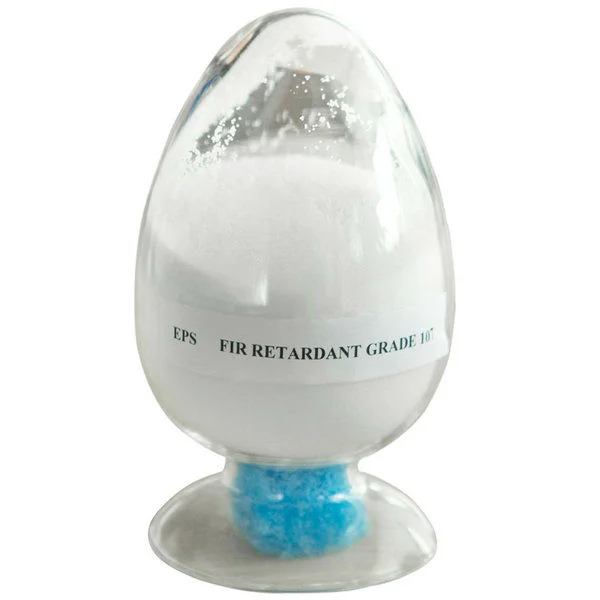
TL;DR: China flame retardant EPS beads compared: FR grades, B1/UL94/EN 13501 fire ratings, HBCD-free PolyFR, 2026 FOB prices + 6-point supplier sourcing checklist.
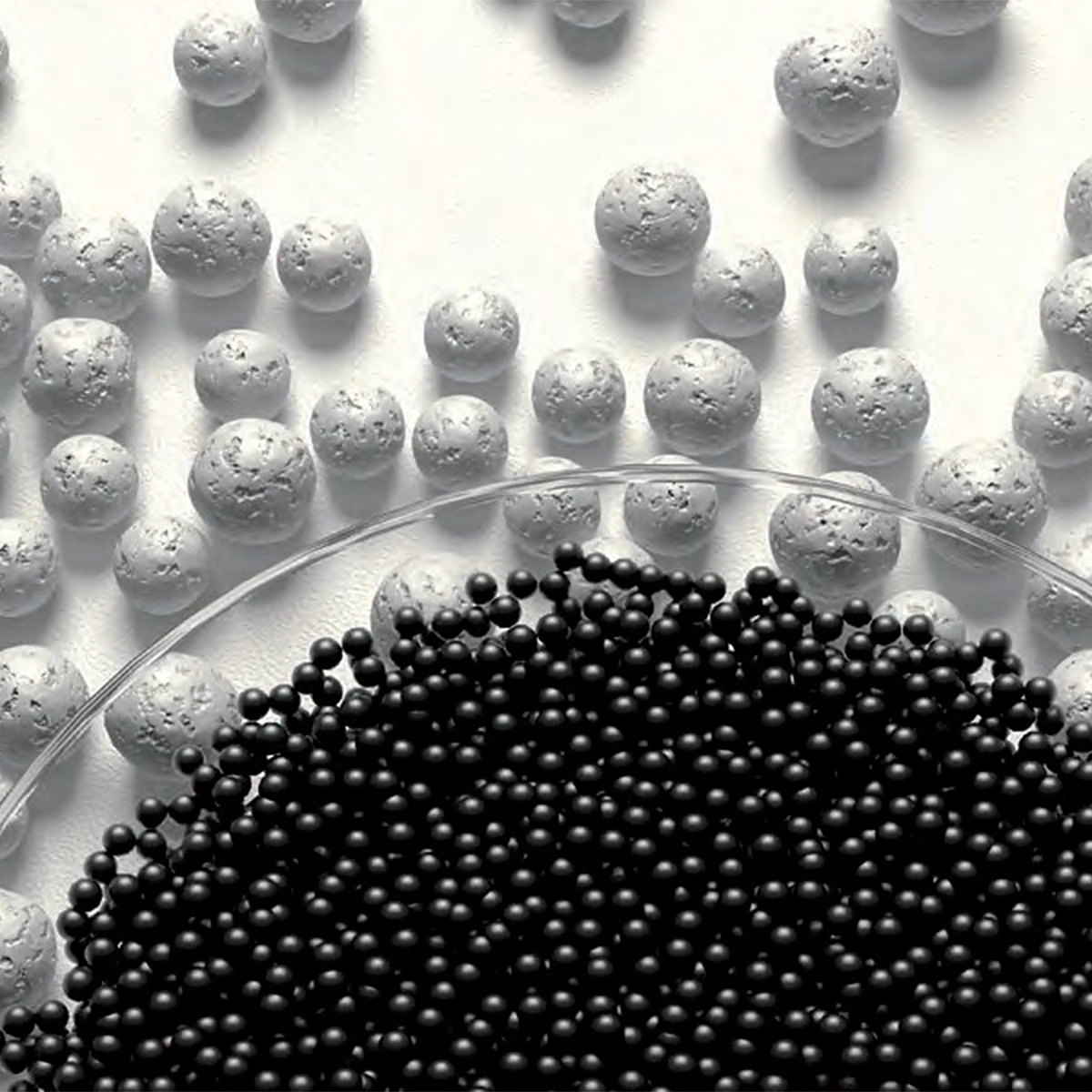
Flame retardant EPS beads are expandable polystyrene beads pre-blended with a polymeric brominated additive (PolyFR) that gives the foam self-extinguishing behavior, allowing it to meet building fire codes such as DIN 4102-B1, EN 13501-1 Euroclass E or B-s2-d0, UL94 HF-1, and China GB 8624 B1/B2. They are the mandatory grade for any EPS used in walls, ceilings, ICF blocks, EIFS panels, roof boards, and HVAC duct insulation.
Flame retardant (FR) EPS beads cost 8–18% more than standard EPS — typically $1,400–$1,900/ton vs $1,200–$1,600/ton FOB China — but they are non-negotiable for almost any insulation, ICF, or construction application worldwide. Modern FR beads use polymeric PolyFR (Emerald Innovation 3000 by LANXESS or FR122P by ICL Industrial Products), which has fully replaced the legacy additive HBCD since the Stockholm Convention banned it in 2014. China supplies roughly 35% of global FR EPS exports across four grade families (Standard, High Expansion, Fast Cycling, Graphite) at densities from 12 to 35 kg/m³. Before placing your first FOB order, verify three documents: a SGS or Intertek fire test report less than 12 months old, a HBCD-free declaration on the Technical Data Sheet, and a Certificate of Analysis showing pentane content of 5.0–6.5%. Without all three, customs clearance and end-user certification can be derailed.
This guide covers FR EPS chemistry, the four commercial grade families, every major fire standard side by side, 2026 pricing, manufacturing process, and a 6-point verification checklist for sourcing from Chinese suppliers. It assumes you are evaluating bulk raw bead procurement for a downstream product such as ICF blocks, EIFS panels, cold storage walls, or fire-rated packaging.
What Are Flame Retardant EPS Beads?
Standard EPS is highly flammable. Plain polystyrene foam ignites at 488°C, melts and drips while burning, and rates below UL94 HB on the horizontal burn scale. Without an FR additive, plain EPS is restricted from any building wall, ceiling, or interior insulation application in nearly every developed market.
Flame retardant EPS solves this by incorporating a brominated flame retardant directly into the polystyrene matrix during the resin polymerization stage. When exposed to flame, the bromine breaks down to release radicals that interrupt the combustion chain reaction in the gas phase, causing the foam to self-extinguish within 1–3 seconds of flame removal. The additive does not change the bulk thermal insulation, density range, or processing behavior of the foam in any noticeable way — the same pre-expander, aging silos, and shape or block molding equipment runs both standard and FR grades with only minor steam-time recalibration.
From HBCD to PolyFR: A Decade of Chemistry Migration
For nearly 50 years, the industry standard FR additive was hexabromocyclododecane (HBCD), used at roughly 0.7% loading by weight. HBCD was effective and inexpensive, but in 2013 it was added to Annex A of the Stockholm Convention as a persistent organic pollutant (POP) because it bioaccumulates in fatty tissue and was found in remote Arctic wildlife and human breast milk samples. The Convention triggered a phase-out across signatory countries through 2014–2016. By 2017, virtually all responsible EPS bead suppliers had switched to polymeric flame retardants, sold under two dominant brand names: Emerald Innovation 3000 (LANXESS) and FR122P (ICL Industrial Products) — collectively referred to as PolyFR.
PolyFR is a high-molecular-weight (above 50,000 g/mol) brominated styrene-butadiene block copolymer that is too large to bioaccumulate. Critically, it offers fire performance equivalent to or better than HBCD in EPS at similar loading levels (0.7–1.0%), making the migration technically transparent for end users while solving the regulatory problem. Today any EPS supplier still selling HBCD-based beads is either operating in an unregulated market, has stale inventory, or is mislabeling product. Buyers exporting to the EU, US, Canada, Japan, or any country with REACH or POP regulations must demand a HBCD-free declaration on the Technical Data Sheet.
How Flame Retardant Beads Differ From Standard EPS in Practice
Functionally, FR EPS processes on the same equipment as standard EPS. However, three operational differences matter on a real production floor:
- Slightly longer steam time (3–7% more) due to the FR additive’s effect on bead surface tension during expansion.
- Marginally higher minimum density for stable fusion — most FR grades fuse cleanly above 13 kg/m³, while standard EPS can stabilize down to 11 kg/m³.
- Storage cleanliness matters — FR beads require dedicated silos and conveying lines if you also produce non-FR products, because cross-contamination in either direction creates traceability issues for fire-rated applications and can void third-party certifications.
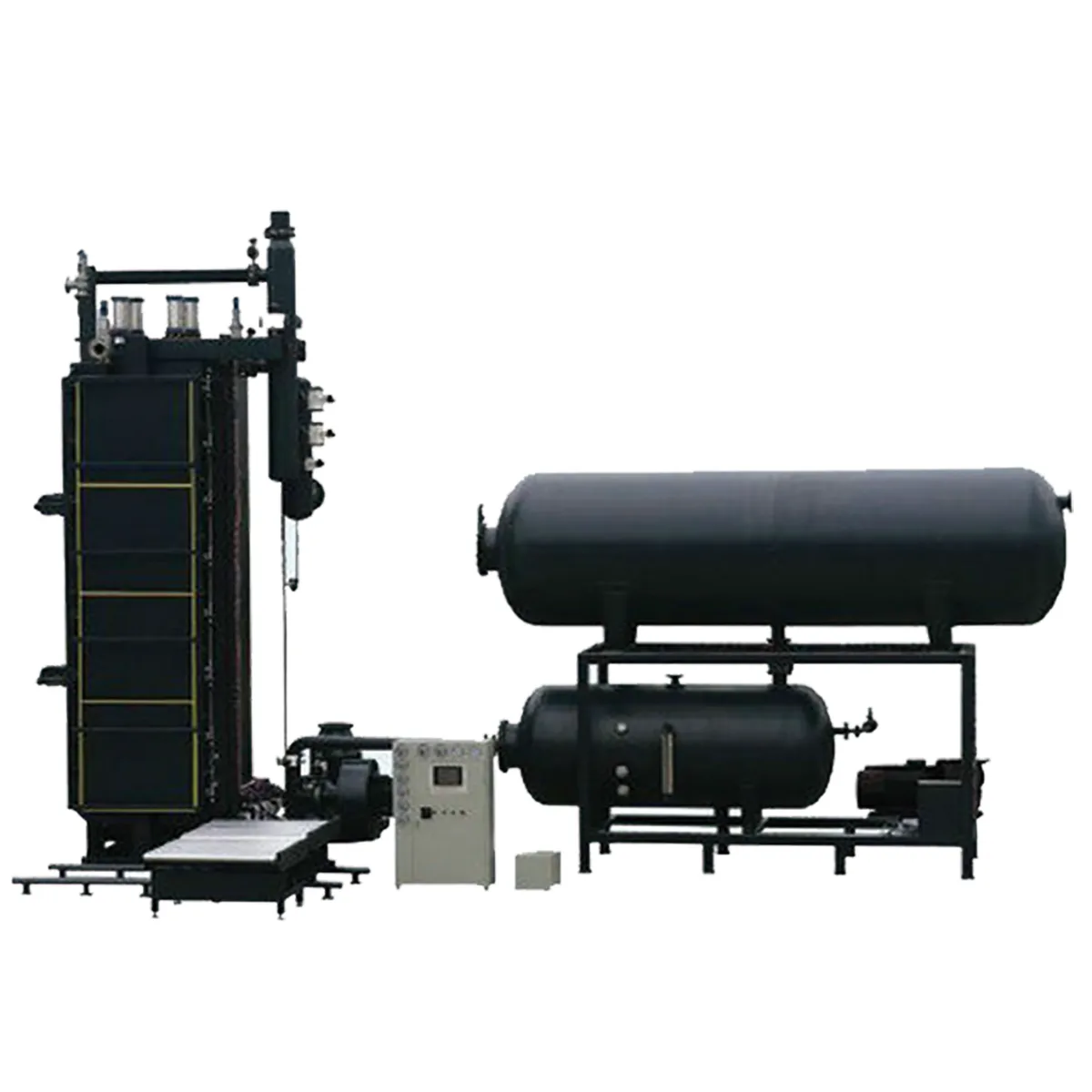
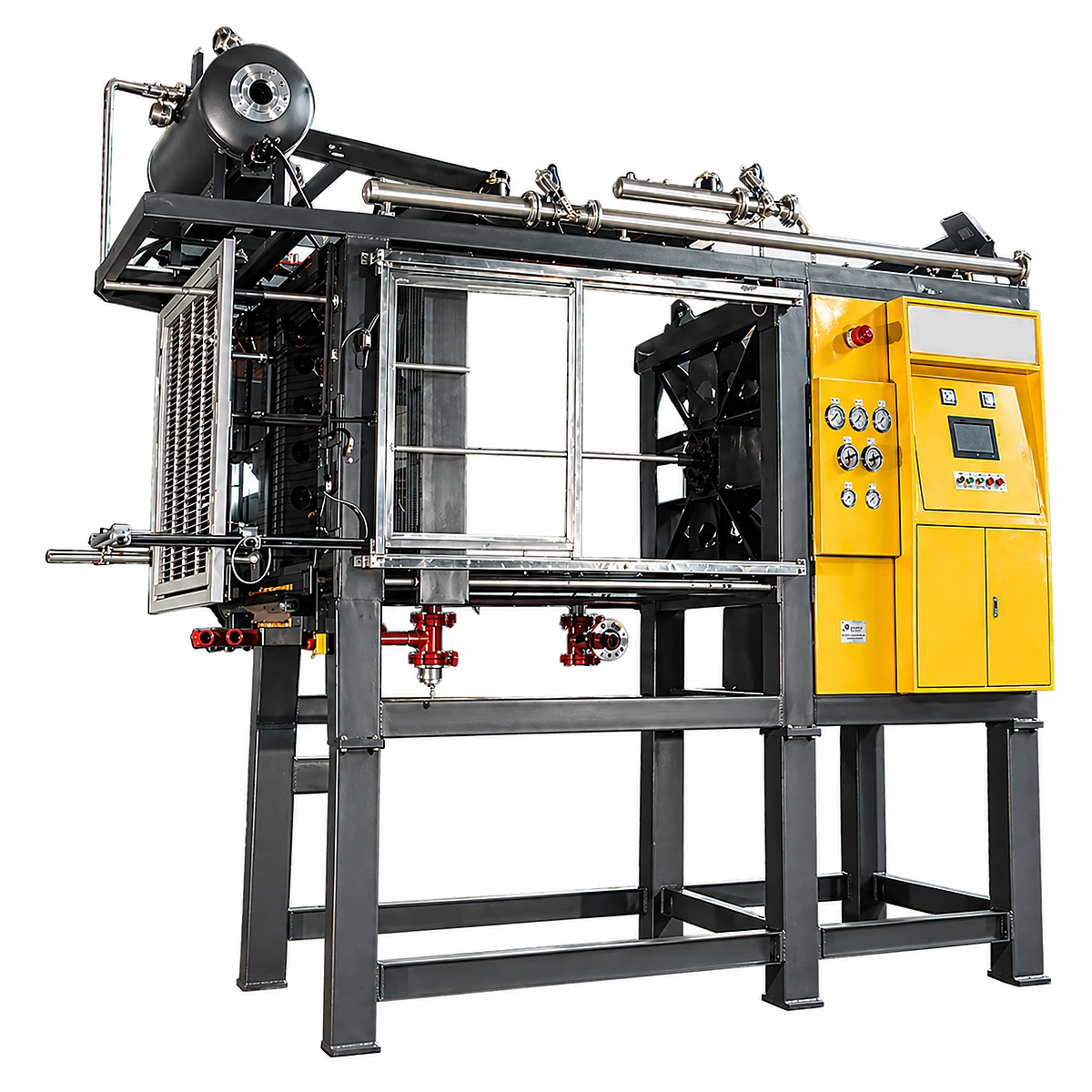
Our BM-1200 (4 sizes) block molding machine and SM-1200 shape molding machine are both compatible with standard, flame retardant, and graphite EPS beads — the only required configuration change is steam-time calibration and dedicated bead routing.
Flame Retardant EPS Grades and Specifications
FR EPS beads are commercially supplied in four grade families, each tuned to a specific application profile. Choosing the right grade matters more than negotiating an extra two cents off the unit price — using a coarse-bead packaging grade for a thin-wall cold storage door, or a fine-bead high-density grade for a low-density roof board, leads to fusion problems, density drift, and fire-test failures.
| Grade Family | Bead Size (mm) | PolyFR Loading | Target Density | Typical Application |
|---|---|---|---|---|
| FR-Standard | 0.7–1.4 | 0.7–0.9% | 18–25 kg/m³ | EIFS panels, roof boards, building insulation |
| FR-High Expansion | 1.0–1.8 | 0.6–0.8% | 12–18 kg/m³ | Cold storage walls, lightweight insulation |
| FR-Fast Cycling | 0.5–1.0 | 0.8–1.0% | 20–30 kg/m³ | ICF blocks, geofoam, structural insulation |
| FR-Graphite | 0.5–1.4 | 0.7–1.0% | 13–20 kg/m³ | Premium EIFS, high-R-value insulation |
Bead Size Selection
Bead size after expansion governs surface finish, wall fusion quality, and minimum producible wall thickness:
- Fine beads (0.5–1.0 mm) are required for thin-wall parts (under 30 mm) and parts with complex geometry, such as cold storage door inserts, electronics packaging with tight features, and ICF tie pockets.
- Medium beads (0.7–1.4 mm) are the workhorse range for EIFS panels, roof boards, and most general construction insulation. They balance surface finish, fusion stability, and bead aging tolerance.
- Coarse beads (1.0–1.8 mm) are appropriate for low-density (under 16 kg/m³) packaging and cold storage applications where wall thickness is above 50 mm and a slightly textured surface is acceptable.
Density and Wall Thickness Considerations
Target density is determined by the end-use application’s structural and thermal requirements, not by personal preference:
- 13–15 kg/m³ — lightweight insulation slabs, low-stress roof boards.
- 16–20 kg/m³ — standard EIFS panels, general building insulation, packaging.
- 20–25 kg/m³ — ICF blocks, geofoam, cold storage walls subject to mechanical loading.
- 25–35 kg/m³ — under-floor insulation, parking deck protection, structural geofoam fills.
Critically, the density on your fire test report must equal or be below your production density. A B1 certificate issued at 30 kg/m³ does not certify 18 kg/m³ foam — lower density burns faster, and the FR loading per cubic meter is correspondingly lower. Buyers and code authorities frequently reject test reports for this exact mismatch.
International Fire Standards: B1, UL94, EN 13501, GB 8624 Side by Side
This is the single most confusing area for first-time FR EPS buyers. The same physical material can be sold under B1, Euroclass E, UL94 HF-1, ASTM E84 Class B, or GB 8624 B1/B2 depending on which standard the test was conducted under. They are not interchangeable, and architects, contractors, and customs officers in different markets accept different certifications.
European Standards: DIN 4102 and EN 13501-1
Germany’s DIN 4102 remains the most widely cited European fire standard for EPS in construction, even though the harmonized EU standard EN 13501-1 has been mandatory across the EU since 2003. DIN 4102 classifies materials as A1 (non-combustible), A2 (limited combustibility), B1 (flame retardant), B2 (normally flammable), and B3 (highly flammable). Standard EPS rates as B2 or B3; FR EPS is engineered to achieve B1.
EN 13501-1 introduces the Euroclass system: A1, A2, B, C, D, E, and F, plus smoke (s1/s2/s3) and flaming droplet (d0/d1/d2) sub-classifications. Standard EPS without FR rates as Euroclass F (fail). FR EPS at densities of 15 kg/m³ and above typically achieves Euroclass E; with PolyFR at 0.9% loading and a graphite-enhanced formulation, premium grades reach Euroclass B-s2,d0, the highest classification practical for any organic foam. Most building codes in EU member states require Euroclass E as a minimum and B-s2,d0 for taller buildings (above 22 m).
North American Standards: ASTM E84 and UL94
In the United States and Canada, the dominant fire test for EPS is ASTM E84 (also published as UL 723 and CAN/ULC-S102), the Steiner tunnel test. This standard reports two values: Flame Spread Index (FSI) and Smoke Developed Index (SDI). Materials are classified as Class A (FSI 0–25), Class B (FSI 26–75), or Class C (FSI 76–200). Standard EPS rates well above Class C and is excluded from interior building applications. FR EPS with PolyFR achieves Class A or Class B ratings at densities of 15 kg/m³ and above, qualifying it for IBC Chapter 26 thermal barrier applications.
UL94 is the small-flame burn test most often cited for component-level applications such as electronics packaging and HVAC duct boards. UL94 rates from HB (slowest, horizontal burn) up through V-0 (highest, vertical burn with self-extinguishing behavior in 10 seconds). For foam materials, the relevant grades are HF-1 and HF-2 (horizontal foam burn). FR EPS beads typically achieve UL94 HF-1, which requires self-extinguishing within 2 seconds and no flaming drip ignition of cotton.
Chinese Standard: GB 8624
GB 8624-2012 classifies building materials as A1, A2, B1, B2, and B3, in descending order of fire performance. The standard has been mandatory for all building insulation materials in China since the 2012 revision and is enforced through the GB 50016-2014 Code for Fire Protection Design of Buildings. EPS is organic and cannot reach A1 or A2; FR EPS is targeted at B1 (difficult to ignite) for facade insulation in mid-to-high-rise buildings, or B2 (normal flammable) for low-rise and packaging applications.
Importantly, GB 8624 testing must be performed by a CMA-accredited Chinese laboratory for products sold in the Chinese market. Foreign test reports (DIN, ASTM, EN) are accepted for export reference but not for Chinese building permit purposes — if your end-customer is a Chinese contractor, demand a GB 8624 report from a Chinese lab. China’s major test labs include the China Building Materials Test & Certification Group (CTC) and the National Center for Quality Supervision and Inspection of Fixed Fire-fighting Systems and Fire Resistant Components (CNCFC).
How to Read a Fire Test Report Without Getting Tricked
Three checks separate a credible fire test report from a marketing prop:
- Sample density check: The density tested must equal or be below your production density. A B1 issued at 30 kg/m³ does not cover 18 kg/m³ foam.
- Test laboratory accreditation: SGS, Intertek, TÜV Rheinland, TÜV SÜD, BV (Bureau Veritas), CTC, and CNCFC are universally accepted. Local provincial test centers may be valid for domestic use only.
- Test date: Most procurement specifications require a test report less than 12 months old. Reports from 2019 or earlier should be re-issued before a major order, particularly because PolyFR formulations have evolved.
Six Applications Driving Flame Retardant EPS Demand in 2026
1. Insulated Concrete Form (ICF) Blocks
ICF construction is the fastest-growing application for FR EPS globally. ICF blocks combine structural concrete with permanent EPS formwork to create walls with R-22 to R-44 insulation values. Building codes universally require fire-rated EPS for ICF, typically at densities of 20–25 kg/m³ and DIN 4102 B1 or GB 8624 B1 classification. The FR-Fast Cycling grade is the standard choice. (See our complete ICF block production guide for the full equipment and process picture.)
2. EIFS Exterior Insulation Panels
Exterior Insulation Finish Systems (EIFS) clad commercial and residential building exteriors, providing both thermal performance and weatherproofing. EIFS panels are typically 50–150 mm thick at 16–20 kg/m³ density. FR EPS is mandatory for EIFS in nearly every developed market, with Euroclass B-s2,d0 or DIN 4102 B1 the standard requirement. Graphite-enhanced FR EPS (with up to 20% better thermal performance) commands a 10–15% premium and is increasingly the default specification.
3. Roof Insulation Boards
Flat-roof and low-slope insulation boards in commercial construction use FR EPS at 16–25 kg/m³ densities, often laminated with bituminous or PVC roofing membranes. North American specifications typically require ASTM E84 Class A; European specifications follow Euroclass B-s2,d0. The FR-Standard grade fits this application directly.
4. Cold Storage and Refrigerated Warehouse Walls
Industrial freezers, cold rooms, and refrigerated logistics warehouses use 100–200 mm thick FR EPS sandwich panels at 14–20 kg/m³ densities. Cold-chain insurance underwriters increasingly require fire-rated insulation after several high-profile freezer warehouse fires (notably the 2014 General Mills Iowa cold storage fire and the 2020 Lenexa, Kansas freezer fire), driving FR EPS adoption even in markets where building codes do not yet mandate it.
5. Electronics Packaging
High-value electronics (servers, medical imaging equipment, lithium battery packs) ship in custom-molded EPS inserts. Lithium battery shipping in particular requires UL94 HF-1 or HF-2 fire-rated foam by IATA, ICAO, and US DOT regulations. Fine-bead FR EPS (0.5–1.0 mm) at 25–35 kg/m³ is the standard specification, molded on shape molding machines such as our SM-1200.
6. HVAC Duct Insulation
Pre-formed EPS duct insulation segments wrap commercial HVAC trunks. The application requires UL94 HF-1 or higher and ASTM E84 Class A in most US jurisdictions. Densities are 18–25 kg/m³ with fine-to-medium bead size for clean fitting around duct contours.
How Flame Retardant EPS Beads Are Manufactured
FR EPS beads are produced through suspension polymerization in batch reactors of typically 50–200 m³ capacity. Styrene monomer, water, suspension stabilizer, and pentane (the blowing agent) are charged into the reactor along with PolyFR and any co-additives such as graphite, color masterbatch, or anti-static agents. The reactor is heated to 90–110°C under controlled pressure for 6–10 hours while polymerization proceeds and pentane is absorbed into the forming polystyrene beads.
The PolyFR is added during the polymerization stage, not as a post-treatment. This in-situ incorporation is what gives FR EPS beads stable fire performance through downstream pre-expansion and molding — the FR additive cannot be washed off, evaporate, or migrate to the surface over time. After polymerization, the beads are washed, centrifuged, dried, and sieved into bead-size fractions (typically 0.3–1.6 mm), then coated with a small amount of zinc stearate or similar release agent to prevent agglomeration. Final beads are packed into 25 kg PE-lined kraft bags or 1,000 kg FIBC bulk bags.
From a buyer’s perspective, this means FR performance is locked in at the resin plant, not at the factory that runs the foam. As long as the supplier delivers in-spec beads with valid test reports, your downstream block molding machine or shape molding machine simply runs them like standard EPS with steam time recalibration. (For end-to-end factory planning, see our complete EPS factory setup guide.)
Sourcing Flame Retardant EPS from China: 6-Point Verification Checklist
China supplies roughly 35% of global FR EPS bead exports, primarily produced by Sinopec, CNPC, Loyal Chemical, and several mid-size specialty resin makers. Pricing is 8–15% below European and Korean origin material, but quality and certification rigor vary widely between top-tier and unbranded suppliers. Use this 6-point checklist before any first order over one container (20 tons in 25 kg bags or 1,000 kg FIBC):
1. HBCD-Free Declaration on the Technical Data Sheet
The TDS must explicitly state "HBCD-free" or "contains polymeric brominated flame retardant (PolyFR/Emerald 3000/FR122P)." Generic phrases like "complies with environmental regulations" or "eco-friendly" are not acceptable. Ask for an additional REACH/POP/RoHS declaration if you are exporting to the EU or US.
2. Recent Third-Party Fire Test Report
Demand a SGS, Intertek, TÜV, BV, CTC, or CNCFC test report dated within the last 12 months. Verify the test sample density matches or is lower than your order density. Verify the test standard matches your destination market (DIN/EN for EU, ASTM/UL for North America, GB for China).
3. Pentane Content on the Certificate of Analysis
Pentane content drives expansion behavior. Specification range is typically 5.0–6.5%. Below 4% means the beads have aged in storage and will under-expand; above 7% means freshness but also higher transport hazard classification (UN 2211 expandable polymer beads, hazard class 9 for pentane content above 7%). The COA must show actual measured pentane, not a generic specification.
4. Bead Size Distribution Curve, Not Just a Nominal Number
Ask for the actual D10/D50/D90 distribution from a sieve analysis, not just a single nominal range. A spec of "0.7–1.4 mm" can be produced as a tight Gaussian centered at 1.05 mm, or as a bimodal distribution with peaks at 0.6 and 1.5 mm — the latter will give you fusion problems even though it nominally meets spec.
5. Container Stuffing and Transit Procedure
Standard packaging is 25 kg PE-lined kraft bags on heat-shrink-wrapped pallets, 36–40 bags per pallet, 20–22 metric tons per 40’ high cube container. Transit pentane loss runs 0.3–0.5% per month. For shipments over 35 days transit, request fresh beads (under 14 days old at FOB date) or specify pentane content at FOB to be 6.0% minimum.
6. After-Sales Technical Support
FR EPS is more sensitive to steam time, aging duration, and mold venting than standard EPS. A reliable supplier offers remote video commissioning support and, for orders above 100 tons annually, will send a process engineer to your factory for 2–3 days of in-person calibration. Suppliers who treat technical support as a paid extra rather than included service are signaling that they are not technically deep on the product.
⚠️ Red flags that should kill any order immediately: refusing to issue a SGS or Intertek report ("our domestic certificate is enough"), refusing to put HBCD-free in writing ("trust us"), refusing to issue a per-batch COA, and a quoted bead density that does not match your order density. Any of these means walk away. (For a deeper checklist on every dimension of buying from China, see our complete China sourcing guide.)
Flame Retardant EPS Pricing: 2026 Market Snapshot
FR EPS pricing follows three drivers: styrene monomer market price (currently $1,050–$1,200/ton FOB Asia), pentane price (a petroleum derivative tracking crude oil), and PolyFR additive price ($6–$10/kg, dominated by LANXESS and ICL). Below is a 2026 Q1 origin-comparison snapshot for FR-Standard grade at 18 kg/m³ target density:
| Origin | FOB Price (USD/ton) | Notes |
|---|---|---|
| China (Shanghai/Ningbo) | $1,400–$1,650 | Largest export volume; major suppliers offer SGS-certified PolyFR formulations. |
| South Korea (Busan) | $1,550–$1,800 | Premium positioning; tight bead size distributions, popular for EIFS. |
| Germany (Hamburg) | $1,800–$2,100 | BASF Styropor and Sunpor; certified to all EU standards but premium-priced. |
| Brazil (Santos, regional) | $1,600–$1,950 | Innova/Videolar/Termotecnica supply Latin American market. |
For FR-Graphite grades, add a 10–15% premium across all origins. For ultra-fine bead grades (under 0.5 mm) used in thin-wall packaging, add a 20–30% premium. Pricing on FIBC bulk packaging is 3–5% lower per ton than 25 kg bag packaging, but most downstream factories prefer the 25 kg bag format for manual handling and inventory accuracy.
Buyers in markets like Vietnam, Indonesia, the Philippines, Mexico, Egypt, Turkey, and Saudi Arabia routinely buy FR EPS from China at the lower end of this range while serving local construction markets where pricing power is constrained. The 8–15% origin discount over European and Korean material directly determines whether an EIFS or ICF product is competitive against alternative wall systems (AAC, precast, conventional masonry).
Five Common Mistakes Buyers Make When Ordering FR EPS
- 1. Mismatched density between test report and order: A B1 certificate issued at 30 kg/m³ does not certify 18 kg/m³ foam. The certificate is technically valid but does not cover your application — code authorities and end-customers reject this exact mismatch.
- 2. Treating B1 and B2 as interchangeable: They are not. Most national codes require B1 for facade and ceiling applications above one story, and explicitly disallow B2. Confirm your destination code before ordering.
- 3. Accepting HBCD-residual product as ‘sometimes-OK’: EU REACH SVHC, US TSCA, Canada CEPA, and Japan POPs Law all classify HBCD as restricted. A single shipment seized at customs costs more than several years of HBCD-free price premium.
- 4. Skipping the COA: Pentane content drives expansion. Without a per-batch COA, you have no recourse when a 60-day-aged shipment fails to expand to your target density.
- 5. Forgetting anti-static packaging: FR additives raise bead static charge by 30–50% over standard EPS, causing dust accumulation in pneumatic conveying lines and increasing fire risk in transport. Specify anti-static PE liner bags or anti-static FIBC for any order over 5 tons.
Related Reading
- Complete Guide to EPS ICF Block Production — FR-Fast Cycling beads are the standard input for ICF; this guide walks the full equipment and process flow.
- EPS Machine Buying Guide: 8 Questions to Ask Before You Order from China — Companion sourcing checklist for the equipment side.
- How to Set Up an EPS Factory: Complete Planning Guide — Investment, layout, and utility framework for factories that will run FR EPS.
- EPS vs EPP: Differences and Applications — The pillar guide covering how flame retardant EPS beads fit within the wider EPS and EPP materials family.
- EPS vs EPP vs ETPU Foam Material Guide — Material-level comparison if you are still deciding between FR EPS and alternative foam systems.
- EPS Block Molding Machine for Packaging: Buyer’s Guide — Equipment selection for converting FR beads into finished blocks.
- Low-Pentane EPS Beads for REACH & IED Compliance: Spec & Sourcing Guide — Extended reading in the same cluster.
Frequently Asked Questions
What replaced HBCD in modern flame retardant EPS beads?
Polymeric brominated flame retardants — commercially branded as Emerald Innovation 3000 by LANXESS and FR122P by ICL Industrial Products, collectively called PolyFR — replaced HBCD globally between 2014 and 2017 after the Stockholm Convention banned HBCD as a persistent organic pollutant. PolyFR is a styrene-butadiene block copolymer with a molecular weight above 50,000 g/mol, too large to bioaccumulate. It delivers fire performance equivalent to or better than HBCD at typical loading levels of 0.7–1.0% by weight, with no measurable change in EPS processing behavior or finished foam properties.
Can I run flame retardant EPS beads on the same machine as standard EPS?
Yes. Pre-expanders, aging silos, block molding machines, and shape molding machines all run FR EPS with only minor process recalibration — typically 3–7% longer steam time and a slightly higher minimum stable density (around 13 kg/m³ vs 11 kg/m³ for standard EPS). However, you should run dedicated silos and conveying lines for FR product if you also produce non-FR foam, because cross-contamination in either direction creates traceability and certification issues for fire-rated end products. Our BM-1200 (4 sizes) block molding machine and SM-1200 shape molding machine are both certified for FR, standard, and graphite EPS grades.
What density of flame retardant EPS do I need for ICF block construction?
20–25 kg/m³ is the standard density range for ICF block production, with 22 kg/m³ the most common target. ICF blocks must withstand wet concrete hydrostatic pressure during the pour and repeated mechanical contact on construction sites, both of which require higher density than typical insulation EPS. The fire rating must be DIN 4102 B1, EN 13501-1 Euroclass E or B-s2,d0, or GB 8624 B1 depending on the destination market. The FR-Fast Cycling grade with 0.8–1.0% PolyFR loading and bead size 0.5–1.0 mm fits this profile directly.
How long does flame retardant EPS bead inventory remain usable?
FR EPS beads have an effective shelf life of 60–90 days from production date when stored sealed in original packaging at 5–30°C. The limiting factor is pentane content, which decreases by approximately 0.3–0.5% per month even in sealed PE-lined bags, and faster if storage exceeds 30°C. Below 4% pentane, beads under-expand and produce density-drift problems in molding. For ocean-shipped imports, request fresh beads (under 14 days old at FOB) and specify minimum pentane content at FOB; assume an additional 0.3–0.4% loss during 30–35 day transit and a further 30–60 days of usable shelf life after arrival.
Are flame retardant EPS beads compliant with REACH, US TSCA, and California Proposition 65?
Modern PolyFR-based FR EPS beads are compliant with EU REACH (no SVHC restrictions), US TSCA (no Section 6 restrictions), Canada CEPA Schedule 1, Japan POPs Law, and California Proposition 65 (PolyFR is not on the warning list). HBCD-based FR EPS is non-compliant in all of the above and should not be imported, distributed, or used. Always demand a HBCD-free declaration on the Technical Data Sheet and a current REACH/POP/RoHS statement of conformance from your supplier — without these, customs clearance and end-user certification can be derailed at any point in the supply chain. (See our FR EPS raw material product page for a current TDS download.)
Where can I find a verified China flame retardant grade EPS bead manufacturer?
The Jiangsu and Zhejiang provinces along China's east coast host the largest cluster of flame retardant EPS bead manufacturers, with FOB prices typically $1,400–1,800/ton for PolyFR-loaded grades versus $2,200–2,800/ton for European-equivalent products. Verified producers include Innova-Wuxi, Sinopec Shanghai (resin sold under brand "Saiqi"), and direct factory partners aggregated under ChinaEps. To verify legitimacy, request a current Stockholm Convention compliance letter (HBCD-free), an EN 13501-1 third-party test report from SGS or TUV Rheinland China, and an ISO 9001:2015 certificate scoped to "expandable polystyrene resin manufacturing." Avoid traders who cannot produce a factory address with a verifiable Baidu/Gaode satellite image.
What's the price of china fire retardant EPS resin in 2026?
FOB Shanghai/Ningbo prices for HBCD-free polyFR EPS resin in 2026 sit in the $1,500–1,900/ton range for MOQ 20 tons (one 40-foot HC container), with $50–120/ton premiums for graphite-enhanced flame retardant grades and bead sizes <0.7 mm. Add 8–14% for sea freight to Latin American ports (Santos, Callao, Cartagena) and 5–9% for ports in Africa and Southeast Asia. EU buyers should expect $2,100–2,500/ton landed cost after import duty. Lock in pricing 60 days in advance for Chinese New Year (late January – early February) when factory schedules tighten and freight forwarders raise quotes 15–25%.
How does Chinese flame retardant EPS bead compare to European brands (BASF Neopor, Versalis Extir)?
Chinese PolyFR-based flame retardant beads meet identical fire codes (DIN 4102-B1, EN 13501-1 Euroclass E/B-s2,d0, GB 8624 B1) and use the same LANXESS Emerald 3000 or ICL FR122P additive in many cases. Foam mechanical properties (compressive strength, dimensional stability, thermal conductivity) match European equivalents within ±3% at equivalent densities. Real-world differences: Chinese suppliers ship in standard 25–1,000 kg PE-lined bags with HS code 3903.11; lead time from order to FOB is 7–15 days versus 30–45 days for Neopor. Trade-offs: BASF/Versalis provide longer batch consistency tracking (5+ years) and broader technical support documentation in EU languages, which matters for highly regulated specifications (medical packaging, aerospace).
What are the import duty rates for flame retardant EPS beads in 2026?
Country-specific FOB-to-landed duty rates for HS 3903.11 (expandable polystyrene) in 2026: Brazil 14% IPI + 18% ICMS, India 7.5% BCD + 18% IGST, Indonesia 10% MFN + 11% VAT, EU 6.5% (third-country MFN, suspendable to 0% via authorized economic operator), USA 5.8% (Section 301 list 4 adds 7.5% punitive), Saudi Arabia/UAE 5% GCC tariff + 5% VAT. For projects above 100 tons/year, applying for inward processing relief (EU) or duty drawback (USA) can recover 60–80% of import tariffs if the finished EPS product is re-exported. Always reconfirm rates with a licensed customs broker 30 days before shipment as anti-dumping duties on Chinese polystyrene products are reviewed every 2 years.
How do I order China flame retardant EPS beads directly from the factory?
To buy China flame retardant EPS beads directly rather than through a trading intermediary, request a per-grade quotation that specifies the grade family (FR-Standard, FR-High Expansion, FR-Fast Cycling, or FR-Graphite), target density, bead size range, and destination market fire standard (DIN 4102-B1, EN 13501-1, ASTM E84, or GB 8624). Send this alongside the 6-point verification checklist above so the supplier returns a current HBCD-free TDS, a third-party SGS/Intertek/TÜV fire test report, and a per-batch Certificate of Analysis with pentane content in the same reply. A typical first order is one 40’ high-cube container (20–22 tons) at FOB Shanghai or Ningbo, with 7–15 days lead time from a factory holding resin stock. You can request a current data sheet and FOB quote on our flame retardant EPS raw material page.