
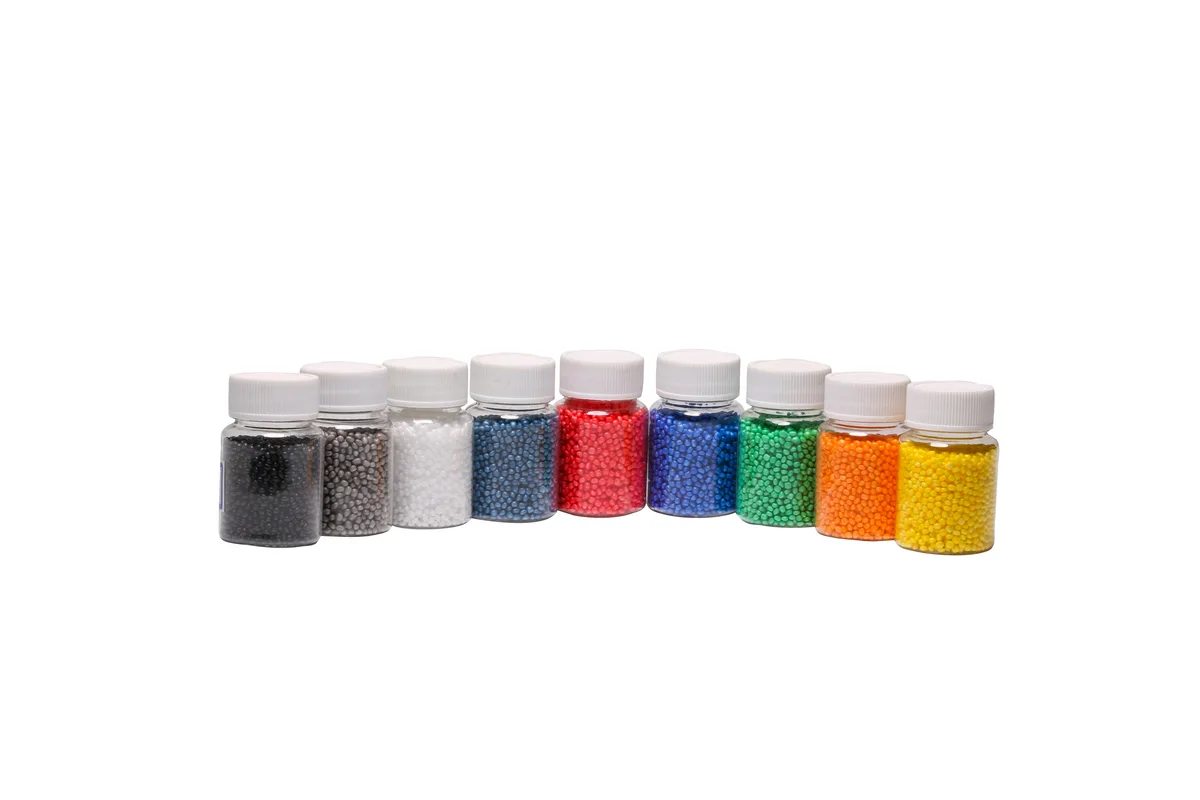
EPP Raw Material Production Line — Turnkey Solution
Complete turnkey line for upstream EPP bead polymerization — pressurized reactors, butane/CO2 blowing-agent loading, fine-particle sieving. EPP commands 3-5× the price of EPS — premium margins for automotive, sports, and high-value packaging buyers.
What This Line Produces
End products this turnkey line is engineered to manufacture.
Standard EPP beads (3-5 mm, 30-60 g/L density range)
High-density EPP (90-150 g/L, automotive bumper applications)
Colored EPP beads (5 colors: blue / green / red / white / yellow for branding)
Anti-static EPP (for electronics packaging, surface resistivity <10⁹ Ω)
Food-grade EPP (FDA / EC 10/2011 compliant, white only)
Production Flow
From raw material to finished product — six stages, fully integrated.
Polypropylene Charging
Polypropylene resin pellets (random copolymer grade) are charged into the pressure reactor along with surfactant and dispersant.
Pressurized Impregnation
Reactor pressurized to 15-25 bar; butane/CO2 blend (or hydrocarbon mix) impregnates molten PP at 130-140 °C over 4-6 hours.
Controlled Pressure Release
Pressure released at controlled rate (2-4 bar/min) to expand impregnated PP into closed-cell EPP beads — critical step that determines bead density.
Cooling & Stabilization
Cold water quench solidifies bead cell structure; 24-48 hour aging stabilizes molecular structure before sieving.
Fine-Particle Sieving
Tight sieve fractions (2.5 / 3.5 / 4.5 mm) ensure consistent downstream molding — EPP buyers reject lots with >3% off-spec beads.
QC Testing & Packing
Each batch tested for density, cell uniformity, blowing-agent residual, and surface property. Packed in moisture-barrier 25 kg bags or 500 kg bulk containers.
Equipment List
Engineered configuration — every machine sized to match line throughput.
| Machine | Model | Qty | Capacity |
|---|---|---|---|
| High-Pressure Polymerization Reactor | HPR-5000 / HPR-8000 | 1-2 | 5-8 m³, 30 bar rated, 304 SS with thermal jacket |
| Butane/CO2 Mixing & Metering Skid | BMS-200 | 1 | 200 L/min metering, ATEX zone 1 + GB 12476 dual-certified |
| Cold-Water Quench System | CWQ-1000 | 1 | 1,000 kW thermal load, brings reactor contents from 140 °C to 25 °C in 15 min |
| Aging Silo Battery | ASB-3x100 | 3 | 3 × 100 m³ silos, 48-hour bead aging cycle |
| Precision Vibratory Sieve | PVS-5 | 1 | 5 size fractions (2.5 / 3 / 3.5 / 4 / 4.5 mm), 1,000 kg/h throughput |
| QC Lab Equipment Bundle | QC-EPP | 1 | Density meter, melt flow indexer, cell-size microscope, blowing-agent residual GC |
| Moisture-Barrier Packing Line | MBP-25/500 | 1 | 25 kg bag or 500 kg bulk container, foil/PE inner liner standard |
Why ChinaEps for This Solution
Engineering specifically tuned for this application — not a generic line.
High-Pressure Reactor Pedigree
EPP requires 30 bar working pressure (3× EPS reactors). Our high-pressure reactor line is ASME Section VIII Div 1 designed, hydro-tested to 45 bar, with 25-year fatigue rating. We are one of few Chinese suppliers willing to build EPP-grade reactors at this scale.
Premium Margin Positioning
EPP sells at 3-5× the price of EPS. Our customers serve automotive Tier-1 (USD 4-6K/ton), sports goods (USD 5-8K/ton premium grades), and high-value packaging — payback period typically 2-3 years vs 4-6 for EPS-only plants.
Blowing-Agent Safety Engineering
Butane and CO2 mixtures are more dangerous than EPS pentane (higher pressure, lower flash point). We ship with redundant pressure relief valves, automated emergency shutdown, leak detection at 1 ppm, and operator training on multi-language SOPs.
Automotive-Spec Quality Documentation
EPP buyers (especially automotive) require IATF 16949, PPAP submissions, statistical process control (SPC) data. We pre-configure the QC lab and provide template documentation for IATF + ISO 9001 audits — most plants pass within 6 months of commissioning.
Real Customer Case
A factory we equipped — operating today.
2,500 t/year EPP plant supplying Geely/SAIC automotive bumper and energy-absorber programs
Sells at USD 4,500-5,500/ton vs USD 1,200-1,500/ton for EPS — 3-4× margin. Reactor stabilized at 5-hour cycle producing 30-90 g/L density range; passed IATF 16949 automotive supplier audit Q3 2024.
Choose Your Investment Tier
Match the production scale to your business stage — from new-factory starter to lights-out flagship.
Pilot Plant
Specialty EPP suppliers serving regional automotive and sporting-goods customers
High-pressure polymerization reactor + microbead drying + ATEX-compliant pentane handling
Industrial Plant
National-scale EPP bead production for Tier-1 automotive supplier supply
Multi-reactor + microbead sizing + IATF 16949 audit-ready QC lab + ATEX zone-22 compliance
Premium OEM Plant
OEM-direct EPP supply for premium automotive bumper / sporting goods / safety equipment
Advanced multi-reactor + premium QC + SCADA + automotive Tier-1 audit-ready documentation
Optional Add-ons & Upgrades
Customize the line to match your specific business model — add components when you need them.
IATF 16949 Documentation Package
Full PPAP / FMEA / Control Plan / MSA documentation for automotive Tier-1 supplier audits.
Premium Microbead Sizing
Tighter bead size distribution (0.3-1.5mm) for premium automotive bumper grade.
Multi-Grade Switching System
Switch reactor production between sporting/automotive/packaging EPP grades without contamination.
ROI Snapshot
Reference numbers based on typical Standard tier deployment — actual ROI varies with local market, energy cost, and product mix.
Service & Support Commitment
Beyond shipping — our commitment to the success of your production line from day one through year ten.
Automotive Tier-1 Qualification Support
Documentation + audit accompaniment for IATF 16949 certification — 3 customers passed first attempt since 2022.
Plant Commissioning + Process Engineering
60-90 day on-site commissioning with our polymer chemists. Includes operator + QC team training.
10-Year Warranty + 24/7 Support
Industrial-scale equipment warranty; 24-hour response on production-down issues.
ATEX + ESG Compliance
Pentane safety + ESG environmental compliance documentation for premium markets.
Frequently Asked Questions
Why is EPP polymerization more challenging than EPS?
What is the minimum capex for an EPP plant and what payback should we expect?
Can the same plant make EPS and EPP, or do I need two separate lines?
Which blowing agent is best — butane, CO2, or hydrocarbon blend?
Do you provide IATF 16949 documentation support for automotive supply?
Tell Us Your Production Goals
Share your capacity targets, product specs, and budget — our engineers design the optimal line for your factory.
Related Production Lines
Diversify revenue with adjacent production capability — many customers operate multiple ChinaEps lines side-by-side.