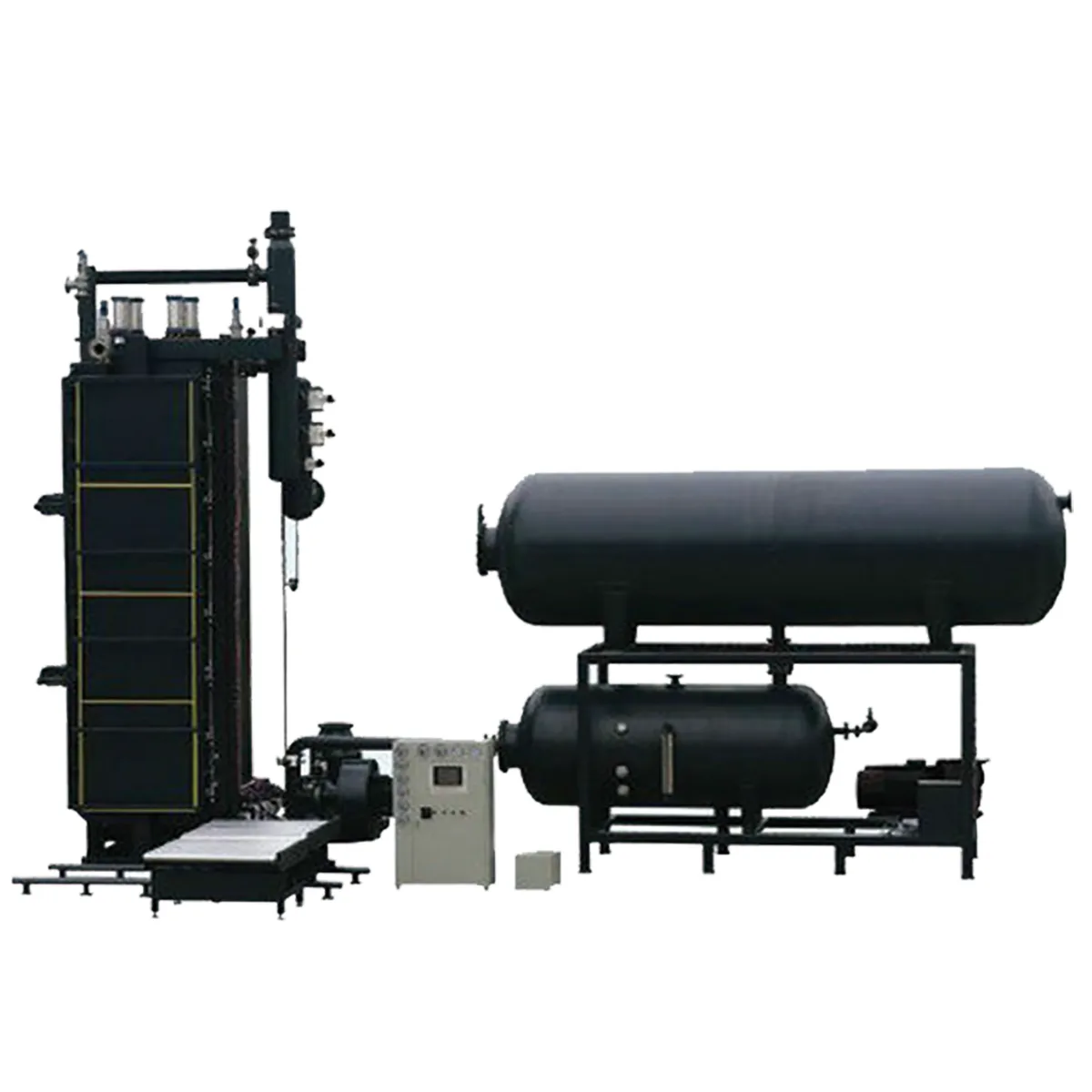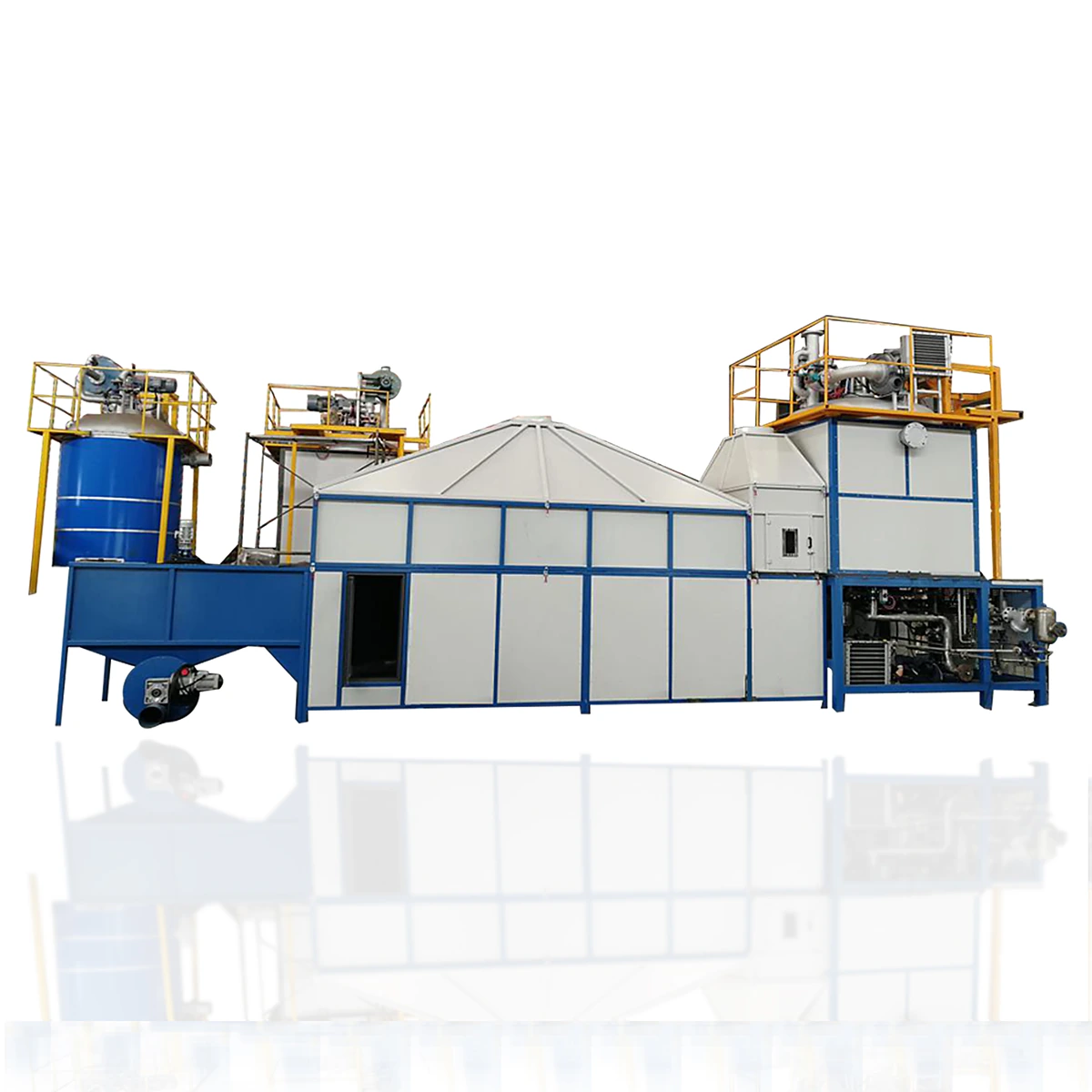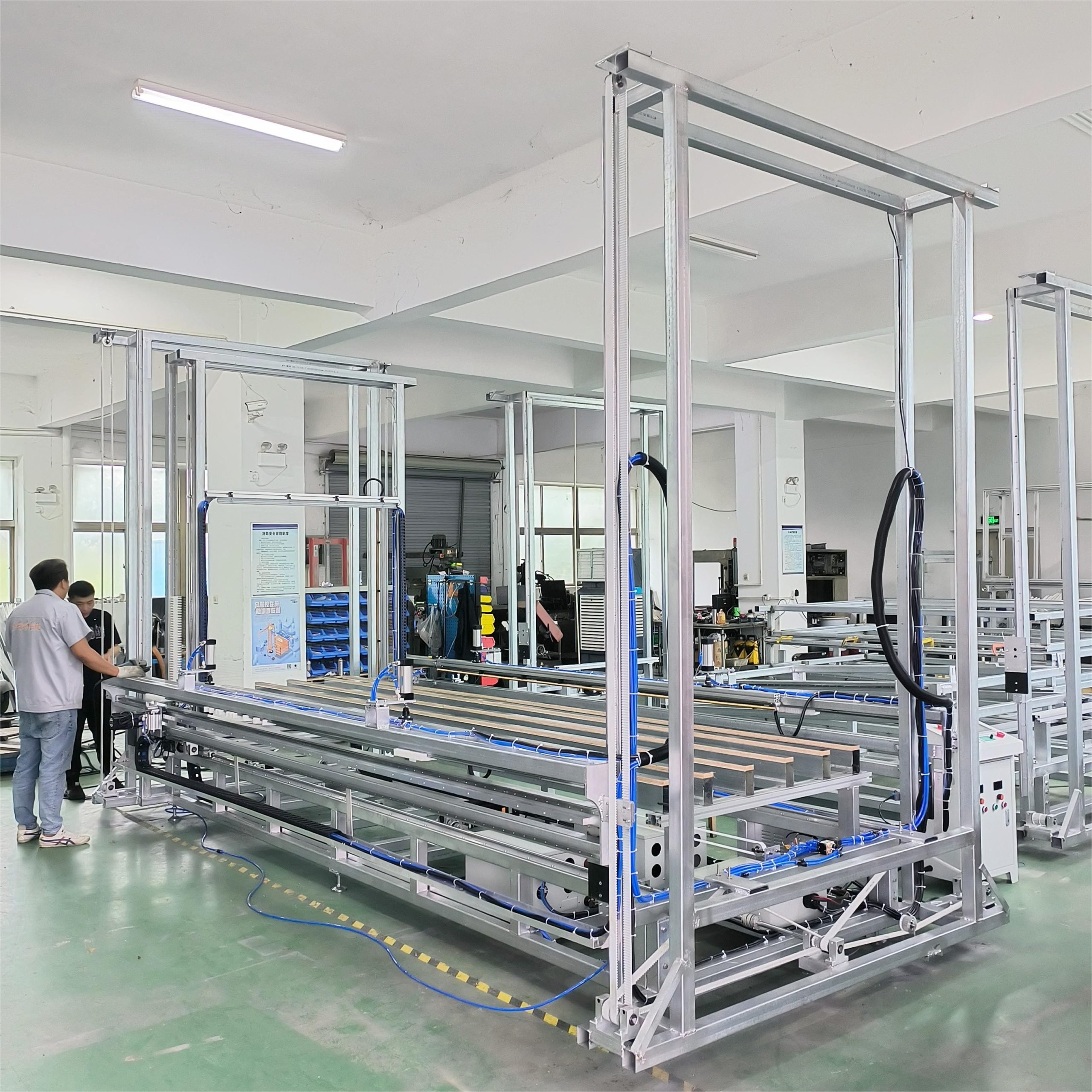
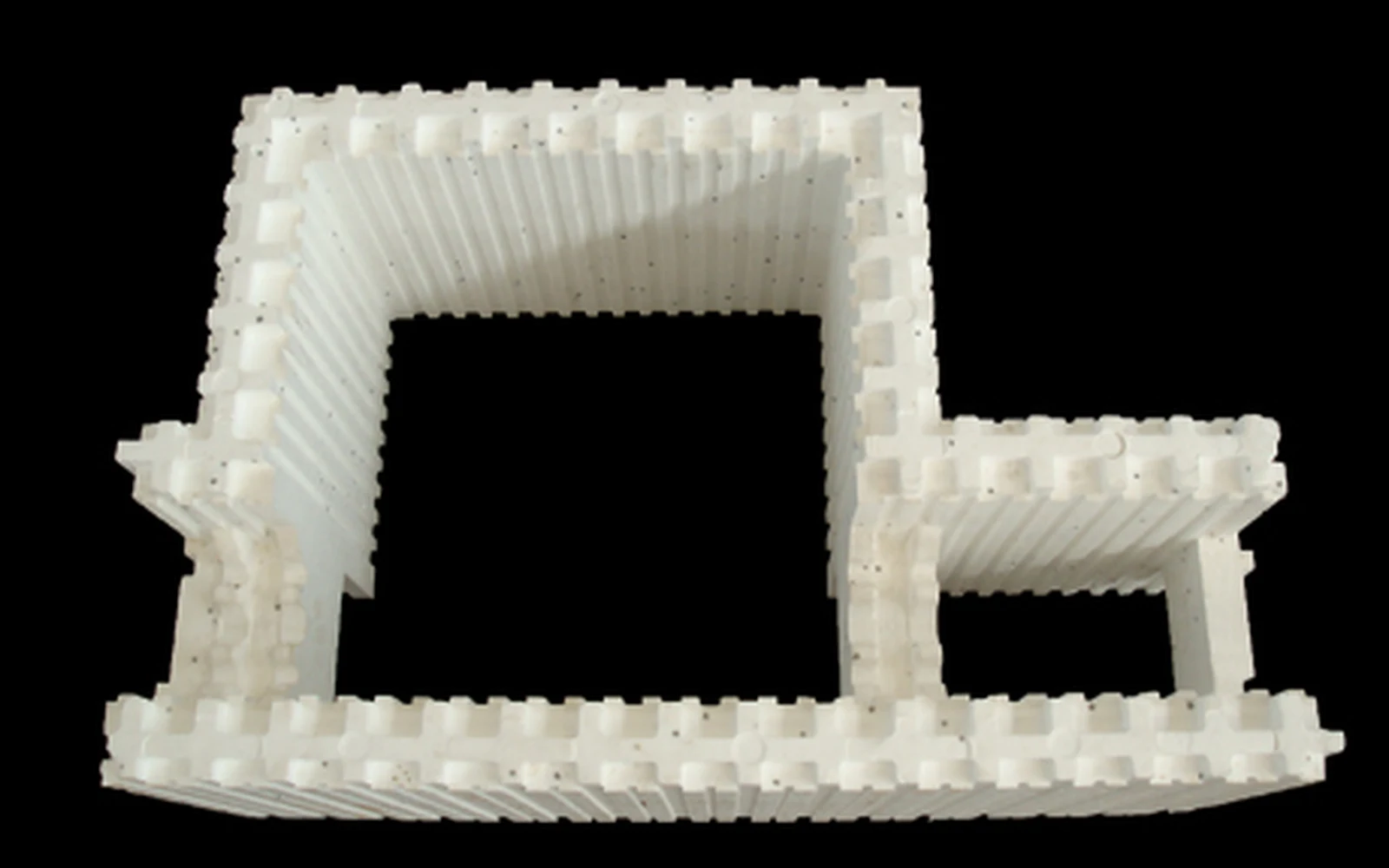
An EPS ICF (Insulated Concrete Form) block production line costs $85,000–$220,000 depending on tier and automation. Output range: 500–1,500 blocks per day at density 25–30 g/L. The line's core is a horizontal block molder (BM-1400 class) plus pre-expander, cutting line and CNC hot-wire block shaper for the interlocking geometry. Payback is 6 months in Middle East / LATAM / India markets with gross margin 38–49% at 500 blocks/day capacity. This guide covers the 6-stage production process, equipment cost by tier, 4 block-geometry specifications, regional cost multipliers, and the 5-point sourcing checklist for ICF-specific lines. B2B factory buyers only — MOQ 1 line. Pair with our EPS ICF factory setup guide for the business-plan side and how to set up an EPS factory for full factory planning.
1. Why the EPS ICF Market Is Growing in 2026
Insulated Concrete Form (ICF) construction is scaling globally as building codes tighten around thermal efficiency. Per the EUMEPS construction data, ICF market volume grew from $2.1B in 2020 to $3.8B in 2025, projected $6.2B by 2030 (10.4% CAGR). Three regional drivers are pulling new factory investment:
- Middle East residential + commercial construction: UAE, Saudi Arabia, Qatar building codes since 2023 require U-value ≤ 0.30 W/m²·K on external walls — ICF hits 0.20–0.25 W/m²·K natively. Dubai Municipality mandates ICF-equivalent thermal performance on all new residential above 4 floors.
- LATAM low-cost housing programs: Mexico Infonavit + Colombia MiCasaYa housing programs use EPS ICF as the preferred structural insulation for social-housing units (18–36 m² homes). Regional demand doubling every 4 years.
- India Modular Construction: Government-backed "Housing for All" (Pradhan Mantri Awas Yojana) 2020–2027 targets 20M urban housing units. ICF-based construction cuts on-site labor 40% and matches monsoon-resilience requirements.
ChinaEps factory note (60+ export markets): ICF block lines are the fastest-growing category in our 2024–2026 export order book. The pattern is consistent — buyers are established local construction supply operators (concrete blocks, insulation boards, brick) diversifying into ICF because their existing customer base (contractors, developers) is asking for it. That means the buyer profile is technically capable — they already have a factory, forklift access, boiler capacity. The line commissioning runs faster (4–6 weeks vs. 6–8 weeks for greenfield fish-box lines) because the infrastructure is already there.
2. The 6-Stage ICF Block Production Process
An EPS ICF factory runs six stages. Two are ICF-specific (Stage 5 CNC shaping, Stage 6 quality assurance for interlocking geometry) versus a standard block molding line:
Stage 1 — Raw Bead Selection (Fire-Retardant Grade Required)
ICF blocks in most markets require flame-retardant EPS beads (B1/B2 class per ASTM C578 or EN 13501 equivalent) — regular EPS is not code-compliant for structural building use. Bead specification: MFI 6–14 g/10 min, pentane 5.5–6.5%, PolyFR flame retardant (HBCD-free). Purchase price: $2,100–$2,400/ton FOB Asia (vs. $1,500–$1,800 for standard grade). See our flame retardant EPS beads sourcing guide for supplier verification.
Stage 2 — Pre-Expansion (Batch, 95–100°C)
Pre-expansion targets density 25–30 g/L for ICF (higher than fish-box 18–22 g/L). Higher density gives ICF blocks their structural compressive strength — required to survive concrete pour pressure without buckling. Steam at 95–100°C for 100–140 seconds per batch. Output bead density variance must stay within ±0.5 kg/m³ — variance beyond that produces blocks that fail concrete-pour pressure tests.
Stage 3 — Aging (12–24 hours in mesh silos)
Pre-expanded beads age 12–24 hours in mesh fabric silos. ICF-grade aging is longer than fish-box aging (8–14 hours) because the higher-density beads need longer to equilibrate residual pentane. Skipping aging → blocks shrink 2–4% post-molding → interlocking geometry misaligns → contractors reject batches.
Stage 4 — Block Molding (Horizontal Block Molder, 0.9–1.4 bar)
Aged beads are fed into a horizontal block molder (BM-1400 class at ChinaEps, spb-s in our catalog). Block dimensions: 1,200 × 400 × 300 mm typical for ICF, larger sizes 1,500 × 400 × 300 mm for regional variants. Steam at 0.9–1.4 bar (110–125°C) fuses the beads. Cycle time 90–120 seconds. See our BM-1400 block molder specs guide for the equipment detail.
Stage 5 — CNC Hot-Wire Shaping (ICF-Specific)
This is where ICF diverges from standard EPS block production. Raw blocks pass through a CNC hot-wire shaper that cuts the interlocking geometry — Lego-style bumps and slots that let installers stack blocks without adhesive. Precision tolerance: ±0.3 mm on interlocking features. Our CNC cutting machine guide covers the SPQ-CNC class equipment specification.
Stage 6 — Quality Assurance (Interlocking Fit Test)
Every batch samples 3–5 blocks for interlocking-fit inspection before packaging. Sample blocks stack in a 2 × 2 × 3 test wall — misfit ≥ 1 mm rejects the batch. This QA step is critical because contractors will not tolerate on-site alignment issues, and one rejected shipment can lose a supply contract.
3. Equipment Cost by Tier
ICF lines split into three tiers based on daily output:
| Tier | Output (blocks/day) | CapEx (FOB China) | Configuration |
|---|---|---|---|
| Entry | 500–800 | $85K–$120K | BM-1400 block molder + PE-1400 pre-expander + 2 silos + basic CNC shaper |
| Mid | 800–1,200 | $120K–$180K | BM-1400 + PE-1400/1800 + 3 silos + SPQ-CNC 5-axis shaper + interlocking QA fixture |
| Industrial | 1,200–1,500+ | $180K–$220K+ | 2 × BM-1400 + PE-1800 + 4 silos + dual CNC shapers + automated QA + palletization |
Add 15–25% for landed cost per our EPS factory line price by country guide. Middle East and LATAM buyers typically hit Mid tier — Entry is usually only Indian tier-2 city entry-level operators.
4. 4 Block Geometry Specifications by Market
ICF geometry is more region-specific than most new factory owners expect. Getting geometry wrong at mold-design stage costs 8–14 weeks re-tooling. The four dimensions to lock at contract signing:
| Spec | Range | Regional Preference |
|---|---|---|
| Block dimensions (mm) | 1200×400×300 / 1500×400×300 / 1200×250×250 | Middle East: 1200×400×300 · LATAM: 1500×400×300 · India: 1200×250×250 (smaller for lower-story homes) |
| Interlocking geometry | Bumps 6 or 8 per side · Slots 4-way or 6-way | North American ICF standard: 8-bump · European: 6-bump · Middle East mix |
| Wall thickness (mm) | 60 / 75 / 100 (each side of concrete cavity) | Residential: 60mm · Commercial: 75mm · Cold-climate: 100mm |
| Fire-retardancy class | B1 (EU) · Class A (US ASTM E84) · SBI class | EU markets: B1 required · Middle East (Gulf): SBI B-s1-d0 · US: Class A |
5. Payback Math · Example Scenario (Middle East)
Illustrative calculation only — not an actual customer project. A Mid-tier line producing 1200×400×300 mm ICF blocks at 27 g/L density, sized for a Saudi Arabia market entry:
| Line Item | Value |
|---|---|
| CapEx (Mid-tier landed KSA · 5% GCC customs duty) | $195,000 |
| Daily production (Mid @ 80% utilization) | 900 blocks/day |
| Working days/year | 260 (Muslim work week) |
| Annual production | 234,000 blocks |
| Cost per block (materials + energy + labor) | $3.20 |
| Sell price per block (KSA construction supply) | $5.50 |
| Gross margin per block | $2.30 (42%) |
| Annual gross profit | $538,200 |
| Payback period | 4.3 months on gross profit basis, 6–8 months net after operating overhead |
Actual material cost, labor, energy, selling price, utilization, and local duties vary by market and by buyer — request a project-specific calculation for your target market. Payback tends to be fast for ICF lines relative to other EPS product lines because sell price per block is high (constructed content vs. commodity packaging) and material cost per block is contained. Compare to fish box production (12–14 month payback) or EPS recycling (10–22 months).
6. Regional Cost Multipliers
| Region | CapEx Multiplier | Sell Price/Block | Payback Range |
|---|---|---|---|
| Middle East (UAE/KSA/Qatar) | 1.0× baseline | $5.20–$6.80 | 4–7 months |
| LATAM (Mexico/Colombia/Peru) | 1.15× (import duty) | $4.80–$6.20 | 6–9 months |
| India | 1.30× (30% duty) | $3.80–$5.20 | 8–12 months |
| Nigeria | 1.60× (import overhead) | $5.50–$7.50 | 7–10 months (subject to 2027 EPS ban resolution) |
| Vietnam / Southeast Asia | 1.05× | $4.00–$5.50 | 7–11 months |
| Eastern Europe | 1.10× (VAT complicated) | $5.50–$7.20 | 6–9 months |
7. 5-Point China Sourcing Checklist for ICF Lines
Standard EPS block molder sourcing verification plus these 5 ICF-specific items:
- CNC shaper geometry references. Ask for photos/videos of interlocking-block geometry the supplier has produced. Look for geometric consistency across a batch — not one perfect block, but 10 blocks that stack cleanly.
- Fire-retardant compatibility. Confirm the block molder handles flame-retardant bead cycles without degradation of the heating elements or steam valves (PolyFR beads have slightly different steam saturation curves than standard beads).
- Interlocking QA fixture included? Some suppliers ship the base line without QA fixture (10-block sample stack tester). Insist on it in the contract — retrofitting costs 4–8 weeks + $6K–$15K.
- Regional geometry mold-plate library. Ask which regional geometries the supplier has mold plates for. Middle East (8-bump) vs. North American (variant 8-bump) vs. European (6-bump) mold plates are not interchangeable.
- Palletization compatibility. ICF blocks palletize different than fish boxes — heavier per block, geometry sensitive to stacking bruise. Confirm output pallet dimensions match your local logistics standard (Euro pallet 1200×800, US pallet 1200×1000, GCC pallet 1200×1000).
For broader Chinese supplier verification, see our EPS machine buying guide. The ISO 9001 quality management requirements apply plus the 5 above.
8. Regulatory + Certification by Market
| Market | ICF Regulations |
|---|---|
| EU | EN 13163 (product spec) + EN 13501-1 (fire) B1/E class · CE marking required for construction products |
| USA/Canada | ASTM C578 (spec) + ASTM E84 Class A fire · ICC-ES structural approval typically required |
| UAE/KSA/GCC | SBI B-s1-d0 fire class · Dubai Municipality certification for buildings above 4 stories · SASO GSO 42 for insulation |
| India | IS 4671 (EPS boards) + IS 12406 (block molds) · BIS certification for construction materials |
| LATAM (Mexico example) | NMX-C-460 (EPS block spec) + NOM-018-ENER for thermal performance |
9. Frequently Asked Questions
What is the minimum investment for an EPS ICF factory?
Entry-tier line at $85K CapEx (FOB China) plus 15–25% for landed cost = $100K–$110K total. Factor another $30K–$50K for working capital, mold-plate design, first-year operating cushion, and regional certification. Realistic total minimum: $130K–$160K for a functional ICF factory.
How many ICF blocks can I produce per day?
Entry-tier 500–800 blocks/day. Mid-tier 800–1,200. Industrial 1,200–1,500+. Actual output runs 70–85% of nameplate depending on operational maturity and interlocking geometry complexity (bumpier geometries slow the CNC shaper).
How much do ICF blocks sell for?
Regional pricing (2026, standard 1200×400×300 mm block): Middle East $5.20–$6.80 · LATAM $4.80–$6.20 · India $3.80–$5.20 · Nigeria $5.50–$7.50 · Vietnam $4.00–$5.50 · Eastern Europe $5.50–$7.20.
What is the difference between ICF blocks and standard EPS insulation blocks?
Standard EPS insulation blocks are rectangular slabs for wall/roof insulation applications — no interlocking geometry, density typically 15–25 g/L. ICF blocks have interlocking bumps and slots (Lego-style) enabling contractor to stack without adhesive, density 25–30 g/L for structural performance. ICF also requires flame-retardant grade beads for building code compliance.
Can I produce both standard blocks and ICF blocks on the same line?
Yes — the block molder is agnostic (same BM-1400 handles both). The differentiator is the CNC shaper. Adding CNC for ICF costs $22K–$38K extra to a standard block line. Many operators start with standard blocks and add ICF capability year 2 as market demand grows.
What is the shelf life of ICF blocks in storage?
Indefinite in dry indoor storage. Outdoor storage causes UV degradation of the surface within 4–6 months — cover with tarps or store indoors. Blocks stored more than 24 months should be tested for compressive strength before use.
Do I need a special permit to run an ICF factory in India?
Yes — Indian ICF production requires BIS certification for construction-grade EPS + Plastic Waste Management Rules 2016 producer registration + state pollution control board consent. Total certification setup 4–7 months + $8K–$25K depending on state.
How much does ICF construction save the end user compared to concrete blocks?
End-user savings: 20–30% on on-site labor + 40–60% on lifetime energy (thermal insulation) + faster build time (2–3× per m² vs. concrete blocks). These savings drive the demand that pulls factory investment.
Can ICF blocks be recycled at end of building life?
Technically yes — the EPS component can be recovered via crushing and densification (see our EPS recycling cost guide). Practically most demolition sends ICF to landfill because separation from concrete cores is labor-intensive. Circular construction regulations increasingly pushing on this.
What is the difference between EPS ICF and neopor (graphite) ICF?
Standard EPS ICF uses white beads (λ 0.036 W/m·K). Neopor / graphite EPS ICF uses grey beads with infrared absorbers (λ 0.030–0.032 W/m·K) — 15–20% better insulation. Graphite ICF costs 20–35% more per block but hits stricter thermal codes (Passivhaus). See our graphite EPS Passivhaus guide.
Related Reading
- EPS ICF Block Factory: $85K Entry, 49% Margin, 6-Month Payback — Business plan companion focus on ICF market economics.
- BM-1400 Block Molder Specs Guide — Core equipment specification.
- EPS Cutting Machine Guide — CNC shaper class for ICF interlocking geometry.
- Flame Retardant EPS Beads Sourcing Guide — Fire-grade beads required for ICF.
- Graphite EPS Passivhaus Insulation Guide — Higher-tier ICF (Neopor/graphite) for stricter codes.