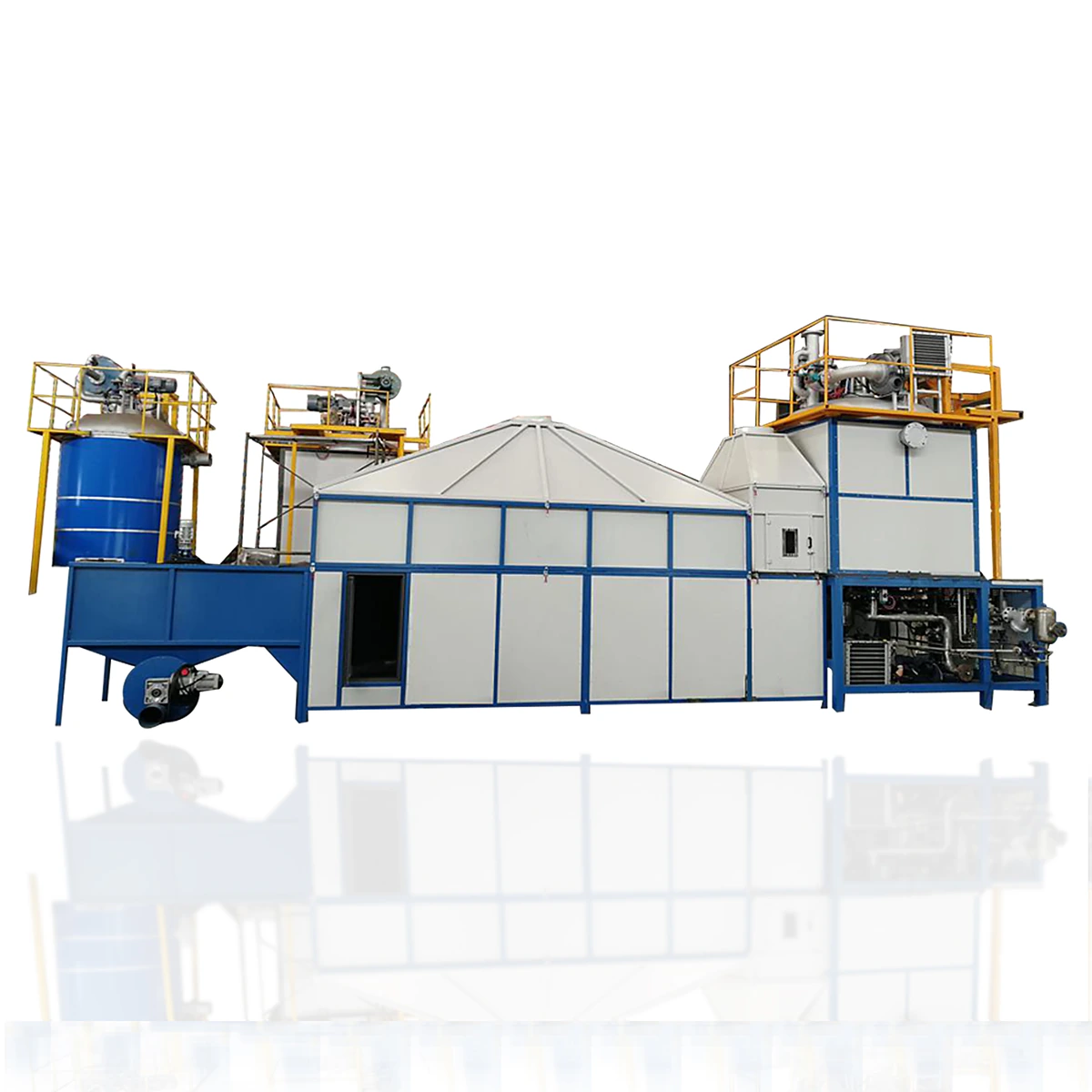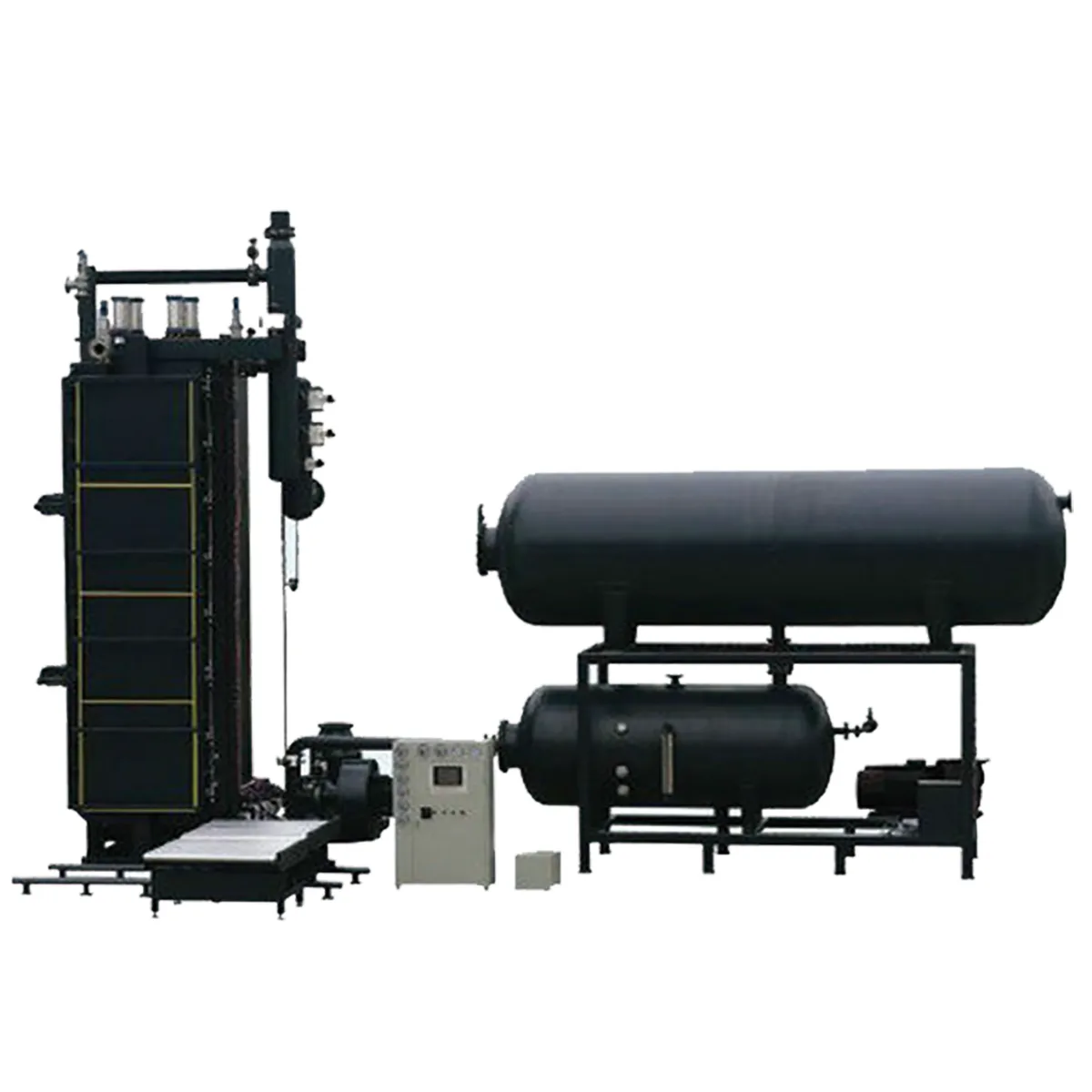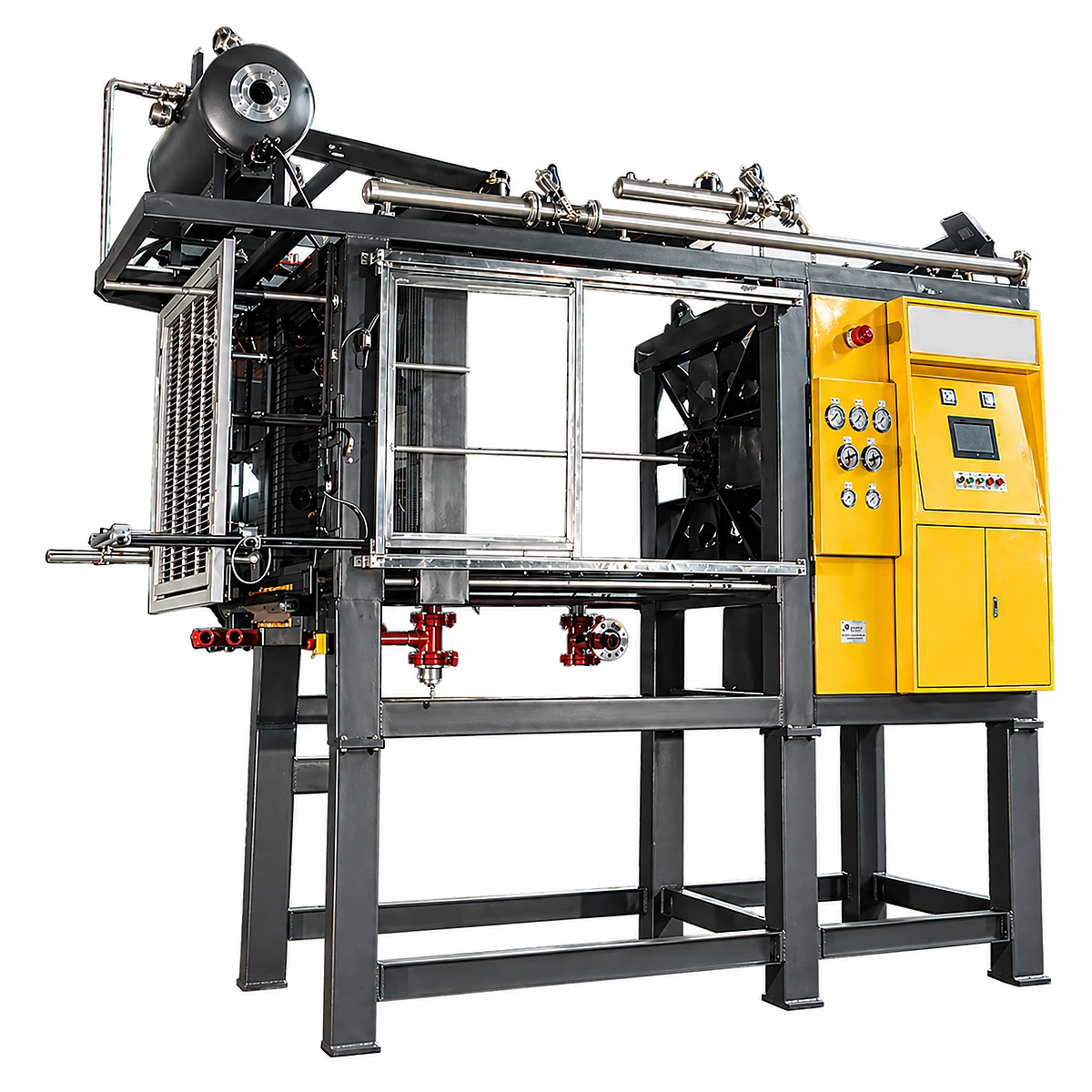
Used EPS production lines sell for $30,000–$120,000 depending on tier and condition — 40–70% off new equipment prices. OEM-refurbished units (with warranty) run $60,000–$180,000, closer to 30–50% off. But the sticker discount hides five real costs: shipping/rigging ($3,000–$12,000), rebuild parts and consumables ($5,000–$25,000), commissioning labor ($4,000–$15,000), potential production-line downtime during install ($8,000–$40,000), and short/no warranty exposure. Total landed cost of a used mid-tier line often ends 25–40% above the auction price. This buyer guide covers 2026 used-market pricing by tier, the 8-point pre-purchase inspection checklist, 3 red flags to walk away from, and when refurbished-from-OEM beats auction-house savings. B2B factory buyers only — MOQ 1 line, no consumer-scale equipment. Pair with our EPS factory line new pricing guide for the new-equipment comparison and 8-question buying guide for supplier verification.
1. Why the Used EPS Market Exists in 2026
Two structural forces have created a stable secondary market for used EPS production lines: upgrade cycles at established factories (mature operations retiring 10–15 year old lines to install higher-automation ones) and factory closures / consolidation (particularly in China 2024–2026 as smaller operators exited the market). The result is a steady inventory of used equipment moving through industrial auctioneers, OEM trade-in programs, and direct broker networks.
The IEA petrochemical capacity tracking shows global EPS capacity utilization stabilizing at 78–82% since 2023, meaning some capacity is retired each year even as demand grows — that retired capacity is what feeds the used market. For B2B buyers with tight capex constraints (typically new factory setups in emerging markets, or existing operators expanding a second line), used equipment offers a real path to production at 40–70% below new-line capex.
ChinaEps factory note (3 sites: Jiangyin / Wenzhou / Dongguan): Across our 60+ export markets, we see two buyer profiles for used EPS lines. First: emerging-market factory owners (India, Nigeria, Indonesia) using used equipment to enter the EPS market at $80K–$150K capex vs. $180K–$300K new — buying gets them producing 6–9 months sooner. Second: existing EPS operators adding a second/third line where the risk tolerance is higher because they already have in-house maintenance capability. The buyer profile we advise against: first-time factory owners with no in-house engineer — the maintenance risk on used equipment kills them. If you are in that profile, spec a Mid-tier new line and pay the premium.
2. 2026 Used Market Pricing by Tier
Used EPS equipment pricing in 2026 falls into three condition tiers. These are indicative price ranges from broker networks, industrial auctioneers (BidSpotter, Machinio), and OEM trade-in programs as of Q3 2026:
| Tier | Condition | Price Range (used) | vs New | Warranty |
|---|---|---|---|---|
| Auction-Grade | As-is, 8–15 years old, no factory inspection | $30,000–$70,000 | 60–75% off new | None |
| Broker-Verified | Third-party inspected, 5–10 years old, running condition documented | $50,000–$110,000 | 50–65% off new | 30-day power-on only |
| OEM-Refurbished | Returned to factory, wear parts replaced, PLC updated | $90,000–$180,000 | 30–50% off new | 6–12 months limited |
Same equipment (Mid-tier block molder + pre-expander + cutting line + minor auxiliaries) new lands at $180K–$300K per our EPS factory line price guide. The Auction-Grade end at $30K–$70K looks attractive on paper — Section 4 shows why the real total often ends 25–40% higher.
3. Price by Machine Type (Individual Units, Not Complete Lines)
If you are not buying a complete used line, individual machine pricing runs approximately:
| Machine | New Price | Used (Broker-Verified) | OEM-Refurbished |
|---|---|---|---|
| Pre-Expander (PE-1400 class) | $28K–$45K | $12K–$22K | $18K–$32K |
| Block Molder (BM-1200 class) | $45K–$80K | $18K–$38K | $28K–$55K |
| Shape Molder (SM-1200 class) | $35K–$65K | $14K–$30K | $22K–$45K |
| Cutting Line (CM-2000 class) | $18K–$40K | $6K–$18K | $10K–$25K |
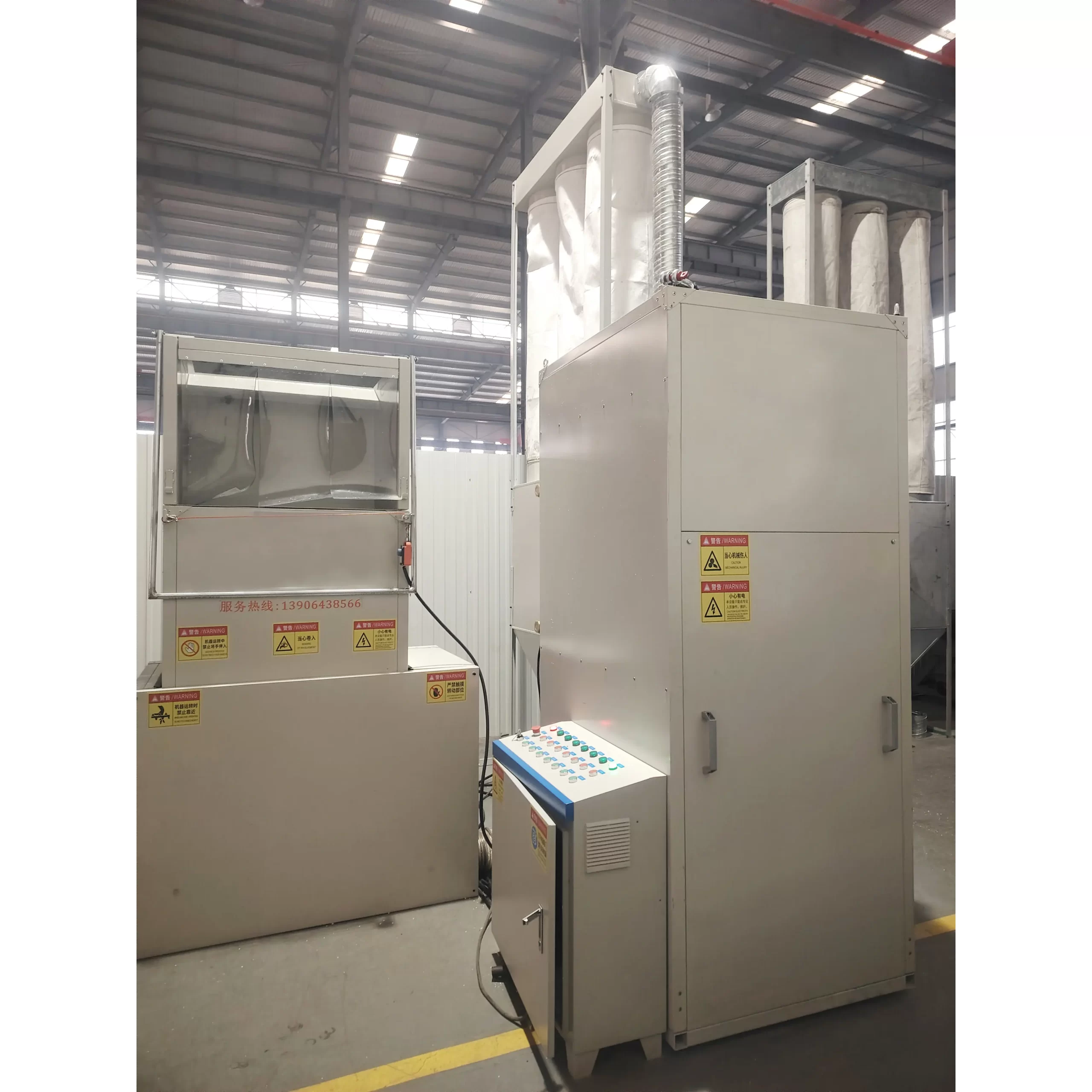
| Recycling Crusher | $8K–$18K | $3K–$8K | $5K–$12K |
| Aging Silo (per unit) | $4K–$12K | $1.5K–$5K | $2K–$7K |
Mixing used + new works well when: the used piece is a durable mechanical item (silo, crusher, basic cutting line) and the new piece carries the smart controls / precision (pre-expander, molder). Mixing badly: used PLC-controlled molder + new pre-expander — the integration is where the pain hits.
4. 5 Hidden Costs · The Real Landed Total
Below is the honest cost stack for a Broker-Verified used Mid-tier line quoted at $80,000, landing in India 2026:
| Cost Line | Amount | Note |
|---|---|---|
| Auction/broker price | $80,000 | Sticker price |
| Rigging + shipping (China → Mumbai) | $4,500 | Used equipment weighs more (no lightweight modern frames) |
| Import duty + GST (India ~30% total) | $24,000 | Same as new equipment — no discount on duty |
| Wear-parts replacement (cutting wires, seals, heating elements) | $8,500 | Assume 60% of wear consumables need replacement day one |
| Commissioning labor (2 techs × 3 weeks) | $9,000 | Used equipment commissioning runs 2–3× new-equipment time |
| PLC/HMI upgrade or workaround | $6,000 | 10-year-old Siemens S7-200 may need replacement to hold spare-parts availability |
| Downtime during install (delayed production start) | $12,000 | 4 weeks × $3K/week lost margin at 75% utilization |
| Total landed cost | $144,000 | 80% above the $80K sticker |
Compare that $144K landed to a Mid-tier new line at $200K FOB China / $286K landed (per our country pricing guide). The used line saves $142K on landed cost — real, meaningful savings, but 50% not 60%. The ISO 9001 quality management discipline you want on new equipment procurement applies equally to used — document every step, get FAT reports, insist on inspection witnessing.
5. 8-Point Pre-Purchase Inspection Checklist
Never buy used EPS equipment sight-unseen. Either travel to inspect, or hire a qualified inspector (Bureau Veritas, SGS, or a local third-party industrial inspector). The 8 must-verify items:
- Nameplate authenticity + serial number lookup. Photograph nameplate and cross-check serial with OEM records if possible. Fake nameplates on rebuilt Chinese equipment do exist in the auction market.
- Under-power run test. Insist on seeing the machine actually run for at least 60 minutes at load. Static inspection tells you nothing about vacuum system, hydraulic pressure holding, or steam distribution.
- PLC/HMI condition. Confirm software version, HMI is bootable, alarm-log accessible. A dead PLC on a 10-year-old machine is a $4K–$8K upgrade before you start.
- Mold-plate flatness + hairline crack inspection. Use a straight edge on mold plates. Any hairline cracks reject the machine — mold plates cost $8K–$35K to replace.
- Steam-valve responsiveness. Sluggish steam valves signal seat wear. Replaceable but budget $500–$2,000 in first-year maintenance.
- Hydraulic-pressure holding test. Pressurize hydraulic system, monitor pressure drop over 15 minutes. More than 10% drop indicates seal wear — $1,200–$4,000 to fix.
- Vacuum pump vacuum-hold test. Same principle. Vacuum leaks kill block density consistency — the most common used-equipment problem.
- Spare-parts availability for the specific model. Verify with OEM that spare parts still ship for this model in 2026. Discontinued models can leave you stranded within 2–3 years.
For broader machine verification methodology, see our EPS machine buying guide with 8 questions — the framework applies to used equipment with the extra inspection layer above.
6. 3 Red Flags · Walk Away
Certain conditions mean the used equipment is not worth negotiating on. Walk away when you see any of these:
- No OEM documentation trail. If the seller cannot produce original manuals, wiring diagrams, or maintenance history, you are buying a machine with no service memory. Cost of reverse-engineering fault diagnostics = 2–3× normal maintenance.
- Refused witness inspection. "It's already crated up" or "the site owner won't allow visits" is a hard no. Legitimate sellers welcome inspection.
- Model discontinued more than 5 years. Even if the machine runs, discontinued models mean parts sourcing becomes a permanent tax on operations. Rule of thumb: buy models within 8 years of current production.
7. When Refurbished-from-OEM Beats Auction
OEM-refurbished units cost 30–50% off new (vs. 60–75% for auction) but carry three material advantages that often justify the smaller discount:
- 6–12 month warranty. Auction lots carry no warranty. A single major failure in year 1 on an unwarranted line can wipe out the price savings.
- PLC/HMI updated to current-generation. Spare parts availability for at least the next 8–10 years is assured.
- Wear parts documented and replaced. No "guess what will fail next month" surprises.
Use OEM-refurbished when: you have limited in-house maintenance depth, you are entering the EPS market for the first time, your cash flow requires predictable operating cost, or your buyer contracts require ISO 9001 traceability. Use auction-grade when: you have a skilled maintenance team, you are adding a fourth or fifth line where a 20% downtime buffer is acceptable, and cash is genuinely constrained.
8. Financing and Payment Terms · Used Equipment Reality
Financing terms on used equipment are meaningfully harder than new. Bank equipment loans typically require 40–60% down for used vs. 20–30% for new. Equipment leasing companies (like DLL, Bibby Financial Services) often decline used industrial equipment older than 7 years. The OSHA machine-guarding compliance requirements can also add cost — some used equipment predates current guarding standards and needs retrofit before commissioning in OSHA jurisdictions.
Payment terms sellers typically demand: 100% upfront for auction lots. 50/30/20 (deposit / after inspection pass / after commissioning) for broker deals. 30/60/10 for OEM refurbished. Never pay 100% upfront to an unfamiliar broker — use escrow (Alibaba Trade Assurance, Escrow.com) for the final payment tranche.
9. Frequently Asked Questions
How much can I save buying used EPS equipment?
Sticker savings 40–70% off new. Real landed cost savings 30–50% after accounting for shipping, wear-parts replacement, commissioning labor, and downtime. On a $200K new Mid-tier line, expect real savings of $60K–$100K for a Broker-Verified used line, $40K–$70K for OEM-refurbished.
What is the average age of used EPS machines on the market?
Most used inventory is 8–15 years old (past first depreciation cycle but before major mechanical failure). Machines less than 5 years old rarely appear used — factory owners either use them or lease them out. Machines older than 15 years should be evaluated very carefully as spare-parts availability becomes an issue.
Where to find used EPS equipment for sale?
Four main sources: industrial auctioneers (BidSpotter, Machinio, Salvex), OEM trade-in programs (contact major suppliers directly), regional brokers (specialized plastics-machinery brokers in each market), and factory closure liquidations (find via local business news). Each source has different price / verification tradeoffs — auctioneer cheapest but riskiest, OEM most expensive but safest.
Is used EPS equipment CE certified?
Original CE certification does not transfer with the machine. If you are importing into the EU, you may need re-certification, which can cost $8K–$25K per machine. For non-EU markets, original CE nameplates suffice. Confirm with your local import broker before committing to purchase.
What warranty comes with used EPS machines?
Auction lots: none. Broker-verified: 30-day power-on warranty (i.e., the machine will turn on and run through a basic cycle). OEM-refurbished: 6–12 month limited warranty covering major mechanical components but excluding wear parts. Compare to new equipment: 12–24 month comprehensive warranty covering both mechanical and wear parts.
Can I finance used EPS equipment?
Yes but harder terms. Down payment typically 40–60% (vs. 20–30% for new). Loan terms usually 3–5 years (vs. 5–7 for new). Interest rates 1–3 percentage points higher. Equipment leasing companies frequently decline used equipment older than 7 years. Consider seller-financing arrangements or cash purchase if bank terms are unfavorable.
How long does used equipment commissioning take vs new?
New Mid-tier line: 4–8 weeks. Used equivalent: 6–12 weeks. The extra time covers wear-parts replacement, PLC re-programming, quirk documentation, and operator training on used-specific behaviors. Budget the downtime cost in your capital planning (see Section 4).
What is the resale value of used EPS equipment?
After 3–5 more years of operation, resale value typically declines another 25–40% from your purchase price. Plan for the machine to reach effectively zero market value at year 15 total age. Depreciation math should treat used equipment as a 5–8 year asset for accounting purposes, not a 10-year asset like new equipment.
Should I buy from OEM trade-in or auction?
OEM trade-in when: first EPS factory, no in-house maintenance depth, cash flow needs predictability, buyer contracts require traceability. Auction when: existing operator adding capacity, skilled maintenance team, tolerance for 20% downtime buffer, cash constrained. Neither is universally better — the answer depends on your operational maturity.
How do I verify a used machine's actual runtime hours?
Machines with modern PLCs (post-2015) track cumulative operating hours in the HMI — access this during inspection. Older machines require indirect estimation: check hydraulic-oil color and viscosity (heavy use darkens/thins), inspect mold-plate wear patterns, verify motor-shaft bearing condition. Third-party inspectors (SGS, Bureau Veritas) can produce runtime estimates from these signals for $800–$2,000 per unit.
Related Reading
- EPS Factory Line Price by Country: China vs India vs Vietnam vs Europe (2026) — New-equipment pricing baseline for comparison.
- EPS Machine Buying Guide: 8 Questions Before You Order from China — Verification framework applicable to used equipment with additional inspection.
- EPS Machine Maintenance Cost: Annual Budget Calculator + 10-Year TCO — Maintenance economics apply more heavily to used equipment.
- EPS Recycling Cost Per Ton: 2026 Pricing — Related buyer guide for recycling line investment.
- How to Set Up an EPS Factory — Full factory planning where used vs. new is one lever among many.