EPS Recycling De-duster - EPS machinery manufacturer China
RC-500
CE ISO 9001 ISO 14001

EPS Recycling De-duster

Complete-line EPS specialist — 500+ factories running on our equipment

EPS Recycling De-duster — eps recycling machines by ChinaEps, CE & ISO 9001 & ISO 14001 certified.

We manufacture EPS recycling de-duster RC-500 — removes fines and contaminants before pellet remelt stage. CE certified, 60+ countries.

Key Specifications

Compacting Capacity
500 kg/h (input volume)
Compression Ratio
50:1
Output
Compressed EPS logs
Installed Power
15 kW
CE and ISO 9001 Certified 5-Yr Structural Warranty 24h Technical Response

Inside the Machine — Core Components

Eight engineered subsystems that make this machine production-grade. Each component is sourced, built, and tested for industrial duty cycles.

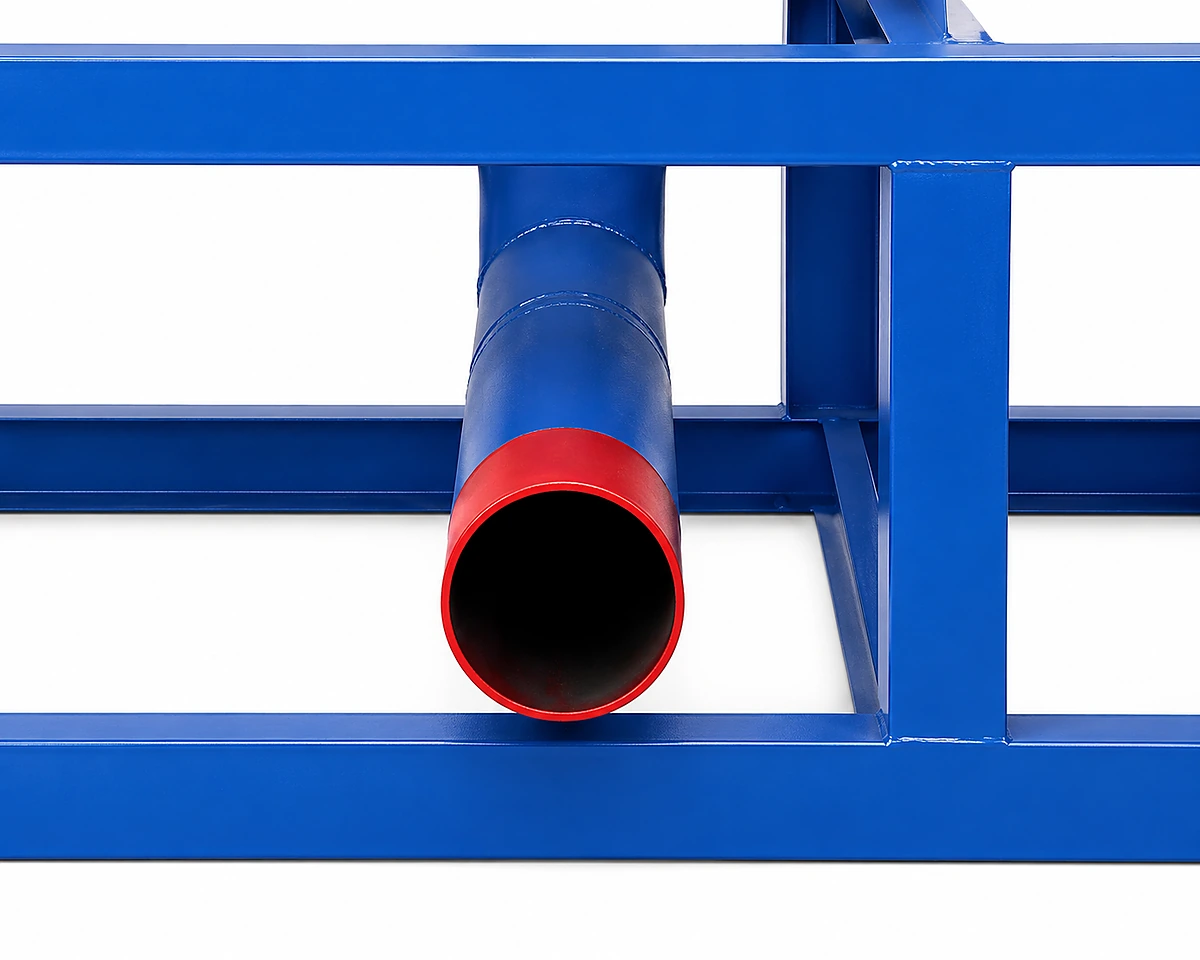
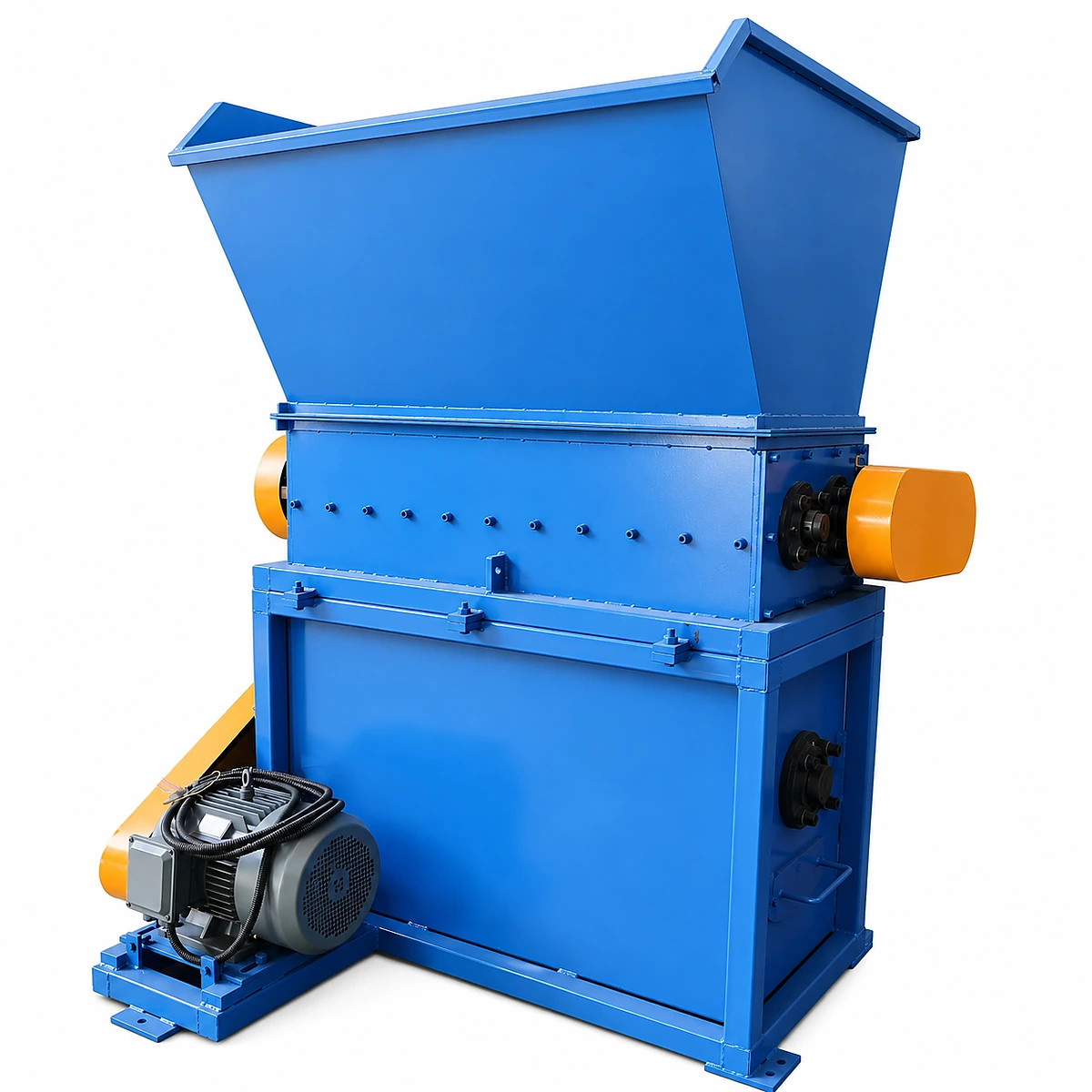
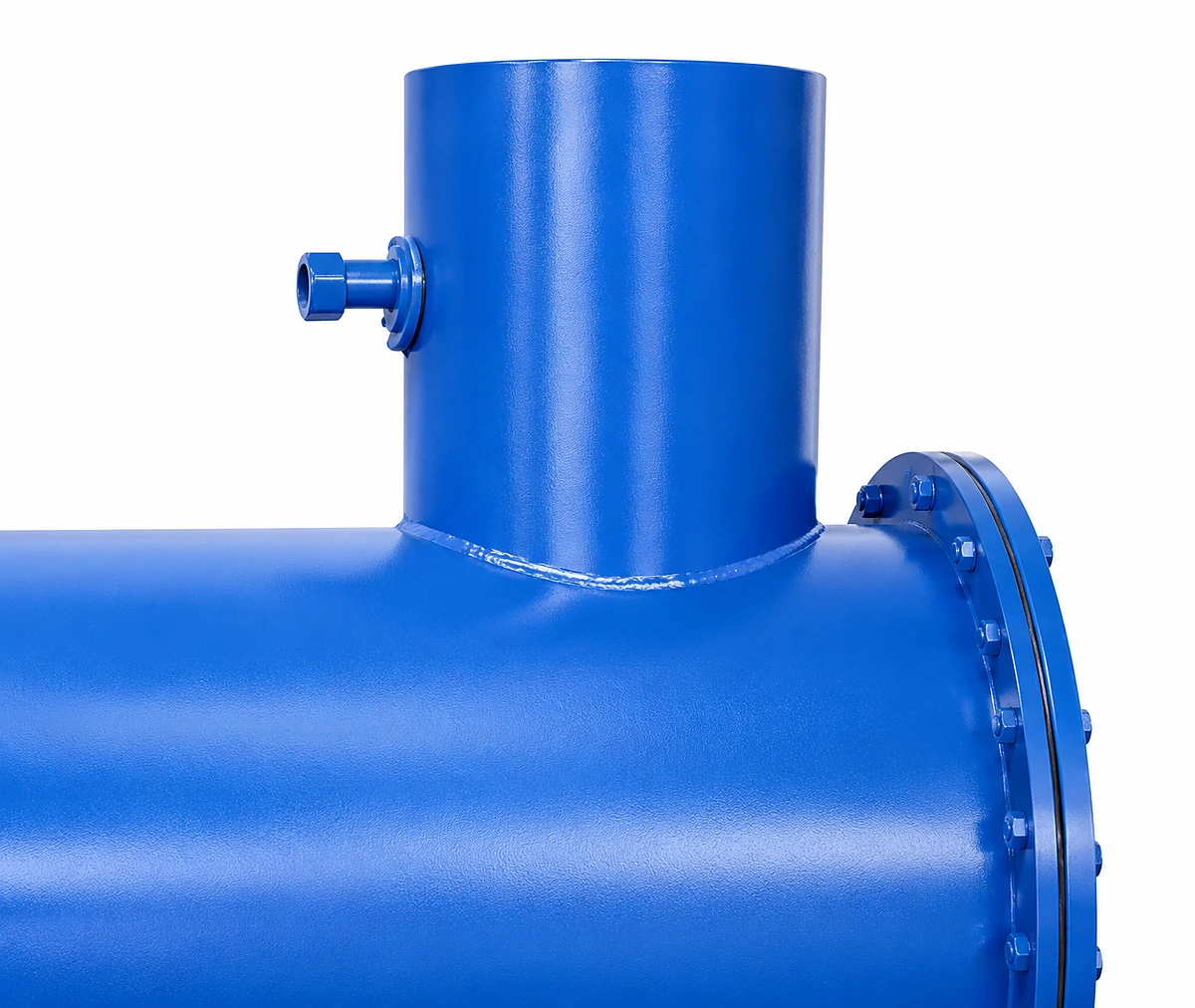
1. Dust Collection Inlet (Large Diameter Top Feed)

1. Dust Collection Inlet (Large Diameter Top Feed)

Function

Large inlet port for efficient dust collection from upstream EPS crusher discharge. Smooth flange transition prevents pellet jamming and minimizes pressure drop at the entry point.

Engineering Details

Welded steel flange DN150-200 mm diameter (sized to upstream Crusher discharge). Powder-coated industrial RAL 5005 blue finish. Pneumatic-locking quick-release clamp for maintenance access. Operating pressure -2 to -5 kPa (negative-pressure pneumatic conveying).
2. Cyclone Pre-Separation (Protects Downstream Filters)

2. Cyclone Pre-Separation (Protects Downstream Filters)

Function

Built-in cyclone separator removes heavy particles (≥2 mm) by centrifugal force BEFORE the air reaches the HEPA filter cartridges — significantly prolongs filter service life and reduces maintenance frequency.

Engineering Details

Tangential inlet generates 15-25 m/s air velocity creating cyclonic separation. Removes 70-80% of heavy particulate load upstream — HEPA filter cartridges only need to handle the fine dust fraction. Pre-separated coarse particles drop to bottom hopper for recycling. Painted carbon steel (Q235 grade) wear-resistant body.

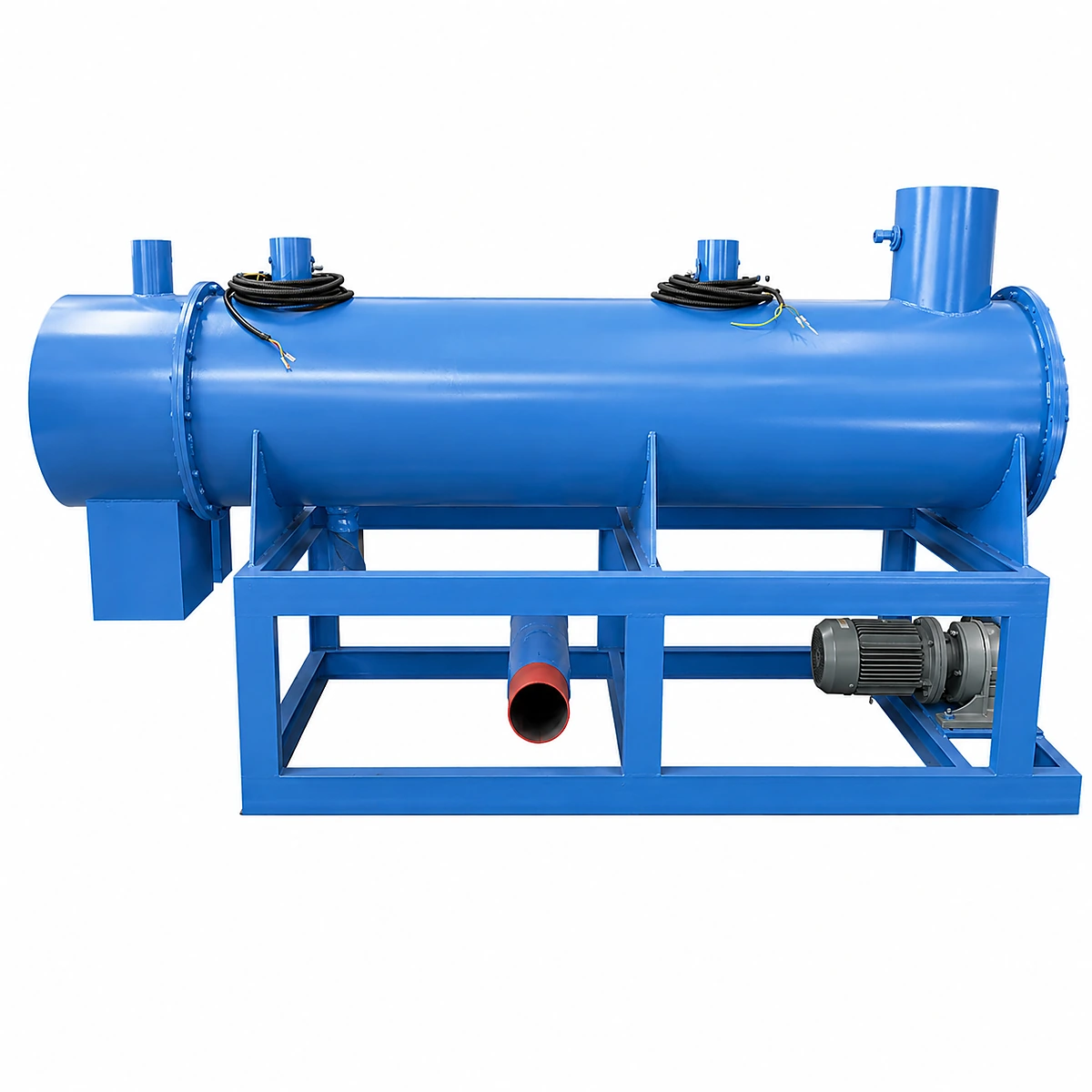
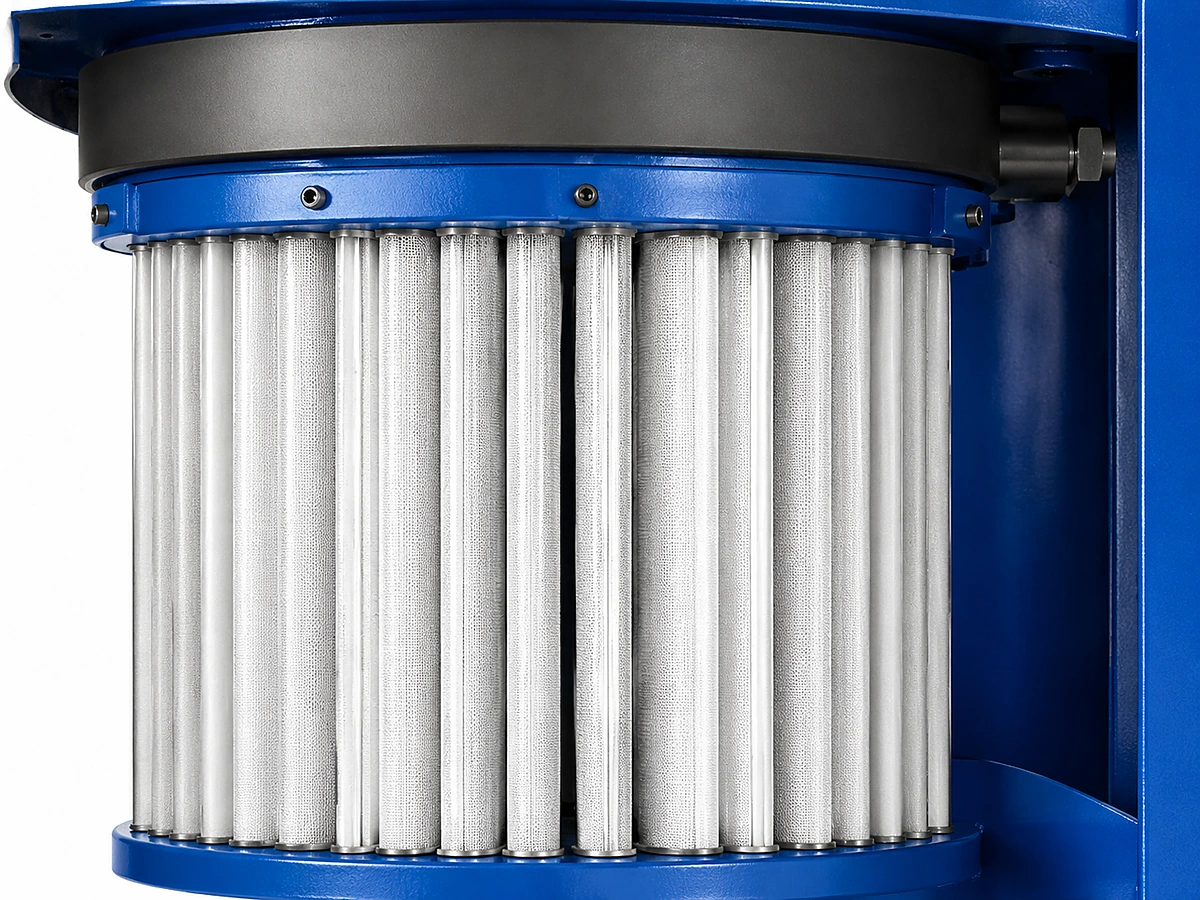
3. High-Efficiency Filtration (HEPA Pleated Cartridges)

3. High-Efficiency Filtration (HEPA Pleated Cartridges)

Function

Pleated cartridge filters remove fine dust and powder (≤2 mm particles) at 95 percent efficiency — the core specification of the EPS Recycling De-duster. Pulse-jet cleaning mechanism reverses airflow periodically to dislodge cake from filter surface, restoring pressure differential.

Engineering Details

HEPA H13 cartridge media (≥99.95% efficiency on 0.3 micron MPPS particles). Pleated polyester or PTFE-coated surface for high dust-load capacity. 4-8 cartridges per machine (depending on airflow rate). Auto pulse-jet cleaning every 5-15 min via solenoid valve + compressed air 0.5-0.7 MPa. Cartridge service life 2000-4000 hours typical.

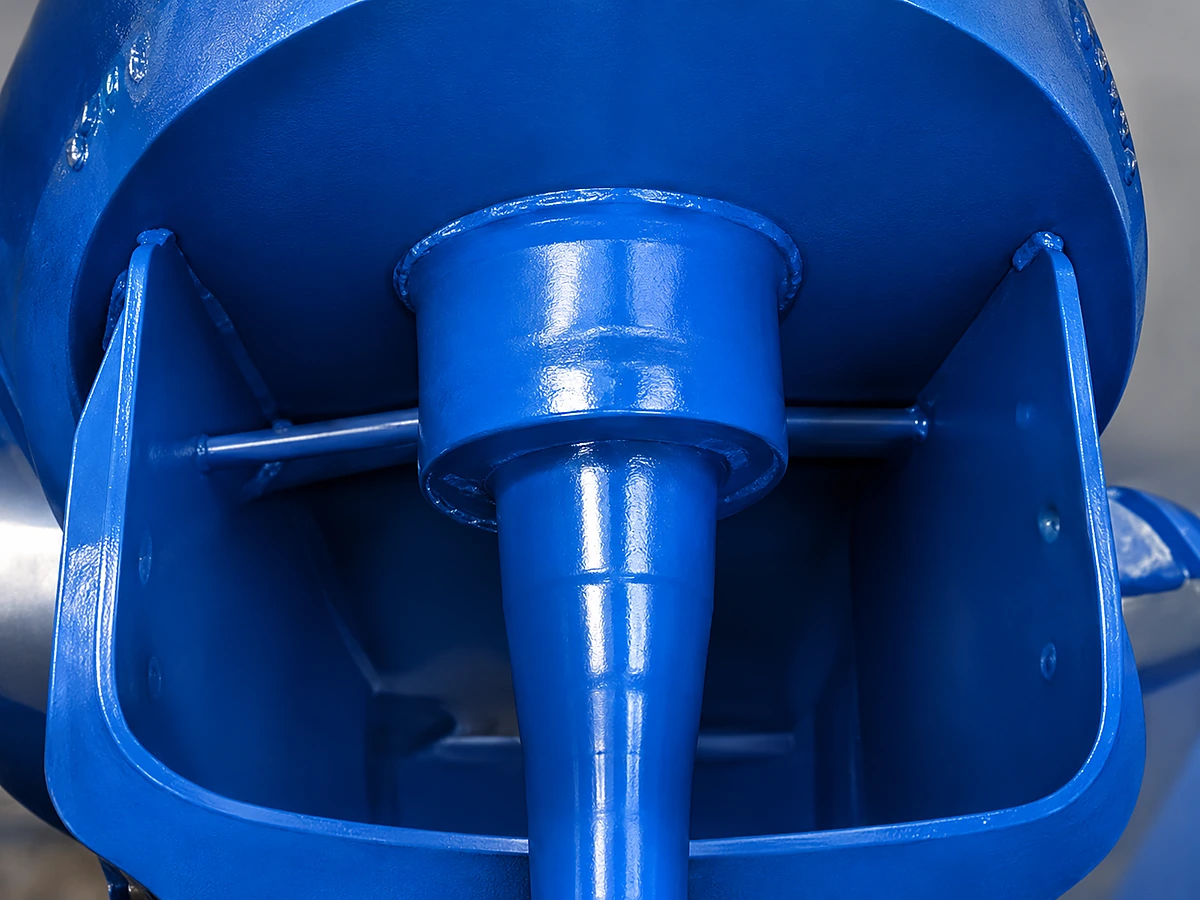
4. Dust Discharge Outlet (Bottom Hopper + Auger Conveyor)

4. Dust Discharge Outlet (Bottom Hopper + Auger Conveyor)

Function

Bottom discharge outlet collects accumulated dust from cyclone bottom + filter cake into a sealed hopper. Optional auger conveyor automatically transports waste to a recycling silo or disposal container — no manual emptying required.

Engineering Details

Painted carbon steel cone hopper with 60-degree slope angle for free-flow. DN100-150 mm outlet with rotary airlock valve (prevents air leak / maintains negative pressure). Optional Ø100 mm screw conveyor 0.55 kW with VFD. Dust accumulation sensor triggers maintenance alert.

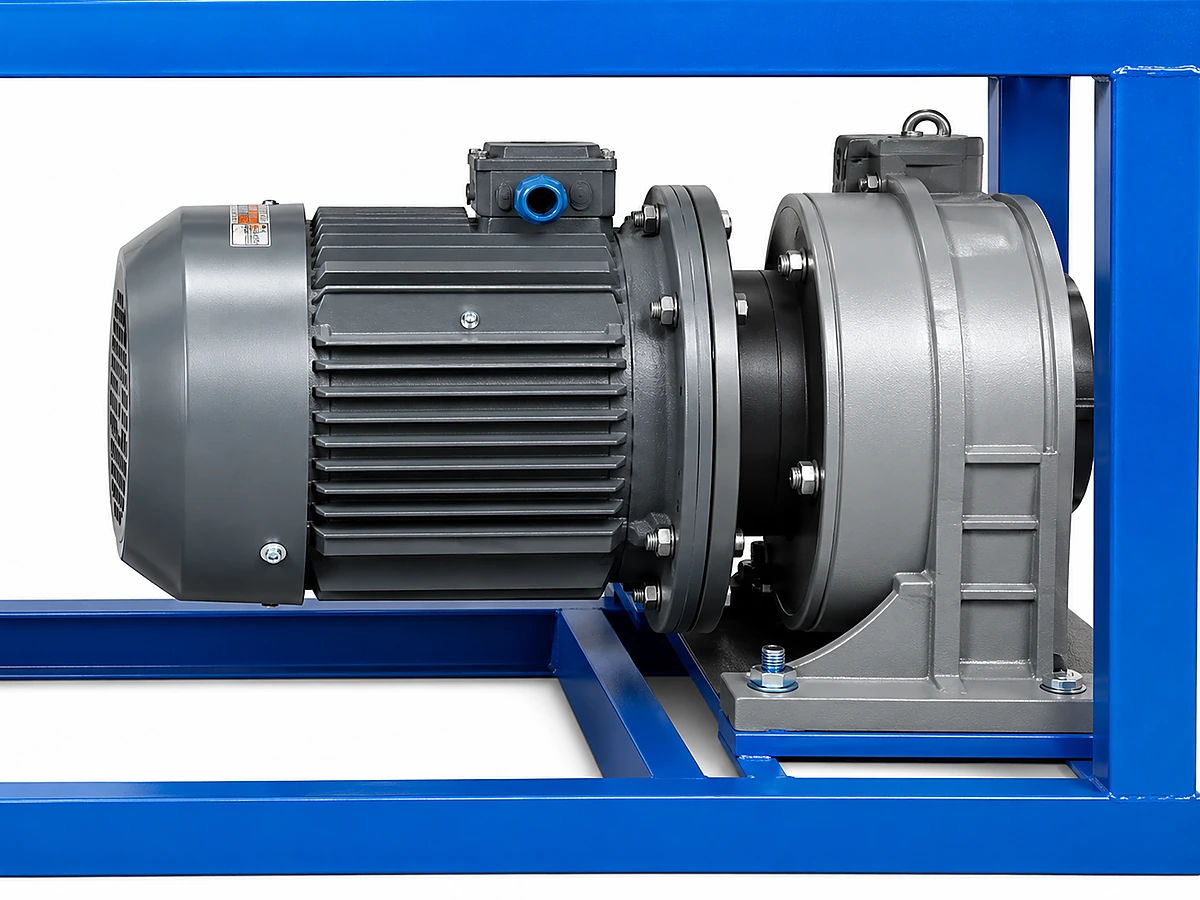
5. Powerful Fan System (High-Performance Motor + Reducer)

5. Powerful Fan System (High-Performance Motor + Reducer)

Function

High-performance fan creates the negative pressure that drives the entire dust extraction process. Direct-coupled motor + reducer delivers ensured continuous airflow without belt slippage or maintenance.

Engineering Details

Centrifugal backward-curved blower with cast aluminum impeller. Motor 4-5.5 kW, IP55 protection, F-class insulation, 1450 rpm. Direct-coupled SKF or NSK bearings. Air flow 1500-2500 m3/hour at static pressure 2000-3500 Pa. Energy-efficient IE3 motor standard.

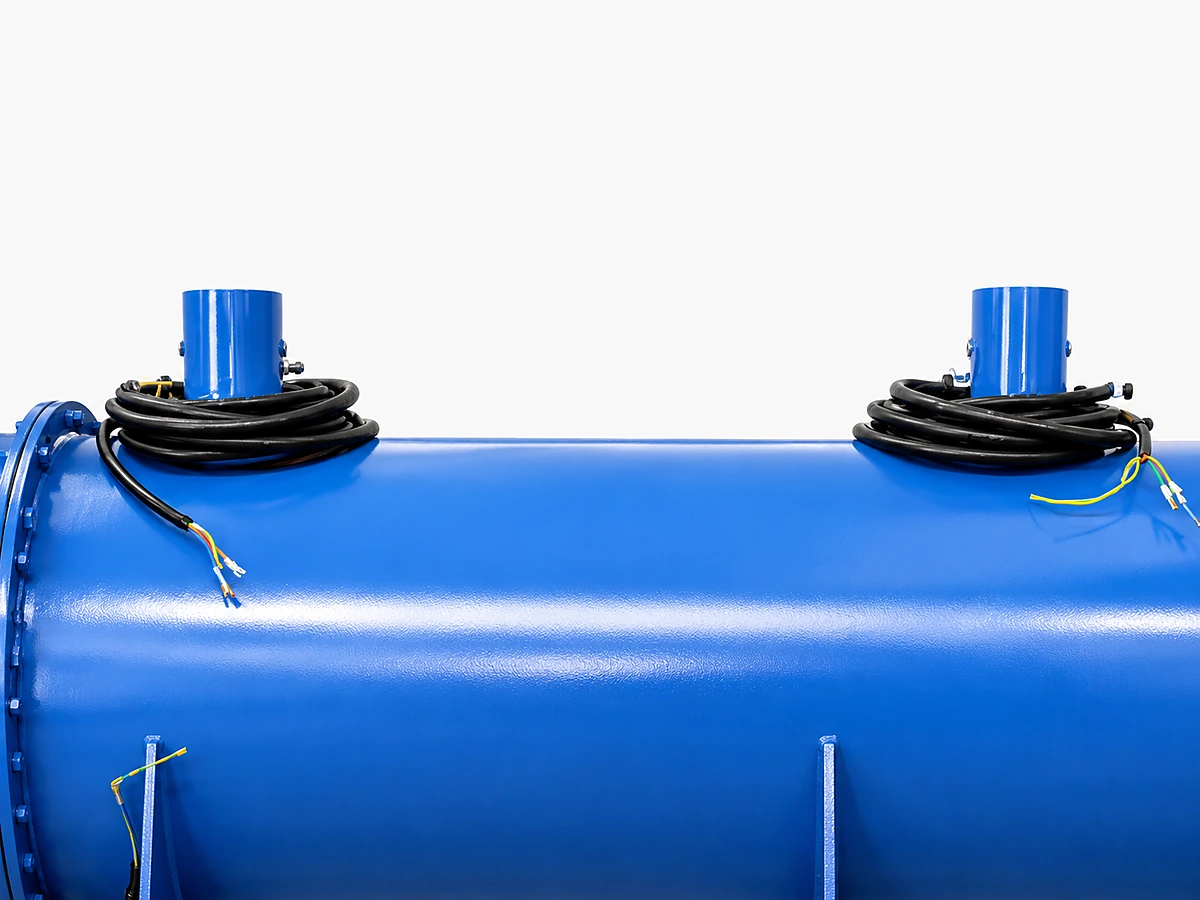
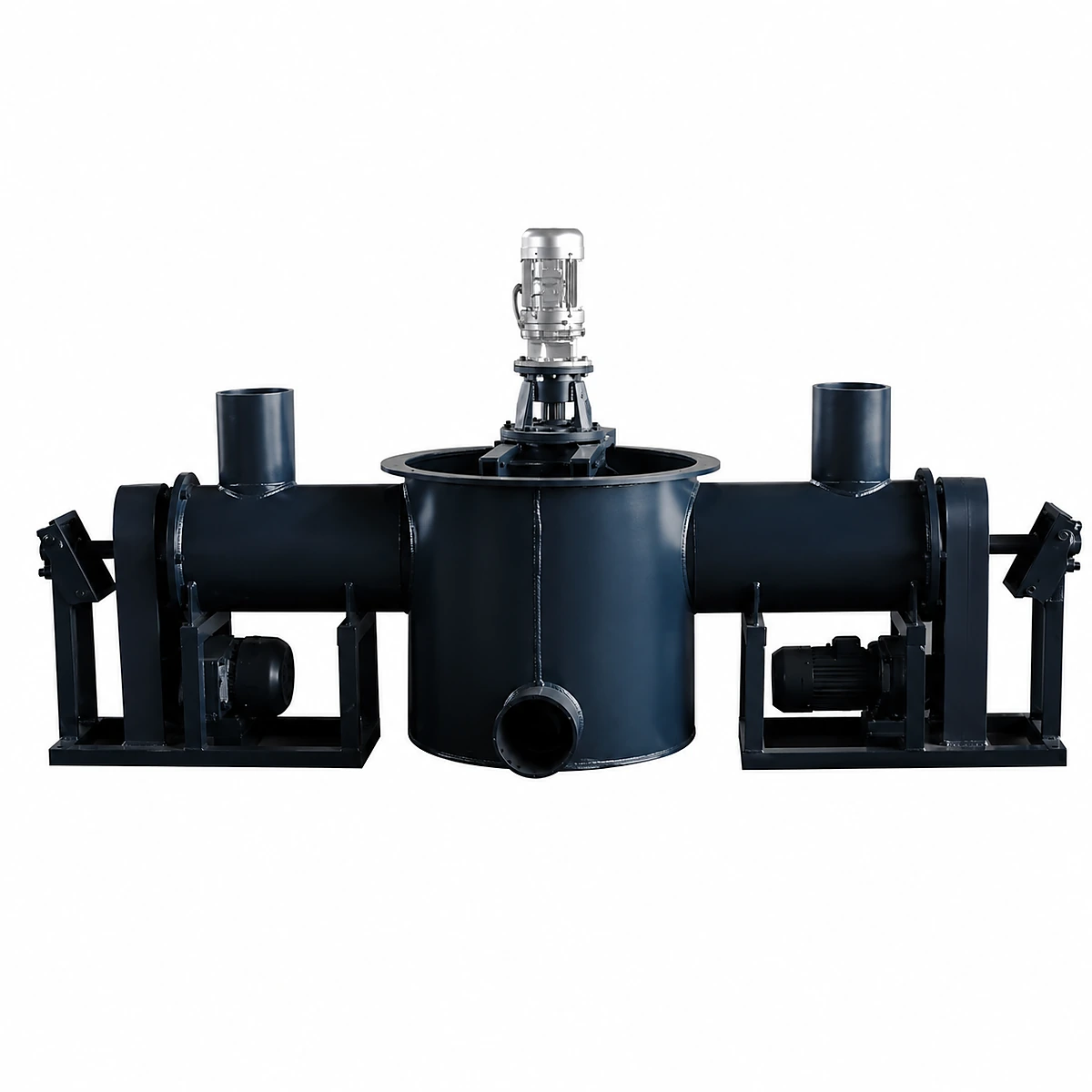
6. Twin Blower / Clean Air Outlet (Dual Redundancy + Balanced Airflow)

6. Twin Blower / Clean Air Outlet (Dual Redundancy + Balanced Airflow)

Function

Twin blower configuration on the top of the unit provides dual-redundancy clean air discharge. Filtered air exits via two parallel outlets — if one blower needs service, the other maintains production. Balanced airflow distribution across the cartridge bank also extends filter life by avoiding hot spots.

Engineering Details

Two parallel exhaust ports (DN150 mm each) with anti-vibration mounts. Optional silencer module reduces noise to ≤75 dB at 1 meter. Discharge air quality: ≤5 mg/m3 dust concentration (exceeds EU 2010/75/EU emission limits for non-hazardous dust). Ducting compatible with workshop ventilation system or outdoor discharge.

Technical Specifications

Parameter Value
Compacting Capacity 500 kg/h (input volume)
Compression Ratio 50:1
Output Compressed EPS logs
Installed Power 15 kW
Hopper Size 1,200 × 1,000 mm
Machine Weight 2,500 kg
Dimensions (L×W×H) 3,000 × 1,500 × 2,200 mm
Output Log Size 200 × 200 × variable mm

* Specifications are subject to change without notice. Contact us for the latest technical data.

What This Machine Solves

Three production problems eliminated by this machine — with engineered, measurable solutions.

The Problem 1

EPS dust accumulates around cutting, grinding, and pneumatic conveying systems — fire/health risk + insurance audit problem

How This Machine Solves It

RC-500 dust collector captures EPS dust with HEPA-grade filtration — keeps factory air below OSHA exposure limits and prevents combustible-dust ignition.

The Problem 2

Combustible-dust events have caused major EPS factory fires — graphite dust is especially dangerous

How This Machine Solves It

RC-500 with ATEX-rated upgrade option certifies the dust collector for zone-22 combustible-dust environments.

Working Principle

RC-500 uses cyclone separator + HEPA filter to capture EPS dust from process exhaust streams. Captured dust collected in sealed bin for disposal or regrind recycling.

Step 1

1. Process Air Intake

Dusty air drawn from cutting/grinding/pneumatic exhaust points.

Step 2

2. Cyclone Pre-Separation

Cyclone removes 95% of bead-size particles.

Step 3

3. HEPA Filtration

Fine dust captured by H13 HEPA filter (99.95% at 0.3 micron).

Step 4

4. Clean Air Exhaust

Filtered air exhausted to factory environment.

Step 5

5. Dust Collection

Captured dust accumulates in sealed bin for disposal or recycling.

Engineered Performance Advantages

Every advantage backed by measurable specs — no marketing claims without data.

Capture Efficiency
99.95%
vs no collector = 0%

HEPA H13 spec meets ATEX zone-22 requirements.

Airflow
500-2,000 m³/h
vs small shop fans 100-200

Sized for production EPS factories.

ATEX Optional
Zone-22 ready
vs standard collectors not certified

Required for graphite-EPS production.

Real Production Applications

See where this machine fits in real factories.

Factory-wide dust extraction with pulse-jet HEPA dust collector
ICF construction site requiring strict dust control
Closed-loop EPS recycling line with integrated de-duster
Workshop ventilation system for combustible-dust compliance

Build a Complete EPS / EPP Line

This machine integrates into the full ChinaEps production flow — upstream, downstream, and auxiliary equipment from one supplier.

ROI Snapshot

Quick reference numbers — for a precise quote with your factory data, use the ROI Calculator.

Equipment Investment
~$1,400-1,600/ton FOB illustrative (quote-specific)
Payback Period
Indirect: insurance compliance + OSHA fine avoidance
Throughput
500-2,000 m³/h airflow capacity
Run Detailed ROI Calculator →

Product FAQ

The questions buyers ask most often before placing an order.

When do I need the ATEX upgrade?
Any factory processing graphite-EPS (combustible dust zone-22 classification) requires ATEX certification. Standard EPS-only factories can use the standard version.
HEPA filter replacement frequency?
6-12 months depending on dust load. Spare filter ships with machine.
Ships to 220V/60Hz?
Yes — 2-week lead time.

Ready to Build Your EPS/EPP Production Line?

Get a customized turnkey solution — competitive pricing, proven technology, and full after-sales support from our engineering team.