Low-pentane EPS beads carry 4.5–5.5% pentane blowing agent instead of the standard 5.5–6.5%, cutting volatile organic compound (VOC) release during pre-expansion, storage, and molding by roughly 15–30%. For buyers shipping into the EU or other regulated markets, this matters for two reasons: the EU Industrial Emissions Directive (IED) caps solvent/VOC emissions from foam plants, and REACH governs residual styrene and any substances of very high concern (SVHC) in the finished bead. Lower pentane also drops the material into a less restrictive hazmat freight class, saving on shipping. The trade-off is real but manageable: lower pentane means slightly lower maximum expansion and a marginally longer pre-expansion residence time, both of which are recoverable with correct steam and aging control. This guide explains what pentane content actually does, how it connects to REACH and IED compliance, the standard-vs-low spec differences, molding adjustments, and a sourcing checklist. Pair it with our REACH/IED compliant EPS beads application page for the market-access angle and the low-pentane L-series product datasheet for grades and MOQ.
What "Low-Pentane" Actually Means
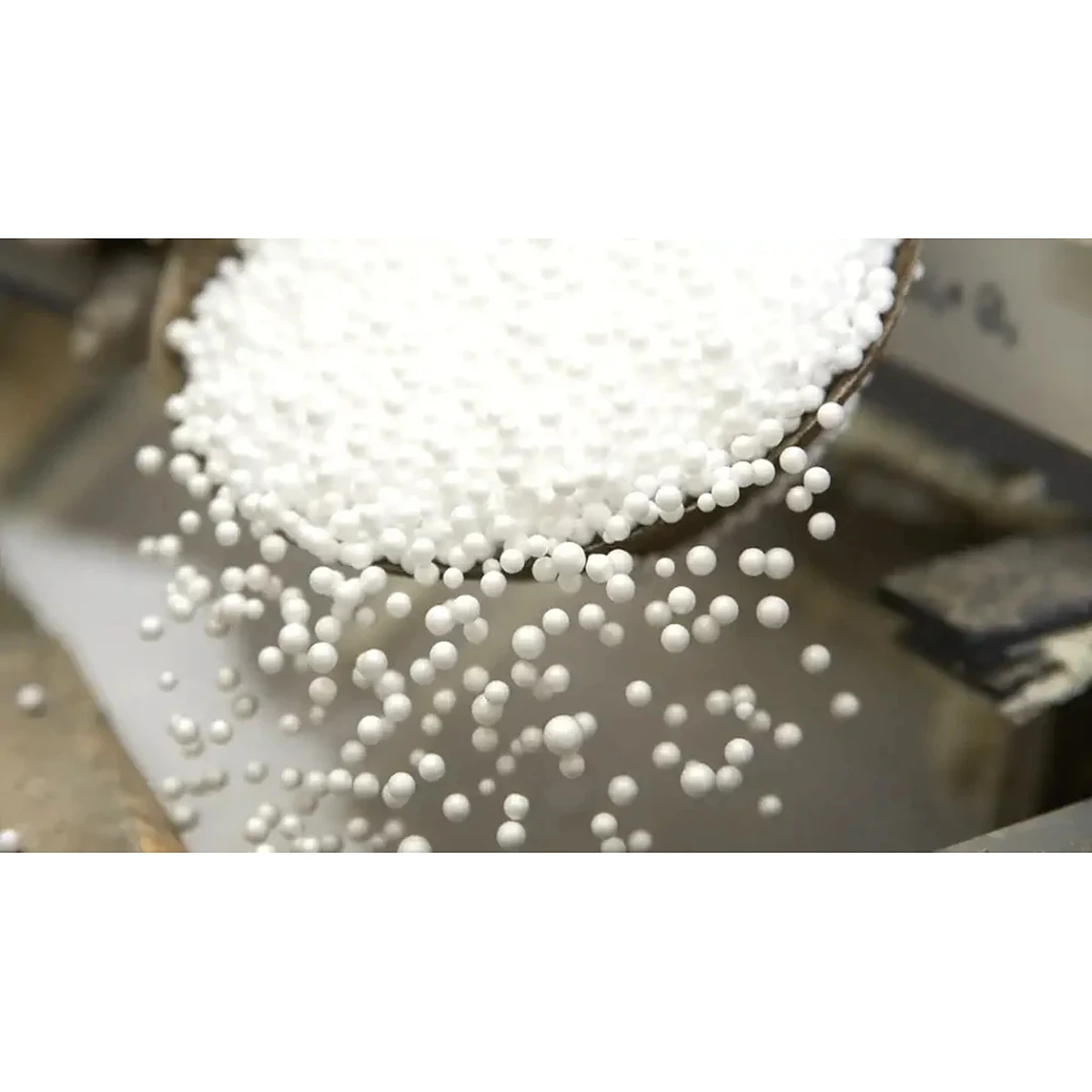
Pentane is the blowing agent that makes expandable polystyrene expand. During suspension polymerization, 4.5–7% pentane by weight is impregnated into the polystyrene bead. When the bead is exposed to steam in the pre-expander, the pentane vaporizes and inflates the bead 20–50 times its original volume. Pentane is a volatile organic compound: it off-gasses continuously from the moment the bead leaves the reactor, through storage, pre-expansion, aging, and final molding.
"Standard" grades sit around 5.5–6.5% pentane — enough headroom to reach very low densities (12–15 g/L) and expand quickly. "Low-pentane" grades are formulated at 4.5–5.5%, deliberately trading a slice of maximum expansion for lower emissions and a lower residual-VOC profile in the finished part. According to the NIOSH pocket guide on pentane, pentane is flammable and has occupational exposure limits, which is why reducing the loaded fraction has both an emissions and a workplace-safety benefit.
Why Pentane Content Connects to REACH and IED
Two distinct EU frameworks are in play, and buyers often conflate them:
- IED (Industrial Emissions Directive) governs what comes out of the factory — solvent and VOC emissions to air. Pentane released during pre-expansion and block aging is a VOC. A molding plant operating near an emission threshold benefits directly from beads that carry less pentane per ton, because there is simply less VOC to capture, oxidize, or vent. Lower-pentane feedstock is one of the cleanest levers a foam converter has to stay under IED solvent limits without retrofitting abatement equipment.
- REACH governs substances in the material itself — residual styrene monomer, and any listed SVHC. Pentane content is not directly an SVHC issue, but low-pentane L-series beads are typically produced with tighter residual styrene monomer control (≤2000 ppm) and paired with polymeric (HBCD-free) flame retardant, which is what keeps them off the REACH restriction radar. The ECHA Candidate List of SVHCs is the authoritative reference for what must be declared, and the historic HBCD flame-retardant phase-out is the reason modern compliant grades use polymeric FR instead.
So the honest framing is: low pentane is primarily an IED / VOC-emissions advantage, and the REACH compliance comes from the accompanying spec (low residual styrene, HBCD-free FR, full SVHC declaration). A credible supplier documents both.
Standard vs Low-Pentane: Spec Comparison
| Property | Standard EPS Beads | Low-Pentane EPS Beads | Why It Matters |
|---|---|---|---|
| Pentane content | 5.5–6.5% | 4.5–5.5% | Lower VOC release → IED headroom |
| Residual styrene monomer | Typ. ≤3000 ppm | ≤2000 ppm | REACH / indoor air quality |
| Min. achievable density | 12–15 g/L | 16–18 g/L | Slightly less expansion headroom |
| Pre-expansion residence time | Baseline | +5–15% | Needs steam/aging tuning |
| Flame retardant | Varies | Polymeric (HBCD-free) | REACH — avoids restricted HBCD |
| Hazmat freight class | Higher | Lower | Reduced shipping cost/restriction |
| Typical shelf life | 3–6 months | 2–4 months | Use fresher — plan inventory turns |
The two figures buyers should always request on a certificate of analysis are measured pentane content and residual styrene monomer in ppm. Everything else on the compliance story flows from those two numbers plus the FR declaration.
The Molding Trade-Off — and How to Recover It
Lower pentane means each bead has less blowing agent to work with, so two things change on the shop floor:
- Lower minimum density. You can still hit 16–18 g/L reliably, but pushing below that gets harder. If your product spec genuinely needs ultra-low density (e.g. some loose-fill or lightweight void-fill packaging), low-pentane may not be the right grade — match the grade to the part.
- Slightly longer pre-expansion. Beads take a little more steam residence time to reach target bulk density. This is a parameter change, not a defect. The fix is in your process control: raise pre-expander steam dwell modestly, verify bulk density on every batch, and respect a proper aging window so residual pentane and moisture equilibrate before molding. Under-aged low-pentane beads are the most common cause of weak fusion complaints.
For most building-insulation, construction, and regulated-market packaging work — the applications that actually need REACH/IED compliance — the density and cycle differences are well within normal operating tolerance. If your line is already tuned for multiple bead grades, adding a low-pentane grade is a straightforward parameter set, not a re-engineering job.
Low-Pentane Grade Map (L-Series)
| Grade | Bead Size | Typical Density | Best For |
|---|---|---|---|
| L-301 | 1.0–1.6 mm | 18–25 g/L | General block / insulation board |
| L-302 | 0.8–1.2 mm | 18–28 g/L | Medium-detail shape molding |
| L-303 | 0.7–1.0 mm | 20–30 g/L | Fine-detail packaging |
| L-401 | 0.6–0.9 mm | 22–33 g/L | High-density structural EPS |
| L-501 | 0.4–0.6 mm | 25–33 g/L | Thin-wall / precision parts |
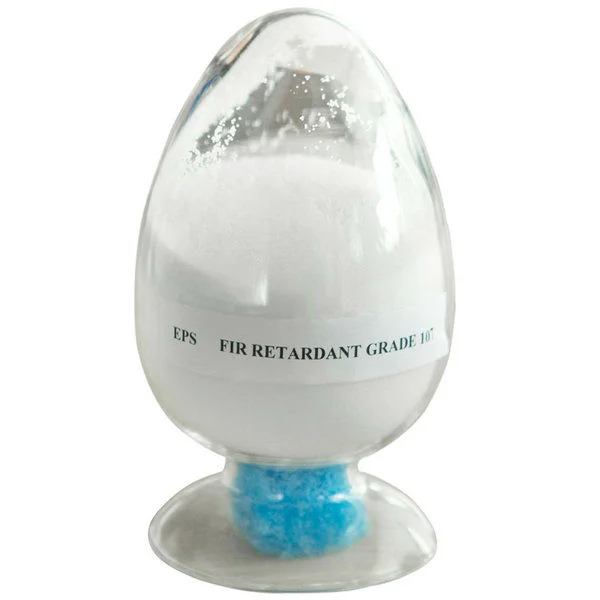
An optional F variant adds an Oxygen Index ≥30 for flame-retardant construction work while keeping the low-pentane, HBCD-free profile. See the full low-pentane L-series datasheet for bead-size and density detail, and the flame-retardant EPS sourcing guide if your project also needs FR certification.
Sourcing Checklist: Verifying a Compliant Low-Pentane Bead
Buying "REACH/IED compliant" beads is only meaningful if the paperwork backs it. Before you place an order, ask the supplier for:
- Certificate of Analysis per batch — with measured pentane content and residual styrene monomer (ppm), not just a datasheet range.
- REACH statement / SVHC declaration — confirming the bead and its FR additive are free of Candidate-List substances above threshold.
- Flame-retardant type — polymeric (HBCD-free) in writing, not just "REACH-friendly."
- Freight classification — confirm the lower hazmat class applies so your logistics quote is accurate.
- Bead age at FOB — request fresh beads and plan for the shorter shelf life; specify max age on the PO.
A supplier that can produce all five on request is genuinely set up for regulated-market EPS. One that cannot is selling you a label. For the market-access and buyer-decision side of this topic, our REACH/IED compliant EPS beads page maps requirements to specific materials and machines, and you can contact ChinaEps for grade recommendations and a certificate sample against your target market.
Frequently Asked Questions
What is the pentane content of low-pentane EPS beads?
Low-pentane EPS beads are typically formulated at 4.5–5.5% pentane by weight, versus 5.5–6.5% for standard grades. The reduced blowing-agent load cuts VOC release during pre-expansion, storage, and molding by roughly 15–30%, which is what gives molders headroom under IED solvent-emission limits.
Does low pentane make EPS beads REACH compliant on its own?
No. Low pentane is mainly an IED / VOC-emissions benefit. REACH compliance comes from the accompanying specification — low residual styrene monomer (≤2000 ppm), a polymeric HBCD-free flame retardant, and a documented SVHC declaration checked against the ECHA Candidate List. Ask for all three in writing, not just a "low-pentane" label.
Will low-pentane beads hurt my molding output?
Only marginally, and it's recoverable. Expect a slightly higher minimum density (about 16–18 g/L vs 12–15 g/L) and a 5–15% longer pre-expansion residence time. Both are fixed by tuning steam dwell, verifying bulk density per batch, and respecting a proper aging window. For insulation, construction, and regulated-market packaging the difference stays within normal operating tolerance.
Why do low-pentane beads have a shorter shelf life?
All EPS loses pentane over time. Because low-pentane grades start with less blowing agent, they reach the point of insufficient expansion sooner — typically a 2–4 month usable window versus 3–6 months for standard grades. Order fresh, specify a maximum age at FOB on the purchase order, and turn inventory faster.
Do low-pentane beads ship at a lower freight cost?
Often yes. Reduced pentane content can move the material into a less restrictive hazmat freight class, which lowers shipping cost and eases some carrier and port restrictions. Confirm the exact classification with your supplier before finalizing a logistics quote, as it varies by destination and mode.