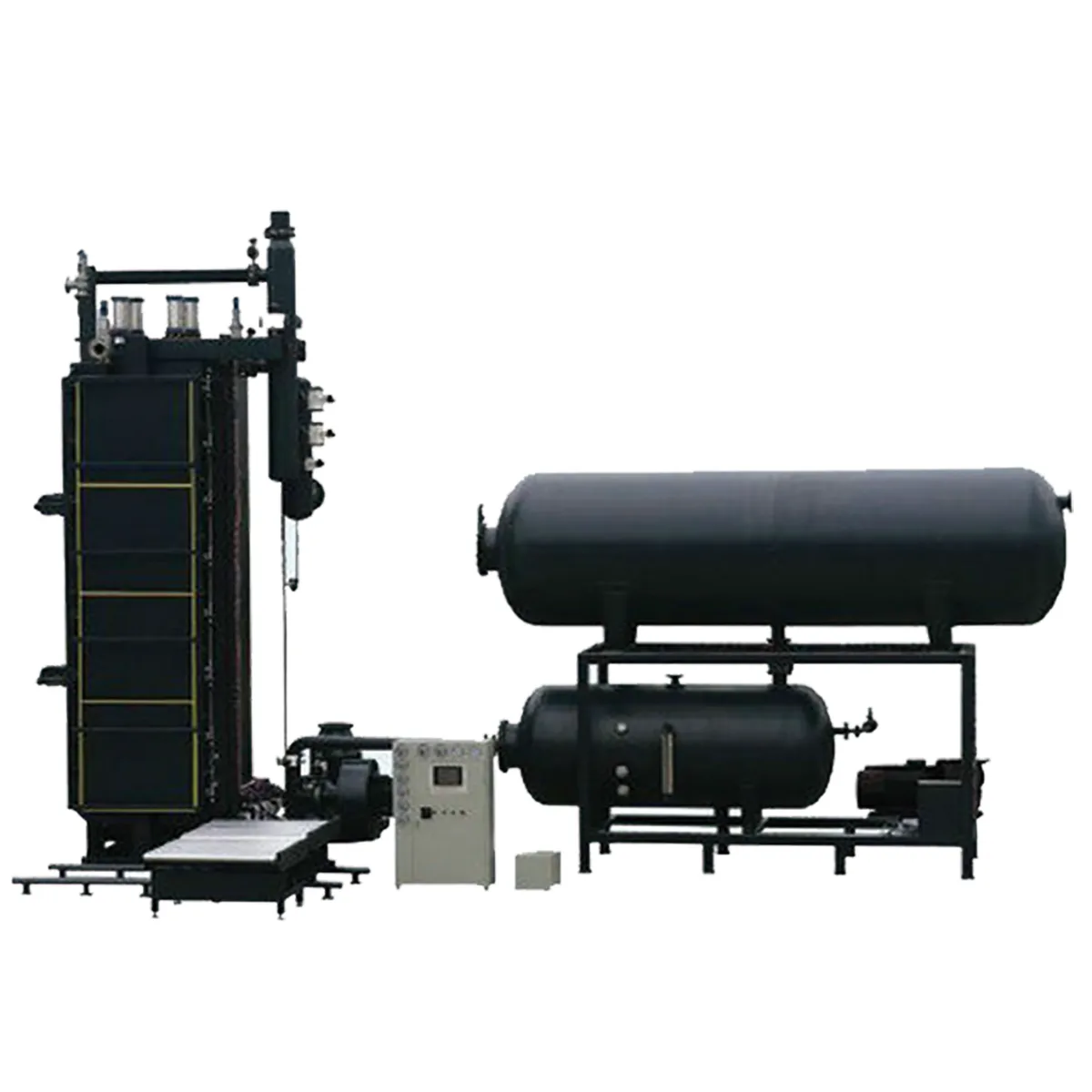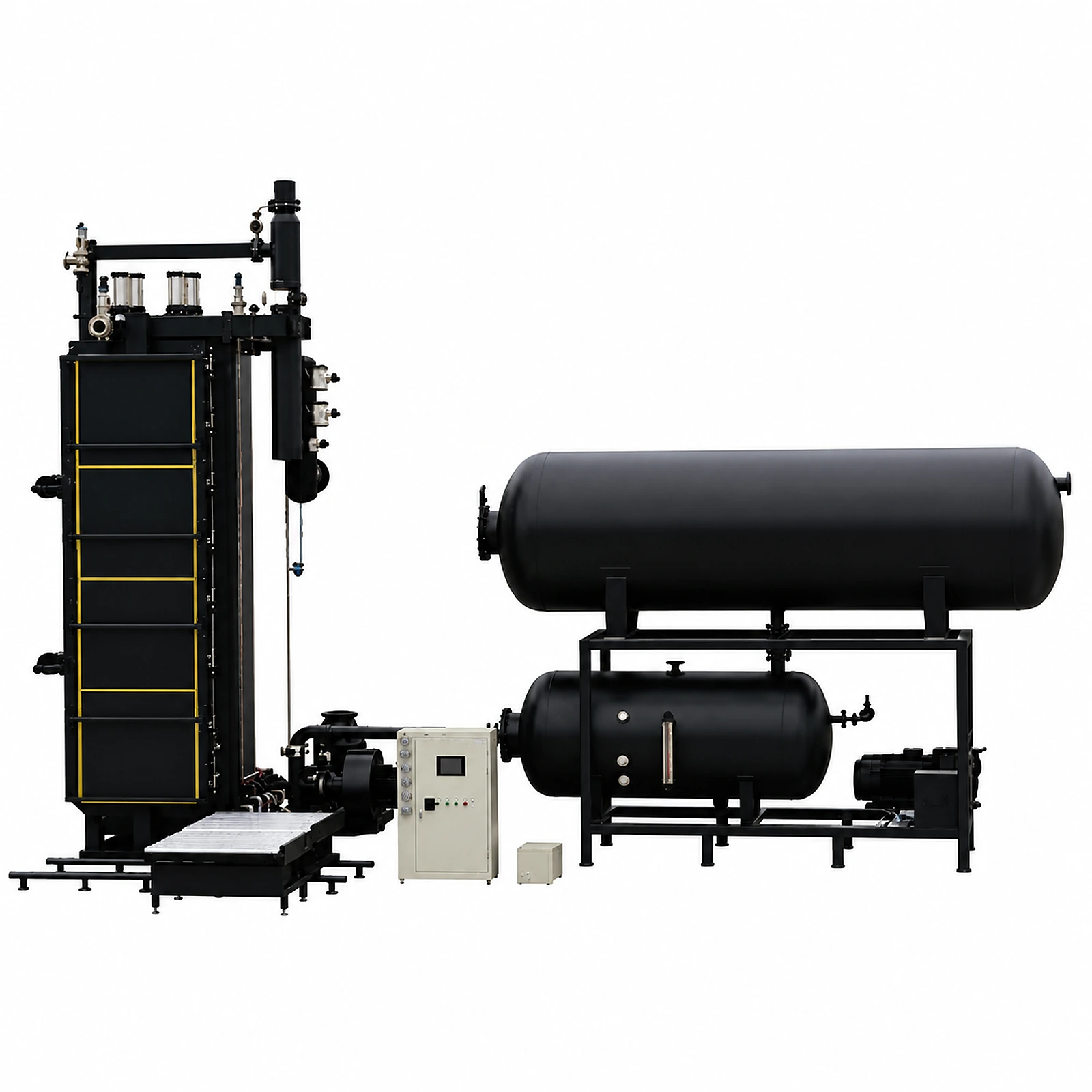
Block dimensions on a horizontal EPS block molding machine run from 1,200 × 600 × 300 mm (BM-1200) up to 1,800 × 1,200 × 600 mm (BM-1800), and the right size is set by your downstream cutting line and target monthly volume, not by buying the biggest machine available. A factory cutting fish boxes off a 600 mm-wide block gains nothing from a 1,200 mm-wide chamber; a factory feeding a 1,200 mm cutting line loses yield on every pass if the block is narrower. Below is the full size range with real specs, how block width and height should match your cutting line, and the volume threshold that decides which model pays back fastest.
1. Why block size is a factory-layout decision, not a spec-sheet choice
A block molding machine's block size sets three things downstream: how many cuts your cutting line makes per block, how much floor space the mold chamber and vacuum tank need, and how many kilograms of steam and water each cycle consumes. Buying a machine sized for a cutting line you don't have — or don't plan to have within two years — means paying for chamber volume, steam capacity and installed power you never use.
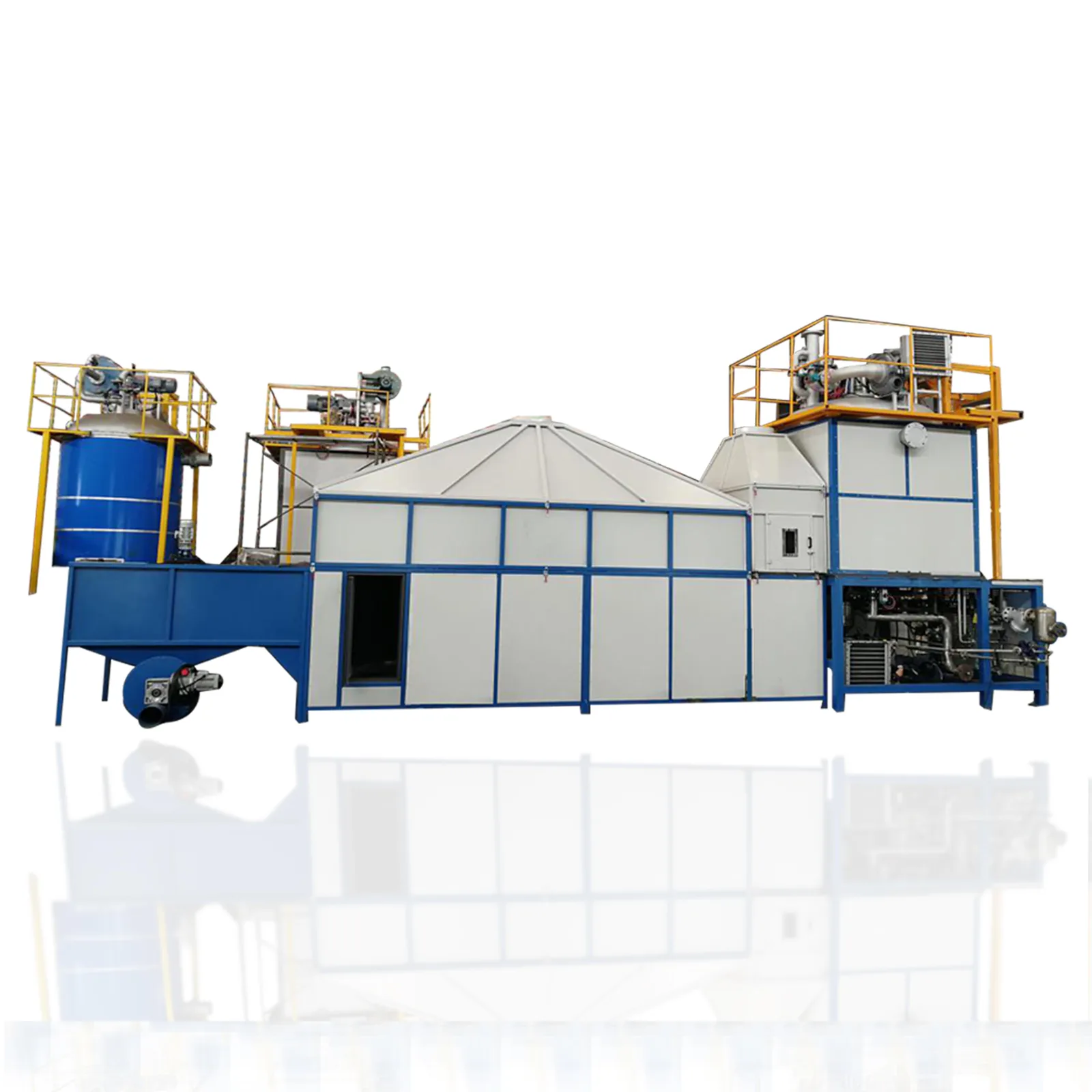
Our six-stage EPS manufacturing process places block molding between bead aging and cutting for a reason: block dimensions are the interface between the two. Get them right and the cutting line runs at full width with minimal off-cuts; get them wrong and every block wastes material at the edges.
2. The four horizontal block sizes, full specs side by side
ChinaEps builds four horizontal block molding machines from the same steam-chest fusion process, differing in chamber size, vacuum tank and installed power. All four hold 8–30 kg/m³ density at ±3% tolerance.
| Spec | BM-1200 | BM-1400 | BM-1600 | BM-1800 |
|---|---|---|---|---|
| Block Size (L×W×H) | 1,200 × 600 × 300 mm | 1,400 × 800 × 400 mm | 1,600 × 1,000 × 500 mm | 1,800 × 1,200 × 600 mm |
| Cycle Time | 6–8 min | 5–7 min | 4–6 min | 3–5 min |
| Vacuum Tank | 5 m³ buffer | 6 m³ (5+1 m³) | 6.3 m³ (5+1.3 m³) | ~7 m³ buffer |
| Steam Consumption | 12–15 kg/m³ block | 12–15 kg/m³ block | 12–15 kg/m³ block | 12–15 kg/m³ block |
| Installed Power | 20 kW | 24.5 kW | 35 kW | 22 kW |
| Machine Weight | 8,000 kg | 10,000 kg | 14,000 kg | 18,000 kg |
Steam consumption per cubic meter of finished block stays flat across all four sizes — the bigger machines don't cost more per m³ to run, they just make more m³ per cycle. That's the number to compare against your steam boiler capacity, not the per-cycle kg figure alone, since a BM-1800 cycle draws more total steam in absolute terms even though the per-m³ rate is identical.
3. Match block width and height to your cutting line, not the other way around
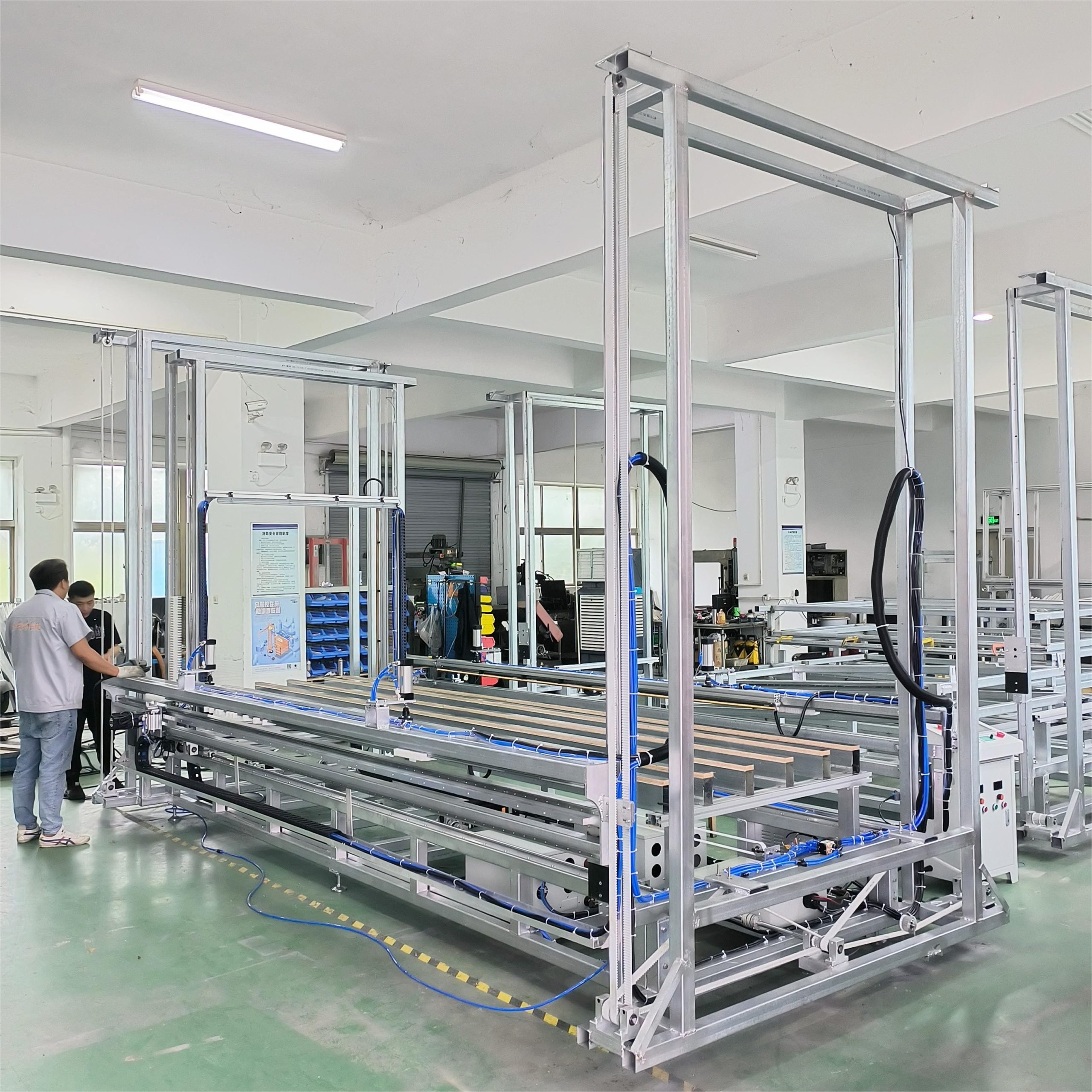
Block width and height set how many sheets your multi-wire cutting line gets per block and how much of that width turns into saleable product versus edge trim. A 600 mm-wide block on a cutting line built for 1,200 mm feeds only half the cutting bed — you pay for the full line but use half its capacity per pass.
The practical rule: pick the block width and height first from what your cutting line (existing or planned) is built to handle, then select the block molding machine whose chamber matches it. Going the other direction — buying the machine first and fitting a cutting line to it later — is the more common mistake we see in RFQs, and it's the harder one to correct once concrete foundations for the cutting line are poured.
4. Capacity by density: the number that actually drives payback
Cycle time alone doesn't tell you throughput, because higher-density blocks take longer to fuse fully. The table below shows pieces per hour at two common density points for each size.
| Model | Capacity @ 12 kg/m³ | Capacity @ 20 kg/m³ |
|---|---|---|
| BM-1200 | 6–10 pcs/hour | 3–4 pcs/hour |
| BM-1400 | 8–12 pcs/hour | 4–6 pcs/hour |
| BM-1600 | 10–14 pcs/hour | 5–7 pcs/hour |
| BM-1800 | 12–16 pcs/hour | 6–8 pcs/hour |
Density roughly halves throughput across every size — a factory running mostly 20+ kg/m³ technical grades should size on the right-hand column, not the 12 kg/m³ figure quoted on most spec sheets. Sizing on the lighter density and then switching product mix to denser grades is the second common cause of an under-sized machine.
5. When block length outgrows the horizontal range
1,800 mm is the practical ceiling for horizontal block molding — beyond that, chamber size and platen deflection start working against fusion quality. Factories that need longer blocks (2,000–6,000 mm), typically for wall-panel insulation, ICF cores or building-facade stock, move to a vertical block molding machine instead. The SPB-LZ vertical line molds 600–1,200 mm width × 1,200 mm depth × 2,000–6,000 mm height (adjustable), at a wider 4–35 kg/m³ density range, in roughly 30–40% less floor footprint than an equivalent-volume horizontal setup because the chamber opens vertically instead of sideways.
This isn't a better-or-worse comparison — it's a length threshold. If your target block is under 1,800 mm, horizontal (BM series) is the lower-CAPEX, easier-maintenance option. If your product needs longer stock, the vertical line is the only configuration that gets there.
6. Size by monthly volume, not the biggest machine you can afford
Block size and monthly output volume move together in practice, even though nothing stops a small factory from running a BM-1800. The volume bands below reflect what we see pay back fastest at each size:
- BM-1200 — 300–800 blocks/month. Entry-level CAPEX, smallest footprint (8,000 kg machine, 20 kW), fits factories under 1,500 m². Right choice for small fish-box or decorative-trim converters where cutting-line width is already fixed at or under 600 mm.
- BM-1400 — 800–1,500 blocks/month. The most common mid-factory size; steam and power draw both roughly 20% above BM-1200 for close to 40% more throughput at 12 kg/m³.
- BM-1600 — 1,500–2,500 blocks/month. Adjustable chamber suits factories running mixed SKUs across several densities without a full mold change.
- BM-1800 — 2,500+ blocks/month. Shortest cycle time (3–5 min) and highest per-cycle output; only pays back its 18,000 kg installed footprint and higher machine cost at volumes that keep it running near capacity.
Below the volume band for a given size, the machine sits idle between cycles and the extra CAPEX doesn't earn its keep; above the band, cycle time becomes the bottleneck and the next size up removes it. Our aging silo sizing guide covers the upstream side of the same math — silo capacity has to scale with whichever block size you land on here, or the molding machine ends up waiting on aged beads instead of the other way around.
7. Five block-size mistakes we see in RFQs
- Sizing the machine before the cutting line is specified. Block width and height should come from the cutting line's cutting-bed width, not the reverse. Retrofitting a cutting line to an already-installed block machine usually means accepting narrower yield than the cutting line was designed for.
- Quoting throughput at the wrong density. Capacity figures quoted at 12 kg/m³ overstate output by roughly 2× for factories running 20 kg/m³+ technical grades. Always ask for capacity at the density you actually run.
- Ignoring steam boiler capacity at the target size. A boiler sized for a BM-1200 (20 kW installed, lower steam draw) will bottleneck a BM-1800 upgrade. Steam supply should be sized for the largest block machine on the roadmap, not just the first one purchased.
- Skipping the vertical option at the 1,800 mm ceiling. Some buyers push a horizontal chamber past its practical size limit instead of switching configuration, trading fusion consistency for a marginal length gain that a vertical line delivers more cleanly.
- Not accounting for mold-change time when running mixed block heights. BM-1200's quick-change cavity insert supports thin (200 mm) and thicker (400 mm) variants of its standard block, but each change takes 4–6 hours — a cost that should be weighed against buying a size with wider native range instead of relying on mold swaps.
8. What to send us before we recommend a size
With these details we can size a block molding machine in one reply:
- Cutting-bed width of your current or planned cutting line.
- Target block density range and which density carries most of your volume.
- Monthly block volume target, current and 12–24 months out.
- Available factory floor area and ceiling height.
- Existing steam boiler capacity, if you already have one.
Frequently Asked Questions
What is the largest block a horizontal EPS block molding machine can produce?
1,800 × 1,200 × 600 mm on the BM-1800, the largest of ChinaEps' four horizontal sizes. Beyond that length, chamber deflection and steam distribution start working against uniform fusion, which is why longer stock (2,000–6,000 mm) is made on a vertical block molding machine instead.
How do I know which block size matches my cutting line?
Match the block molding machine's width and height to your cutting line's cutting-bed dimensions, not the reverse. A block narrower than the cutting bed wastes cutting-line capacity per pass; a block wider than the bed can't be cut in a single pass at all.
Does block size affect density range?
Not within the horizontal series — BM-1200 through BM-1800 all hold 8–30 kg/m³ at ±3% tolerance. The vertical SPB-LZ line has a wider 4–35 kg/m³ range, since its adjustable chamber height accommodates a broader mix of product types.
What monthly volume justifies a BM-1800 over a BM-1400?
Roughly 2,500 blocks/month and above. Below that, the BM-1800's shorter 3–5 minute cycle time and 12–16 pcs/hour capacity (at 12 kg/m³) sit unused relative to its 18,000 kg installed footprint and higher CAPEX; the BM-1400 reaches similar utilization at lower cost in the 800–1,500 block/month range.
Can one block molding machine run multiple block heights?
Yes, within limits. BM-1200's quick-change cavity insert produces 200 mm and 400 mm variants of its standard 300 mm block, but each mold change takes 4–6 hours. Factories running frequent height changes should weigh that downtime against buying a size whose native chamber already covers the range needed.
How does block size change steam and water consumption?
Steam consumption per cubic meter of finished block (12–15 kg/m³) stays consistent across BM-1200 through BM-1800 — larger machines don't cost more per unit volume, they simply produce more volume per cycle. Water consumption scales from 0.3 m³/day (BM-1200) to 0.5 m³/day (BM-1600), which should be checked against on-site water supply before sizing up.
Is a bigger block molding machine always the safer choice?
No. Oversizing means the machine cycles below the volume its steam and vacuum systems were designed to run efficiently, and per the European Manufacturers of EPS (EUMEPS) production guidance, EPS block dimensional stability depends partly on consistent, repeatable fusion cycles — a machine running well under its rated volume band is harder to keep tuned to a stable cycle than one matched to its actual output.
Send us your cutting-line width and volume target, we will size the machine
Use the contact form to send your cutting-bed width, target density, and monthly volume plan. We will reply with the block size that matches your cutting line, the capacity at your actual density, and whether your current steam supply covers it. The BM-1200 to BM-1800 product page has full specs for all four horizontal sizes, and per the American Society for Testing and Materials EPS insulation standard (ASTM C578), dimensional stability testing assumes blocks were molded at a consistent density and cycle — a second reason to size the machine to the volume you actually run, not the volume you might someday reach.