In EPS hot wire cutting, temperature and travel speed are one setting, not two independent settings. The wire must deliver enough heat per millimetre of travel to soften a narrow path through the foam, while moving fast enough that the kerf does not keep absorbing heat and widening. A bowed wire with bead pull-out means the heat input is too low for the commanded speed; a wide kerf, glazed face or heavy fumes means it is too high. Start inside the machine maker's qualified range, change one variable at a time, and accept the recipe only after the centre and both edges of the cut hold dimension.
This guide is for an operator commissioning an industrial multi-wire EPS cutting line or CNC hot wire cutter. It does not prescribe one universal temperature. Wire diameter, heated length, foam density, block age, additive package, tension and number of energised wires all change the electrical load. The useful output is a documented process window for each product family.
Why Temperature Alone Does Not Define the Cut
Current passing through nickel-chromium wire produces resistance heat. The wire transfers that heat into a very small zone of EPS; the polymer softens, the wire advances, and the cut closes behind it as two separate faces. Three heat flows happen at once:
- Electrical input heats the wire. Current, resistance, heated length and wire diameter determine how much heat is available.
- The moving foam removes heat. A denser block presents more polymer per millimetre of travel. More active wires also increase the total load on the power supply.
- The room and machine remove heat. Air movement, terminals, frame mass and pauses between cuts change the steady condition.
This is why a controller percentage copied from another machine is not a transferable recipe. Even a displayed temperature is only useful if the sensor and control method are understood. Many industrial cutters regulate current or power rather than directly measuring the hottest point of every wire. The broad operating envelope for EPS hot-wire work is typically 150–300°C, but the correct production setting is the lowest stable heat input that cuts without drag at the required speed.
The Process Window: Too Cold, Stable, and Too Hot
| Condition | What the Operator Sees | Dimensional Effect | First Controlled Action |
|---|---|---|---|
| Heat input too low | Wire trails behind the guides, chatters, or pulls beads from the face | Centre of the sheet becomes thicker or curved; corners lag | Reduce speed one step; if drag remains, raise heat one step |
| Stable window | Wire stays aligned, face is continuous, little residue accumulates | Centre and edges remain inside the drawing tolerance | Record current/power, speed, density, block age and tension |
| Heat input too high | Wide melted path, glossy skin, rounded detail, strong visible fume plume | Part is undersize and kerf compensation becomes unstable | Lower heat one step; do not hide excess heat by increasing speed blindly |
| Tension fault | Cut changes across wire span although heat and speed readings stay steady | Wedge-shaped sheets or bowed profile | Stop and correct tension/alignment before changing the recipe |
The centre measurement matters. A long wire can look correct at its supported ends while bowing in the middle under cutting resistance. Measuring only the first sheet edge can approve a recipe that is already out of tolerance across the span.
How Cutting Speed Changes the Heat Delivered per Millimetre
At constant electrical power, doubling travel speed roughly halves the time available to heat each millimetre of the cut path. That does not make the finished temperature exactly half—heat transfer is not that simple—but it explains the operator's control direction:
- If speed increases, heat input normally has to increase or the wire begins to drag.
- If speed decreases, heat input normally has to decrease or the kerf widens.
- If density or block thickness increases, the same nominal speed may require more heat or a lower feed.
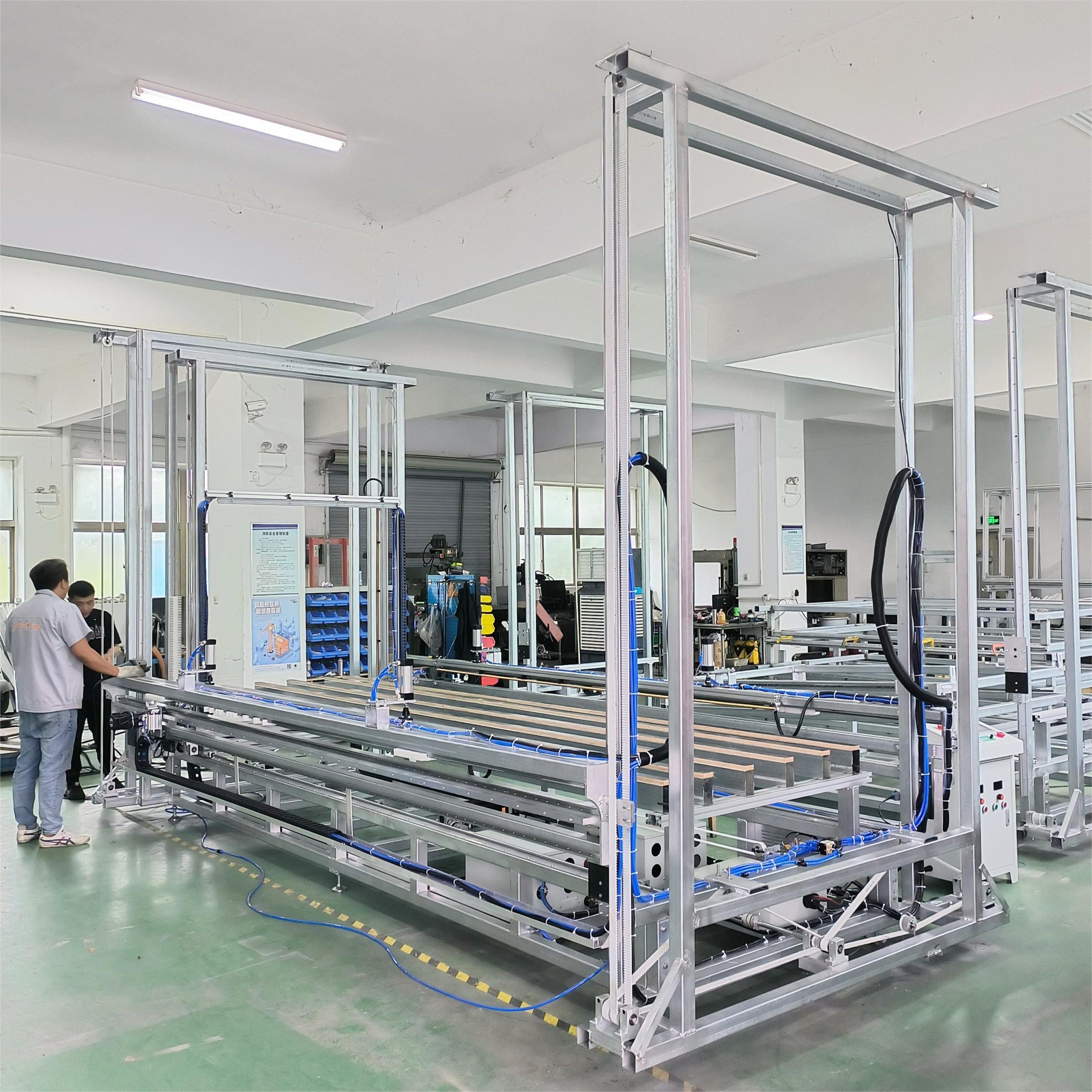
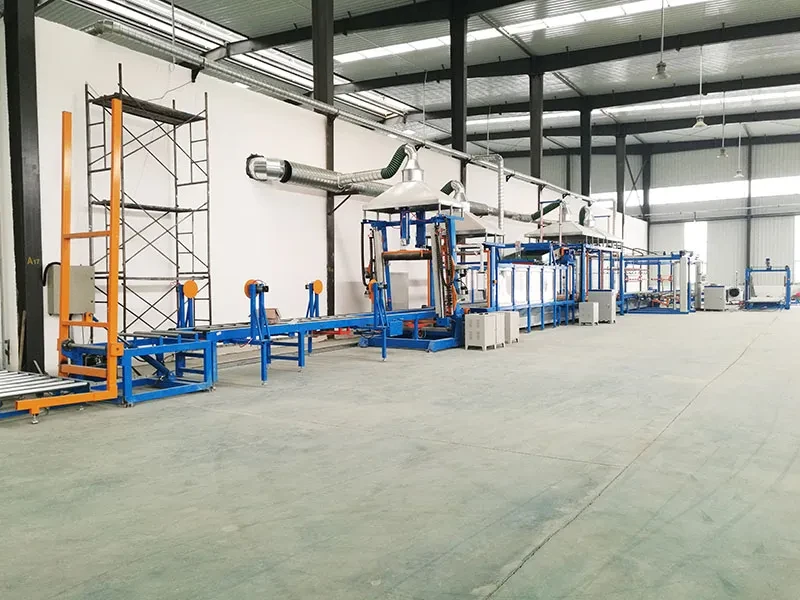
- If the wire bank grows from a few wires to dozens, confirm that the power supply holds the command under full load.
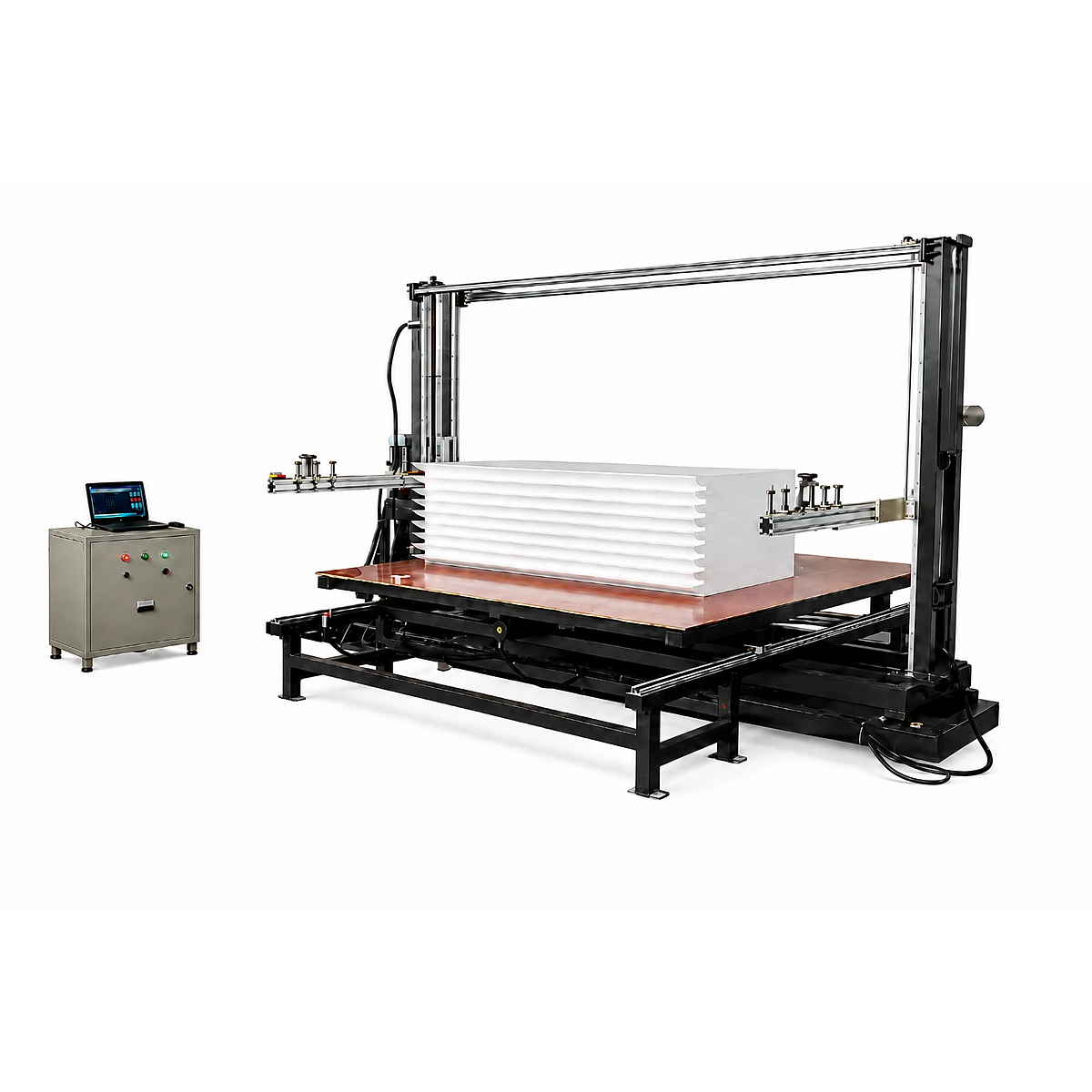
On the ChinaEps SPQ line, an established reference point is 1.8–2.0 m/min at 15 kg/m³ with the specified oscillating heated-wire system. Treat that as a machine-and-material reference, not permission to enter 2.0 m/min on every cutter. A CNC contour with tight directional changes, a static sheet cutter, and a full multi-wire bank place different demands on the wire.
Five Inputs That Move the Correct Setting
1. Foam density and grade
Higher density means more polystyrene has to be softened along the cut. Standard white EPS, flame-retardant EPS and graphite EPS should not share one unverified recipe. Graphite EPS is normally started 5–10°C below the white-EPS setting at the same density, then verified by the cut face and dimension. Graphite residue also calls for cleaning intervals about 10–15% shorter than for white EPS.
2. Block age and internal stability
A block should finish its specified conditioning period before precision cutting. A green or still-warm block can move after cutting, making a sound machine recipe look inaccurate. Record block age and core temperature with the trial; otherwise speed and temperature get blamed for shrinkage created upstream.
3. Wire diameter and heated length
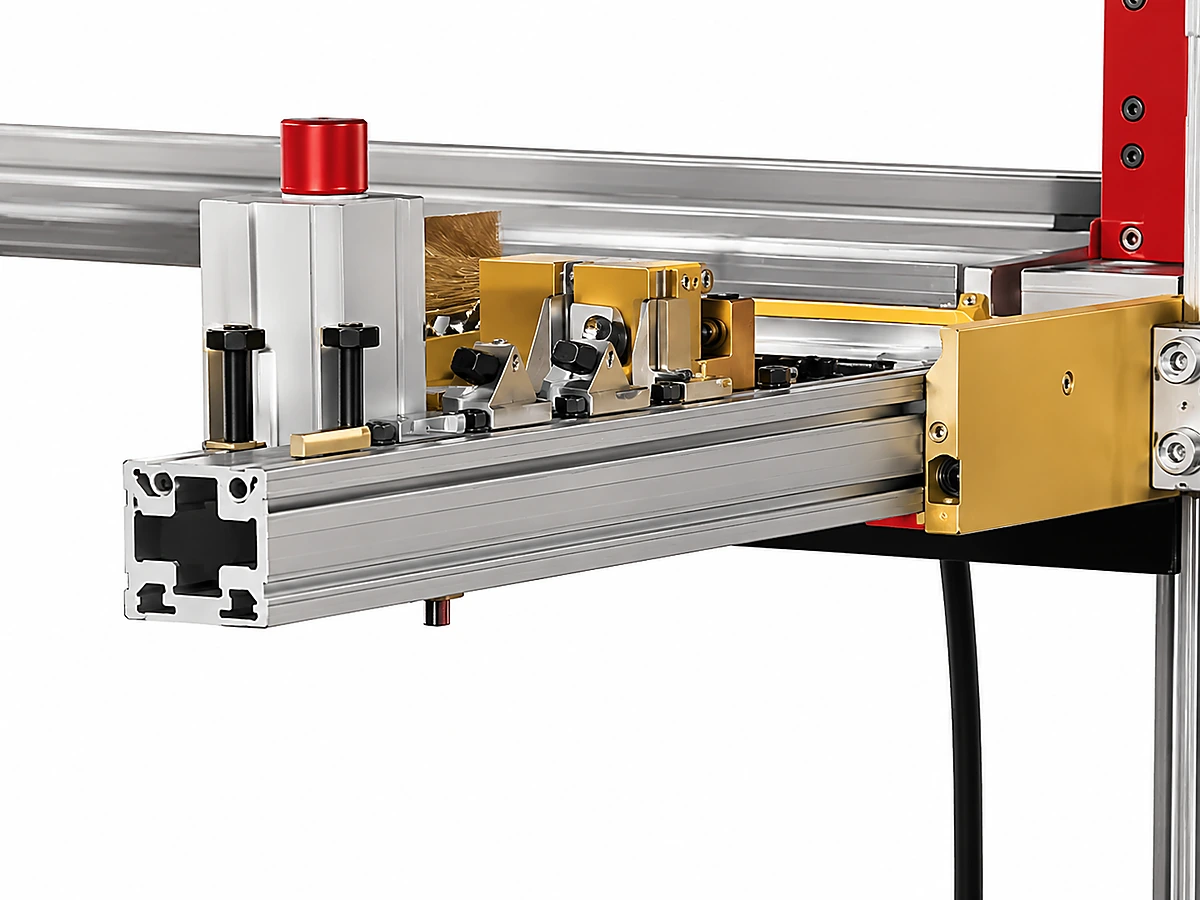
A thicker wire carries more current and resists mechanical deflection, but it also produces a wider minimum kerf. A longer heated span has more resistance and more opportunity to sag. If the diameter or free length changes, repeat the trial instead of reusing the old controller value. For wire selection, tension and service-life limits, use the separate EPS cutting-wire guide.
4. Wire tension and guide alignment
Temperature cannot correct a loose wire. Nichrome expands when hot, so cold tension and running tension are not identical. Verify the machine's specified tensioning method, check springs and guides, and allow the wire bank to reach steady state before measuring. Repeatedly adding heat to overcome a bowed wire shortens life and increases kerf without fixing the geometry.
5. Number of active wires and power-supply headroom
A recipe proved with ten active wires is not automatically proved with sixty. Measure the value under full production load. If voltage or current falls as more wires energise, the apparent process problem may be cabinet capacity, a contactor, a terminal or a supply issue rather than the programmed recipe.
A Six-Step Trial-Cut Method
- Define the product. Record grade, density, block dimensions, conditioning time, target thickness, tolerance and surface requirement.
- Inspect the machine cold. Confirm wire diameter, tension, guide alignment, clean terminals, guards, extraction and unobstructed travel.
- Choose a conservative starting point. Use the machine manual or a previously approved recipe for the same grade and density. Do not start at the controller maximum.
- Stabilise and make the first cut. Let the wire reach steady operation. Cut a full-length sample at a moderate speed and do not tune from a short offcut.
- Measure after cooling. Check kerf or finished thickness at the entry, centre and exit, on both sides of the block. Note bow, bead pull-out, gloss, residue and odour/extraction behaviour.
- Move one variable and repeat. If the wire drags, reduce speed before adding heat. If the face is over-melted, reduce heat before changing geometry compensation. Run at least three repeat cuts at the candidate setting.
| Trial Record | Minimum Entry |
|---|---|
| Material | Supplier/grade, white/graphite/FR, measured density |
| Block condition | Molding time, cutting time, core/room temperature |
| Wire system | Alloy, diameter, free length, tension method, active-wire count |
| Commands | Current/power or temperature indication, travel speed, oscillation if used |
| Results | Dimensions at entry/centre/exit, kerf, surface, wire bow, pass/fail |
The approved recipe should be a range, not a single unexplained number: material and density band, acceptable speed band, heat/current band, wire specification and measured result. That gives the next shift enough information to recognise drift without inventing a new setup.
Diagnose the Defect Before Touching Both Knobs
| Symptom | Likely Cause | Check Before Adjustment | Adjustment Direction |
|---|---|---|---|
| Rough face with loose beads | Low heat per mm | Density, full-load current, wire contamination | Slow feed; then add heat only if required |
| Wide kerf and glossy skin | Excess heat per mm | Actual speed, pause/dwell in the program | Reduce heat |
| Correct edges, thick centre | Wire bow or low tension | Centre deflection, springs, span, guides | Correct mechanics; then requalify recipe |
| Good first cuts, gradual deterioration | Residue or thermal drift | Wire surface, extraction airflow, terminals | Clean and inspect; do not compensate indefinitely |
| Wire breaks after heat increase | Overheat, excessive tension or damaged guide | Break location and terminal condition | Remove root cause before replacing wire |
| All wires slow under full bank | Power delivery limit | Loaded voltage/current and connections | Repair supply issue; do not over-command |
Safety Boundaries Are Part of the Recipe
A hot wire is an energised heating element inside moving machinery. EPS can also retain pentane from bead expansion, so block conditioning and local extraction matter. Follow the machine's guarding and lockout procedure; the OSHA machine-guarding guidance explains the general duty to protect operators from moving parts, while the NIOSH Pocket Guide entry for pentane lists exposure and flammability information.
- Do not bypass an enclosure or interlock to watch the wire more closely.
- Isolate electrical energy and confirm the wire is cool before replacement or cleaning.
- Keep extraction running during trials; increased visible fumes are a stop-and-review signal, not a productivity trade-off.
- Do not cut an unconditioned block beside an ignition source.
What to Put in a Cutting-Line Acceptance Test
A supplier speed claim is useful only with the conditions attached. Put the following into the acceptance sheet: EPS grade and measured density; block size and age; wire diameter and active count; required sheet/profile drawing; commanded speed; measured electrical condition; extraction operating; sample count; and dimensions at the edge and centre. Run the agreed product rather than an easy low-density demonstration block.
For a multi-wire line, approve thickness uniformity across the complete bank and over repeated blocks. For CNC, approve both straight sections and the smallest specified radius. The broader EPS cutting-machine buyer's guide compares machine classes, while Hot Wire Cutting: How It Works and Where It Stops covers suitable materials, kerf and geometry limits.
Frequently Asked Questions
What temperature should an EPS hot wire cutter use?
Industrial EPS hot-wire cutting commonly operates inside a 150–300°C envelope. The correct setting depends on wire diameter and length, EPS density and grade, travel speed, tension and active-wire count. Use the lowest stable heat input that cuts without drag and holds dimension.
Why does the wire bend backward while cutting?
The foam is resisting the wire faster than it can soften the cut path. First verify tension, contamination and full-load power. Then reduce feed speed one step; raise heat only if drag remains.
Does a hotter wire always cut faster?
No. Extra heat can widen kerf, round detail, glaze the surface, increase fumes and shorten wire life. Speed is acceptable only when the entire cut, especially the centre of a long span, remains within tolerance.
Should graphite EPS use the same setting as white EPS?
No unverified recipe should be shared. A practical start is 5–10°C cooler than white EPS at the same density, followed by dimensional and surface checks. Graphite residue also requires more frequent wire cleaning.
Why is the first block correct but later blocks drift?
Check wire contamination, thermal expansion, tension compensation, terminal heating and extraction airflow. Correct the physical drift instead of repeatedly increasing temperature or lowering speed.
How many trial cuts are enough to approve a recipe?
After the exploratory cuts, run at least three repeat full-length cuts at the candidate setting and measure entry, centre and exit. A factory acceptance test should use a larger agreed sample that represents the buyer's actual product mix.
Send the Product, Not Just a Target Speed
For a useful cutting-line proposal, send the EPS grade, density range, conditioned block size, finished drawing, daily volume, tolerance and required surface. ChinaEps can then match the wire system, active-wire count, power supply and trial protocol to the product. Use the engineering enquiry form and attach the drawing; a speed figure without those inputs is not a production guarantee.