Graphite EPS — the grey insulation board sold under names like Neopor® — is expanded polystyrene with infrared-absorbing graphite particles dispersed through every bead. Those particles cut radiant heat transfer, so grey EPS reaches a thermal conductivity (λ) of about 0.030–0.032 W/(m·K) versus 0.036–0.038 for ordinary white EPS — roughly 15–20% better insulation at the same thickness, or the same U-value in a thinner, lighter wall. That margin is exactly what makes graphite EPS the default rigid foam for Passivhaus, ETICS external wall insulation, and any project chasing a tight U-value without losing floor area. This pillar explains what graphite EPS is, why it outperforms white EPS, where it belongs in a Passive House wall, the standards and fire data you need to specify it, and what changes on the factory floor when you produce it. For the broader rigid-foam material picture, pair this with our EPS vs EPP differences and applications guide; if you are evaluating it as a production opportunity, see our graphite EPS for Passivhaus solution page.
What Is Graphite EPS (Grey EPS)?
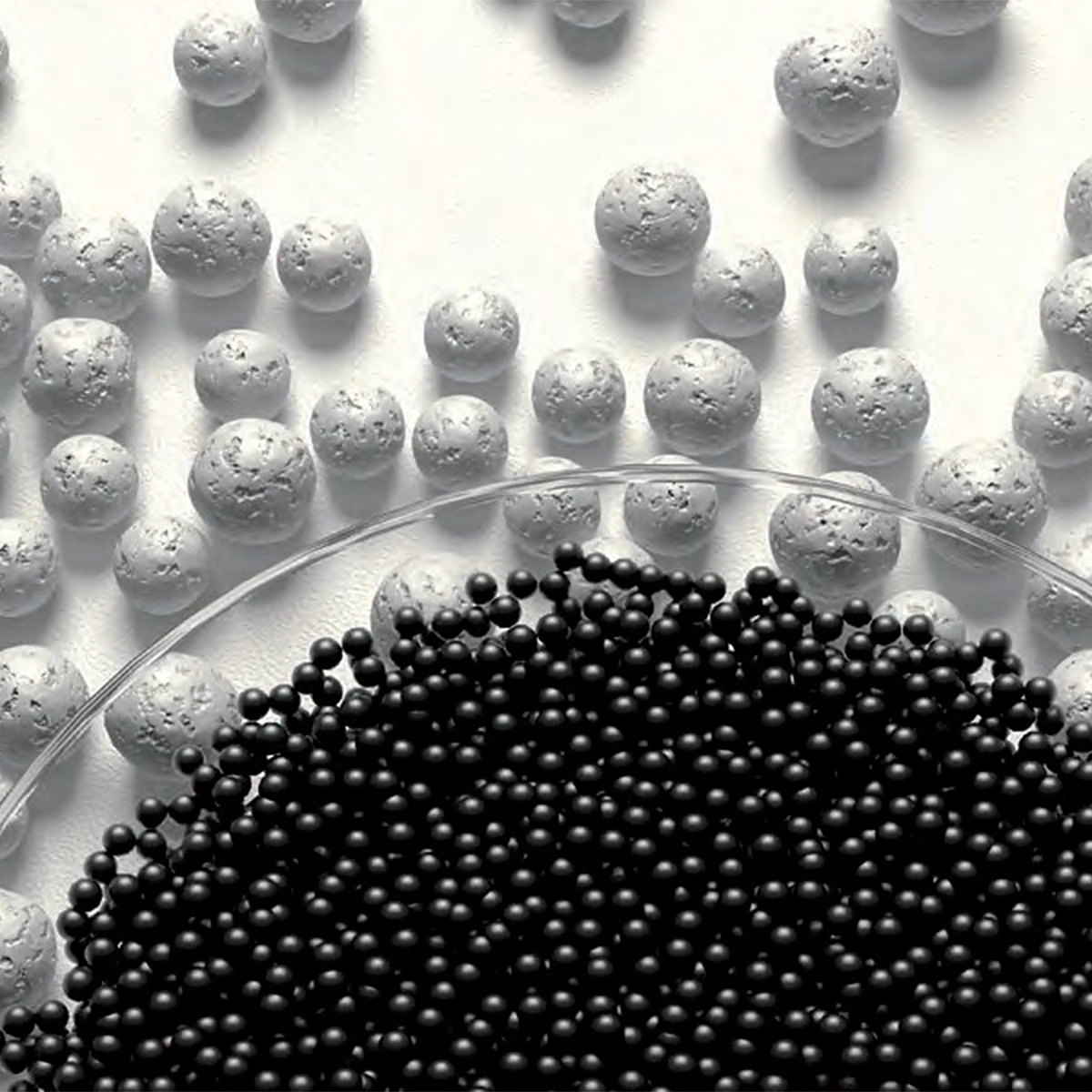
Graphite EPS is standard expandable polystyrene with fine graphite added to the polymer before expansion. The result is a grey-to-silver bead instead of the familiar white one, and the colour is the giveaway: the graphite is doing optical work. In ordinary white EPS, a meaningful share of heat moves through the foam by radiation — infrared energy crossing the air-filled cells. Graphite particles absorb and scatter that infrared radiation, shutting down the radiant pathway and leaving only conduction and convection, which the closed-cell structure already handles well.
The base polymer, the bead-expansion chemistry, and the EPS manufacturing process are otherwise the same as white EPS: polystyrene beads containing a pentane blowing agent are pre-expanded with steam, matured, then fused into blocks or molded into shape. Graphite EPS is not a different material class — it is a performance grade of EPS, sitting alongside standard, flame-retardant, fast-cycling and high-expansion grades in the same family. That is why an existing EPS factory can usually produce it without reinventing the line.
Why Graphite Beats White EPS — The Physics
Heat crosses an insulation board three ways: conduction through the solid polymer and trapped gas, convection inside the cells, and radiation across them. Closed-cell EPS already suppresses convection, and the polystyrene skeleton is a poor conductor. Radiation is the pathway white EPS leaves open — and at the low densities used for insulation board (15–25 kg/m³), thinner cell walls mean more radiant transfer, which is why low-density white EPS insulates less well per kilogram than you might expect.
Graphite changes that trade-off. By absorbing infrared inside the foam, it lets manufacturers hit a low λ at low density — you get top-tier insulation without paying for extra mass. In practical terms, a 0.031 W/(m·K) graphite board delivers the same thermal resistance as a white board roughly 15–20% thicker. On a deep-renovation facade or a Passivhaus wall where every centimetre of build-up eats into window reveals, balconies, and site lines, that thickness saving is often the deciding factor — not the raw material cost.
Grey EPS vs White EPS: Property Comparison
| Property | Graphite (Grey) EPS | Standard (White) EPS |
|---|---|---|
| Thermal conductivity λ | 0.030–0.032 W/(m·K) | 0.036–0.038 W/(m·K) |
| Insulation per cm thickness | ~15–20% higher | Baseline |
| Board colour | Grey / silver | White |
| Typical insulation density | 13–20 kg/m³ | 15–25 kg/m³ |
| Wall thickness for a target U-value | Thinner | Thicker |
| Sun sensitivity before rendering | Higher — can overheat/warp in direct sun | Lower |
| Relative material cost | Higher (graphite additive) | Lower |
| Compressive & mechanical behaviour | Same as EPS of equal density | Baseline |
| Recycling stream | Polystyrene (#6) | Polystyrene (#6) |
Read this as a thickness-and-cost trade, not a contest: graphite EPS buys you a slimmer, lighter wall at a higher material price; white EPS is the economical choice when wall depth is not constrained. The one real handling caveat is sun sensitivity — grey boards absorb solar heat and can distort if left exposed on a facade, so they are protected from direct sun on site and rendered promptly.
Graphite EPS in Passivhaus and ETICS Systems
The Passivhaus standard sets a very low heating demand, and on most masonry or concrete buildings the cheapest route to the required wall performance is an External Thermal Insulation Composite System (ETICS) — insulation boards bonded and dowelled to the structure, then reinforced and rendered. Graphite EPS dominates this market because ETICS rewards exactly what grey EPS offers: a low λ in a manageable thickness, low weight for adhesive-and-dowel fixing, and an established render-compatible board format. The Passive House Institute certifies components and whole buildings against these performance targets, and grey-EPS ETICS is one of the most common ways projects reach them.
In a Passive House wall, the insulation also has to keep the thermal envelope continuous — minimising thermal bridges at reveals, balconies, and slab edges. A thinner graphite board makes that detailing easier: window reveals stay buildable, the facade does not project as far, and balcony or parapet junctions are simpler to wrap. This is why specifiers reach for grey EPS first on deep retrofits, where the existing structure leaves little room to add a thick white-EPS build-up without losing daylight or breaching boundary lines.
Lambda Values, U-Values and Standards
In Europe, EPS insulation boards — white and graphite alike — are specified under the harmonised product standard EN 13163, the framework the European EPS construction association (EUMEPS) maintains guidance around. EN 13163 defines declared thermal conductivity (λD), compressive stress, dimensional stability, and the coded designation classes you quote on a submittal. In North America, the equivalent reference is ASTM C578, the Standard Specification for Rigid, Cellular Polystyrene Thermal Insulation, which sets density and R-value types. Quoting the right standard turns “high-performance grey board” into a verifiable specification.
| Metric | What it tells you | Graphite EPS typical |
|---|---|---|
| λD (declared conductivity) | Lower = better insulation per cm | 0.030–0.032 W/(m·K) |
| R-value (per board) | Thermal resistance = thickness ÷ λ | Higher than white at equal thickness |
| U-value (whole element) | Lower = less heat loss; Passivhaus walls target U ≤ ~0.15 W/(m²·K) | Reached in a thinner build-up |
| Compressive stress (10%) | Load the board carries | Same as white EPS of equal density |
The practical chain runs λ → R-value → U-value: a lower declared λ raises the R-value of a given thickness, which lowers the U-value of the wall. Because graphite EPS starts with a lower λ, it lets a designer hit a demanding U-value target without thickening the wall — the whole reason it earns its premium on certified low-energy projects.
Fire Performance and the PolyFR Flame Retardant
EPS used in construction is almost always a flame-retardant grade. Since 2015 the industry standard additive has been polymeric flame retardant (PolyFR), which replaced the legacy brominated retardant HBCD; the substitution is documented in the European Chemicals Agency (ECHA) regulatory record. Graphite EPS for facades is produced in this flame-retardant form and tested for reaction to fire under the European classes, and ETICS systems add a non-combustible render and, where required, mineral-wool fire barriers at floor lines. For background on flame-retardant EPS grades and sourcing, see our guide to flame-retardant EPS beads.
The takeaway for specifiers: grey colour and fire class are independent. You can — and on a facade you should — specify a graphite and flame-retardant grade, and confirm the system-level fire test for the full ETICS build-up, not just the board on its own. Manufacturing under an ISO 9001 quality system keeps the additive dosing and density consistent batch to batch, which is what makes the declared values trustworthy.
When to Specify Graphite EPS
| Project situation | Specify | Why |
|---|---|---|
| Passivhaus / certified low-energy build | Graphite EPS | Hits a low U-value in a buildable thickness |
| Deep facade retrofit with tight reveals / boundaries | Graphite EPS | Thinner build-up preserves daylight and site lines |
| New ETICS facade chasing best λ | Graphite EPS | Lower declared conductivity per cm |
| Budget project, no thickness constraint | White EPS | Same U-value achievable cheaper with more thickness |
| Below-grade / loaded applications | Either (density-driven) | Graphite gives no mechanical advantage; choose on cost |
| Packaging, void fill, cold-chain | White EPS | Radiant insulation gain is irrelevant; pay less |
The decision rule is simple: specify graphite EPS when thickness or weight is constrained and the U-value target is demanding; specify white EPS when it is not. Paying the graphite premium for a non-thermal job, or for a wall with no depth limit, is the most common over-specification — and the easiest money to save.
Producing Graphite EPS — What Changes on the Line
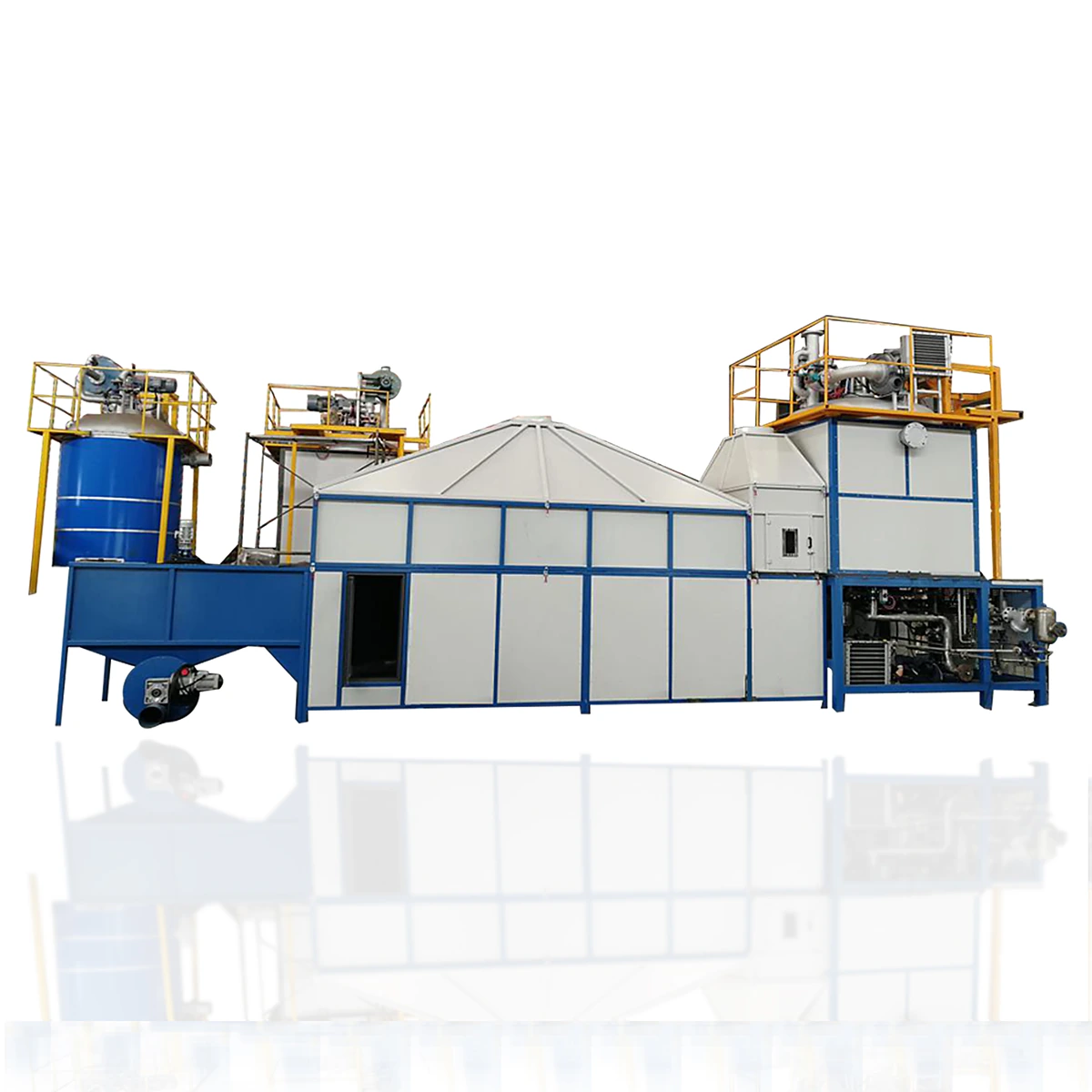
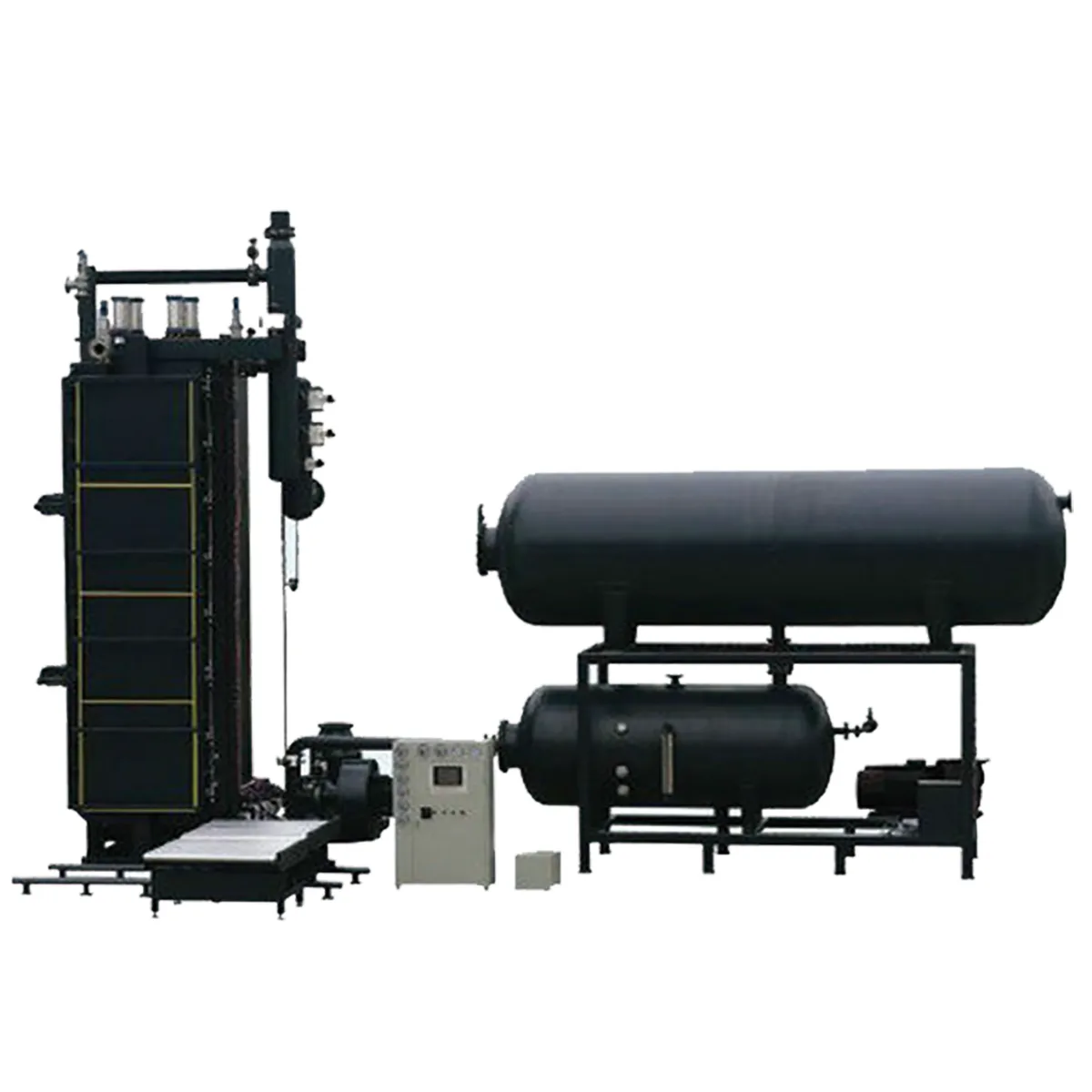
For a manufacturer, graphite EPS is an upgrade of an existing EPS line rather than a new factory. You start from grey raw beads — our graphite EPS raw material — and run them through the same three core stages, with a few adjustments. Pre-expansion is the sensitive step: grey beads absorb steam heat faster and have a narrower processing window, so a well-controlled pre-expander with stable steam and accurate density control matters more than it does for white EPS. Block molding on a block molding machine is largely unchanged, though fusion and cooling are tuned for the grade.
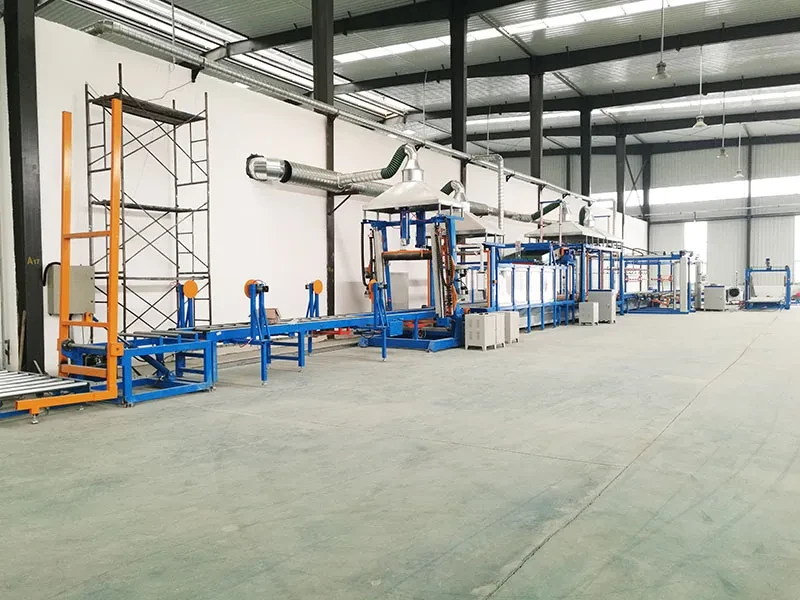
Cutting is where grey board has its own requirement. Because graphite boards can soften and the foam is denser-feeling at the surface, a dedicated graphite board cutting line gives the clean, dimensionally accurate panels that ETICS bonding demands. In short, an EPS producer adding grey board needs careful pre-expander control, the right raw bead, and a cutting line suited to the grade — not a rebuilt plant. If you are weighing graphite EPS as a market entry, our graphite EPS for Passivhaus solution page maps the full equipment chain and the buyer segments it serves.
Frequently Asked Questions
What is graphite EPS and why is it grey?
Graphite EPS is expanded polystyrene with fine graphite particles dispersed through every bead, which gives the board its grey-to-silver colour. The graphite absorbs and scatters infrared radiation inside the foam, shutting down the radiant heat pathway that ordinary white EPS leaves open. The result is a lower thermal conductivity — about 0.030–0.032 W/(m·K) versus 0.036–0.038 for white EPS — at the same low density used for insulation board.
How much better does graphite EPS insulate than white EPS?
Graphite EPS insulates roughly 15–20% better per centimetre of thickness. In practice that means a grey board reaches the same thermal resistance (R-value) as a white board about 15–20% thicker, or the same wall U-value in a noticeably thinner, lighter build-up. The gain comes entirely from blocking radiant heat transfer, not from a different polymer or cell structure.
Why is graphite EPS used for Passivhaus and ETICS facades?
Passivhaus walls must hit a very low U-value, and External Thermal Insulation Composite Systems (ETICS) are the common way to get there on masonry buildings. Graphite EPS lets a designer reach that U-value in a thinner, lighter board, which keeps window reveals buildable, limits how far the facade projects, and simplifies thermal-bridge detailing — especially on deep retrofits where wall depth is constrained.
Is graphite EPS fire-rated?
Graphite colour and fire class are independent. Construction-grade graphite EPS is produced as a flame-retardant grade using polymeric flame retardant (PolyFR), the additive that replaced legacy HBCD, and is tested for reaction to fire under the European classes. On facades, the ETICS system adds a non-combustible render and, where required, mineral-wool fire barriers, so the fire performance is assessed at system level, not for the board alone.
What standards specify graphite EPS insulation?
In Europe, EPS insulation boards are specified under EN 13163, which defines declared thermal conductivity, compressive stress, and dimensional classes. In North America the equivalent is ASTM C578, the specification for rigid cellular polystyrene thermal insulation. Both apply to white and graphite EPS; graphite boards simply declare a lower λ. Quoting the relevant standard turns a marketing claim into a verifiable specification.
Can an existing EPS factory produce graphite EPS?
Yes, in most cases. Graphite EPS runs on the same pre-expander, block molder, and cutting line as white EPS, starting from grey raw beads instead of white. The main adjustments are tighter pre-expansion control — grey beads absorb steam faster and have a narrower processing window — and a cutting line suited to the grade. It is an upgrade of an existing line, not a new plant.