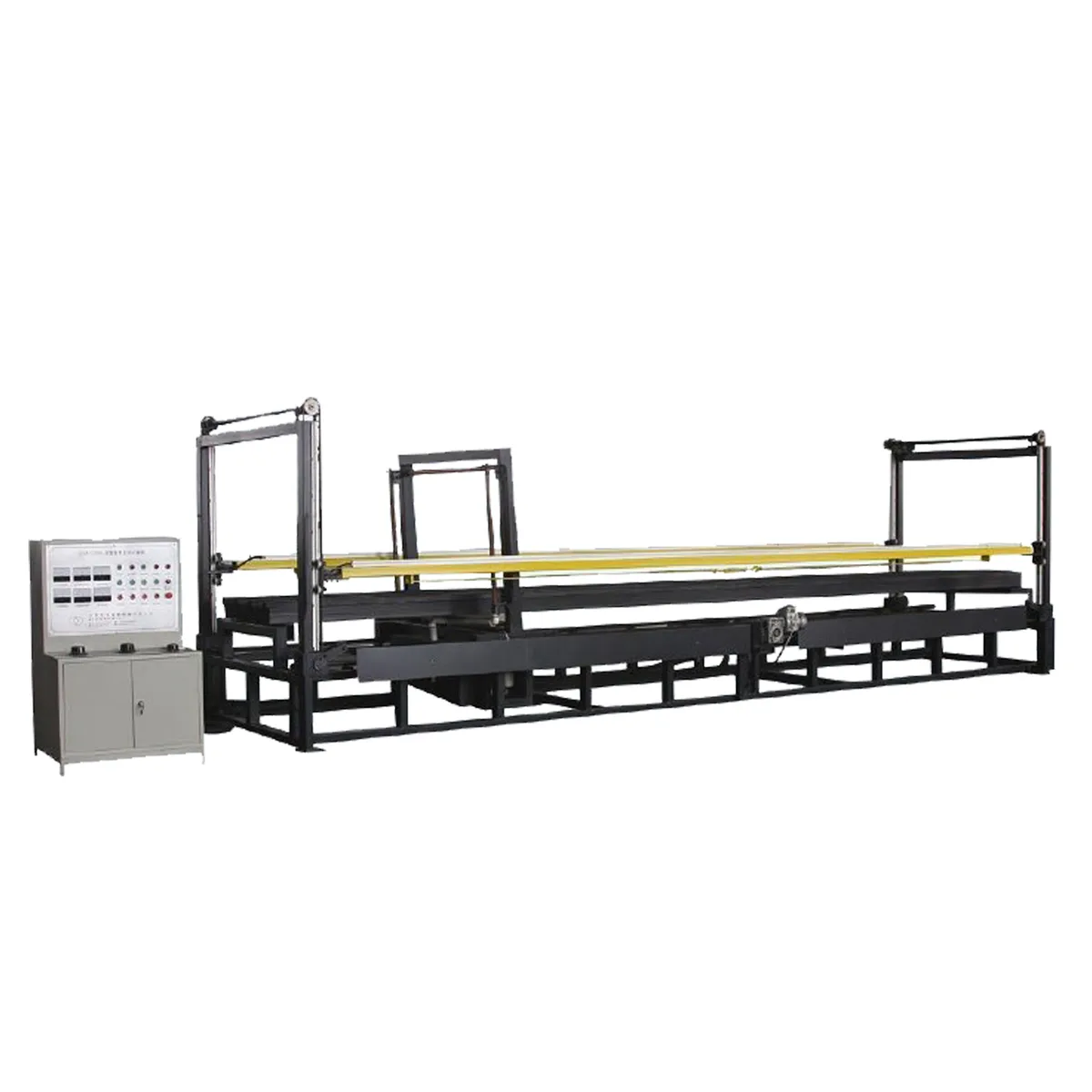
TL;DR: An EPS block cutting machine slices molded blocks into sheets and shapes. Compare automatic multi-wire lines and CNC cutters — tolerance, wire count, speed.
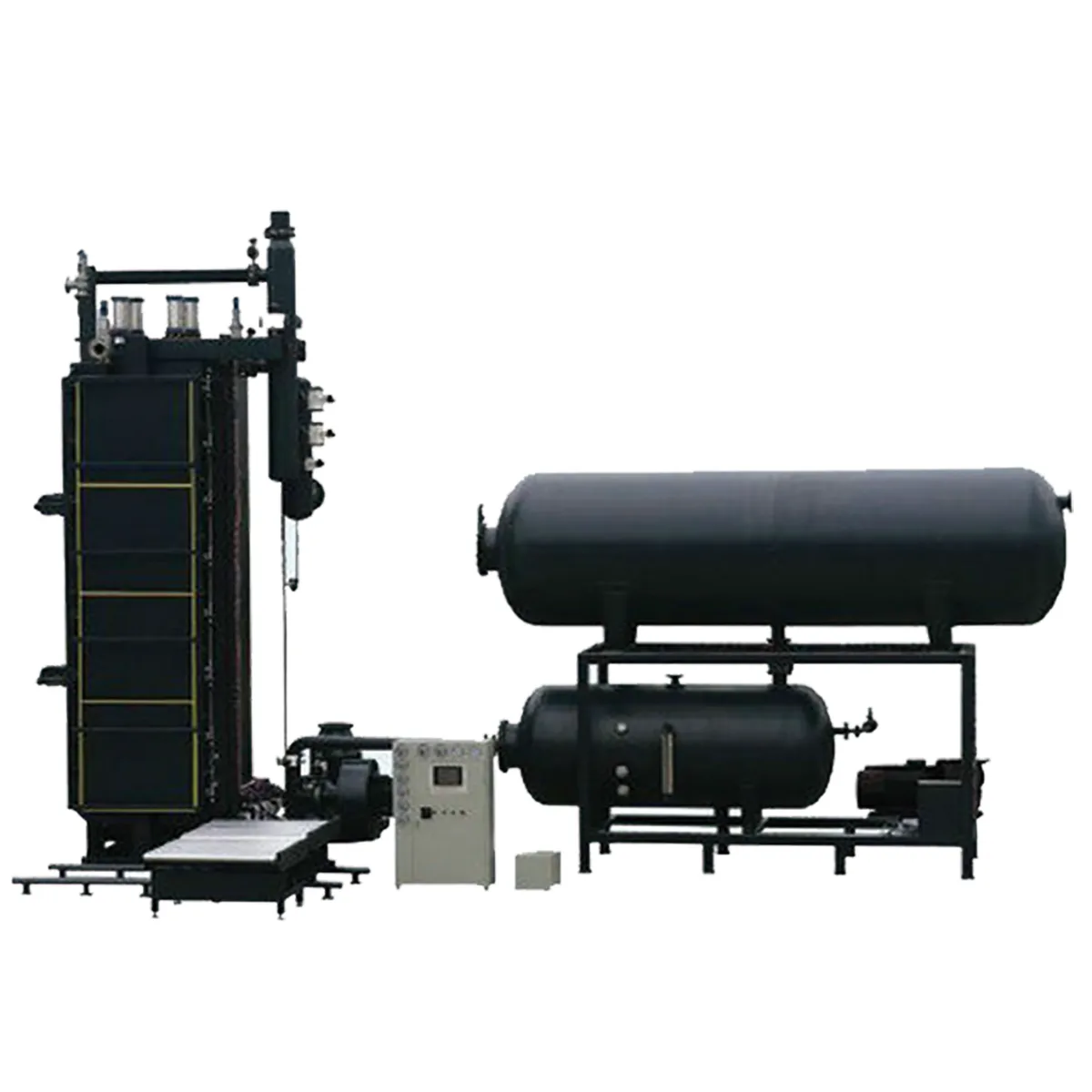
An EPS cutting machine is the link between your block molding press and your finished product. After a pre-expander expands raw beads and a block molding machine fuses them into large blocks, the cutting machine slices those blocks into sheets, panels, and complex 3D shapes at the exact dimensions your customers need. Choosing the wrong cutting system can bottleneck an otherwise efficient production line, waste 5–15% of raw material as off-cuts, and cost $8,000–$25,000 in annual energy overhead. Hot-wire and band cutters also carry real operator hazards, so every installation should follow OSHA machine-guarding and electrical-safety practices.
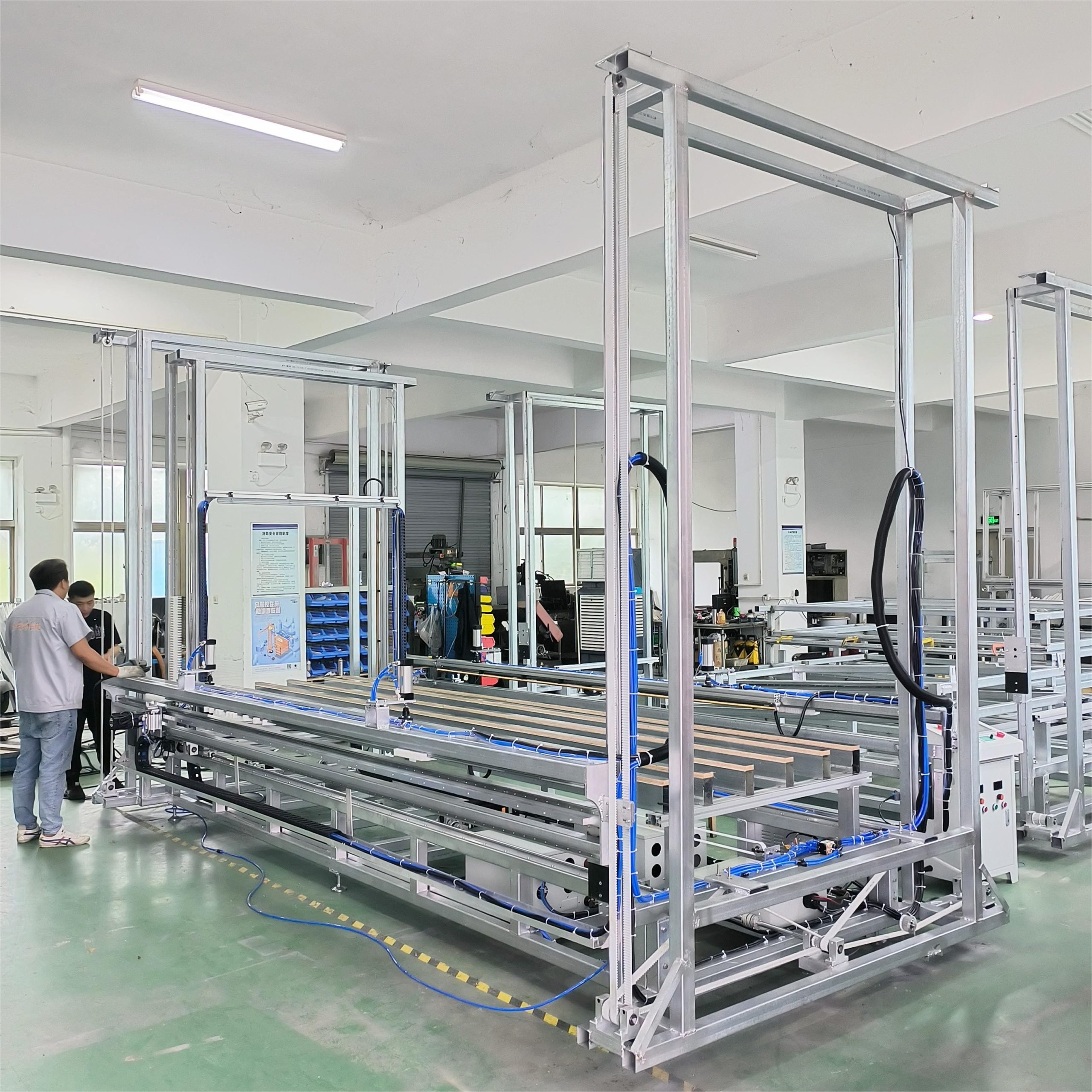
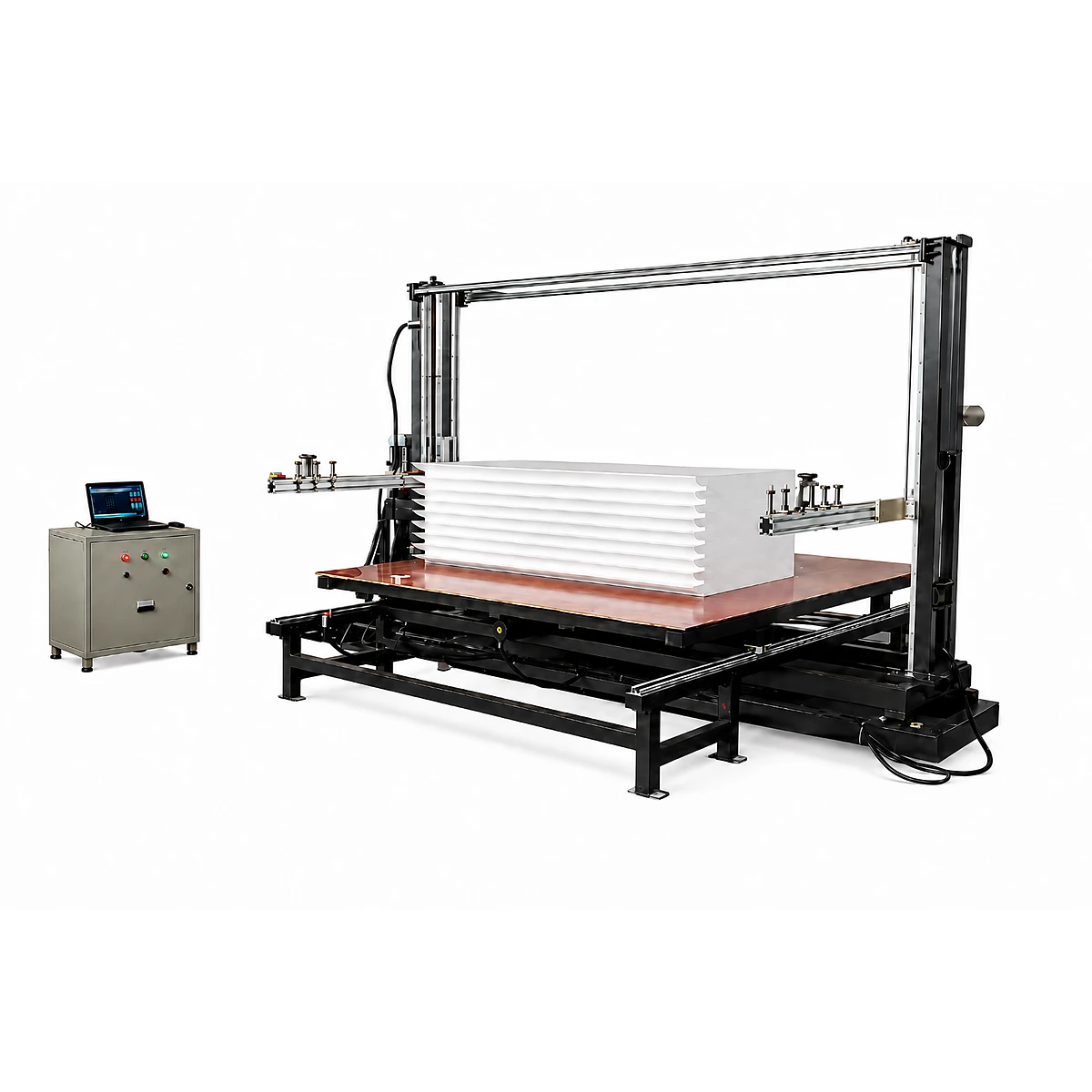
An EPS block cutting machine is the machine that turns a molded EPS block into saleable product. It holds the block on a bed and drives heated nickel-chromium wires through it — a bank of parallel wires for flat sheets, or a servo-driven single wire on a CNC gantry for contoured shapes. Everything else in the specification — wire count, block envelope, cutting speed, thickness tolerance — follows from which of those two jobs you are buying it for.
EPS cutting machines fall into three main categories: hot wire sheet cutters (CM series, $12K–$65K) for slicing blocks into flat insulation boards and packaging sheets at 1–3 m/min; automatic cutting lines (SPB/SPQ series, $30K–$90K) for high-volume production with ±0.5 mm tolerance and 60-wire auto-setup in 3 minutes; and CNC shape cutters ($18K–$45K) for 2D/3D architectural profiles, signage, and mold patterns. The right choice depends on three factors: your daily output volume, the shape complexity your end-market demands, and how many product changeovers you run per shift.
This guide covers all three categories with specification tables, a decision matrix by application, total cost of ownership calculations, and a 6-point evaluation checklist to help you make an informed purchasing decision.
Three Types of EPS Cutting Machines Explained
Every EPS manufacturer needs at least one cutting system. The type you choose determines your product range, throughput ceiling, and operating cost per cubic meter of finished product.
Type 1: CNC Hot Wire Sheet Cutters (CM Series)
Hot wire cutters use electrically heated nickel-chromium (Ni-Cr) alloy wires to melt through EPS blocks along programmed paths. The wire temperature is digitally controlled (typically 150–300°C depending on density and cutting speed) to produce clean, smooth cuts without mechanical vibration or dust. This is the most common type of EPS cutting machine worldwide.
- Cutting length range: 2,000 mm (CM-2000) to 8,000 mm (CM-8000), covering small workshops to large-scale plants
- Wire count: 1–80 adjustable wires depending on model, allowing simultaneous multi-sheet cutting from a single block
- Accuracy: ±1 mm across all CM models, sufficient for insulation boards (EN 13163 requires ±2 mm) and packaging
- Power consumption: 5–15 kW installed, making hot wire cutting the most energy-efficient method per cut
- Cutting modes: Horizontal slicing, vertical trimming, and on larger models (CM-6000+) 2D/3D shape cutting
The CM series is your default choice when your primary product is flat sheets and panels — insulation boards, packaging inserts, geofoam blocks, and sandwich panel cores. Models from CM-3000 upward include automatic block feeding, eliminating the manual positioning that limits smaller machines to 60–80 blocks/shift.
Type 2: Automatic Cutting Lines (SPB & SPQ Series)
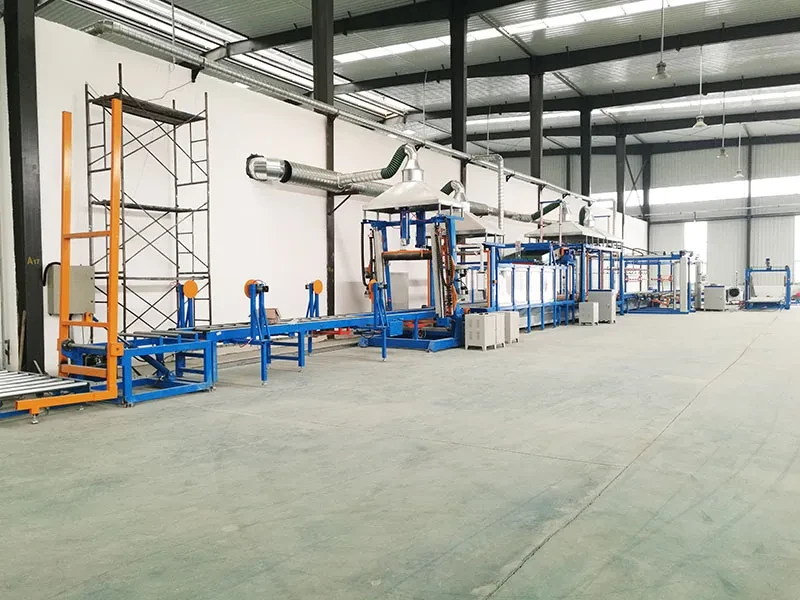
When your daily output exceeds 200 m³ of finished sheets, individual CNC cutters become a bottleneck. Automatic cutting lines integrate feeding, horizontal cutting, vertical cutting, and length cutting into a single continuous flow.
The SPB series handles blocks from 2,000 to 6,000 mm with up to 60 horizontal wires and 13 vertical wires. Its automatic wire positioning system adjusts thickness settings without manual wire moving, saving 15–20 minutes per product changeover compared to manual CM-series machines.
The SPQ series takes this further with an oscillation cutting mechanism and cooling fans that allow cutting speeds of 1.8–2.0 m/min at 15 kg/m³ density — approximately 40% faster than static hot wire at the same density. The patented automatic wire setting system configures 60 wires in just 3 minutes, and thickness tolerance tightens to ±0.5 mm (twice as precise as standard CM-series machines).
- Best for: Dedicated insulation board manufacturers producing 300–1,000+ m³/day of standard-thickness sheets
- Key advantage: Continuous flow eliminates block handling between cuts, reducing labor by 50–60% vs CM-series
- Key limitation: Less flexible for custom shapes; optimized for rectangular sheet production
Type 3: CNC Shape Cutting Machines
A CNC hot wire foam cutting machine moves a single hot wire or a small wire array along computer-programmed 2D and 3D paths to produce complex profiles: architectural cornices, decorative moldings, signage letters, lost-foam casting patterns, and prototype molds. Unlike the CM series (which cuts in straight lines), CNC shape cutters can follow curves, angles, and contoured surfaces.
- Best for: Architectural decoration, signage production, prototyping, and lost-foam casting foundries
- Typical accuracy: ±0.5–1.0 mm on contoured profiles
- Output: Lower volume than sheet cutters (5–30 pieces/hour depending on complexity), but each piece commands 3–10× the margin of flat sheets
- Software: Accepts DXF/DWG files from standard CAD software; some models support direct G-code input
EPS Cutting Machine Specification Comparison
The following table compares key specifications across our cutting machine range. All machines use Ni-Cr alloy hot wires and CNC control.
| Model | Cutting Length | Max Wires | Power | Accuracy | Best Application |
|---|---|---|---|---|---|
| CM-2000 | 2,000 mm | 20 | 5 kW | ±1 mm | Small workshops |
| CM-3000 | 3,000 mm | 30 | 7 kW | ±1 mm | Medium-scale production |
| CM-4000 | 4,000 mm | 40 | 8 kW | ±1 mm | Geofoam & large panels |
| CM-5000 | 5,000 mm | 50 | 10 kW | ±1 mm | High-volume insulation |
| CM-8000 | 8,000 mm | 80 | 15 kW | ±1 mm | Max-length & 3D profiles |
| SPB Series | 2,000–6,000 mm | 60H + 13V | 12–18 kW | ±1 mm | Automated sheet lines |
| SPQ Series | 2,000–6,000 mm | 60 (auto-set) | 15–22 kW | ±0.5 mm | Premium insulation lines |
| CNC Shape | Variable | 1–4 | 3–8 kW | ±0.5–1 mm | 3D shapes & profiles |
Matching an EPS Block Cutting Machine to Your Block Molder
An EPS block cutting machine is one half of a pair. It earns its price only if its block envelope — the length, width and height it accepts — contains the block your molding machine actually makes, and if its density range reaches the heaviest grade you intend to run. Buyers who specify the molder and the cutter separately, months apart, are the ones who find the mismatch on the factory floor.
Three checks settle it, and all three can be done from datasheets before you sign anything.
Check 1: Does the Machine's Envelope Contain Your Block?
On our cutting lines the number in the model name is the maximum block length in millimetres: an SPB-2000Q accepts blocks up to 2,000 mm, an SPB-6000Q up to 6,000 mm. So your molder sets the floor. A BM-1200 horizontal molder produces a 1,200 × 600 × 300 mm block, which the smallest line in the range covers comfortably. An SPB-LZ vertical molder running its full 2,000–6,000 mm length needs the 6000-size line, and nothing smaller will do.
| Cutting machine | Block envelope accepted | Density range | Tolerance | Heating / motor |
|---|---|---|---|---|
| SPB 2000–6000Q multi-wire line | L 2,000–6,000 × W 1,000–1,260 × H 500–1,260 mm | 12–45 kg/m³ | ±0.3 mm | 32 kW / 11 kW |
| SPQ-FR graphite & FR-EPS line | L 2,000–6,000 × W 1,000–1,260 × H 500–1,260 mm | 15–45 kg/m³ | ±0.4 mm | 34 kW / 11 kW |
| SPQ-CNC shape cutter | Travel X 2,000–4,000 × Y 1,000–2,000 × Z 500–1,200 mm | 12–45 kg/m³ (EPS / EPP / XPS / PU) | ±0.1 mm positioning | 6–10 kW total |
Check 2: Does the Density Range Reach Your Heaviest Grade?
Read the line as a chain: its real density ceiling is the lowest ceiling among molder, cutter and any downstream handling, not the highest number on any one brochure. A quote pairing a 45 kg/m³ cutting line with a 30 kg/m³ molder is a 30 kg/m³ line. Check the bottom of the range too — the multi-wire lines above are published from 12 and 15 kg/m³, so if your packaging work runs lighter than that, say so at quotation stage, because wire tension and traverse speed are set differently at the light end.
Check 3: What Is the Smallest Cut You Have to Make?
This is the check almost nobody runs, and it is the one that sends a machine back. A multi-wire block cutting machine has minimum cut dimensions: on the SPB-Q line the minimum horizontal cut is 10 mm, the minimum vertical cut 200 mm, and the minimum cross cut 300 mm. Sheets thinner than 10 mm, or strips narrower than 200 mm, are outside what that machine will produce no matter how it is programmed. Work of that kind belongs on the CNC shape cutter, which follows a programmed contour down to a 5 mm minimum cutting radius with a 0.3 mm wire. Put your smallest current SKU next to those three numbers before you choose.
How to Choose the Right EPS Cutting Machine
Matching your cutting system to your production reality requires working through four decision points in sequence. Getting any one wrong leads to either under-capacity (production bottleneck) or over-investment (idle capital).
Decision 1: What Are You Cutting?
- Flat sheets and boards only (insulation, packaging, geofoam slabs) → CM series or SPB/SPQ automatic lines
- Complex 2D/3D shapes (architectural cornices, signage, prototypes, lost-foam patterns) → CNC shape cutter
- Both flat sheets and occasional shapes → CM-6000 or CM-8000 (larger models include 2D/3D cutting modes) + consider adding a dedicated CNC shape cutter for high-value orders
Decision 2: What Is Your Daily Volume?
| Daily Output | Recommended Machine | Reason |
|---|---|---|
| Under 50 m³/day | CM-2000 or CM-3000 | Low investment, sufficient for small workshops |
| 50–200 m³/day | CM-4000 to CM-6000 | Auto feeding, multi-wire batch cutting |
| 200–500 m³/day | SPB series or CM-7000/CM-8000 | Automatic line reduces labor 50%+ |
| 500+ m³/day | SPQ series (multiple units) | Fastest speed + tightest tolerance + auto wire setup |
Decision 3: What Tolerance Does Your End Product Require?
Standard CM-series machines deliver ±1 mm accuracy, which satisfies EN 13163 (the EUMEPS European insulation board standard, ±2 mm required) and most packaging specifications. However, if you produce premium insulation boards for passive house construction (Passivhaus standard) or laminated sandwich panels where bonding quality depends on surface flatness, the SPQ series with ±0.5 mm tolerance is worth the investment. The tighter tolerance reduces adhesive consumption by 10–15% in lamination lines and virtually eliminates gap-related thermal bridging complaints.
Decision 4: How Many Product Changeovers Per Shift?
If you produce a single sheet thickness all day, manual wire spacing on a CM-series machine adds only 5–10 minutes at shift start. But if your order book requires 4–8 thickness changes per shift (common for packaging manufacturers serving multiple clients), the SPB/SPQ automatic wire positioning system pays for itself within 6–12 months through saved changeover time alone. At 15 minutes saved per changeover × 6 changeovers/day × 250 working days, you recover 375 hours of production time annually — equivalent to roughly $18,000–$30,000 in additional output capacity.
Total Cost of Ownership: Beyond the Purchase Price
The machine purchase price represents only 40–55% of your 5-year total cost of ownership. The remaining costs — energy, wire consumables, maintenance, and labor — vary significantly between machine types and should drive your purchasing decision as much as the sticker price.
Energy Cost
Hot wire cutting consumes 5–22 kW depending on model and wire count. At a typical industrial electricity rate of $0.08–0.12/kWh, annual energy cost ranges from $6,000 (CM-2000 running 16h/day) to $25,000 (SPQ line running 20h/day). The SPQ oscillation cutting mechanism is 15–20% more energy-efficient per cubic meter of cut foam compared to static hot wire, because faster cutting speed means less time with wires energized per block.
Wire Replacement
Ni-Cr alloy wires last 200–500 operating hours before needing replacement, depending on cutting density (lower-density foam is gentler on wires) and wire temperature setting. Wire cost runs $0.50–$2.00 per meter depending on diameter. For a 40-wire CM-5000 cutting 1,200 mm wide blocks, annual wire replacement cost is approximately $1,500–$3,000. SPQ machines with automatic wire tensioning extend wire life by 20–30% through consistent tension maintenance.
Material Waste
Hot wire cutting produces minimal kerf waste (the wire melts a path approximately 1–2 mm wide). Typical material waste is 2–5% for sheet cutting operations. Block ends and edge trims can be recycled through an EPS crusher and cold compactor, recovering 85–95% of waste material value. See our EPS recycling equipment guide for the full recovery process. Factoring in recycling, net material waste cost drops below 1% for well-optimized cutting operations.
EPS Cutting Machine Applications by Industry
Construction Insulation
The largest application by volume. Insulation board manufacturers need continuous high-speed cutting with consistent thickness across every sheet. The SPB or SPQ series running 16–20 hours/day can process the output of 2–3 BM-1200 block molding machines operating in parallel. Key specifications: thickness range 10–300 mm, length up to 6,000 mm, tolerance ±1 mm (or ±0.5 mm for premium lines).
Packaging
Packaging manufacturers typically need frequent product changeovers (different insert dimensions for different products) and may produce both flat sheets and simple shaped inserts. A CM-4000 or CM-5000 handles most packaging operations, with the SPB series for higher-volume dedicated packaging lines. One sizing question comes up before the machine question: buyers often arrive comparing rigid cut EPS sheet against soft extruded polyethylene sheet, which is a different material on a different line entirely — our EPE vs EPS foam guide settles that choice and lists the standard sheet thicknesses, face sizes and densities buyers order against.
Architectural Decoration
EPS architectural elements (cornices, pilasters, keystones, column covers) are a high-margin product category that demands CNC shape cutting. The EPS core is cut to the desired profile, then coated with a polymer-modified cement layer and fiberglass mesh for exterior durability. Typical margins are 5–10× higher than flat sheet sales, making even a single CNC shape cutter a profitable addition to existing sheet-cutting operations.
Geofoam and Civil Engineering
Geofoam blocks used in road embankments, bridge abutments, and stadium seating require precise dimensional cutting of very large blocks. The CM-8000 with its 8,000 mm cutting length and SCADA integration is specifically designed for this market, allowing automated production of blocks that meet ASTM D6817 dimensional tolerance requirements.
6-Point Evaluation Checklist Before You Buy
- Match cutting length to your block mold size. Your cutting machine must accept blocks from your molding machine without additional handling. If your block molding machine produces a 1,200 mm block, an SPB-2000Q covers it; if it produces 4,000 mm blocks, you need the 4000-size line or larger.
- Calculate your wire count requirement. Divide your standard block height by your most common sheet thickness. A 1,000 mm block cut into 50 mm sheets needs 20 wires. Add 20% for trimming and odd sizes.
- Verify wire speed matches your density range. Lower-density foam (12–15 kg/m³) cuts faster than high-density (25–35 kg/m³). If you process multiple density grades, ensure the machine offers variable speed control across your full density range.
- Check the control system interface. PLC with touchscreen HMI reduces operator training time from weeks to days. Recipe storage (the ability to save and recall cutting programs) is essential if you make frequent product changeovers.
- Confirm after-sales support coverage. Wire replacement parts, PLC programming support, and remote diagnostics availability. Ask for response time guarantees and whether the manufacturer stocks spare parts in your region.
- Request a cutting test with your actual foam. Different EPS raw bead grades (standard, fast cycling, graphite, flame retardant) behave differently under cutting. A test cut with your actual production foam at your target density validates surface quality, accuracy, and effective throughput.
Integration with Your EPS Production Line
A cutting machine does not operate in isolation. It sits between your block molding press and your downstream packaging/shipping operation. For a smooth-running production line, consider these integration points:
- Block aging time: Freshly molded EPS blocks contain residual moisture and pentane. Most blocks need 24–72 hours of aging in an EPS silo before cutting. Cutting too early causes surface dimpling and dimensional instability after cutting.
- Conveying: An automatic block conveyor between silo and cutting machine eliminates forklift handling and reduces block damage during transport.
- Post-cutting handling: Cut sheets need stacking (stacking machine), gluing for laminated products (glue system), and wrapping (wrapping machine) before palletizing.
- Waste recovery: Connect your EPS crusher directly to the cutting station’s waste chute. Crushed off-cuts feed back into the block molding machine at 5–15% blend ratio, reducing raw material cost.
For a complete guide to designing your production line from raw beads to finished product, see our EPS factory setup guide.
Frequently Asked Questions
What is the typical lifespan of an EPS cutting machine?
A well-maintained CNC hot wire cutting machine lasts 15–20 years in continuous industrial use. The mechanical frame and drive system are the most durable components (20+ years). Wire heating elements, contactors, and PLC components are the most common replacement items, typically serviced every 3–5 years. Annual maintenance cost averages 2–3% of the original machine purchase price.
How much does an EPS cutting machine cost from China?
FOB China pricing ranges from $12,000–$18,000 for an entry-level CM-2000 to $55,000–$65,000 for a CM-8000 with full automation and SCADA. Automatic cutting lines (SPB/SPQ) range from $30,000–$90,000 depending on cutting length and automation level. CNC shape cutters range from $18,000–$45,000. All prices are FOB and exclude shipping, installation, and customs duties.
Can I cut graphite EPS (grey EPS) with a standard hot wire machine?
Yes. Graphite EPS (grey/silver beads with 3–5% graphite additive for improved thermal insulation) cuts cleanly with standard Ni-Cr hot wire machines. However, graphite EPS generates more surface carbon residue on wires, requiring 10–15% more frequent wire cleaning intervals. Wire temperature should be set 5–10°C lower than standard white EPS at the same density to avoid excessive melting at the cut face.
What is the difference between hot wire cutting and oscillating blade cutting?
Hot wire cutting melts through EPS using an electrically heated wire at 150–300°C, producing smooth surfaces with minimal dust but leaving a thin fused skin layer on the cut face. Oscillating blade cutting uses a rapidly vibrating steel blade that mechanically shears through the foam, producing a rougher surface texture that improves adhesive bonding. The SPQ series uses an oscillation mechanism that combines elements of both: oscillating motion with heated wire contact, achieving faster speeds than pure hot wire while maintaining good surface quality.
How do I calculate the ROI of upgrading from manual to automatic cutting?
Calculate your current labor cost for cutting operations (operators × hourly rate × hours/year), then subtract the reduced labor cost with an automatic line (typically 1–2 operators instead of 3–4). Add the value of increased throughput (“extra cubic meters per day × margin per m³ × working days”). For most mid-volume manufacturers, upgrading from a manual CM-series cutter to an SPB or SPQ automatic line pays back in 18–30 months through combined labor savings and increased output. See our ROI calculation guide for a detailed framework with worked examples.
What safety features should an EPS cutting machine have?
Essential safety features include: emergency stop buttons on all operator stations, light curtain guards on block feeding areas, wire break detection with automatic power cutoff, over-temperature protection on wire heating circuits, and proper grounding of all electrical components. Additionally, ensure adequate ventilation at the cutting station — heated EPS releases small amounts of pentane vapor during cutting, which should be extracted by the facility’s ventilation system.
Our cutting lines are CE certified — the SPB-Q line to EN 60204-1 and EN ISO 13849-1 PL d for the safety circuit — and the graphite/FR line additionally carries ISO 9001 and ATEX Zone 22 dust extraction, which is mandatory when cutting graphite-EPS. Ask any supplier which certificate covers the exact model quoted: certification is issued per model series, not per company.
What is an EPS block cutting machine?
It is the machine that converts a molded EPS block into finished product. Heated nichrome wires are driven through the block: a bank of parallel wires cuts flat sheets and boards in one pass, while a CNC gantry moves a single wire along a programmed path for contoured shapes. It sits between the block molding machine and packing, and its block envelope has to match the block your molder produces.
What size EPS block cutting machine do I need?
Start from your block, not from the cutter. On our lines the model number is the maximum block length in millimetres — an SPB-2000Q takes blocks to 2,000 mm, an SPB-6000Q to 6,000 mm — so the longest block your molder makes sets the smallest line you can buy. Then confirm two more numbers: that the density range covers your heaviest grade, and that your thinnest sheet is above the machine’s 10 mm minimum horizontal cut.
Can one EPS block cutting machine handle both standard and graphite EPS?
The standard multi-wire line is rated 12–45 kg/m³ and will cut flame-retardant modified EPS. Graphite (grey) EPS is the case that justifies a dedicated line: it is more abrasive on the wire and produces a combustible dust load, which is why the SPQ-FR runs 34 kW of wire heating with 0.5–0.8 mm wire and ships with ATEX Zone 22 dust extraction and HEPA filtration as standard rather than as an option.