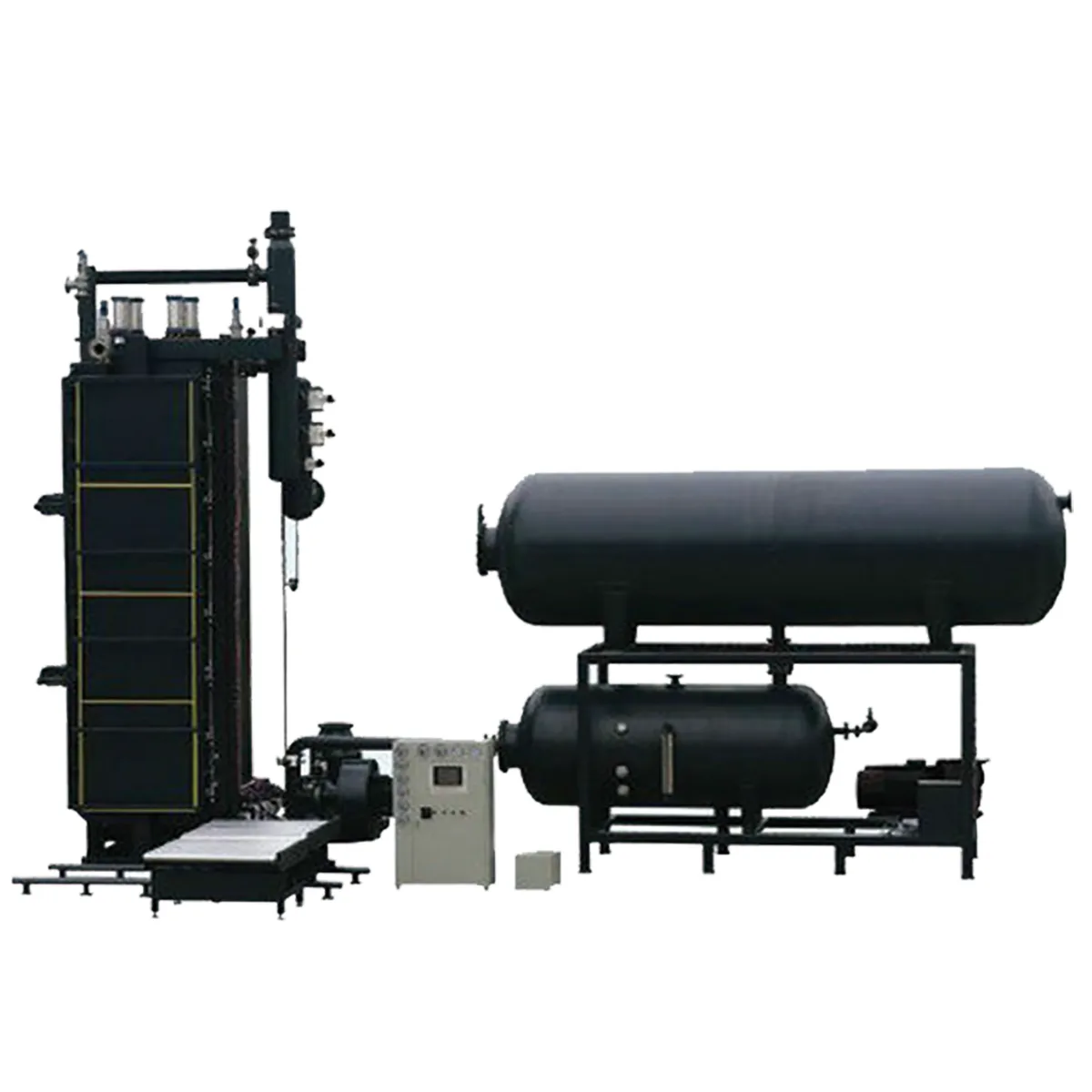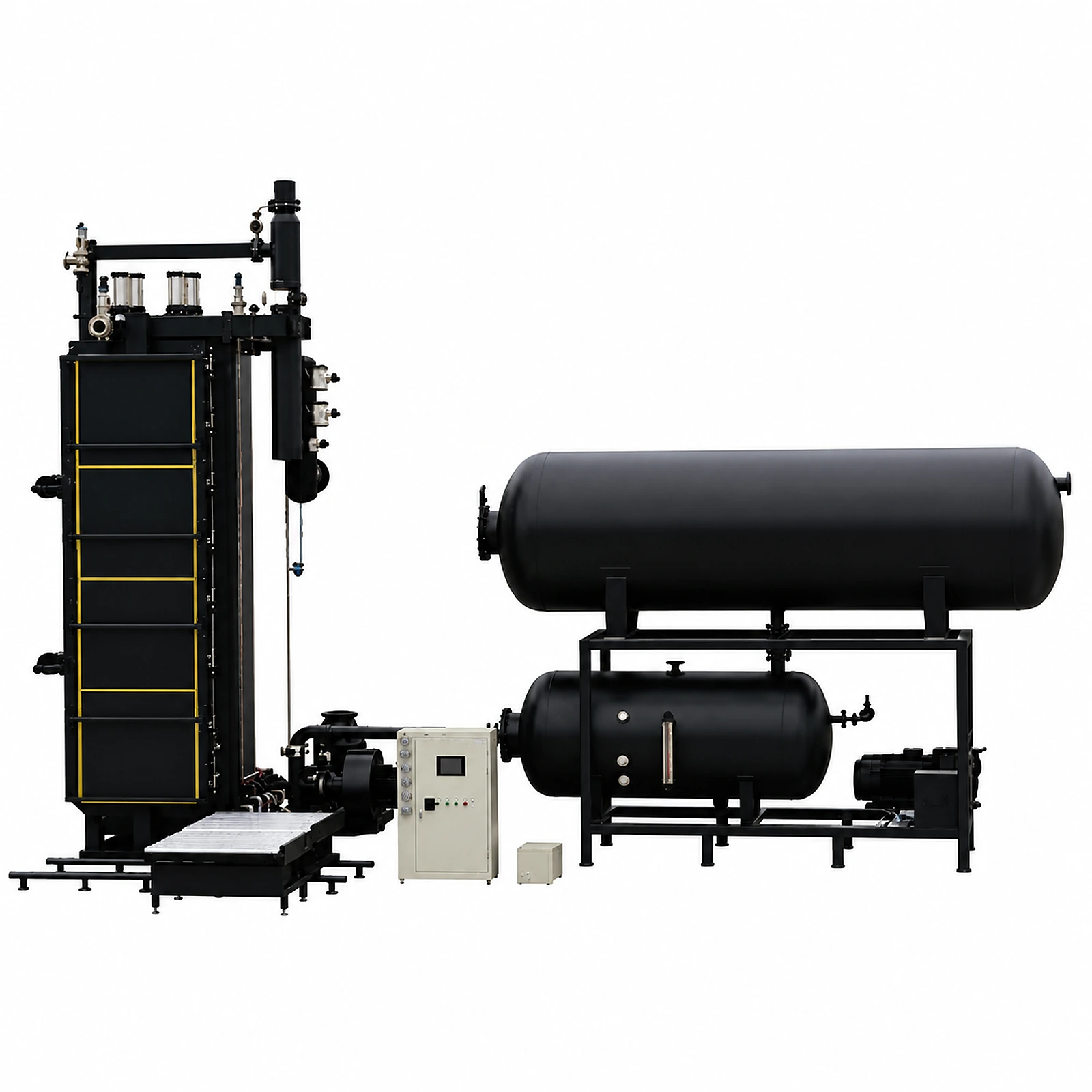
An EPS block is a large rectangular billet of expanded polystyrene, produced by fusing pre-expanded beads together with saturated steam inside a mold, then cut into finished product on a hot-wire line. It is an intermediate, not an end product. Block geometry runs from 1,200 × 600 × 300 mm on a compact horizontal molder up to 6,000 mm long on a vertical molder, at densities of roughly 4–45 kg/m³. Those two numbers — size and density — decide almost everything about what the block can be sold as.
A note on scope before anything else, because it saves people a wasted enquiry: ChinaEps builds the machines that mold and cut EPS blocks. We do not sell finished blocks. If you need a block delivered to a job site, your supplier is a local EPS converter. If you are planning to become that converter, this page is the part most equipment quotations skip — what the thing you are about to manufacture actually is, and which of its properties are fixed by your machine choice on day one.
1. What an EPS Block Is, Physically
Expandable polystyrene arrives as a resin bead containing 5–7% pentane by weight. That bead is expanded with steam in a pre-expander until it reaches the target bulk density, then held in an aging silo for 8–24 hours so air diffuses into the cells and residual pentane drops to 2–3%. Only then is it blown into a block mold and fused.
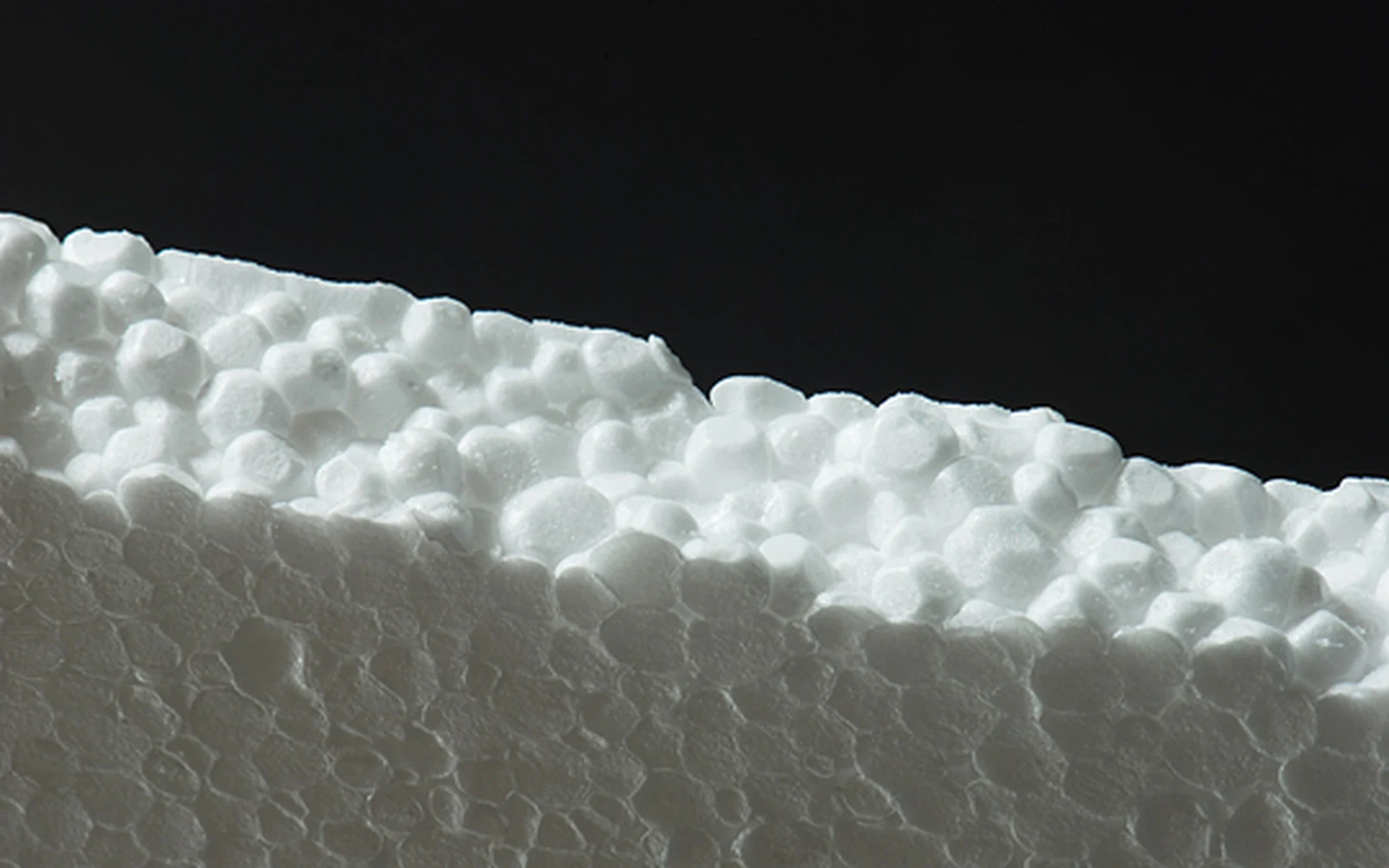
Fusion is the step that makes a block a block. Saturated steam at low pressure softens the bead surfaces until they weld to their neighbours; the cavity walls define the geometry. The result is a closed-cell billet that is typically 95–98% air by volume. Everything downstream — insulation board, fish box walls, ICF forms, geofoam fill — is that billet with material removed from it.
Three consequences follow from this, and they are the reason block specification matters more than buyers expect:
- You cannot add material back. Every finished dimension has to fit inside the block you molded. Block size is a hard ceiling on product size.
- Density is set at the pre-expander, not the molder. The molder fuses whatever bulk density you fed it. A block that comes out too light cannot be fixed by longer steam.
- The block is not stable at demold. Post-demold shrinkage of 0.3–0.5% is normal and expected. Cutting before it settles produces boards that go out of tolerance on the pallet.
2. Standard EPS Block Sizes
There is no single global standard block size. Block geometry is set by the mold cavity, and cavity size is a machine decision. The table below gives the real geometries produced by the three block molder configurations we build, which bracket most of what the export market runs.
| Configuration | Block size (L × W × H) | Block volume | Density range | Typical use |
|---|---|---|---|---|
| BM-1200 horizontal | 1,200 × 600 × 300 mm | 0.216 m³ | 8–30 kg/m³ | Packaging block stock, small-run converters |
| BM-1400 horizontal | 1,400 × 800 × 400 mm (cavity insert to 600 mm high) | 0.448 m³ | 10–35 kg/m³ | Mid-capacity board and ICF factories |
| SPB-LZ vertical | 600–1,200 W × 1,200 D × 2,000–6,000 tall | up to 8.64 m³ | 4–35 kg/m³ | Long insulation board, wall panel, geofoam |
Two practical notes on reading a size spec:
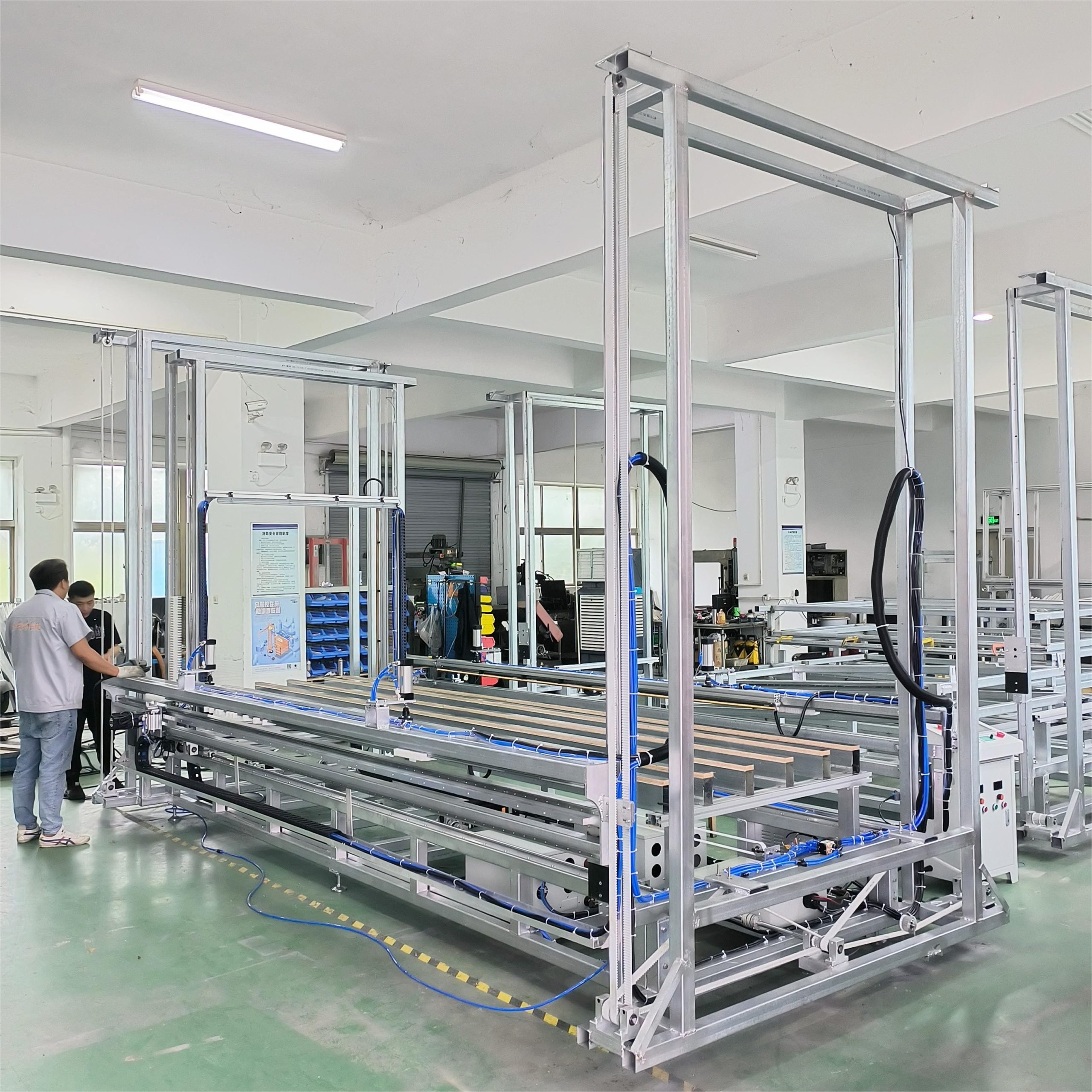
Long blocks are a yield decision, not a prestige one. A 6,000 mm block is not simply "better". It cuts fewer end-offs per cubic metre and suits long board runs, but it needs the floor length, the crane or conveyor to move roughly 170 kg of foam at 20 kg/m³, and a cutting line rated for that length. Our multi-wire cutting line accepts blocks of 2,000–6,000 mm long, 1,000–1,260 mm wide and 500–1,260 mm high — check that envelope against the molder before you sign for either machine.
The mold, not the machine frame, sets the size. Cavity inserts change block geometry without changing the machine. On the BM-1400 the insert swap that takes the block from 400 mm to 600 mm high is a 4–6 hour job. If you expect to serve two markets with different block formats, price the second cavity at the time of the original order, not two years later.
3. EPS Block Density and What It Buys You
Density is the single number that determines what a block is worth and what it can legally be sold into. It is measured as apparent density under ISO 845, and it drives compressive strength, which is tested under ASTM D1621.
| Density | Molding steam pressure | Typical end product |
|---|---|---|
| Under 15 kg/m³ | 0.06–0.08 MPa | Single-use shipping foam, void fill |
| 15–25 kg/m³ | 0.08–0.10 MPa | EIFS and roof insulation board, sandwich panel core |
| Over 25 kg/m³ | 0.10–0.15 MPa | ICF forms, geofoam fill, heavy-duty and structural packaging |
Two things buyers routinely get wrong here.
Density variance matters more than the nominal figure. A line that holds ±0.8 kg/m³ block to block passes an insulation specification; one that wanders ±3 kg/m³ fails it at the same average. For board production, hold ±1 kg/m³ or shrinkage drifts out of spec. Ask a machine supplier for the variance figure, not the range.
Flame-retardant and graphite grades change the machine requirement, not just the bead price. FR grades need 5–10% higher steam pressure at the same target density and at least 12 hours of aging rather than 6. On the cutting side, dense FR and graphite foam needs thicker wire and more heating power — our premium line runs 0.4–0.7 mm nichrome wire at 32 kW for exactly this reason, and covers 12–45 kg/m³. A cutting line specified for 20 kg/m³ white EPS will sag its wires on 40 kg/m³ FR board. See the flame-retardant grade guide before committing to a bead contract.
4. The Standards That Govern EPS Blocks
A block on its own is rarely certified. What gets certified is the product cut from it, against the specification of its destination market. Three matter for most exporters:
- ASTM C578 — the North American specification for rigid cellular polystyrene thermal insulation. It defines density and compressive-resistance classes and the dimensional-stability limits your block has to hold after cure.
- EN 13163 — the European product standard for factory-made EPS thermal insulation. European designations such as EPS 100 / 150 / 200 refer to compressive stress at 10% deformation in kPa, not to density. This trips up buyers who assume EPS 100 names a density. EN 13163 also sets the dimensional tolerance most board factories work to, at ±2 mm.
- ASTM D6817/D6817M — the specification for rigid cellular polystyrene geofoam, covering types, physical properties and dimensions for civil engineering fill. Geofoam is the one application where the block itself, not a cut product, is what ships.
The practical version: decide the destination standard before you buy the mold. A cavity sized for a market that works in 600 mm board widths is the wrong cavity for one that works in 4-foot sheets, and the mold is not the cheap part to change.
5. From Block to Product: the Yield Arithmetic
Block economics are decided at the cutting line, and the numbers are simple enough to run before you commit to a machine. The constraints below are the real limits of our multi-wire line.
| Cutting constraint | Value | What it limits |
|---|---|---|
| Thickness tolerance | ±0.3 mm | Whether boards pass the EN 13163 ±2 mm check with margin |
| Minimum horizontal cut | 10 mm | Thinnest board you can slice from a block |
| Minimum vertical / cross cut | 200 mm / 300 mm | Smallest piece you can section without a shape molder |
| Cutting speed | 1–1.5 m/min at 30 kg/m³ | Line throughput; denser foam cuts slower |
| Wire diameter | 0.4–0.7 mm | Kerf loss per cut; thicker wire for high density |
| Scrap recovery | 95–98% | How much offcut returns to the process rather than to waste |
Worked example. Take a 6,000 × 1,200 × 1,200 mm block at 20 kg/m³, cut into 50 mm insulation board:
- Block volume: 6.0 × 1.2 × 1.2 = 8.64 m³. Block mass: 8.64 × 20 = 173 kg — plan the handling equipment for that, not for a 3 kg packaging block.
- Boards across the 1,200 mm dimension at 50 mm: 1,200 ÷ 50 = 24 slices before kerf. At 0.7 mm wire, 23 cuts remove about 16 mm total, so the last slice is short — in practice you plan 23 full boards and one offcut.
- Cutting pass on a 6,000 mm block at 1–1.5 m/min: 4–6 minutes, plus wire setup. Repositioning 60 wires is a 2–4 minute automated job on our premium line and a much longer manual one on a basic frame — which is where the throughput difference between a cheap and an expensive cutting line actually shows up.
- Material planning: apply a 1.05 cutting-waste factor to block volume when sizing silo capacity and bead purchasing, and route offcut back through a recycling loop to hold the 95–98% recovery figure.
If your product needs a shape rather than a slice — fish box, helmet liner, contoured insert — block molding is the wrong route entirely. That is a shape molding decision, and cutting a block into it wastes more material than it saves.
6. Why Blocks Sit Before They Are Cut
A freshly demolded block is warm, wet and still moving. Post-demold shrinkage of 0.3–0.5% is normal; the accepted quality limit is 0.5% in any dimension. High-expansion beads at 50–80× shrink more than standard 40–50× beads and need longer to settle.
Cutting too early is one of the cheapest mistakes to make and one of the most expensive to discover, because the boards leave the line in tolerance and go out of tolerance in the warehouse. Two related failure modes are worth naming, since both are visible in the block before they are visible in the product:
- Retained moisture. Short bead aging or blocked mold drainage leaves condensed steam in the block. In humid climates, extend aging to 12–24 hours rather than the 6–12 that a dry climate tolerates.
- Retained pentane. Beads molded at 5% or more residual pentane produce blocks that off-gas in storage. This is a fire and explosion hazard in a closed warehouse, not a quality nuisance. Aging to 2–3% before molding is the control.
The EPS quality control guide covers the full defect set and the tests that catch each one.
7. Buying Blocks Versus Producing Them
Most people who search for EPS blocks want to buy a few, and the answer for them is short: contact a regional EPS converter, specify density and dimension against ASTM C578 or EN 13163, and ask for the dimensional-stability declaration. Blocks are bulky and cheap per kilo, so freight dominates the delivered price and a local supplier almost always wins.
Producing them is a different question, and the honest threshold is volume. Block molding only makes sense when you consume enough foam that freight on finished blocks exceeds the cost of running your own line — which is why the equipment buyers we see are usually converters who already buy blocks and have watched that freight bill grow. If that describes your position, the sequence is understand the process, then size the line against your real product mix, then plan the factory. The China sourcing guide covers supplier verification.
Frequently Asked Questions
What is a standard EPS block size?
There is no universal standard. Block size is set by the mold cavity. Common export configurations run from 1,200 × 600 × 300 mm on compact horizontal molders to 1,400 × 800 × 400 mm on mid-capacity machines, up to 6,000 mm long on vertical molders. Regional conventions differ because they follow the finished board sizes each market sells.
How much does an EPS block weigh?
Multiply volume by density. A 1,200 × 600 × 300 mm block (0.216 m³) at 15 kg/m³ weighs about 3.2 kg. A 6,000 × 1,200 × 1,200 mm block (8.64 m³) at 20 kg/m³ weighs about 173 kg. The range across normal block formats is roughly two orders of magnitude, which is why handling equipment has to be specified against the block, not against "foam".
What density should an EPS block be?
It depends entirely on the end product. Under 15 kg/m³ for single-use packaging, 15–25 kg/m³ for insulation board and panel cores, over 25 kg/m³ for ICF, geofoam and structural packaging. Specify against the destination standard rather than against a density number alone, because ASTM C578 and EN 13163 classify by mechanical performance, not by mass.
Why do EPS blocks need to age before cutting?
A demolded block shrinks 0.3–0.5% as it cools and dries, and the accepted quality limit is 0.5% in any dimension. Cutting before it stabilises produces board that measures correctly at the line and out of tolerance later. Residual moisture and residual pentane both need time to leave the block as well — the pentane one is a storage safety issue, not just a quality one.
Does ChinaEps sell EPS blocks?
No. We manufacture the equipment that produces them — pre-expanders, horizontal and vertical block molding machines, multi-wire cutting lines, and recycling systems — and we supply EPS and EPP raw material. If you need finished blocks, buy from a converter in your region; freight makes long-distance block supply uneconomic. If you are planning to produce blocks, we can size the line against your target product mix.
What is the difference between an EPS block and an EPS board?
The board is cut from the block. A block is the molded intermediate; boards, sheets, ICF forms and packaging pieces are what a hot-wire line makes from it. This is also why board tolerance is a cutting-line specification rather than a molding specification — a ±0.3 mm cutting line gives comfortable margin against the ±2 mm dimensional tolerance board factories normally work to.